
If you're trying to improve your career, technical skills, or leadership ability in 2026, the 1% growth strategy in India is one of the most practical approaches you can follow. This idea is simple: don't chase dramatic overnight change. Build steady improvement through small, repeatable actions that actually stick. Here's the thing — most students and working professionals in Maharashtra already know they need to improve, but they often fail because the plan is too vague, too big, or disconnected from their real role. A better system is to define role-based parameters, focus on the few skills that matter most, and improve them consistently.
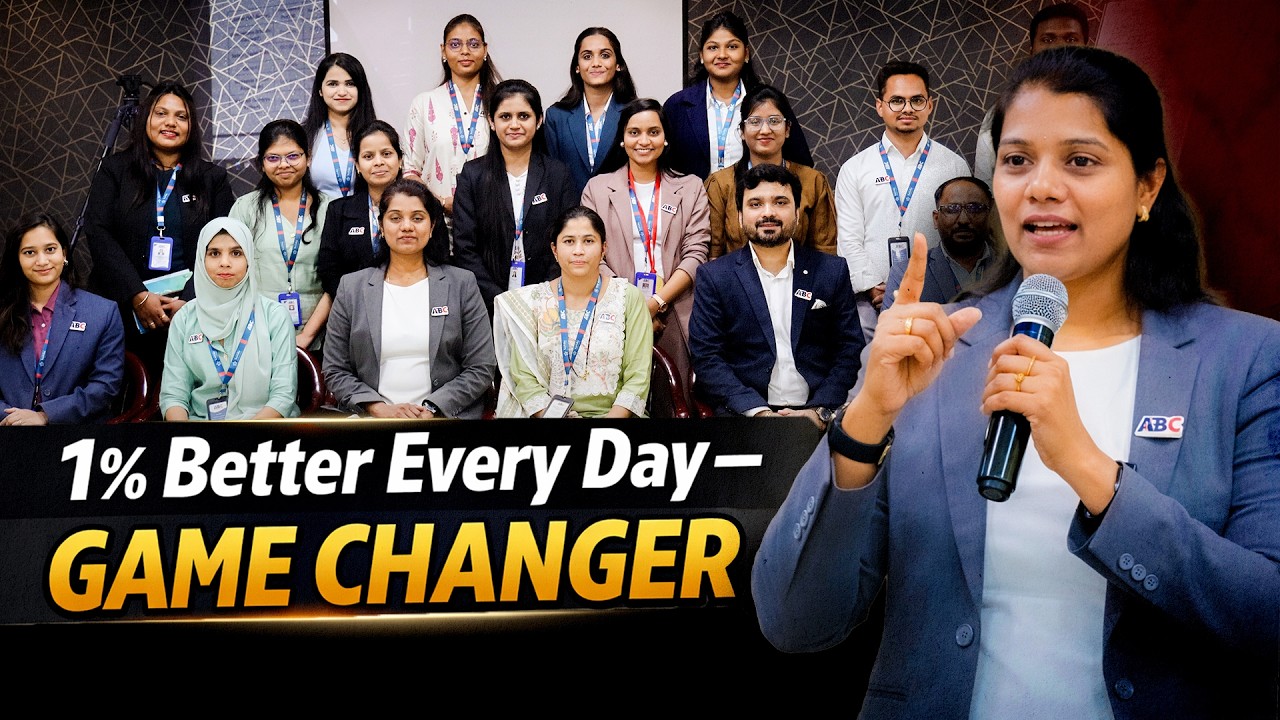
Whether you're a diploma student in Chhatrapati Sambhajinagar, a mechanical engineer in Pune, or a working professional in Sangli aiming for the next salary jump, this mindset works because it's realistic. Trust me, after training thousands of learners, I've seen that the people who get hired by companies like Tata Technologies, Siemens, Bosch, L&T, KPIT Technologies, TCS, and Infosys aren't always the flashiest. They're usually the ones who improve steadily, measure what matters, and keep showing up.
What is the 1% growth strategy and why does it work?
The 1% growth strategy is the practice of making small, measurable improvements in a focused area over time. It sounds basic, but what most people don't realize is that consistency beats intensity in almost every career path. If you try to fix everything at once, you'll quit. If you improve one process, one habit, or one technical parameter every week, you'll create momentum.
Let's make this practical. Suppose you're learning AutoCAD, Revit, PLC SCADA, Python, or data analytics. Instead of saying, “I'll master the full software this month,” define one parameter: speed, accuracy, file organization, error reduction, reporting quality, or communication. Then improve that by a small amount daily. The good news is, this approach reduces pressure and gives you visible progress.
How do role-based parameters help students and professionals improve faster?
This is where advanced thinking starts. Generic improvement goals don't work well. Role-based parameters do. A fresher civil engineer, an electrical design trainee, and a project coordinator should not all track the same progress markers.
For example:
- Civil CAD learner: drawing accuracy, layer discipline, plotting consistency, BOQ support speed
- Mechanical design learner: model revision control, assembly accuracy, drawing standards, tolerance awareness
- Electrical engineer: schematic clarity, component tagging discipline, panel documentation quality
- IT or software learner: logic quality, debugging time, Git discipline, documentation habits
Here's the thing — when your improvement metric matches your actual job role, your effort starts producing interview-ready results. That's what employers notice. At Bajaj Auto or Mahindra Engineering, nobody pays you for vague effort. They pay for reliable output.
What should you improve first if you already know the basics?
If you're beyond beginner level, don't spend all your energy collecting more theory. Go deeper into execution quality. In our experience, advanced learners improve fastest when they focus on these four areas:
- Speed without quality loss
- Error prevention through checklists
- Better prioritization of high-value work
- Daily review of measurable output
For example, if you're using AutoCAD 2025 or Revit 2026, your next jump may not come from learning random commands. It may come from reducing rework, naming files correctly, using templates properly, and delivering cleaner outputs in less time. Trust me, these are the details that separate a student project from professional work.
How can you apply the 1% rule to technical skill development?
Let's break it down into a power-user workflow you can actually follow.
1. Pick one skill that directly affects job performance
Don't choose ten. Choose one. If you're in design, it might be annotation quality. If you're in programming, it might be debugging speed. If you're in project planning, it might be baseline update accuracy.
2. Define one measurable parameter
Good examples are time taken per task, number of errors, revision count, output quality score, or presentation clarity. Bad examples are “get better” or “be more confident.”
3. Improve through repeatable daily action
Spend 20 to 30 focused minutes improving just that one parameter. Not passive watching. Real work. Real output. Real correction.
4. Review weekly, not emotionally
What most people don't realize is they judge progress based on mood. That's a mistake. Use numbers. Did your error count reduce from 12 to 8? Did your task time drop from 50 minutes to 38? That's growth.
5. Stack the next improvement only after stability
Once one habit becomes natural, add the next. That's how sustainable growth works.
Why do most people fail with big goals and sudden motivation?
Because big goals create emotional excitement but weak systems. A student says they'll become job-ready in 30 days, study 8 hours daily, finish five tools, build a portfolio, and apply everywhere. It sounds impressive. It usually collapses by week two.
The better method is boring but effective. Study one module. Practice one output standard. Improve one weak area. Repeat. The good news is, this method works for both freshers and working professionals.
Say you're earning ₹18,000 to ₹22,000 per month in an entry-level support or drafting role in Pune. If you systematically improve technical output, communication, and turnaround time over 6 to 12 months, moving to ₹28,000 to ₹38,000 becomes realistic. With stronger specialization and project discipline, many professionals in Maharashtra push into the ₹4.5 lakh to ₹7.5 lakh annual range. That's how actual growth happens — not through motivational slogans, but through visible value.
How does this mindset help in leadership and team performance?
The original message behind a leadership summit isn't just personal motivation. It's about how teams improve. Strong team leads don't ask for impossible overnight change. They define clear parameters and improve them one by one.
For example, in a training team or project team, the leader may track:
- on-time task completion
- quality of documentation
- number of avoidable errors
- follow-up discipline
- clarity in communication
At companies like Thermax, Kirloskar, Siemens, or L&T, this kind of structured thinking matters. Managers value people who can improve systems, not just talk about ambition. Here's the thing — leadership starts when you can identify the key parameter that drives results.
What is the best daily routine for incremental career growth?
If you want a practical format, use this simple daily structure:
- 20 minutes: review yesterday's mistakes
- 30 minutes: focused practice on one parameter
- 15 minutes: document what improved and what didn't
- 10 minutes: prepare the next day's target
This works especially well for students balancing college and training. If you're serious about building job-ready habits, keep your system visible. Use a notebook, spreadsheet, or task board. Don't rely on memory.
At ABC Trainings, we've seen learners improve faster when they stop chasing everything and start tracking one meaningful metric at a time. If you want help building a role-based learning plan, you can call 8698270088 or WhatsApp 7774002496.
How can Maharashtra students turn small improvements into job results?
Start local, stay practical. A student in Chhatrapati Sambhajinagar may begin by improving software accuracy. A learner in Pune may focus on interview communication and project presentation. A working professional in Sangli may improve Excel reporting, design revision control, or project coordination discipline.
Trust me, employers don't ignore small improvements. They notice consistency. If your portfolio is cleaner, your files are organized, your work is more accurate, and your communication is sharper than last month, you're becoming more employable.
The good news is, you don't need a dramatic reset. You need a better system. That's the real value of the 1% approach. It's realistic, measurable, and strong enough to support long-term career growth in India.
If you want structured guidance, ABC Trainings helps students and professionals build industry-focused skills with practical training and progress tracking. Sometimes the smartest move isn't doing more. It's improving the right thing, one step at a time.
How can I use the 1% rule while learning CAD or IT skills in Maharashtra?
Pick one measurable skill at a time, such as drafting speed, coding accuracy, debugging time, or presentation quality. Practice it daily for a short fixed duration and track progress weekly. This works well for students in Pune, Chhatrapati Sambhajinagar, and Sangli because it fits around college or job schedules. The key is to improve output quality, not just spend more hours.
Is incremental improvement really enough to get a better job in India?
Yes, if the improvement is tied to job-relevant parameters. Employers look for consistency, fewer errors, better communication, and reliable delivery. Small gains in these areas can make a big difference during interviews and technical tests. Over time, this can support salary growth from entry-level packages to stronger role-based opportunities.
What should I track every week for career growth?
Track numbers that reflect real performance: task completion time, error count, revision count, attendance consistency, mock interview score, or project quality. Avoid vague goals like “work harder.” Weekly tracking helps you see what is actually improving. It also makes your preparation more disciplined and less emotional.
Where can I get guided skill training with practical tracking in Maharashtra?
You can look for institutes that focus on role-based training, measurable assignments, and practical outputs instead of theory-heavy teaching alone. ABC Trainings works with students and professionals across Maharashtra and focuses on job-ready skill development. If you want course guidance, you can call 8698270088 or WhatsApp 7774002496. Ask specifically for a learning path based on your target role.
Visit Our Centers
Chhatrapati Sambhajinagar
Corporate Office (HQ)
2nd Floor, Kandi Towers, Jalna Road, Amarpreet Chowk, Chhatrapati Sambhajinagar, Maharashtra 431001
Osmanpura Branch
Plot No 14, Shanya Sect, Near Sant Eknath Rang Mandir, Osmanpura, Chhatrapati Sambhajinagar, Maharashtra 431005
CIDCO Branch
Plot No 4, N-3, Cidco, Opp. High Court, Chhatrapati Sambhajinagar, Maharashtra 431003
Pune
Wagholi Branch
1st Floor, ABC Trainings, Laxmi Datta Arcade, Pune - Ahilyanagar Hwy, Wagholi, Pune, Maharashtra 412207
Hadapsar Branch
Bloom Hotel, ABC Trainings 1st Floor, S.no 156/3 Shree Tower Pune - Solapur Rd, Hadapsar, Pune, Maharashtra 411028
Sangli
Sangli Branch
2nd Floor, Vasant Market, Opp. City High School, Sangli, Maharashtra 416416
Start Your Career Journey Today
Join 10,000+ students who transformed their careers with ABC Trainings.
💬 WhatsApp: 7774002496📞 Call: 8698270088