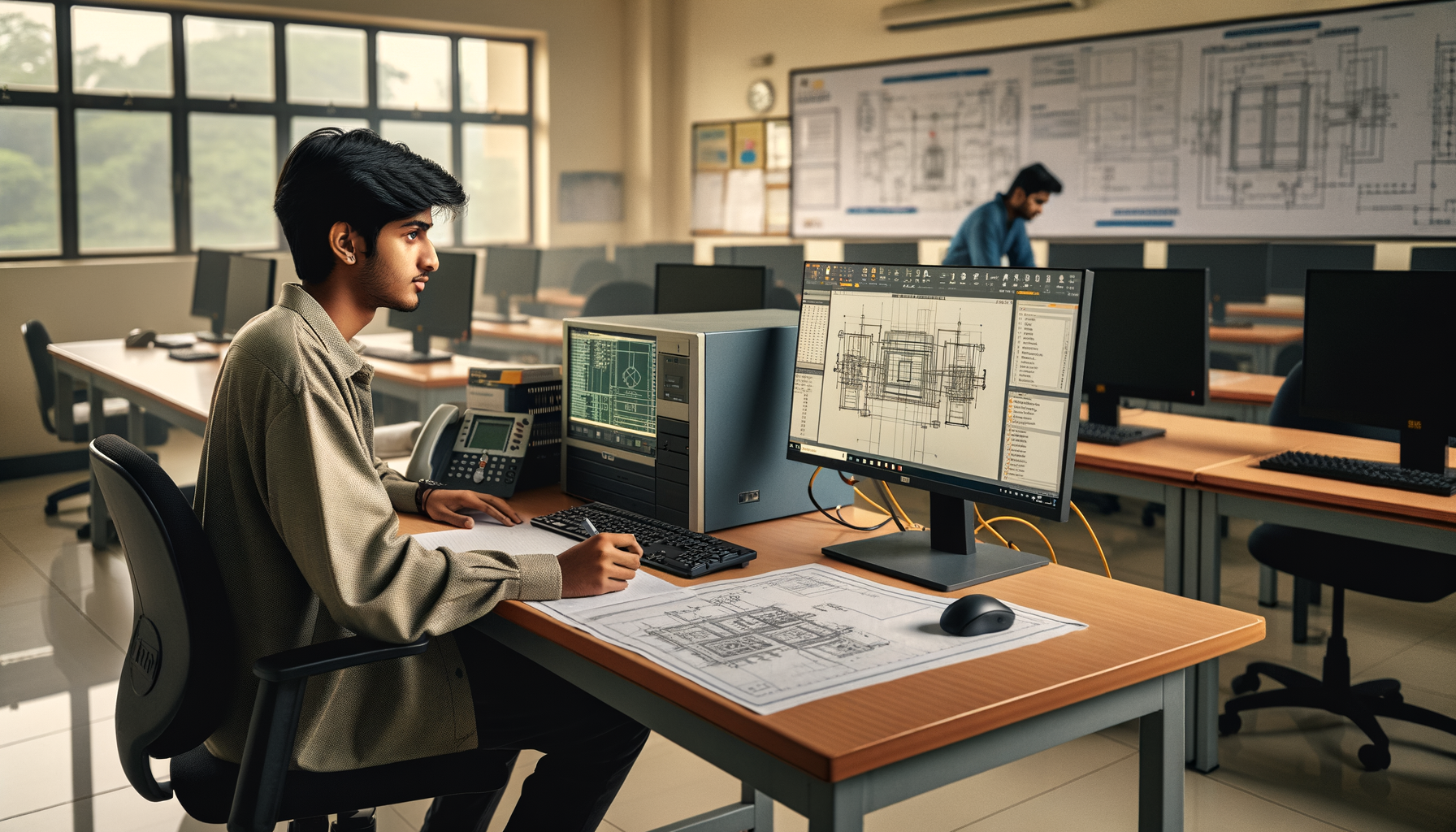
If you're already familiar with the basics of engineering software and you're asking what comes next, you're asking the right question. Advanced engineering software skills in Maharashtra are becoming the real separator in 2026. Companies don't just want students who can open a tool and make a basic file. They want people who can work faster, cleaner, and with fewer mistakes. Here's the thing: whether you're from Civil, Mechanical, IT, or Electrical, the jump from beginner to employable often happens when you start using professional workflows instead of classroom shortcuts.

The video highlights a Republic Day special opportunity from ABC Trainings for children of those serving the nation, including families from the Indian Army, Navy, Air Force, and other service backgrounds. The offer focuses on Civil Engineering, Mechanical Engineering, IT, and Electrical Engineering training. But what most people don't realize is this: getting admission into a course is only step one. The real value comes from learning advanced methods that match how teams at companies like Tata Technologies, Bajaj Auto, L&T, Siemens, Bosch, Infosys, KPIT Technologies, and TCS actually work.
What advanced engineering software skills do companies expect in Maharashtra in 2026?
At fresher level, most employers in Pune, Chhatrapati Sambhajinagar, Sangli, Kolhapur, and Nashik expect more than tool familiarity. They expect software discipline. That means naming standards, revision control, templates, layer management, data handling, documentation quality, and speed.
For Civil students, advanced skill means you can create accurate drawings, manage dependencies, and avoid common drafting errors. For Mechanical students, it means parametric thinking, assemblies, tolerances, BOM awareness, and manufacturing-ready output. For Electrical students, it means panel logic, wiring standards, signal flow understanding, and practical interpretation. For IT students, it means working with project structure, debugging workflows, version control, deployment basics, and code readability.
Trust me, students often underestimate these “small” things. Recruiters don't.
How do you move from basic software learning to power-user workflow?
You stop working file by file and start thinking system by system. That's the shift.
In advanced training, you'll focus on templates, reusable blocks, libraries, macros, naming conventions, standards-based settings, and shortcuts that save hours every week. The good news is, these aren't impossible expert tricks. They're habits.
Let's say you're using AutoCAD 2025, SolidWorks 2024, CATIA V5, Revit 2025, MATLAB, TIA Portal, or Visual Studio Code. A beginner draws or codes until the work looks finished. A power user sets up the environment first. Units, grids, snaps, styles, libraries, file references, keyboard mappings, annotation styles, and output settings are configured before real work begins. That's how professionals maintain consistency across teams.
What are the advanced techniques Civil Engineering students should learn?
If you're in Civil, don't stop at 2D drafting. Go deeper into layered drawing standards, Xrefs, sheet setup, plotting discipline, quantity-linked workflows, and model coordination. If you're learning tools like AutoCAD Civil 3D, Revit 2025, or STAAD.Pro, the advanced edge comes from accuracy and coordination, not just modeling.
For example, when you're preparing a drawing set, use standard title blocks, annotation scales, object styles, and view templates. Learn how to detect clashes early, maintain revision notes properly, and organize sheets in a way that a site engineer can actually read. At firms working on infrastructure and building projects, poor documentation causes delays. Strong documentation gets noticed.
Students aiming for roles in Pune and nearby industrial zones can expect entry salaries around ₹2.8 lakh to ₹4.2 lakh per year, while those with better software command and project-ready portfolios may push toward ₹4.5 lakh. At companies supporting EPC, construction planning, or design consulting, your output quality matters a lot.
What are the advanced techniques Mechanical students should learn?
Mechanical students usually know sketch, extrude, and assembly basics. That's not enough anymore. You should learn design intent, parametric relationships, configurations, GD&T basics, exploded views, BOM control, interference checks, and manufacturing-friendly drawings.
If you're working in SolidWorks 2024, Creo, CATIA V5, or AutoCAD Mechanical, start mastering templates, custom properties, design tables, mates strategy, and drawing automation. What most people don't realize is that a badly built model becomes a headache the moment someone asks for a design change. A well-built parametric model saves the team.
This matters in places where automotive and manufacturing hiring happens, especially around Pune, Chakan, Talegaon, Satara, and Sangli. Companies connected to Bajaj Auto, Mahindra Engineering, Bosch, Kirloskar, Thermax, and Tata Technologies value engineers who can prepare usable production data, not just pretty models. Fresher packages often start from ₹3 lakh to ₹4.8 lakh, and stronger candidates with practical software depth can move faster.
What advanced techniques Electrical students should learn?
For Electrical students, basic symbols and wiring diagrams are only the starting point. Go deeper into panel layout logic, cable scheduling, I/O mapping, load calculations, fault thinking, and documentation structure. If you're learning AutoCAD Electrical, EPLAN, ETAP, or PLC-related software, focus on standards and readability.
Here's the thing: in industry, someone else has to read your work under pressure. If your drawings are cluttered, tags are inconsistent, or cross-references are missing, your software skill isn't really job-ready. Learn component tagging, report generation, terminal planning, and revision workflows. These are the efficiency tricks professionals use daily.
In Maharashtra, especially in Pune, Sangli, Kolhapur, and industrial belts around MIDC zones, electrical software skills can open roles from design support to maintenance planning. Starting salaries commonly range from ₹2.6 lakh to ₹4.5 lakh depending on software, project exposure, and communication.
What advanced techniques IT students should learn after basics?
If you're an IT student, don't stay stuck in basic syntax, HTML pages, or simple CRUD demos. Advanced learning starts when you handle folder architecture, Git workflows, debugging tools, API testing, database indexing basics, deployment habits, and code reviews.
If you're using VS Code, GitHub, Postman, MySQL, MongoDB, Node.js, React, Python, Java, or Linux tools, then start optimizing the way you work. Use terminal shortcuts. Configure linters. Learn branching properly. Write reusable components. Debug with intention. Understand logs. Build projects that can be explained clearly in interviews.
Recruiters at Infosys, TCS, KPIT Technologies, and similar firms don't expect every fresher to be senior-level. But they do notice whether you understand real workflow. In Maharashtra, fresher IT salaries can range from ₹3 lakh to ₹6 lakh depending on role, stack, and project quality. Advanced execution can make a visible difference.
Which software settings and habits save the most time for advanced learners?
This is where serious students gain an edge. First, create standard templates for every recurring task. Second, build your own shortcut list and use it daily. Third, organize folders in a way another engineer can understand in 30 seconds. Fourth, don't ignore naming conventions. Fifth, save versions smartly instead of creating random final-final-last files.
Also learn output discipline. Export settings, print settings, PDF quality, layer visibility, line weights, and documentation structure matter more than students think. Trust me, one clean submission often beats three flashy but messy ones.
Another pro habit: review your own work like a checker, not a creator. Zoom out. Print preview. Cross-check dimensions. Validate references. Run clash, interference, or logic checks where possible. The difference between average and advanced often shows up in review quality.
How should defence families and serious students choose the right training path?
The video speaks directly to families serving the nation, and that's a meaningful opportunity. If your parent is in the Indian Army, Navy, Air Force, or another national service role, and you're planning your career in Maharashtra, choose training that goes beyond software buttons. Look for industry-style assignments, trainer feedback, and workflows based on real employer expectations.
ABC Trainings has promoted free registration under this special offer for eligible students in Civil Engineering, Mechanical Engineering, IT, and Electrical Engineering. If you're in Sangli, Pune, or Chhatrapati Sambhajinagar and want to understand which advanced path suits your branch, you can call 8698270088 or WhatsApp 7774002496. One honest discussion can save you months of confusion.
Is advanced software training worth it in 2026?
Yes, if the training changes how you work. No, if it's just more theory with a new certificate.
The good news is that advanced skills are learnable. You don't need to be a topper. You need repetition, correction, and the right workflow mindset. What most people don't realize is that employers often choose the student who is dependable over the one who is only flashy. If your files are structured, your logic is clear, and your output is professional, you'll stand out.
That's why advanced engineering software skills in Maharashtra matter so much in 2026. They help you move from “I know the software” to “I can handle real work.” And that gap is exactly where jobs are won.
Which course is best for children of defence personnel in Maharashtra?
It depends on your branch and career goal. Civil, Mechanical, IT, and Electrical are all good options if the course includes practical software training and project work. For students in Sangli, Pune, or Chhatrapati Sambhajinagar, the better choice is the one aligned with local hiring demand and your academic background. If you're eligible under a special offer, ask for the exact software covered before registering.
Can advanced software training improve salary for freshers in Maharashtra?
Yes, it often helps, especially when your portfolio and practical output are stronger than average. A fresher with only basic knowledge may start around ₹2.5 lakh to ₹3 lakh, while someone with better software execution, documentation quality, and project confidence may reach ₹4 lakh to ₹6 lakh depending on the field. Salary also depends on city, company, and interview performance. Pune usually offers higher ranges than smaller cities, but competition is also tougher.
Is free registration enough, or should students check course depth first?
You should always check course depth first. Free registration is useful, but the real value comes from what you'll actually learn, how much practice you'll get, and whether trainers teach industry workflows. Ask about software versions, assignments, faculty experience, and placement guidance. A low-cost course with weak depth can waste more time than it saves money.
How can I choose between Civil, Mechanical, IT, and Electrical software training?
Start with your degree or diploma branch, then look at your interest in design, coding, systems, or analysis. Civil suits students interested in drafting, planning, structures, and project documentation. Mechanical fits product design and manufacturing. Electrical works well for panel, control, and system documentation roles. IT is better if you enjoy coding, debugging, and software development workflows. If you're unsure, ABC Trainings can guide you based on your background and job target.
Visit Our Centers
Chhatrapati Sambhajinagar
Corporate Office (HQ)
2nd Floor, Kandi Towers, Jalna Road, Amarpreet Chowk, Chhatrapati Sambhajinagar, Maharashtra 431001
Osmanpura Branch
Plot No 14, Shanya Sect, Near Sant Eknath Rang Mandir, Osmanpura, Chhatrapati Sambhajinagar, Maharashtra 431005
CIDCO Branch
Plot No 4, N-3, Cidco, Opp. High Court, Chhatrapati Sambhajinagar, Maharashtra 431003
Pune
Wagholi Branch
1st Floor, ABC Trainings, Laxmi Datta Arcade, Pune - Ahilyanagar Hwy, Wagholi, Pune, Maharashtra 412207
Hadapsar Branch
Bloom Hotel, ABC Trainings 1st Floor, S.no 156/3 Shree Tower Pune - Solapur Rd, Hadapsar, Pune, Maharashtra 411028
Sangli
Sangli Branch
2nd Floor, Vasant Market, Opp. City High School, Sangli, Maharashtra 416416
Start Your Career Journey Today
Join 10,000+ students who transformed their careers with ABC Trainings.
💬 WhatsApp: 7774002496📞 Call: 8698270088