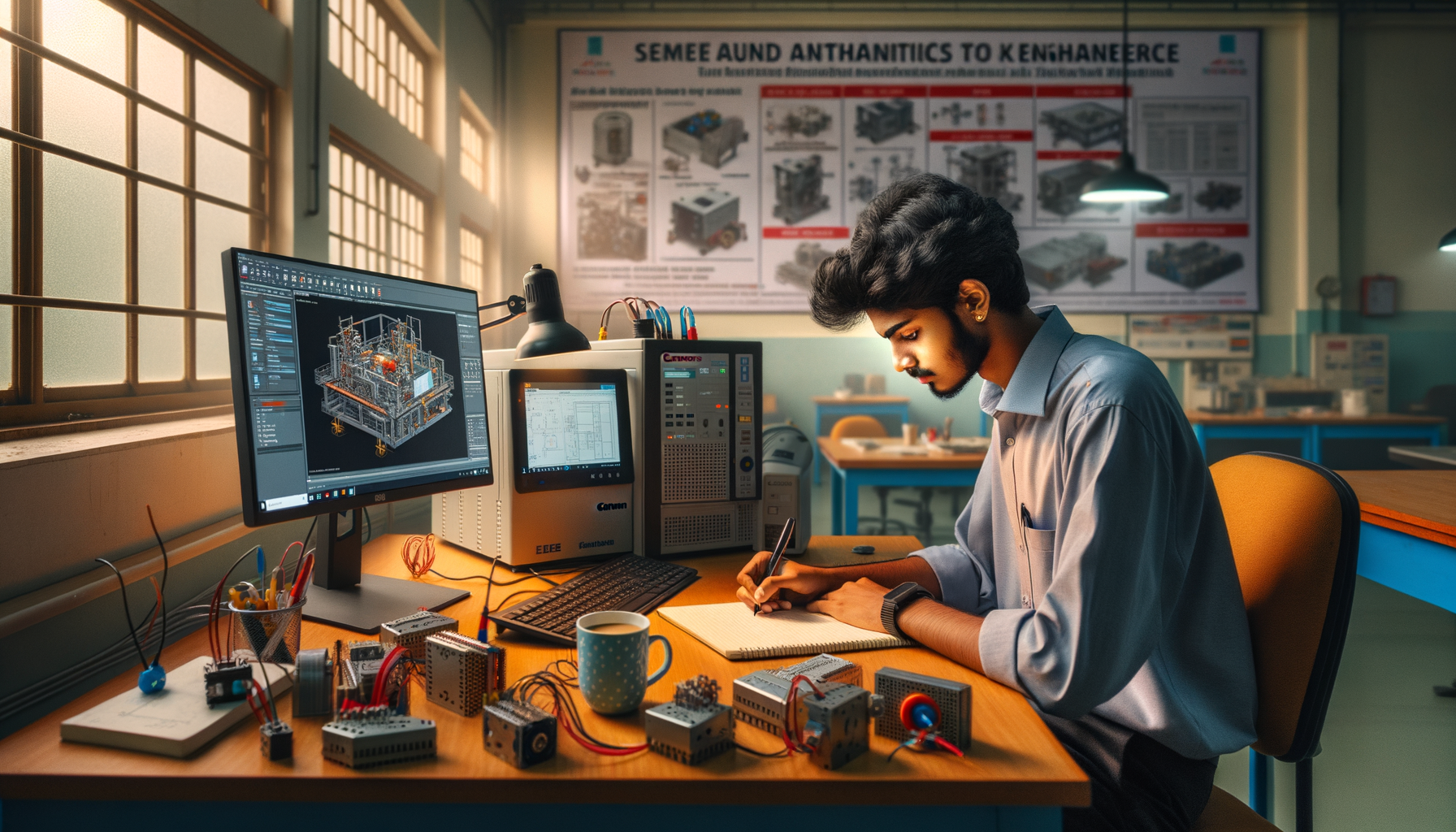
If you're a diploma or mechanical engineering student and you're already clear on basic CAD, manufacturing, and core subjects, the next question is obvious: where do AI, automation, and robotics actually fit into your career in India? That's exactly where this discussion matters. The primary keyword here is AI and automation careers for mechanical students in India, and here's the thing: the market isn't killing mechanical jobs, it's changing what employers expect from you. If you want roles in Pune, Chhatrapati Sambhajinagar, Nashik, or even plant locations around Chakan, Sanand, Hosur, and Aurangabad industrial belts, you'll need deeper technical positioning, not just a degree.

The video topic points to a ground-reality conversation with Prof. Harshal P. Kale from Shreeyash College of Engineering & Technology, and that matters because students don't need hype right now. They need clarity. Trust me, companies like Bajaj Auto, Tata Technologies, Mahindra Engineering, Bosch, Siemens, Thermax, Kirloskar, Infosys, TCS, and KPIT Technologies are not hiring only on marks. They look for engineers who understand systems, data, machine behavior, automation logic, and how software connects to production. The good news is, if you already know the basics, you can build a serious edge in 6 to 12 months with the right advanced skill stack.
Is AI really reducing mechanical jobs in India in 2026?
Not exactly. What most people don't realize is that AI usually removes repetitive decision-making, poor manual reporting, and low-value inspection work first. It doesn't remove the need for engineers who understand machines, tolerances, maintenance patterns, process flow, and production constraints. In fact, plants are hiring people who can work between mechanical systems and digital tools.
Let's make this practical. A traditional production role may now expect you to read machine data dashboards, interpret sensor-based alerts, support predictive maintenance, and coordinate with automation or controls teams. A quality engineer may be expected to use vision-system outputs, SPC software, and root-cause analysis with data logs. A design engineer may work with simulation, optimization, digital twins, or AI-assisted design suggestions in tools connected to Siemens NX, CATIA, SolidWorks 2025, or Creo.
So no, mechanical isn't dead. Basic-only mechanical is the risky zone.
What advanced skills should diploma and mechanical students add now?
If you want to go beyond entry-level, build depth in four layers instead of randomly collecting certificates.
1) Automation fundamentals with plant relevance
Learn PLC logic, HMI structure, SCADA basics, industrial communication, sensors, actuators, VFDs, and troubleshooting flow. Don't stop at toy examples. Work on conveyor logic, motor interlocks, alarm handling, and fault diagnostics. Siemens TIA Portal, Allen-Bradley concepts, and basic ladder logic interpretation are highly useful.
2) Data thinking for machines
You don't need to become a full data scientist. But you should know how machine data is captured, cleaned, trended, and used for decisions. Excel is not enough at advanced level. Add SQL basics, Power BI dashboards, and Python for simple industrial analysis. Even basic anomaly detection understanding can help in maintenance and quality teams.
3) CAD-CAM-CAE plus digital workflow awareness
If you already know modeling, go deeper into assemblies, GD&T interpretation, BOM discipline, revision control, simulation setup quality, and manufacturing handoff. Engineers in Tata Technologies or Mahindra supplier ecosystems are valued when they understand the full design-to-production chain, not just part modeling.
4) Robotics and mechatronics exposure
You should know robot application areas, end effectors, pick-and-place logic, safety interlocks, machine vision basics, and integration flow. Even if you don't become a robotics programmer, this makes you stronger for automation support and production engineering roles.
Which tools matter most for advanced mechanical careers?
Here's a realistic stack for 2026. You won't need every tool on day one, but you should understand where each one fits.
- CAD/Design: SolidWorks 2025, CATIA V5/V6, Creo, Siemens NX
- Automation: Siemens TIA Portal, SCADA platforms, HMI configuration basics
- Analysis: ANSYS basics, simulation interpretation, tolerance stack-up tools
- Data/Reporting: Excel advanced, SQL basics, Power BI, Python fundamentals
- Manufacturing: CAM workflow awareness, CNC process understanding, MES exposure
- Industry 4.0 awareness: IoT dashboards, sensor data concepts, predictive maintenance logic
The smartest students build one strong primary track and one supporting track. For example: CAD + automation, or production + data analytics, or maintenance + IoT monitoring.
How do professionals actually combine mechanical with AI and automation?
This is where advanced thinking starts. AI is not a separate magical subject sitting outside engineering. In industry, it usually works inside an existing workflow.
Example one: predictive maintenance. A mechanical engineer understands bearing failure, vibration behavior, lubrication issues, and thermal problems. AI models or rule-based systems help detect patterns early. Without machine knowledge, the data is useless.
Example two: vision-based quality inspection. The software may flag defects, but someone must define acceptable tolerances, process variation, lighting issues, fixture consistency, and false-positive conditions.
Example three: production optimization. AI may suggest cycle improvements, but process engineers still validate tool wear, line balancing, safety limits, and throughput constraints.
That's why hybrid engineers are valuable. They speak both machine and software.
What salary can mechanical students expect after adding advanced automation skills?
Let's keep this honest and India-specific. Salaries depend on city, college tier, internship quality, and actual skills.
- Diploma + basic shop-floor role: ₹1.8 lakh to ₹3 lakh per year
- Diploma + PLC/automation support skills: ₹2.8 lakh to ₹4.2 lakh per year
- BE Mechanical + CAD/CAE/design role: ₹3 lakh to ₹5.5 lakh per year
- BE + automation/data/industry 4.0 edge: ₹4.5 lakh to ₹7.5 lakh per year
- Strong niche profile in Pune or Bengaluru: ₹6 lakh to ₹9 lakh per year in select roles
In Maharashtra, Pune usually offers the widest range because of automotive, IT, and engineering services. Chhatrapati Sambhajinagar has manufacturing relevance and good starting opportunities, while Nashik and Kolhapur also have industrial demand. The jump in salary usually comes when you can solve problems independently, not when you just list software names on your resume.
What power-user habits make a mechanical student job-ready faster?
Trust me, these habits matter more than students think.
Build mini industrial case studies
Don't just say you learned automation. Show a motor control sequence, a tank level control logic, a downtime dashboard, or a predictive maintenance mini-project.
Document your workflow clearly
Create project sheets with objective, inputs, logic, output, screenshots, and result. Interviewers love candidates who explain work like engineers, not like course attendees.
Learn troubleshooting language
Use terms like fault isolation, root cause, interlock condition, sensor feedback, downtime reduction, tolerance issue, and process variation correctly.
Practice version discipline
In design and automation, naming, revisions, backups, and change logs matter. What most people don't realize is that messy file handling makes even good students look unprofessional.
Stay domain-specific
If you're targeting automotive, study fixtures, line automation, BIW basics, and process planning. If you're targeting plant maintenance, focus on sensors, motors, pumps, reliability, and failure analysis.
How should diploma students plan the next 12 months?
Keep it simple and serious.
- Months 1-3: Strengthen mechanical fundamentals, CAD quality, Excel, and industrial terminology
- Months 4-6: Add PLC, HMI, sensors, and control logic basics
- Months 7-9: Build one project linking mechanical process with automation or data
- Months 10-12: Prepare resume, portfolio, mock interviews, and role-specific applications
If you want guided training with practical direction, ABC Trainings can help you choose a track that fits your current level instead of pushing random software. For course guidance in Maharashtra, call 8698270088 or WhatsApp 7774002496. One conversation can save you months of confusion.
What is the career reality for mechanical students in an AI-driven market?
Here's the thing: companies still need mechanical engineers. But they want engineers who can adapt, read systems, and work with automation. If you stay at the basic level, competition gets harder. If you combine core mechanical understanding with automation, data awareness, and project thinking, your profile becomes much stronger.
The good news is you don't have to become a coder first. Start from your domain. Understand machines deeply. Then add digital capability in layers. That's the path that works for real students from Pune, Chhatrapati Sambhajinagar, Sangli, and across Maharashtra. ABC Trainings sees this shift clearly because employers increasingly ask for candidates who can do more than textbook engineering.
Is AI a good career option for diploma mechanical students in Maharashtra?
Yes, but not as a standalone buzzword. For diploma mechanical students, the better path is combining mechanical basics with automation, PLC, sensors, simple data analysis, and machine-related digital tools. In cities like Pune and Chhatrapati Sambhajinagar, this combination improves both interview chances and starting salary.
Which is better after mechanical: CAD, automation, or robotics?
It depends on your interest and job target. CAD is strong for design and manufacturing support roles, automation is better for plant and controls-related openings, and robotics is useful when you want integration or advanced production exposure. If you're confused, start with one core track and add one supporting skill instead of trying everything together.
Can mechanical engineers get jobs in IT companies like Infosys, TCS, or KPIT?
Yes, especially in technical support, engineering software, product lifecycle, simulation support, manufacturing tech, and digital engineering roles. KPIT Technologies and similar firms often value domain knowledge when it connects with software, mobility, or engineering workflows. You'll need stronger software understanding than a traditional core-only profile.
What is the best course after diploma mechanical for jobs in Pune?
For Pune, practical tracks like CAD-CAM, PLC-SCADA, industrial automation, design engineering, and mechanical plus data reporting are useful. The best course depends on whether you want plant, design, maintenance, or digital engineering roles. A counseling discussion before joining is worth it, and you can contact ABC Trainings at 8698270088 or WhatsApp 7774002496.
Visit Our Centers
Chhatrapati Sambhajinagar
Corporate Office (HQ)
2nd Floor, Kandi Towers, Jalna Road, Amarpreet Chowk, Chhatrapati Sambhajinagar, Maharashtra 431001
Osmanpura Branch
Plot No 14, Shanya Sect, Near Sant Eknath Rang Mandir, Osmanpura, Chhatrapati Sambhajinagar, Maharashtra 431005
CIDCO Branch
Plot No 4, N-3, Cidco, Opp. High Court, Chhatrapati Sambhajinagar, Maharashtra 431003
Pune
Wagholi Branch
1st Floor, ABC Trainings, Laxmi Datta Arcade, Pune - Ahilyanagar Hwy, Wagholi, Pune, Maharashtra 412207
Hadapsar Branch
Bloom Hotel, ABC Trainings 1st Floor, S.no 156/3 Shree Tower Pune - Solapur Rd, Hadapsar, Pune, Maharashtra 411028
Sangli
Sangli Branch
2nd Floor, Vasant Market, Opp. City High School, Sangli, Maharashtra 416416
Start Your Career Journey Today
Join 10,000+ students who transformed their careers with ABC Trainings.
💬 WhatsApp: 7774002496📞 Call: 8698270088