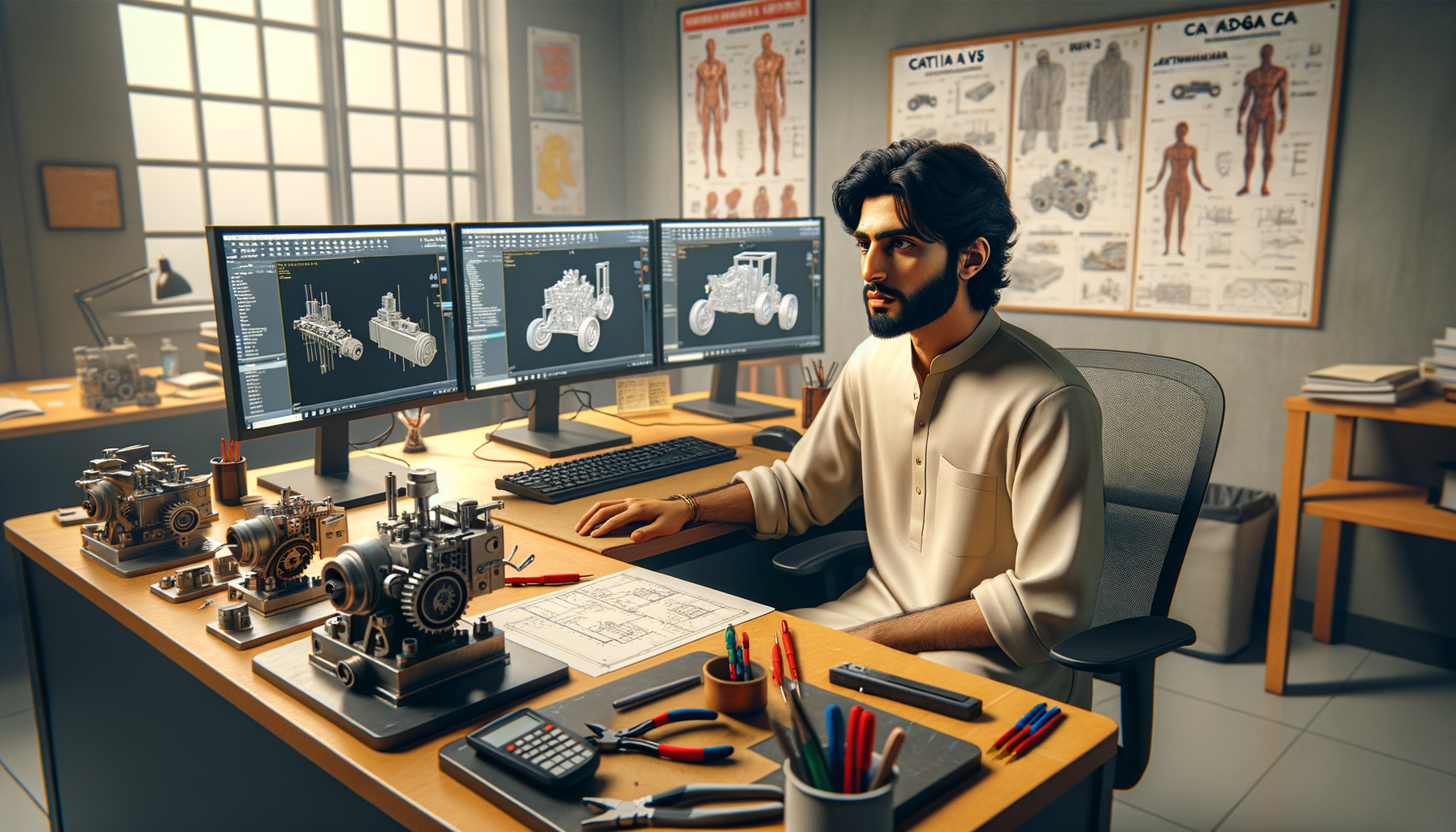
Mechanical field scope in India 2026 is much bigger than most students think. If you still believe mechanical engineering means only workshop jobs, machine maintenance, or production lines, you're already behind the market. Here's the thing: companies now want mechanical graduates who can work across automobile systems, electrical integration, electronics, CAD design, manufacturing, quality, and automation. If you know the basics and want to go deeper, this guide will show you where the real opportunities are, what advanced skills matter, and how students in Maharashtra can move from average job offers to better technical roles.

At ABC Trainings, we've seen one pattern again and again in Pune, Chhatrapati Sambhajinagar, and Sangli: students who combine core mechanical knowledge with software and cross-domain skills get shortlisted faster. Trust me, industry isn't hiring by degree title alone anymore.
What is the real scope of mechanical engineering in India 2026?
The real scope is hybrid. Mechanical engineers are now working in automobile product design, EV component development, HVAC systems, industrial automation, piping layouts, manufacturing engineering, testing, quality analysis, mechatronics support, and production planning. What most people don't realize is that many job descriptions don't even use the word "mechanical" prominently, but the role still needs a mechanical foundation.
In companies like Bajaj Auto, Mahindra Engineering, Tata Technologies, Bosch, Siemens, Thermax, Kirloskar, and L&T, mechanical graduates are hired for CAD modeling, GD&T-based detailing, fixture design, tolerance stack-up, system integration, maintenance planning, and supplier quality. If you add software skills like SolidWorks 2025, CATIA V5, Creo 10, AutoCAD 2026, and basic PLC or sensor understanding, your profile becomes much stronger.
How does mechanical engineering connect with automobile careers?
Automobile is still one of the strongest extensions of mechanical engineering. But the advanced side is not just engines and gearboxes. Today, automobile roles involve BIW design, plastic trims, sheet metal, chassis brackets, thermal systems, EV battery enclosures, wiring packaging coordination, and manufacturing feasibility.
If you want to go deeper, focus on these power skills:
- 3D parametric modeling with design intent, not just feature creation
- Assembly management for large vehicle sub-systems
- GD&T interpretation as per ASME standards
- Tolerance stack-up and fit analysis
- BOM structuring and revision control
- Sheet metal rules, bend allowance, flat pattern validation
- Surface modeling for automotive parts
For example, a fresher in Pune working in CAD support or junior design can start around ₹2.8 lakh to ₹4.5 lakh per year. With strong CATIA or Creo skills and production understanding, that can move to ₹5.5 lakh to ₹8 lakh in 2 to 4 years. Tata Technologies and KPIT Technologies often value engineers who understand both mechanical packaging and system-level coordination.
Can mechanical students move into electrical and electronics roles?
Yes, but not by guessing. The good news is that you don't need to become a full electrical engineer to work on electrical-connected mechanical systems. You need application-level understanding. Mechanical engineers are already involved in panel enclosure design, motor mounting systems, thermal management, cable routing coordination, actuator integration, sensor brackets, cooling systems, and machine assembly.
In automation-heavy industries, you should understand:
- Motors, drives, and actuators from a mechanical integration point of view
- Sensors used in industrial systems
- Pneumatics and electro-pneumatic layouts
- Basic PLC workflow awareness
- Control panel mechanical packaging
- Tolerance and vibration impact on sensors and assemblies
Here's where advanced learners stand out: they don't say, "I'm only mechanical." They know how the machine frame, moving mechanism, cable path, actuator stroke, sensor location, and maintenance access all connect. That's the exact thinking companies like Siemens, Bosch, and L&T appreciate.
Which advanced software skills increase mechanical job opportunities?
If you already know basic drawing and modeling, don't stop there. Industry-standard work is about speed, control, and error reduction. That's where advanced software workflows matter.
Advanced CAD skills that actually matter
- Top-down assembly design
- Master modeling techniques
- Configurations and family tables
- Design tables for repetitive parts
- Large assembly performance settings
- Drawing templates and standards setup
- Layer, block, and annotation discipline in AutoCAD 2026
- Weldment and sheet metal automation
- Revision cloud, ECO-friendly documentation workflows
- File naming and PDM-ready folder structures
What most people don't realize is that companies don't just test whether you can make a part. They check whether you can work like a professional team member. Can you reuse geometry? Can you avoid broken references? Can you create manufacturable drawings? Can you finish work faster without compromising standards?
If your answer is yes, you're already ahead of many freshers.
What are the best advanced career paths after basic mechanical engineering?
Once your fundamentals are clear, you can move into specialized tracks based on your interest and market demand.
1. Mechanical design engineer
Best for students who enjoy CAD, detailing, product development, and assemblies. Common in Pune, Nashik, Chakan, and Aurangabad industrial belts. Salary range: ₹3 lakh to ₹6 lakh for freshers with good software skills.
2. Automobile design and development
Best for students interested in BIW, interiors, chassis, EV packaging, and manufacturing support. Strong demand around Pune and supplier ecosystems. Salary range: ₹3.2 lakh to ₹7 lakh depending on tool skills and project exposure.
3. Production and manufacturing engineering
Best for students who like shop-floor planning, process sheets, tooling, cycle time improvement, and quality systems. Companies like Bajaj Auto, Kirloskar, and Mahindra Engineering value practical understanding. Salary range: ₹2.5 lakh to ₹5 lakh initially.
4. Automation and mechatronics support
Best for students who want a mix of mechanics, sensors, pneumatics, and machine systems. If you add PLC basics and machine design, your scope improves. Salary range: ₹3 lakh to ₹6.5 lakh.
5. Quality and validation
Best for detail-oriented students comfortable with tolerances, inspection, root cause analysis, and documentation. This path is underrated but stable. Salary range: ₹2.8 lakh to ₹5.5 lakh.
How should mechanical students in Maharashtra build an advanced skill stack?
Let's make this practical. If you're in Chhatrapati Sambhajinagar, Pune, Kolhapur, Sangli, Nashik, or Satara, build your profile in layers.
Layer 1: Core mechanical clarity
Engineering drawing, manufacturing processes, machine design basics, materials, fits and tolerances.
Layer 2: One major CAD platform
Choose SolidWorks, CATIA, Creo, or AutoCAD Mechanical and become genuinely strong in it.
Layer 3: Industry workflow skills
GD&T, BOM, assembly strategy, drawing standards, revision handling, and basic project documentation.
Layer 4: Cross-domain awareness
Automobile systems, electrical integration, pneumatics, sensors, and manufacturing coordination.
Layer 5: Portfolio and interview readiness
Create 4 to 6 proper projects. Not random practice files. Use named assemblies, exploded views, manufacturing drawings, section views, and realistic constraints.
Trust me, a student with fewer but industry-style projects performs better in interviews than someone with 50 disconnected models.
What mistakes stop mechanical students from growing faster?
There are some common mistakes we see every year.
- Learning software commands without understanding design logic
- Ignoring drawing standards and focusing only on 3D models
- Not learning GD&T and manufacturing relevance
- Saying no to electrical or automation exposure
- Keeping a generic resume with no project depth
- Not practicing timed modeling and detailing tasks
Here's the thing: the market rewards applied skill, not course completion alone. If you can explain why you selected a feature sequence, why a tolerance matters, or how an assembly affects serviceability, you sound like a working engineer, not just a student.
Where can you learn these advanced mechanical skills in Maharashtra?
If you want structured, job-focused training, ABC Trainings helps students build deeper skills in CAD, design workflows, and interview preparation across Maharashtra. The focus should always be on practical output: professional drawings, assemblies, standards, and domain understanding linked to actual hiring patterns in Pune and nearby industrial zones.
If you want guidance on which path suits your profile, call ABC Trainings on 8698270088 or WhatsApp 7774002496. Whether you're a diploma student, BE student, or recent graduate, the right advanced path depends on whether you want design, automobile, production, or automation roles.
Is mechanical engineering still a good career option in India?
Yes, if you treat it as a modern, connected field. Mechanical engineering is no longer isolated from electronics, electrical systems, software tools, and industrial automation. The students who grow fastest are the ones who build depth after basics. The good news is that Maharashtra still has strong demand through manufacturing clusters, automotive companies, EPC firms, and design service companies.
So if you're serious, don't stay at the beginner level. Go deeper into CAD workflows, cross-functional system understanding, and project-based learning. That's where better jobs start.
What is the best course for mechanical students after diploma in Maharashtra?
If you're a diploma student, the best next step is usually a practical CAD and design course with strong drawing, assembly, and GD&T training. In cities like Pune and Chhatrapati Sambhajinagar, employers often shortlist students who can create proper manufacturing drawings, not just 3D parts. If you're interested in automobile roles, CATIA or Creo can be especially useful. Add basic automation awareness if you want broader scope.
Can a mechanical engineer get a job in the electrical or electronics industry?
Yes, especially in roles involving machine systems, actuator integration, thermal systems, enclosures, cable routing coordination, and maintenance engineering. You won't replace an electrical design engineer, but you can work in cross-functional industrial roles. Companies value engineers who understand how mechanical assemblies interact with motors, sensors, and controls. This is common in manufacturing and automation companies across Maharashtra.
What salary can a mechanical design engineer get in Pune in 2026?
A fresher with strong CAD skills can expect around ₹3 lakh to ₹4.5 lakh per year in many Pune companies. If you have solid project work, good drawing knowledge, and software like CATIA, Creo, or SolidWorks, offers can go higher. After 2 to 4 years, many professionals move into the ₹5.5 lakh to ₹8 lakh range. Your salary depends heavily on practical skill, domain fit, and communication during interviews.
Which software should mechanical students learn first for better jobs?
If you want general mechanical design opportunities, start with SolidWorks or AutoCAD Mechanical. If your target is automobile design, CATIA V5 and Creo are often more relevant. The right choice depends on the roles you want in Pune, Chakan, Nashik, or Sambhajinagar. Don't try to learn everything at once; master one tool deeply, then expand based on industry demand.
Visit Our Centers
Chhatrapati Sambhajinagar
Corporate Office (HQ)
2nd Floor, Kandi Towers, Jalna Road, Amarpreet Chowk, Chhatrapati Sambhajinagar, Maharashtra 431001
Osmanpura Branch
Plot No 14, Shanya Sect, Near Sant Eknath Rang Mandir, Osmanpura, Chhatrapati Sambhajinagar, Maharashtra 431005
CIDCO Branch
Plot No 4, N-3, Cidco, Opp. High Court, Chhatrapati Sambhajinagar, Maharashtra 431003
Pune
Wagholi Branch
1st Floor, ABC Trainings, Laxmi Datta Arcade, Pune - Ahilyanagar Hwy, Wagholi, Pune, Maharashtra 412207
Hadapsar Branch
Bloom Hotel, ABC Trainings 1st Floor, S.no 156/3 Shree Tower Pune - Solapur Rd, Hadapsar, Pune, Maharashtra 411028
Sangli
Sangli Branch
2nd Floor, Vasant Market, Opp. City High School, Sangli, Maharashtra 416416
Start Your Career Journey Today
Join 10,000+ students who transformed their careers with ABC Trainings.
💬 WhatsApp: 7774002496📞 Call: 8698270088