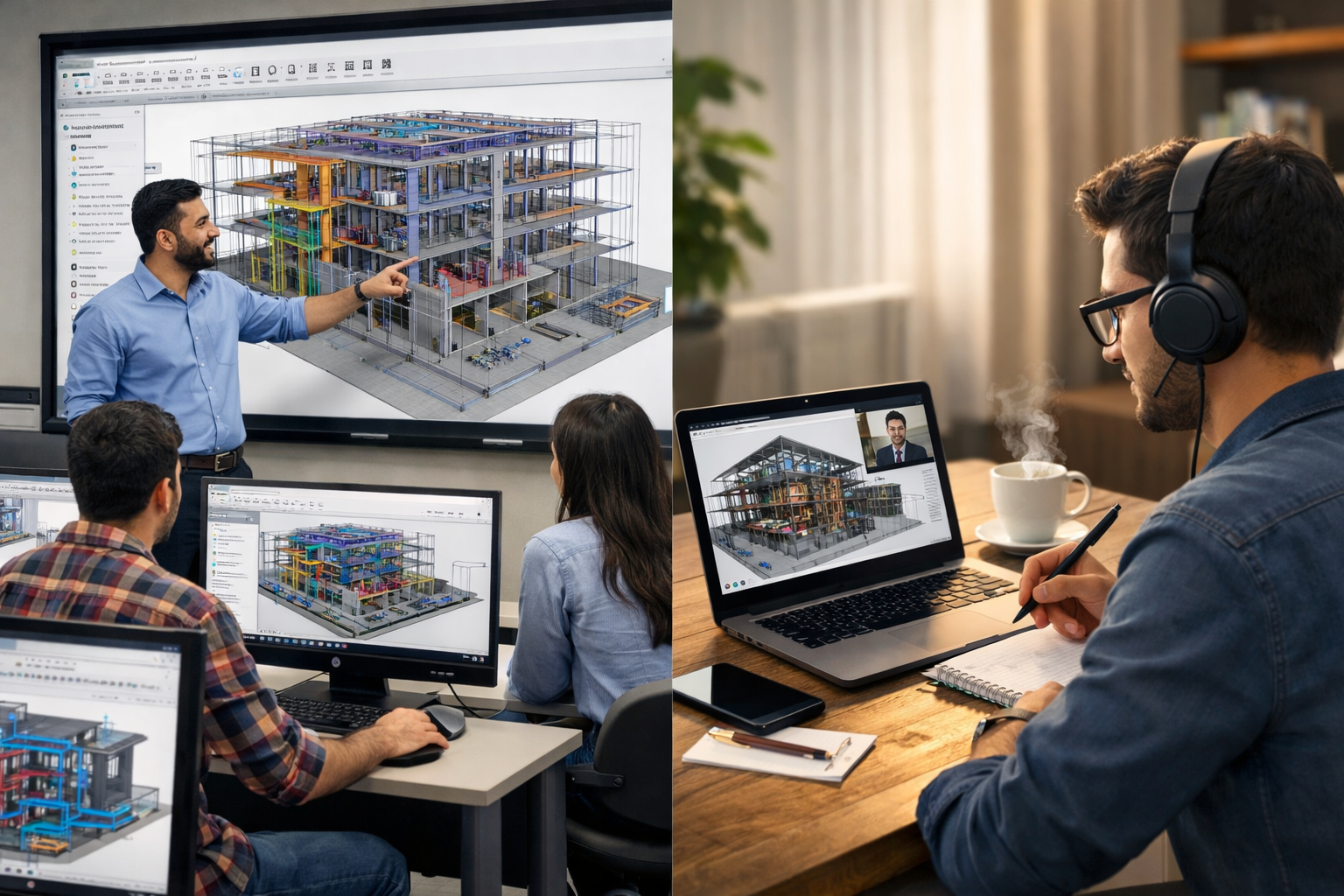
The demand for Building Information Modeling (BIM) professionals in India has grown rapidly due to the expansion of infrastructure, smart cities, and digital construction practices. Cities like Pune, known for their engineering ecosystem and construction firms, have become major hubs for BIM training and placement opportunities.
However, students often face a critical question before enrolling in a course:
Should you choose Online BIM Training or Offline BIM Training in Pune for better placement outcomes?
Both formats have advantages, but the right choice depends on learning style, industry exposure, and placement support. In this detailed guide, we will compare both formats and help you understand which training mode actually improves job placement chances in the BIM industry.
Understanding BIM Training and Why It Matters
Building Information Modeling (BIM) is not just a software skill. It is a digital workflow used in architecture, engineering, and construction (AEC) for designing, coordinating, and managing building projects.
BIM professionals work with:
Architectural modeling
Structural design coordination
MEP (Mechanical, Electrical, Plumbing) modeling
Construction simulation
Project data management
Because of these responsibilities, companies prefer candidates who have practical project exposure, software proficiency, and industry understanding.
That is why the quality and format of BIM training plays a major role in placement success.
Online BIM Training in Pune
What is Online BIM Training?
Online BIM training allows students to learn BIM tools and workflows through virtual classes, recorded sessions, and remote project practice.
This format has become popular after the rise of remote learning and digital classrooms.
Advantages of Online BIM Training
1. Flexible Learning Schedule
Online classes are ideal for:
Working professionals
Civil engineers with jobs
Students completing their degree
Learners can attend classes from anywhere and manage their schedule easily.
2. Access to Recorded Sessions
Most online courses provide recorded lectures, allowing students to revise difficult topics like:
Clash detection
BIM coordination
Advanced modeling workflows
This improves understanding over time.
3. Lower Cost
Online courses usually cost less because there are no infrastructure or classroom expenses.
This makes BIM training more accessible for many students.
4. Learning from Industry Experts
Online programs often invite guest trainers and industry experts from different cities or countries.
Students get exposure to global BIM workflows.
Limitations of Online BIM Training
Despite its benefits, online learning has some challenges.
Limited Hands-On Guidance
When students face problems in modeling or coordination tasks, instant trainer support may not always be available.
Reduced Peer Learning
Interaction with classmates is limited compared to classroom environments.
Discipline Required
Online learning requires self-motivation and consistency. Students who struggle with time management may fall behind.
Offline BIM Training in Pune
What is Classroom BIM Training?
Offline BIM training involves in-person classroom sessions at a training institute, where students learn directly with trainers and classmates.
This format has traditionally been the most common method for technical training.
Advantages of Offline BIM Training
1. Strong Practical Learning Environment
Classroom training provides:
Live software demonstrations
Immediate doubt resolution
Hands-on project guidance
Students gain better understanding of modeling workflows.
2. Real Project-Based Training
Good training centers provide real construction project simulations, including:
Architectural modeling
Structural coordination
MEP clash detection
This practical exposure is highly valued by employers.
3. Better Networking Opportunities
Offline learning allows students to:
Connect with classmates from engineering backgrounds
Interact with trainers from the construction industry
Build professional networks
Networking often helps in job referrals and placement opportunities.
4. Stronger Placement Support
Many classroom institutes conduct:
Interview preparation sessions
Portfolio development
Resume building workshops
Company interview drives
This increases placement success rates.
Online vs Offline BIM Training — Placement Comparison
| Factor | Online BIM Training | Offline BIM Training |
|---|---|---|
| Learning Flexibility | Very High | Moderate |
| Practical Exposure | Moderate | Very High |
| Trainer Interaction | Limited | Direct & Continuous |
| Peer Networking | Low | High |
| Real Project Practice | Limited | Extensive |
| Placement Support | Moderate | Strong |
Key Insight
Students who complete project-based offline BIM training generally perform better in job interviews because they can demonstrate practical workflow knowledge.
However, online BIM training works well for professionals upgrading skills.
What Recruiters Actually Look For in BIM Candidates
Construction and engineering companies hiring BIM professionals usually prioritize:
Hands-on project experience
Strong understanding of BIM coordination
Knowledge of AEC industry workflows
Ability to work in team-based project environments
Practical software proficiency
Offline training environments tend to simulate these conditions more effectively.
Who Should Choose Online BIM Training?
Online BIM training is ideal for:
Working professionals in civil engineering
Students from cities outside Pune
Individuals looking for flexible learning
Professionals upgrading from AutoCAD to BIM
Who Should Choose Offline BIM Training?
Classroom training is best for:
Fresh civil engineering graduates
Architecture students
Diploma engineers
Job seekers looking for strong placement support
These learners benefit the most from hands-on guidance and project training.
Why Pune is a Major Hub for BIM Careers
Pune has emerged as a strong market for BIM professionals because of:
Growing infrastructure projects
International design companies
Engineering consulting firms
Real estate development companies
This creates strong demand for:
BIM Modelers
BIM Coordinators
BIM Engineers
BIM Managers
With the right training and practical exposure, students can secure opportunities in India and international markets.
Choosing the Right BIM Training Institute in Pune
Before enrolling, students should evaluate:
Industry-Oriented Curriculum
The course should include:
Architectural BIM
Structural BIM
MEP BIM
Clash detection
Construction documentation
Real Project Training
Institutes should provide live or simulated projects similar to industry workflows.
Placement Assistance
Look for institutes that offer:
Resume building support
Interview preparation
Job referrals
Experienced Trainers
Training should be delivered by industry professionals with project experience.
Why Many Students Prefer ABC Trainings for BIM Training
Many engineering and architecture students choose ABC Trainings because it focuses on practical industry-oriented BIM education.
ABC Trainings is a Government Affiliated Training Company, MSME, ISO certified, known for providing professional technical training programs designed to prepare students for real construction industry workflows.
Key highlights include:
Industry-oriented BIM training programs
Practical project-based learning
Expert trainers from the AEC industry
Placement guidance for students
Final Verdict: Which Format Delivers Better Placement Outcomes?
If the goal is maximum placement support and practical BIM skills, Offline BIM Training in Pune generally delivers better results.
However:
Online BIM training works well for skill upgrades and flexibility.
Offline BIM training provides stronger practical exposure and networking.
For fresh graduates and job seekers, classroom training usually leads to better job readiness and placement opportunities.
Enroll for BIM Training in Pune
If you want to build a career in the BIM and construction technology industry, choosing the right training program is the first step.
ABC Trainings
📞 Calling Number: 7039169629
💬 WhatsApp: 8698270088
Get expert guidance, industry-focused training, and support to start your career in Building Information Modeling (BIM).