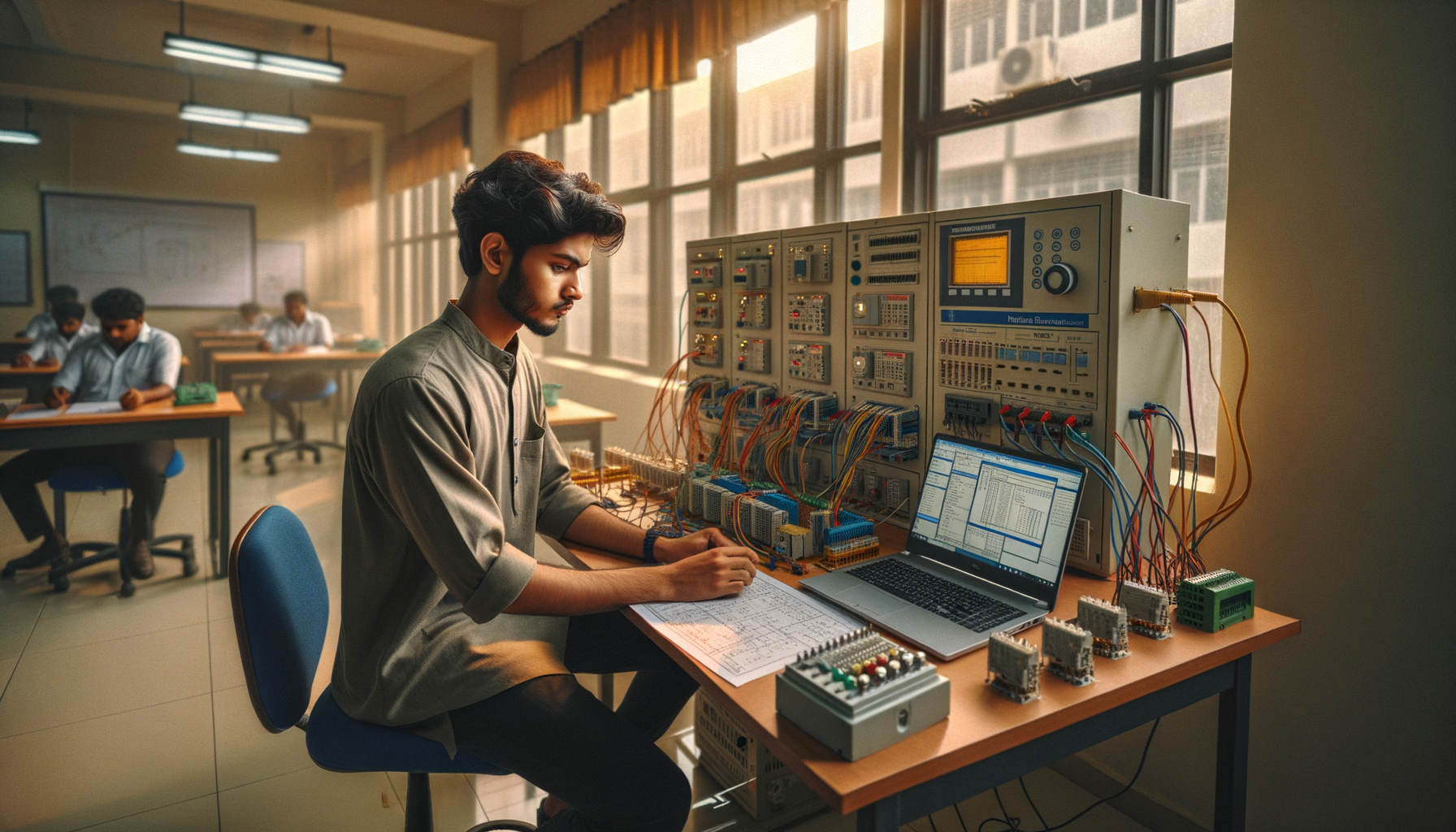
PLC SCADA Training in Latur | Industrial Automation Course Fees & Duration
If you're searching for PLC SCADA training in Latur, you're probably asking three practical questions: what will it cost, how long will it take, and will it actually help you get a job? I've trained beginners, diploma holders, electricians, and engineering graduates for years, and here's the thing: most students don't fail because PLC or SCADA is too difficult. They struggle because they start with the wrong expectations, skip fundamentals, and treat software like theory instead of industry work.
Trust me, industrial automation is one of those fields where a focused student can move faster than a highly qualified but careless one. The good news is, if you understand the common mistakes early, you'll save time, money, and a lot of frustration.
What is the typical PLC SCADA course duration in Latur?
For most beginners in Latur, a practical PLC SCADA course usually takes 2 to 4 months, depending on batch type and depth. A basic module covering PLC programming, SCADA basics, HMI screens, wiring concepts, and industrial communication can be completed in around 8 to 10 weeks. A more job-focused program with hands-on practice, mini projects, troubleshooting, and interview preparation often goes up to 3 to 4 months.
If you're a student attending college in Latur, Udgir, Ausa, or Nilanga, weekend batches are common. Working professionals usually prefer Sunday or evening batches. What most people don't realize is that duration alone means nothing. I've seen students sit in a 6-month class and still not write a proper ladder logic sequence. I've also seen focused learners become job-ready in 10 to 12 weeks because they practiced every day.
So don't ask only, "How many months?" Ask, "How many hours of actual PLC practice will I get?" That's the better question.
What are the PLC SCADA course fees in Latur?
In Latur, PLC SCADA course fees generally range from ₹18,000 to ₹45,000, depending on what is included. A basic classroom program with PLC fundamentals and SCADA introduction may be priced around ₹18,000 to ₹25,000. A more complete industrial automation course that includes Siemens PLC, HMI, SCADA, VFD, sensors, panel basics, communication protocols, and project work may fall in the ₹28,000 to ₹45,000 range.
If a course is extremely cheap, be careful. Many students get attracted to low fees and later realize there is no real hardware practice, no troubleshooting sessions, and no placement guidance. On the other hand, expensive doesn't always mean better either. Ask what software versions are being taught. For example, are you learning Siemens TIA Portal V16/V17, WinCC, basic Allen-Bradley concepts, and practical HMI design? Or are you just watching demos?
At a serious training center, you should expect clarity on fees, duration, hardware access, project work, and support after course completion. That's one reason many Maharashtra students compare institutes carefully before joining ABC Trainings or similar structured programs.
What mistakes do PLC SCADA beginners in Latur make?
I've seen the same mistakes again and again.
1. They start with software before understanding inputs and outputs
Students rush into ladder logic without understanding push buttons, sensors, relays, contactors, limit switches, and output loads. Then one small wiring question comes in an interview, and they're stuck. PLC is not just software. It's control logic connected to physical devices.
2. They memorize programs instead of understanding sequence
This is the biggest mistake. A student copies motor start-stop, star-delta, or tank level control logic from notes and thinks they've learned PLC. But when I change one condition, the whole understanding collapses. Recruiters can spot this in two minutes.
3. They ignore fault finding
Industry doesn't pay you only for writing logic. Companies pay you for identifying why a machine stopped. Was it a sensor issue? Wrong addressing? Communication fault? Timer mistake? Output not energizing? Students who avoid troubleshooting stay weak.
4. They don't build a project portfolio
If you're from Latur and applying in Pune, Chhatrapati Sambhajinagar, or Nashik, your resume needs proof. A mini project like conveyor control, water level automation, bottle filling sequence, or traffic signal automation gives you something real to discuss.
5. They think certificates alone get jobs
Here's the thing: certificates help, but they don't replace skill. Companies and automation contractors care more about whether you can read logic, check wiring, understand HMIs, and solve a breakdown.
What separates students who get placed from those who don't?
Simple answer: discipline, repetition, and practical thinking.
The students who get placed usually do five things well. First, they practice ladder logic daily, even if only for 45 minutes. Second, they ask "why" behind every rung. Third, they learn to present projects clearly. Fourth, they improve basic interview communication. Fifth, they are willing to start with realistic fresher salaries and grow from there.
Students who struggle usually keep waiting for confidence before practicing. That never works. Confidence comes after repetition.
I've seen students from smaller cities like Latur, Beed, Osmanabad, and Nanded get selected for automation support and maintenance roles in Pune because they were sharp in fundamentals. Some started at ₹1.8 lakh to ₹2.4 lakh per year. With 2 to 3 years of practical exposure, many move into ₹3.5 lakh to ₹5.5 lakh roles. In stronger project-based or programming-heavy profiles, salaries can go even higher.
Companies connected directly or indirectly to manufacturing and engineering ecosystems such as Bajaj Auto, Tata Technologies, Mahindra Engineering, Bosch, Siemens, L&T, Thermax, Kirloskar and vendor networks around Pune and Chakan look for people who can work with systems, not just talk theory.
Which software and tools should a good automation course cover?
A good PLC SCADA course for 2026 should not stay stuck at outdated demos. At minimum, students should be exposed to:
Siemens TIA Portal V16 or V17
WinCC SCADA basics
HMI screen development
Ladder logic programming
Timers, counters, memory bits, interlocks
Analog and digital I/O concepts
VFD and motor control basics
Sensors and panel component understanding
Industrial communication basics
If your course includes zero hardware interaction, that's a red flag. Even simulation-based learning should connect to real industrial use cases.
How should beginners choose the right PLC SCADA institute in Latur?
Don't choose based on posters or promises. Ask direct questions.
How many systems are available in the lab? Will I get individual practice? Is there project work? Will you teach troubleshooting? Are interview questions covered? What is the total fee? Are there hidden charges for certificate or project?
Trust me, the institute's teaching style matters more than fancy marketing. A trainer who has handled 1000+ students knows exactly where beginners get stuck. That's where real learning happens.
If you're comparing options, look for a place that explains both course fees and duration transparently, gives practical exposure, and helps you build confidence for jobs in Maharashtra's industrial belt. ABC Trainings is often considered by students who want structured guidance, practical sessions, and a clearer roadmap into automation roles. For batch details, you can call 8698270088 or WhatsApp 7774002496.
What are my pro tips before joining PLC SCADA training?
Learn electrical basics first
You don't need to be an expert electrician, but you must know NO/NC contacts, relays, contactors, overloads, and basic control circuits.
Practice one logic in three ways
Take one problem like motor control and solve it using basic start-stop, interlock version, and fault-safe version. This builds real thinking.
Keep a troubleshooting notebook
Write every mistake you make: wrong addressing, timer preset issue, latch error, output mapping confusion. This becomes your personal shortcut guide.
Record your project explanation
Use your phone and explain your PLC project in simple language. If you can't explain it clearly, you probably don't understand it fully yet.
Don't chase salary in the first 3 months
Focus on getting the right first role. Once your foundation is solid, growth in automation is much faster than most students expect.
Is PLC SCADA a good career option for Latur students in 2026?
Yes, especially for diploma and engineering students who want practical industrial roles. Maharashtra's manufacturing network across Pune, Chhatrapati Sambhajinagar, Nashik, and Satara continues to need automation technicians, PLC programmers, commissioning support staff, and maintenance engineers. If you train properly and stay practical, this field can give you a stable start and long-term growth.
The biggest advantage for Latur students is this: competition is lower than overcrowded software fields, but the skill demand is real. The students who take practice seriously still stand out.
What is the fees for PLC SCADA training in Latur?
Most PLC SCADA courses in Latur fall between ₹18,000 and ₹45,000. Basic courses are cheaper, while programs with Siemens PLC, HMI, SCADA, VFD, hardware practice, and projects cost more. Always ask what is included before paying. Low fees can sometimes mean limited practical exposure.
How long does a PLC SCADA course take in Latur?
For most students, the duration is between 2 and 4 months. Fast-track batches may finish in 8 to 10 weeks, while weekend or job-oriented batches can take longer. What matters more than calendar duration is actual hands-on practice. Daily revision makes a huge difference.
Can a fresher get a job after PLC SCADA training in Maharashtra?
Yes, freshers can get entry-level jobs in maintenance, automation support, panel work, and junior PLC programming roles. Starting salaries are commonly around ₹1.8 lakh to ₹2.4 lakh per year, depending on city, interview performance, and practical skill. Pune, Chakan, and Chhatrapati Sambhajinagar usually offer more openings than smaller towns. Project knowledge helps a lot in interviews.
Which is better for beginners: PLC only or PLC with SCADA?
For most beginners, PLC with SCADA is the better choice because industry work rarely stays limited to logic alone. You'll understand machine control as well as monitoring, alarms, trends, and operator interface. That makes your profile stronger for jobs. Just make sure the course includes practical work, not only software demos.
Visit Our Centers
Chhatrapati Sambhajinagar
Corporate Office (HQ)
2nd Floor, Kandi Towers, Jalna Road, Amarpreet Chowk, Chhatrapati Sambhajinagar, Maharashtra 431001
Start Your Career Journey Today
Join 10,000+ students who transformed their careers with ABC Trainings.
💬 WhatsApp: 7774002496📞 Call: 8698270088