Artificial intelligence is no longer just a topic for beginners watching intro videos. In 2026, if you want to build a serious AI career in India, you need to understand how the core concepts connect in actual projects. This guide covers the primary keyword clearly: AI concepts in India 2026—from AI types to machine learning, deep learning, NLP, computer vision, robotics, and where each fits in real industry work. Here's the thing: most students can define AI, but far fewer can explain when to use which approach, what tools matter, and how companies in Maharashtra actually apply them.

If you've already heard the basic definitions, let's go deeper. This is the layer that helps you answer interview questions better, choose the right learning path, and avoid the common confusion between AI, ML, DL, automation, and data science. Trust me, this clarity matters when you're applying to roles in Pune, Chhatrapati Sambhajinagar, Mumbai, or Sangli.
What are the core AI concepts you must understand beyond definitions?
Artificial Intelligence is the broad field. Machine Learning is one way to achieve AI. Deep Learning is a specialized branch of machine learning based on neural networks. NLP handles text and language. Computer Vision works with images and video. Robotics combines software intelligence with physical actions.
What most people don't realize is that these are not isolated subjects. In real projects, they often work together. A factory inspection system at Bosch or Siemens may use computer vision for defect detection, deep learning for pattern recognition, and robotics for automated sorting. A customer support bot at Infosys or TCS may combine NLP, speech processing, and machine learning models for intent classification.
So if you're learning AI seriously, don't study each topic like a separate chapter. Study them as a system.
What is the difference between Narrow AI, General AI, and Super AI?
This is one of the most asked interview questions, but advanced learners should answer it practically, not academically.
Narrow AI is what we use today. It performs specific tasks well: spam detection, face recognition, recommendation engines, fraud alerts, predictive maintenance, route optimization. Most AI products in Indian companies fall into this category.
General AI would perform any intellectual task a human can do across domains. We are not there yet. Anyone claiming current tools are full AGI is overselling.
Super AI is hypothetical intelligence beyond human capability. It's discussed in research and ethics, not in your typical entry-level project.
The good news is that for careers in India, you only need to focus on Narrow AI implementation. That's where hiring happens. KPIT Technologies may work on automotive intelligence, Tata Technologies on engineering analytics, and Mahindra Engineering on mobility systems—but these are still domain-specific AI systems.
How does machine learning actually fit into AI projects?
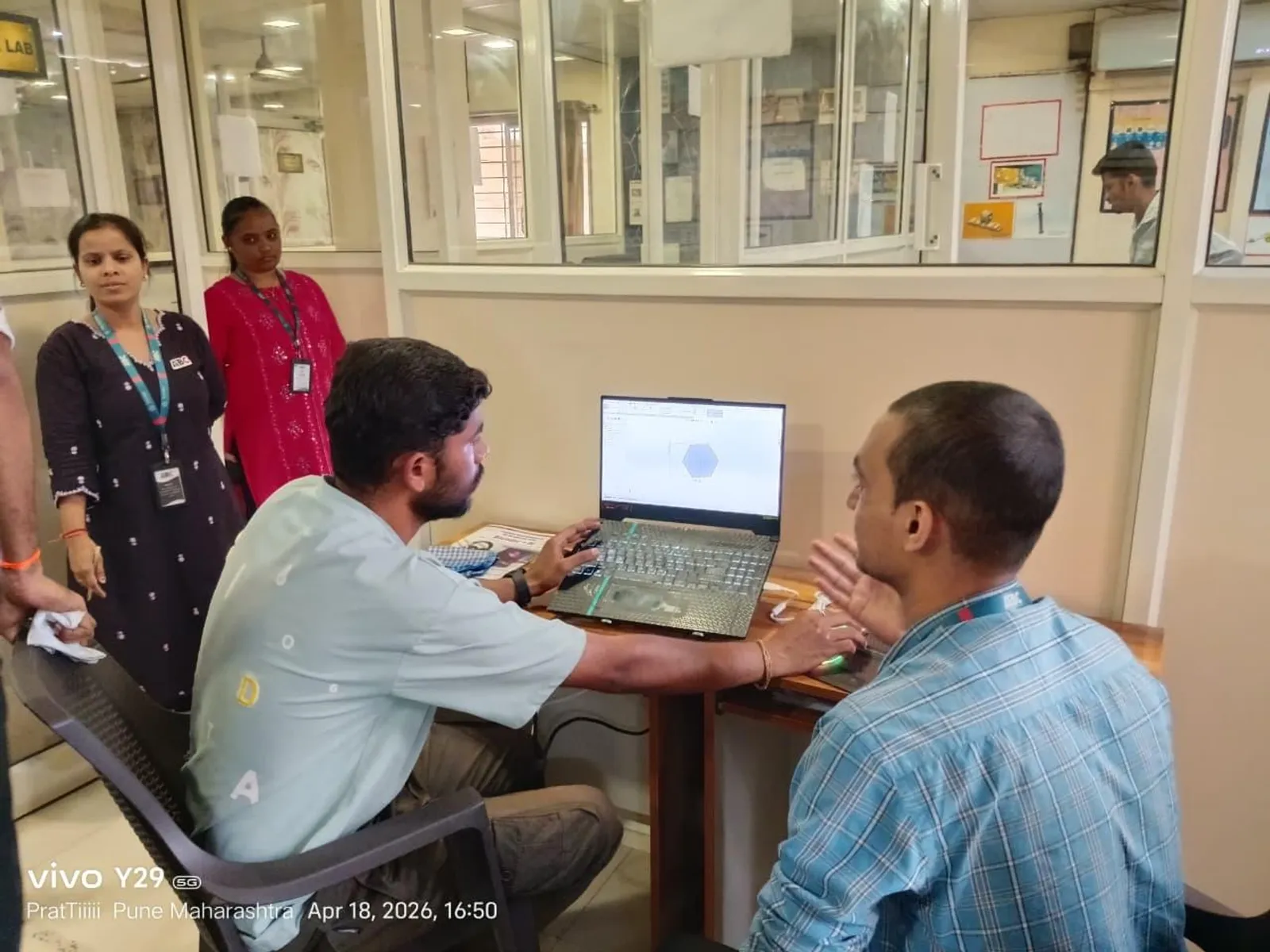
Machine learning is the decision-making engine in many AI systems. Instead of hard-coding every rule, you train models on data so they can find patterns and make predictions.
At an advanced level, you should think in workflows:
- Define the business problem clearly
- Identify structured or unstructured data
- Clean and label the data
- Select the right model family
- Train, validate, and test properly
- Measure business outcomes, not just accuracy
Here's where many learners go wrong: they jump to algorithms too early. In actual companies like Thermax, Kirloskar, or Bajaj Auto, the biggest challenge is often data quality, not model selection. If your sensor data is inconsistent or your labels are weak, even the best algorithm won't help.
For advanced learners, start comparing supervised learning, unsupervised learning, and reinforcement learning based on use case. Predictive maintenance, demand forecasting, and quality scoring usually begin with supervised learning. Customer segmentation uses unsupervised methods. Autonomous control systems may involve reinforcement learning, though production use is still selective.
When should you use deep learning instead of standard machine learning?
Deep learning becomes useful when your data is complex and high-dimensional—images, speech, video, long text, or large-scale patterns that manual feature engineering can't handle well.
Use standard machine learning when:
- Your dataset is structured and not huge
- Interpretability matters
- You need faster training and simpler deployment
Use deep learning when:
- You're working with image classification or object detection
- You're processing speech or language at scale
- You have enough data and compute resources
- Accuracy gains justify complexity
Trust me, this distinction saves time. Many students in Pune start with deep learning because it sounds more impressive. But if you're solving sales prediction or machine failure forecasting for a medium-sized plant in Maharashtra, XGBoost or Random Forest may outperform a neural network with less effort.
How do NLP and computer vision differ in real applications?
NLP focuses on human language. Computer Vision focuses on visual data. Both are major AI domains, but the workflows are different.
NLP applications in India include chatbots, resume screening, sentiment analysis, multilingual support, document extraction, and voice assistants. This matters in a country with multiple languages and mixed English usage. A practical NLP project may involve classifying support tickets, summarizing service reports, or extracting invoice data.
Computer Vision applications include surveillance analytics, industrial inspection, medical imaging support, attendance systems, and retail shelf monitoring. In manufacturing hubs around Pune, Chakan, and Nashik, vision systems are becoming common for quality checks and safety monitoring.
What most people don't realize is that deployment conditions matter more than model demo accuracy. Lighting variation, camera angle, document scan quality, local language spelling, and noisy real-world inputs can break an otherwise good model.
Where does robotics fit in AI learning?
Robotics is where AI interacts with the physical world. But not every robot uses advanced AI, and not every AI system is robotic. That's an important distinction.
In industrial settings, robotics may include rule-based automation, sensor feedback, computer vision, and path planning. AI becomes valuable when the system must adapt, detect patterns, or improve decisions based on data.
If you're an engineering student, robotics is a strong specialization when combined with Python, embedded systems, control logic, and vision. Siemens, L&T, and Bosch value candidates who understand both algorithmic thinking and hardware constraints.
What are the best advanced AI learning steps after basic theory?
If you've covered the fundamentals, follow this progression:
- Master Python workflows for NumPy, Pandas, Matplotlib, and model pipelines.
- Build small end-to-end projects instead of only notebooks.
- Learn model evaluation properly: precision, recall, F1-score, ROC-AUC, confusion matrix.
- Study deployment basics using APIs, Flask or FastAPI, and cloud exposure.
- Work on domain projects in manufacturing, finance, healthcare, or education.
- Practice explaining trade-offs because interviews test thinking, not just coding.
The good news is that you don't need a PhD to start. You need project discipline. At ABC Trainings, students who progress fastest are usually the ones who stop collecting random tutorials and start finishing use-case-based projects.
What salary can you expect in AI roles in Maharashtra in 2026?
For freshers with practical AI skills, salaries vary by role, city, and project depth.
- AI/ML Intern: ₹12,000 to ₹25,000 per month
- Junior Data Analyst with ML exposure: ₹3.2 lakh to ₹5 lakh per year
- AI/ML Engineer Fresher: ₹4.5 lakh to ₹7.5 lakh per year
- Computer Vision or NLP Fresher with strong portfolio: ₹5.5 lakh to ₹8.5 lakh per year
- 2 to 4 years experienced AI Engineer: ₹8 lakh to ₹16 lakh per year
In Pune, better packages usually go to candidates who can show deployed projects, GitHub work, and domain understanding. Companies don't just want model builders. They want problem solvers.
How should Maharashtra students choose the right AI training path?
Choose a path based on what you want to build. If you like data and prediction, focus on machine learning. If you're interested in language, choose NLP. If you enjoy image-based systems, go toward computer vision. If you prefer hardware plus intelligence, robotics is a better fit.
Don't chase every buzzword. Here's the thing: a focused portfolio beats a scattered one. One solid defect detection system, one text classification project, and one deployed prediction model can create more interview impact than ten half-finished notebooks.
If you're looking for structured AI training in Maharashtra, ABC Trainings can help you move from concept clarity to project execution. For course details, call 7039169629 or WhatsApp 7774002496.
Is AI a good career option in Pune and Maharashtra in 2026?
Yes, if you learn it practically. Pune has growing demand in IT services, automotive tech, manufacturing analytics, and software product companies. Students with Python, machine learning, and one specialization like NLP or computer vision have better chances than those who only know theory. Focus on projects, not just certificates.
Should I learn machine learning first or deep learning first in India?
Start with machine learning first. It gives you the foundation for data handling, evaluation, and problem framing. Deep learning makes more sense once you're comfortable with supervised learning, model metrics, and basic pipelines. For most beginners and even many job roles, machine learning is the better first step.
Which AI specialization has better job scope: NLP, computer vision, or robotics?
All three have scope, but the right choice depends on your background. NLP is strong for software and language applications, computer vision is valuable in manufacturing and surveillance, and robotics suits students interested in hardware plus automation. In Maharashtra, computer vision and ML currently offer faster entry for many freshers, while robotics often needs broader technical depth.
Can non-IT students learn AI in Maharashtra?
Yes, definitely. Mechanical, electrical, electronics, and civil students can move into AI if they learn Python, statistics basics, and project workflows. In fact, domain knowledge can become an advantage when applying AI to manufacturing, quality control, energy, or construction problems. The key is consistent practice and guided project work.
Visit Our Centers
Chhatrapati Sambhajinagar
Corporate Office (HQ)
2nd Floor, Kandi Towers, Jalna Road, Amarpreet Chowk, Chhatrapati Sambhajinagar, Maharashtra 431001
Osmanpura Branch
Plot No 14, Shanya Sect, Near Sant Eknath Rang Mandir, Osmanpura, Chhatrapati Sambhajinagar, Maharashtra 431005
CIDCO Branch
Plot No 4, N-3, Cidco, Opp. High Court, Chhatrapati Sambhajinagar, Maharashtra 431003
Pune
Wagholi Branch
1st Floor, ABC Trainings, Laxmi Datta Arcade, Pune - Ahilyanagar Hwy, Wagholi, Pune, Maharashtra 412207
Hadapsar Branch
Bloom Hotel, ABC Trainings 1st Floor, S.no 156/3 Shree Tower Pune - Solapur Rd, Hadapsar, Pune, Maharashtra 411028
Sangli
Sangli Branch
2nd Floor, Vasant Market, Opp. City High School, Sangli, Maharashtra 416416
Start Your Career Journey Today
Join 10,000+ students who transformed their careers with ABC Trainings.
💬 WhatsApp: 7774002496📞 Call: 7039169629