AI in Mechanical Design: The Future of CAD, CAM, and CAE for Engineers in 2026 (Updated May 2026)
AURIC — Aurangabad Industrial City — has attracted 71,343 crore rupees in investment and is creating 62,405 direct engineering jobs across the Sambhajinagar industrial belt. Skoda VW Shendra, Toyota Kirloskar, and Hyosung are filling those roles right now — and every job description mentions AI-integrated CAD, CAM, or CAE tools. Here is the thing most mechanical engineers are missing: AI in product design is not a future consideration. It is happening in production-grade software today. SolidWorks, CATIA, NX, and Fusion 360 all have native AI features deployed in their 2024 and 2025 releases. The engineers who understand how to use these tools will be shortlisted ahead of those who do not — regardless of how many years of traditional CAD experience they have.
- AI is already integrated into SolidWorks, CATIA, NX, and Fusion 360 — this is production software, not a demo
- Generative design reduces component weight by 30 to 70% while meeting the same structural requirements — Bajaj and Tata Tech are actively using it
- Text-to-CAD tools (ZOO, Autodesk AI, CATIA Magic) let engineers describe geometry in plain language and get 3D models in seconds
- AI-powered FEA simulation cuts analysis setup time from hours to minutes and flags failure points before physical testing
- ABC Trainings AI Powered Product Design workshop covers all of this — ask about the next batch at 7039169629
How AI Is Reshaping CAD, CAM, and CAE in Mechanical Engineering
Ten years ago, AI in mechanical design meant automated meshing in FEA software. Today it means: describing a part's load conditions and manufacturing constraints to a generative design engine and receiving 10 optimised geometry options in 45 seconds. It means AI-assisted toolpath generation in CAM software that reduces machining time and tool wear simultaneously. It means simulation tools that learn from your past analysis runs and flag potential failure modes before you even set up the boundary conditions. Companies like Bajaj Auto, Tata Technologies, KPIT, and Mahindra R&D are no longer evaluating candidates purely on traditional CAD proficiency — they are asking whether candidates can work with AI-assisted design workflows. The shift started in their R&D labs and is now moving into their mainstream design teams.
Generative Design: What It Is and Why Every Design Engineer Must Know It
Generative design is the most immediately impactful AI capability for mechanical engineers to understand in 2026. Here is how it works: you define the design space (the maximum envelope your part can occupy), the manufacturing constraints (which manufacturing process will be used — CNC milling, casting, 3D printing), the load conditions (forces and moments the part must withstand), and the material. The AI engine then generates multiple geometry options that satisfy all those constraints, typically achieving 30 to 70% weight reduction compared to conventionally designed parts. Autodesk Fusion 360 has had generative design built-in since 2019. SolidWorks 2024 added its own topology optimisation AI module. Bajaj Auto's R&D at Akurdi and Tata Tech's engineering centres actively use these workflows. Engineers who understand generative design are not replaceable by AI — they are the ones who know how to direct it.
| AI CAD/CAE Tool | AI Feature | Manual Time Saved | Used By |
|---|---|---|---|
| Fusion 360 Generative Design | Topology optimisation | 60–80% reduction | Bajaj Auto R&D, aerospace |
| ANSYS Discovery AI | Auto-mesh + smart BCs | 2–4 hours saved/run | Tata Tech, Mahindra R&D |
| NX CAM AI Machining | AI toolpath suggestion | 40–60% toolpath time | Bharat Forge, KPIT |
| ZOO / KittyCAD | Text-to-CAD model | Initial concept: seconds | Design startups, prototyping |
| SolidWorks AI Simulation | Design comparison AI | 50% setup time saved | Automotive Tier-1 suppliers |
AI in CAM: How Machining Toolpaths Are Being Automated
In CAM (Computer-Aided Manufacturing), AI is automating what used to be the most time-consuming manual task: toolpath selection and optimisation. NX CAM and Mastercam both now include AI modules that analyse part geometry and material, then recommend toolpath strategies that minimise machining time while staying within tool life limits. Machine learning models trained on thousands of real machining runs suggest cutting speeds and feeds that human programmers might take an hour to calculate — in seconds. For engineers at companies like Mahindra, Bharat Forge Kagal, and the CNC machining vendors across Chakan MIDC, this is already in their production workflow. Understanding how to supervise and validate AI-generated toolpaths — not just execute manually created ones — is now part of the CNC programmer job description.

AI-Powered FEA and Simulation: Faster Analysis, Smarter Optimisation
AI-powered FEA (Finite Element Analysis) is arguably the most mature AI application in mechanical design. Traditional FEA workflows involve hours of manual mesh setup, boundary condition definition, solver configuration, and result interpretation. AI tools like ANSYS Discovery, SimScale AI, and SolidWorks Simulation with AI assist do three things that change this completely: they auto-mesh complex geometries with appropriate element sizing, they suggest boundary conditions based on part type and typical loading scenarios, and they compare your current design against a database of similar past simulations to flag unusual results before you even run the full solve. For automotive suppliers in Pune and Sambhajinagar — the Tier 1 and Tier 2 parts makers who supply Skoda VW and Toyota Kirloskar — faster simulation means faster design iteration, which means faster time-to-market. That is a direct competitive advantage.
Text-to-CAD and Prompt-to-Edit Tools in 2026
Text-to-CAD is the most talked-about AI development in mechanical design in 2025 and 2026, and it is more production-ready than most engineers realise. ZOO (formerly KittyCAD) allows engineers to describe geometry in plain language — "a bracket with two M8 bolt holes 50mm apart and a 10mm radius fillet on all internal corners" — and generates a 3D model in seconds. Autodesk's AI assistant in Fusion 360 can interpret natural language feature requests and apply them to existing models. CATIA 3DEXPERIENCE's Magic Shape tools use AI to suggest organic geometry modifications based on functional descriptions. These are not prototypes — they are shipping features used in production engineering environments. The engineers who will thrive are not the ones threatened by these tools, but the ones who understand how to prompt them effectively and validate their outputs against real engineering requirements.
How AI Changes the Day-to-Day Role of the Mechanical Design Engineer
What most people do not realise is that AI does not eliminate the mechanical design engineer — it changes what that engineer does. The repetitive, rule-based parts of the job (drafting standard features, setting up similar simulations, generating toolpaths for common geometries) are being automated. The parts that remain require deeper engineering judgement: evaluating AI-generated options against real-world manufacturing constraints, catching errors in AI-suggested boundary conditions, and communicating design intent across cross-functional teams. Engineers who adapt by developing strong fundamentals in design principles, materials science, and manufacturing processes — and then layer AI tool proficiency on top — become significantly more valuable, not less. The engineers at risk are those who never moved beyond being tool operators.
AI Powered Product Design Workshop at ABC Trainings — What You Actually Learn
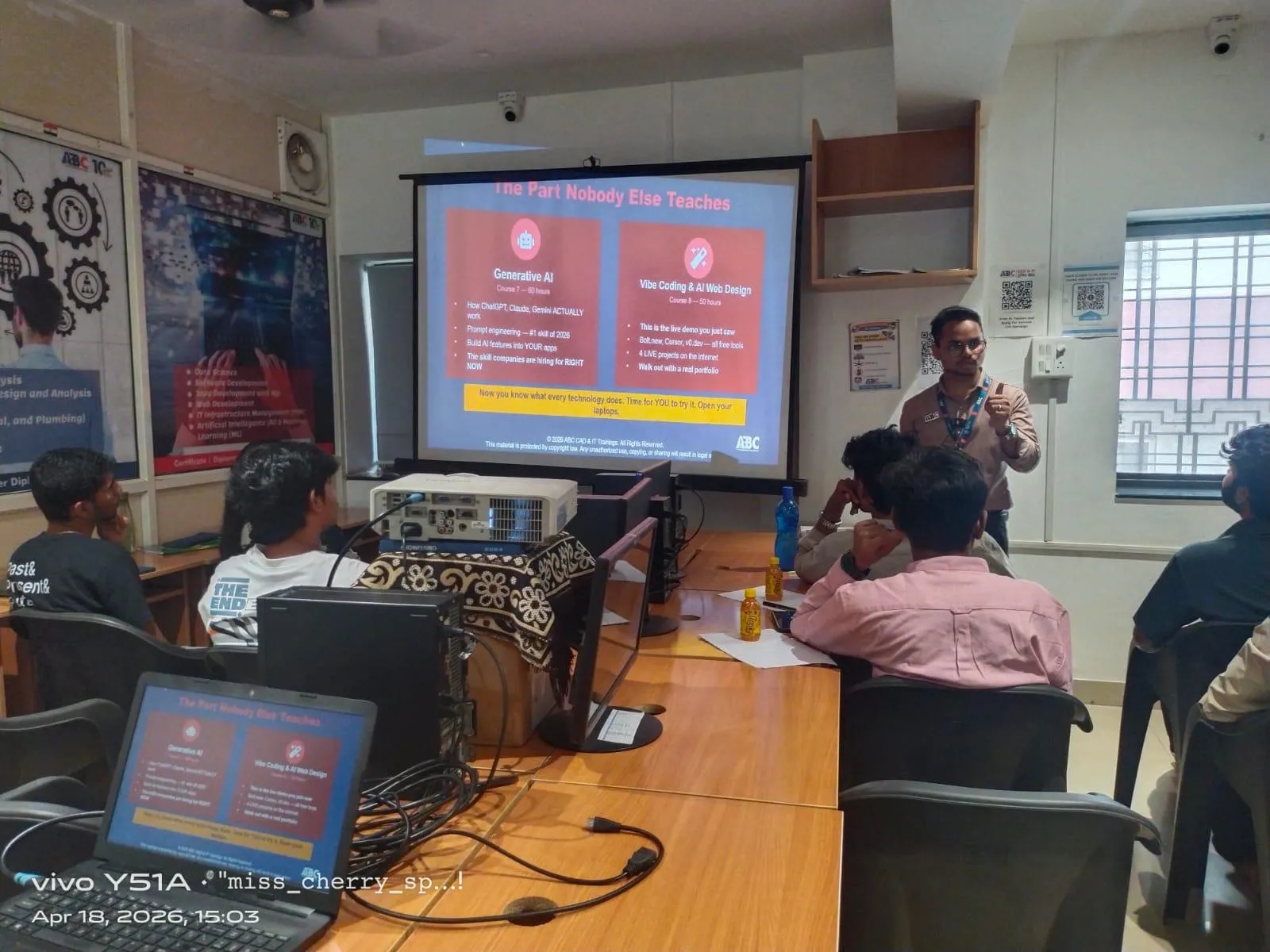
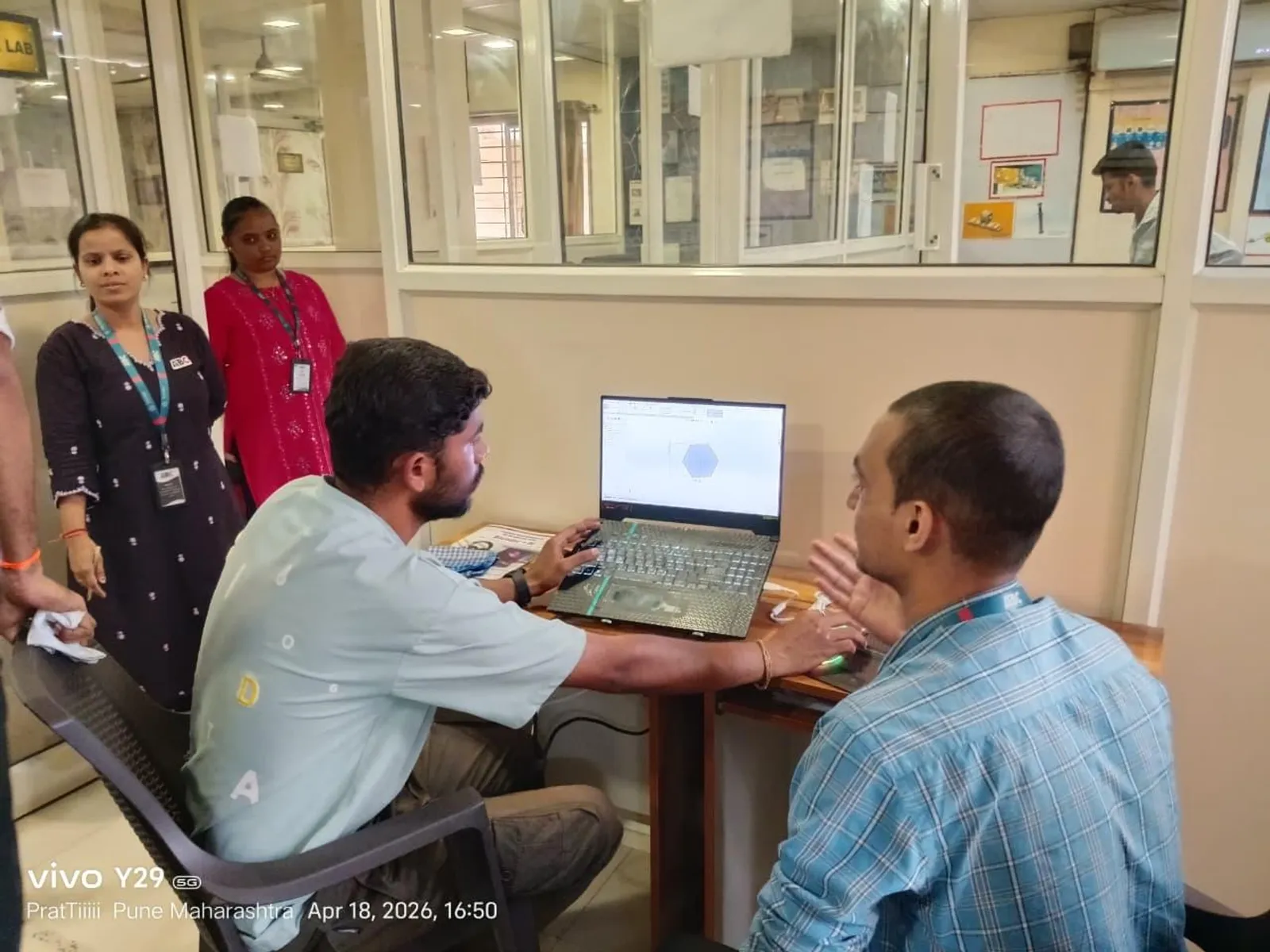
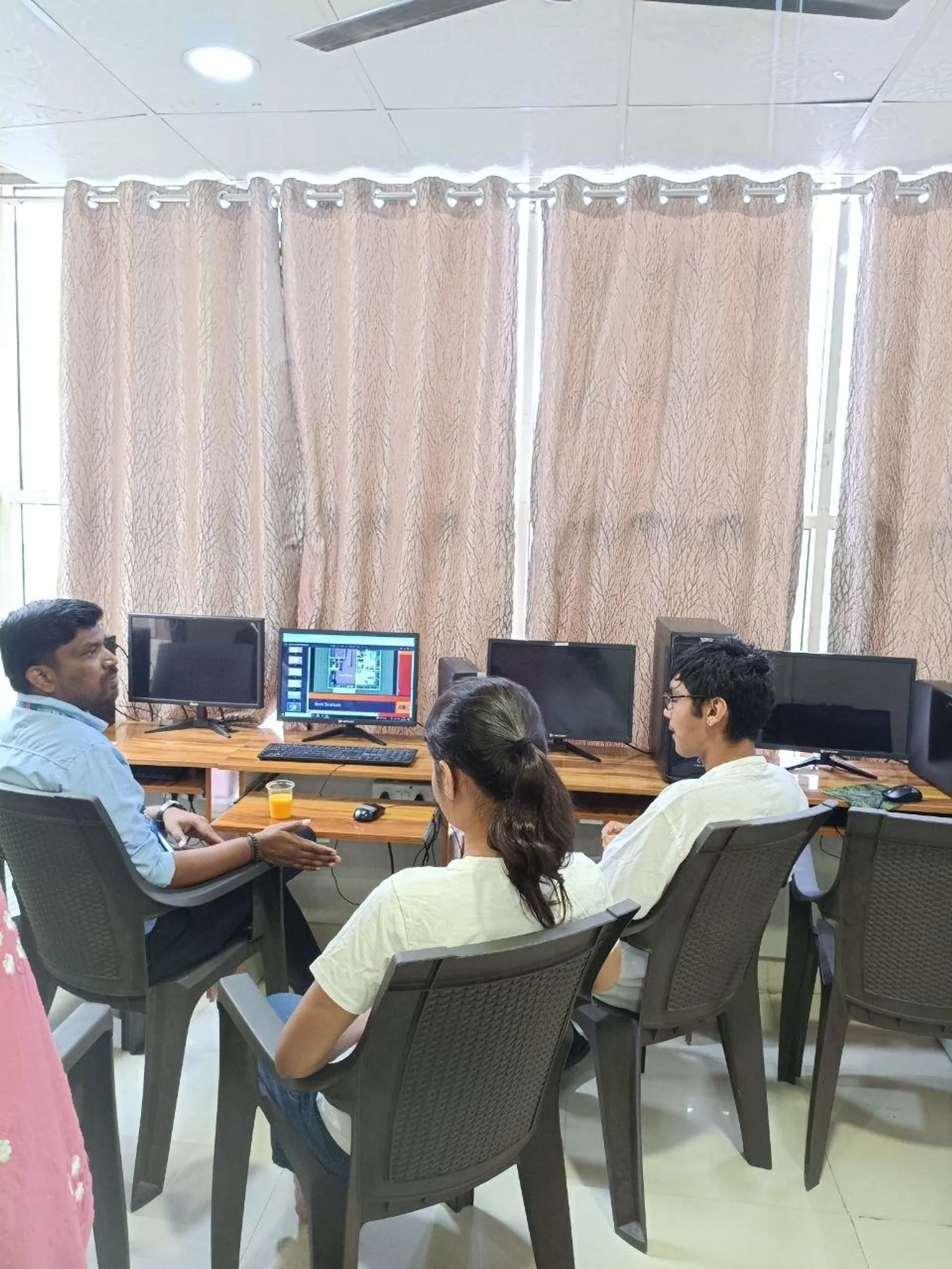
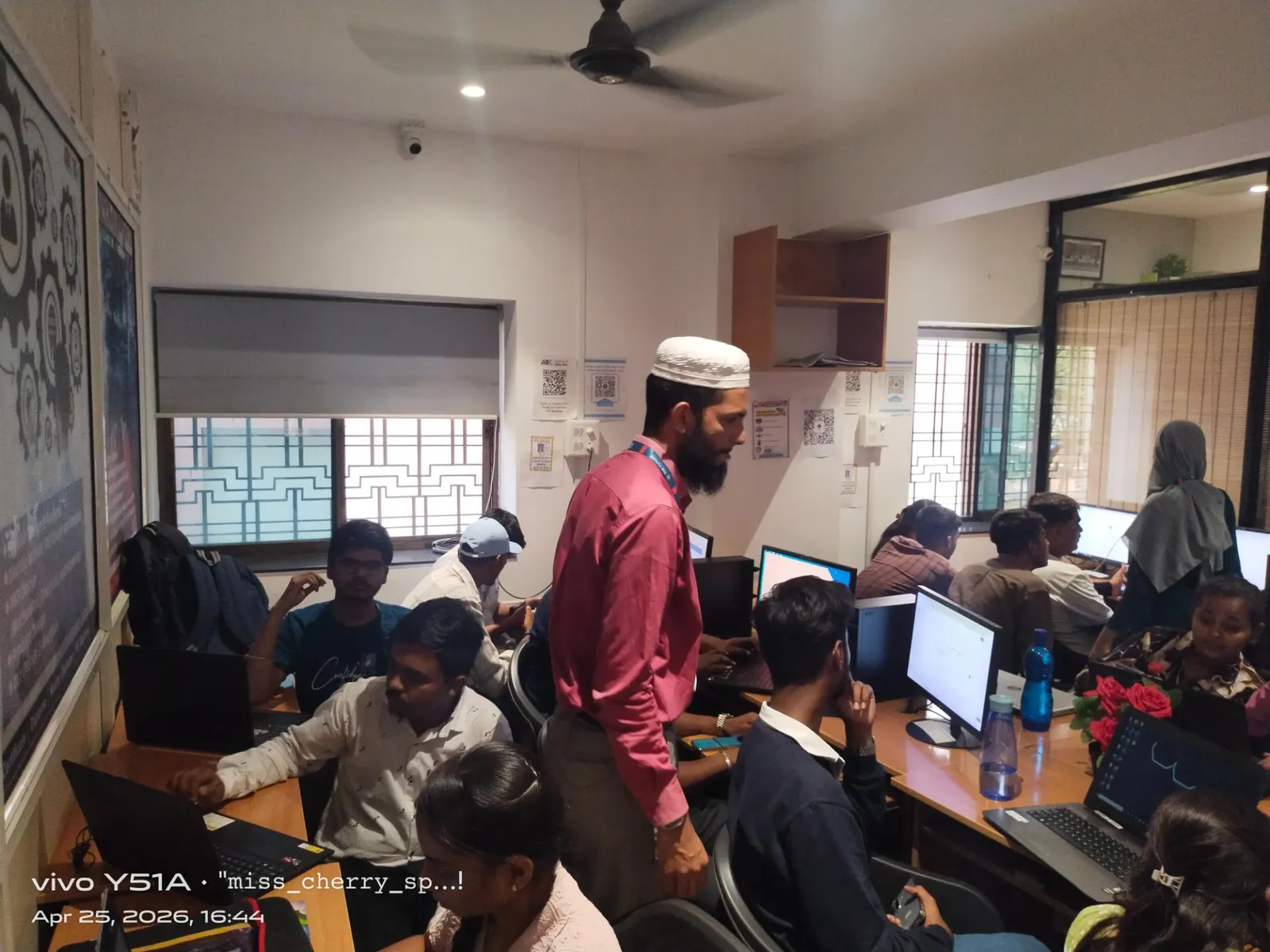
ABC Trainings offers the AI Powered Product Design, Analysis and Simulation workshop — a hands-on program covering AI-integrated workflows in SolidWorks and ANSYS, generative design fundamentals, AI-assisted toolpath generation in CAM, and an introduction to Text-to-CAD tools. The workshop is designed for mechanical engineers and CAD/CAM professionals who want to stay ahead of the AI shift in their industry. Batches are available at Wagholi (Laxmi Datta Arcade, Pune-Ahilyanagar Highway), Hadapsar (Shree Tower, opp. Vaibhav Theater), Cidco and Osmanpura (Sambhajinagar), and Sangli (Vishrambag, Sangli-Miraj Road). CMYKPY scheme subsidy is available for eligible Maharashtra residents. Call 7039169629 or WhatsApp 7774002496 for the next batch schedule.
CMYKPY Scheme — Fund Your AI-Powered Design Workshop
Maharashtra mechanical engineers aged 18–35 can claim 6,000 to 10,000 rupees under the CMYKPY government scheme when enrolling in the ABC Trainings AI Powered Product Design, Analysis and Simulation workshop. Eligibility requires Maharashtra domicile and an Aadhaar-linked bank account. With AURIC creating 62,405 engineering jobs across Sambhajinagar, the demand for AI-trained design engineers is at an all-time high. Visit our nearest centre to check eligibility and enroll before the next batch fills.
Get the CAD/CAM Training Brochure + Fees + Batch Dates on WhatsApp
Free 1:1 counselling. Placement track record. CMYKPY/PMKVY eligibility check.
💬 Get Brochure on WhatsApp📞 Call 7039169629About the author: Rahul Patil. 12 yrs experience training mechanical and CAD/CAM engineers across Maharashtra.
Visit Our Centers
- Wagholi (Pune): 1st Floor, Laxmi Datta Arcade, Pune-Ahilyanagar Highway. Call 7039169629
- Hadapsar (Pune HQ): 1st Floor, Shree Tower, opp. Vaibhav Theater, Magarpatta. Call 7039169629
- Cidco (Chh. Sambhajinagar): Kalpana Plaza, opp. Eiffel Tower, N-1 Cidco. Call 7039169629
- Osmanpura (Chh. Sambhajinagar): S.S.C Board to Peer Bazar Road, near Jama Masjid. Call 7039169629
- Sangli: Shubham Emphoria, 1st Floor, Above US Polo Assn., Sangli-Miraj Rd, Vishrambag. Weekend batches available. Call 7039169629
FAQs
Which AI tools are being used in mechanical design and CAD in 2026?
The most widely used AI tools in mechanical design in 2026 are: Autodesk Fusion 360 (generative design, Text-to-CAD), ANSYS Discovery (AI-assisted FEA mesh and boundary conditions), NX CAM (AI toolpath optimisation), SolidWorks with Topology Study (structural optimisation), and ZOO / KittyCAD (natural language to 3D geometry). CATIA 3DEXPERIENCE Magic Shape and Siemens NX Predictive Engineering also have active AI modules deployed in production engineering environments.
Will AI replace mechanical design engineers?
No — but the role will change significantly. AI automates the repetitive, rule-based parts of mechanical design (standard feature creation, similar simulation setups, common toolpath generation). What it cannot replace is engineering judgement: evaluating AI-generated options against real manufacturing constraints, catching AI errors in boundary conditions, and communicating design intent across teams. Engineers who build strong fundamentals in design principles and materials science, then layer AI tool proficiency on top, become more valuable. The engineers at risk are those who only ever operated software without understanding the underlying engineering.
How can a mechanical engineer learn AI-powered CAD and CAM skills?
The most effective path is structured hands-on training in AI-integrated workflows — not YouTube videos of isolated features. ABC Trainings AI Powered Product Design, Analysis and Simulation workshop covers generative design in SolidWorks and Fusion 360, AI-assisted FEA in ANSYS, AI toolpath generation in CAM software, and an introduction to Text-to-CAD tools. Batches are available at Wagholi, Hadapsar, Cidco, Osmanpura, and Sangli. Call 7039169629 for batch dates.
Does ABC Trainings offer AI-powered mechanical design training in Pune and Sambhajinagar?
Yes. ABC Trainings offers the AI Powered Product Design, Analysis and Simulation workshop at five centres: Wagholi and Hadapsar in Pune, Cidco and Osmanpura in Sambhajinagar, and Sangli. The workshop covers AI-integrated CAD, CAM, and CAE workflows with hands-on SolidWorks, ANSYS, and AI tool sessions. CMYKPY scheme subsidy is available for eligible Maharashtra residents. WhatsApp 7774002496 or call 7039169629 to check the next batch date at your nearest centre.