AI + MERN Integration: Build Smart Full Stack Apps with Artificial Intelligence (Updated May 2026)
TCS laid off 12,000 employees in July 2025, and every announcement cited the same reason: AI is replacing manual work that junior engineers used to do. Here's the thing though — the same companies are simultaneously posting hundreds of roles for engineers who can build AI-integrated applications. NASSCOM's 2025 report puts the demand at 1.25 million AI professionals by 2027. AI + MERN integration is exactly the skill bridging that gap: you take a stack that millions of developers already know and make it genuinely intelligent.
- AI + MERN means React handles UI, Node+Express acts as AI gateway, MongoDB stores AI outputs
- LLM APIs (Gemini, OpenAI) are called from the Node backend — never directly from React
- Real use cases: chatbots, content generation, behaviour prediction, NLP search
- Not a separate AI track — it's the same MERN app with AI endpoints added on top
- TCS and Infosys digital teams specifically look for this combination in 2026 hiring
What AI + MERN Integration Actually Means (Not the Buzzword Version)
AI + MERN integration isn't a new framework. It's standard MERN development with AI API calls woven in. Instead of just displaying data or performing CRUD operations, your application can now understand language, analyse user behaviour, generate content, and make predictions. React handles the user interface, Node and Express act as the AI gateway managing prompts, context, and API keys securely, MongoDB stores users, interactions, and AI-generated content, and the AI model provides the intelligence. That's it.
Architecture: How React, Node and the AI Model Fit Together
The architecture rule is simple: AI API calls always go through Node, never directly from React. Why? Because your API key sits in an environment variable on the server, not exposed in the browser bundle. The flow: React sends a user request to your Node API endpoint, Node enriches the request with context (user history, product data), calls the LLM API, processes the response, saves relevant outputs to MongoDB, and returns the result to React. This pattern works for chatbots, content generation, recommendations — any AI feature.
| AI Feature | Node Implementation | MongoDB Storage |
|---|---|---|
| Chatbot | Conversation context + LLM API call | Session messages array |
| Content Generation | Prompt template + product JSON | Generated text + input hash |
| Smart Search | NLP parse → MongoDB filter | Query log for analytics |
| Recommendations | Behaviour data + ranking model | Interaction events collection |
Calling LLM APIs from Node.js: The Right Way to Do It
The actual Node code is surprisingly clean. You install the SDK (openai or @google/generative-ai), initialise the client with your key, define a system prompt that sets context, pass the user message plus relevant database context, and stream or return the response. The most important thing most tutorials skip: always trim the context. Passing 10,000 tokens of user history for every message is expensive and slow. Pass only what's relevant — last 5 messages, current product details, user preferences.
Building AI Features: Chatbot, Content Generator, Smart Search
A chatbot needs conversation history stored in MongoDB — each session has a document with an array of message objects. Content generation (product descriptions, email drafts) needs a structured prompt template with the product JSON injected in. Smart NLP search parses a natural language query into a structured MongoDB filter — "red sneakers under ₹2000 in size 9" becomes a query object with colour, price, and size conditions. Trust me, this last feature is what impresses interviewers most because it bridges AI and database design.
Storing and Using AI Outputs in MongoDB
MongoDB is excellent for AI output storage because the shape of AI responses varies. A product description is a string. A classification result is an object with confidence scores. A recommendation list is an array. MongoDB's document model handles all of these without schema migrations. The pattern: save the raw AI output alongside the input prompt and a timestamp. This creates an audit trail, allows caching (if the same prompt fires again within an hour, return the saved result), and gives you training data for fine-tuning later.
Error Handling and Rate Limits: What Nobody Tells You
LLM APIs have rate limits — typically requests per minute and tokens per day on free tiers. Your Node layer needs to handle 429 (rate limit) responses gracefully: retry with exponential backoff, serve a cached result if available, or return a friendly degraded response. Cost control matters too: log token usage per request, set a monthly budget alert, and use streaming for long responses so users see output progressively instead of waiting. These are the engineering details that separate a professional AI integration from a demo that breaks under load.
What Infosys and TCS Are Actually Looking for in AI Developer Roles
Infosys's digital transformation teams are explicitly hiring "Full Stack + AI" engineers at ₹6–10 LPA for freshers with demonstrable AI integration projects (source: Infosys careers, AmbitionBox 2025). TCS iON and TCS Digital units look for React + Node candidates who have worked with LLM APIs. Capgemini and Mphasis are posting similar roles for their Pune delivery centres. What gets your resume shortlisted: a GitHub repo with a deployed MERN app that calls an LLM API, with a clear README explaining the AI feature architecture.
ABC Trainings AI + MERN Curriculum: What You Build and When
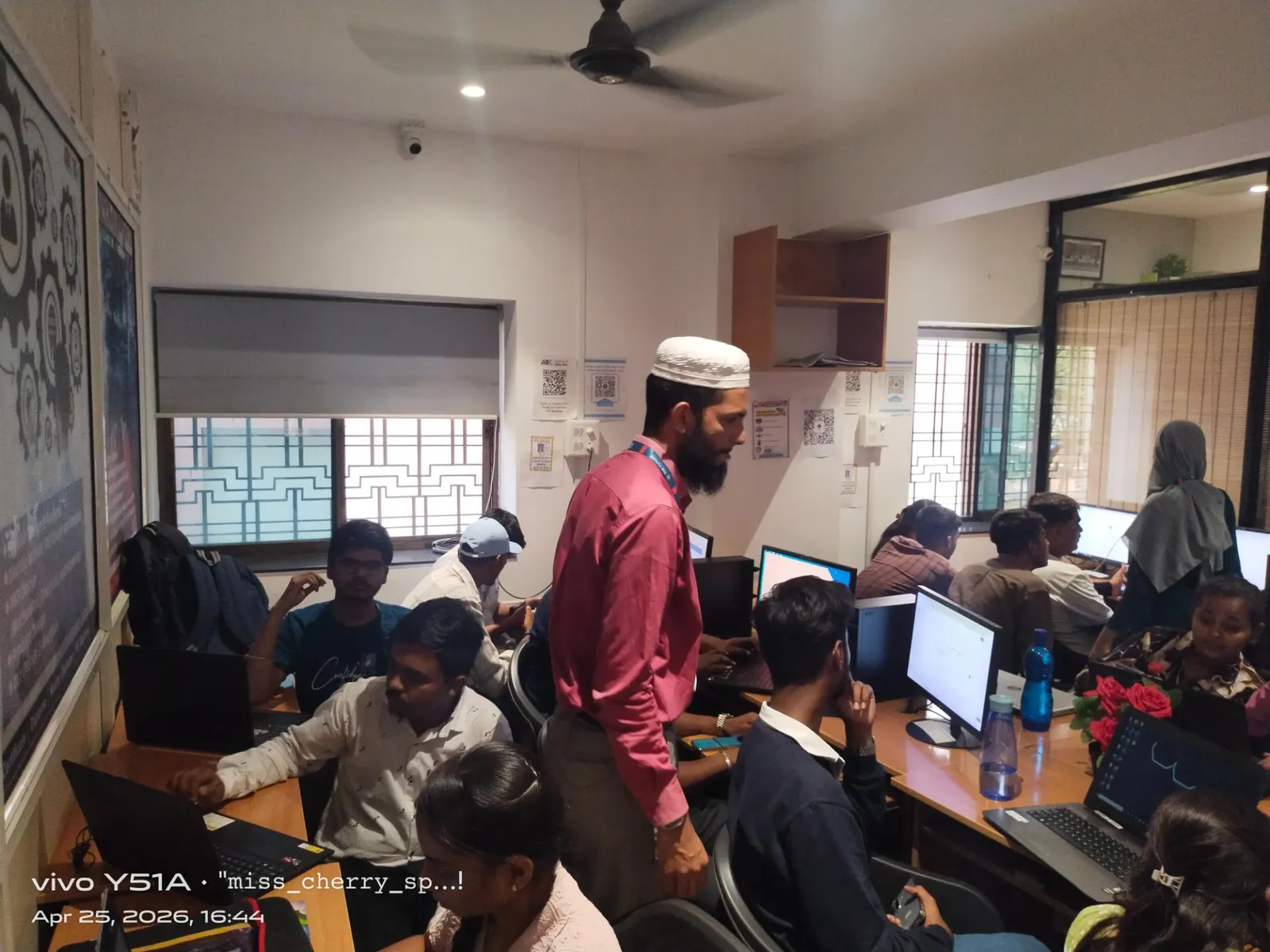
ABC Trainings' AI + MERN program starts with MERN fundamentals for those who need them, then moves to LLM API integration, prompt engineering, MongoDB AI data patterns, and a capstone industry project. Students in Pune attend at Wagholi (Laxmi Datta Arcade, Pune-Ahilyanagar Highway) or Hadapsar (Shree Tower, opp. Vaibhav Theater, Magarpatta). Sambhajinagar students attend at Cidco (Kalpana Plaza, N-1) or Osmanpura. WhatsApp 7774002496 for batch dates and fees.
Get the AI Powered Application Development Brochure + Fees + Batch Dates on WhatsApp
Free 1:1 counselling. Placement track record. CMYKPY/PMKVY eligibility check.
💬 Get Brochure on WhatsApp📞 Call 7039169629About the author: Ankush Shendge, IT Trainer, ABC Trainings.
Visit Our Centers
- Wagholi (Pune): 1st Floor, Laxmi Datta Arcade, Pune-Ahilyanagar Highway. Call 7039169629
- Hadapsar (Pune HQ): 1st Floor, Shree Tower, opp. Vaibhav Theater, Magarpatta. Call 7039169629
- Cidco (Chh. Sambhajinagar): Kalpana Plaza, opp. Eiffel Tower, N-1 Cidco. Call 7039169629
- Osmanpura (Chh. Sambhajinagar): S.S.C Board to Peer Bazar Road, near Jama Masjid. Call 7039169629
- Sangli: Shubham Emphoria, 1st Floor, Above US Polo Assn., Sangli-Miraj Rd, Vishrambag. Weekend batches available. Call 7039169629
FAQs
Do I need to know machine learning before learning AI + MERN integration?
No. AI + MERN integration uses pre-built LLM APIs — you're calling an endpoint, not building a model. You need JavaScript/Node.js skills, not ML knowledge. Machine learning is a separate, advanced track. This course is designed for full stack developers adding AI capabilities to existing web apps.
Which AI APIs work best for a MERN project — OpenAI or Google Gemini?
Both work well. Google Gemini has a generous free tier, making it ideal for learning and portfolio projects. OpenAI's GPT-4o is the industry standard and what most companies use in production. ABC Trainings teaches both so you're comfortable with whichever an employer uses.
What salary can I expect as an AI + MERN developer fresher in Pune?
AI + full stack developers in Pune freshers earn ₹5–8 LPA (AmbitionBox/6figr 2025). Candidates with a deployed AI MERN project and clear GitHub documentation consistently land in the upper half of that range. With 2–3 years experience, packages reach ₹12–18 LPA at product companies.
Does ABC Trainings cover prompt engineering in the AI + MERN course?
Yes. Prompt engineering is a dedicated module — covering system prompts, few-shot examples, chain-of-thought prompting, and context window management. These skills directly affect output quality and API costs, so we treat it as a core engineering discipline, not an afterthought.