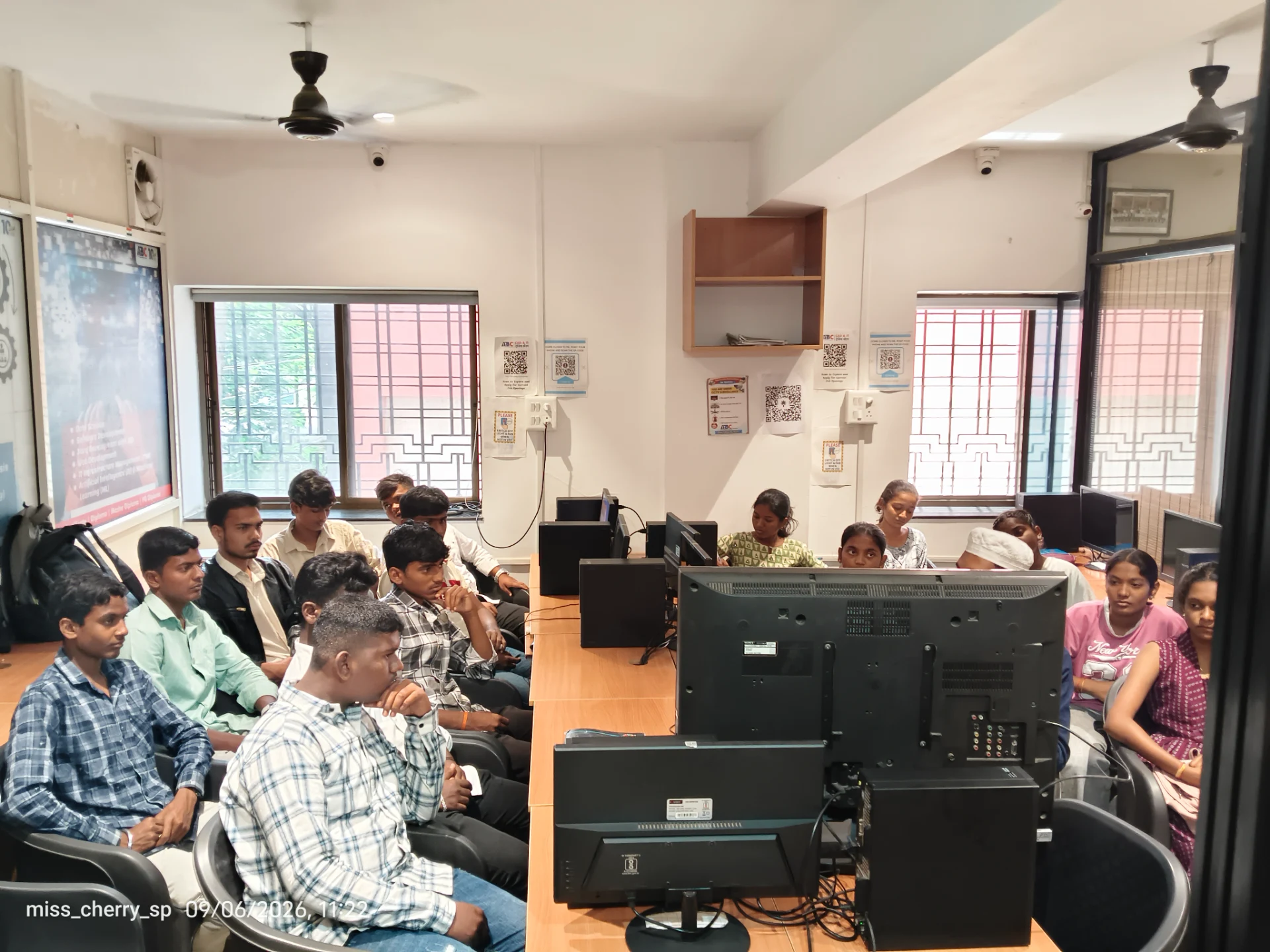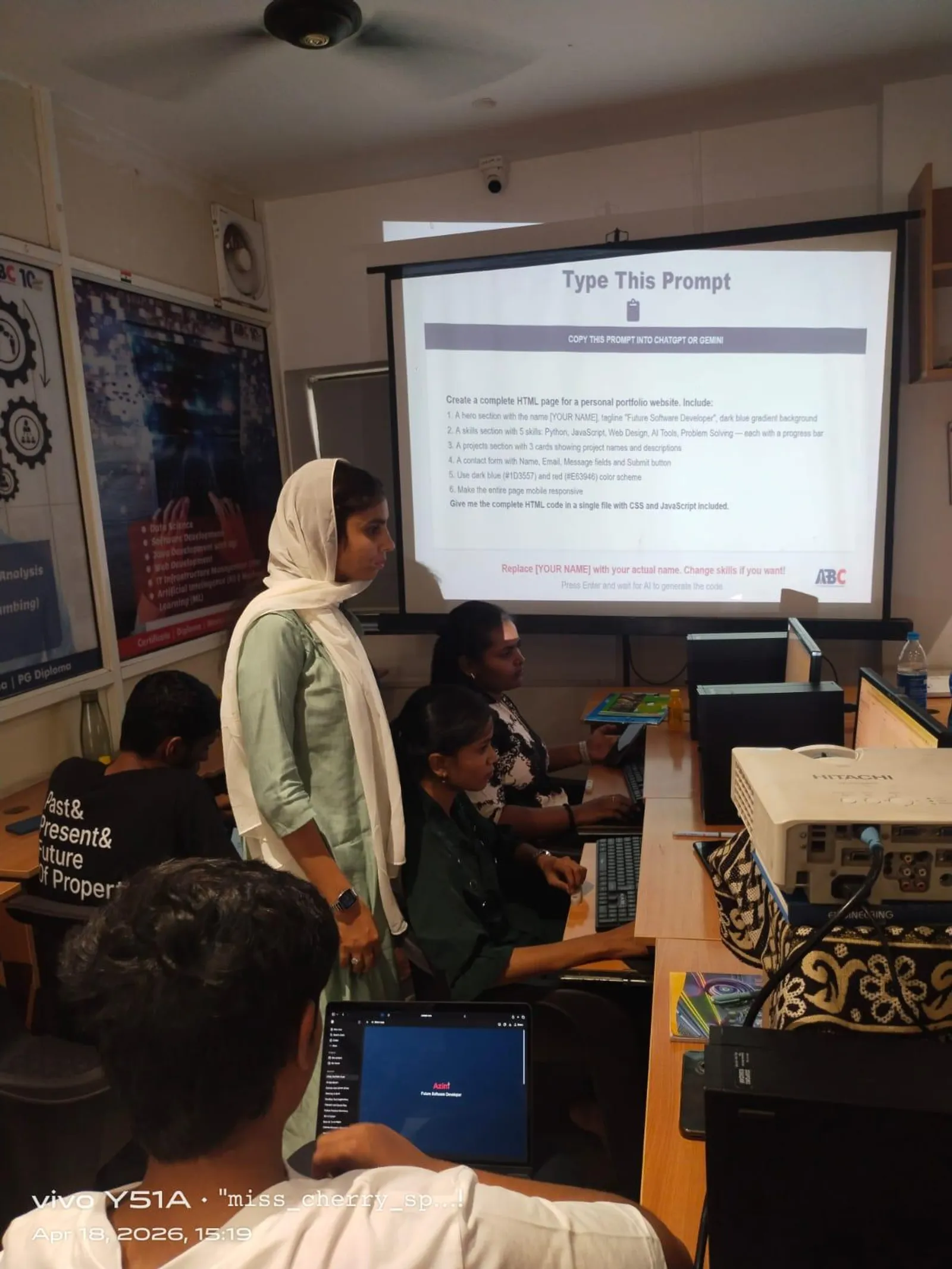
Automotive Embedded Systems for Beginners: Complete Free Course 2026 -- C Programming, CAN Bus, ARM Microcontrollers and Serial Protocols (Updated August 2026)
Every modern vehicle runs on embedded systems -- the ECUs (Electronic Control Units) that control everything from the engine and transmission to ABS brakes, airbags, and infotainment. Skoda VW Shendra (Plot A-1/1 AURIC), Bajaj Auto Waluj (Plot G-137), and Endurance Technologies (E-92) in Sambhajinagar collectively hire hundreds of embedded systems engineers annually. NASSCOM-Deloitte projects 1.25 million AI-integrated engineering roles by 2027, and automotive embedded engineering is one of the fastest-growing lanes. This guide covers all 18 episodes of ABC Trainings' free Automotive Embedded Systems course: from C programming fundamentals to CAN bus communication, ARM7 LPC2148 microcontroller programming, and serial protocols used in real ECU systems.
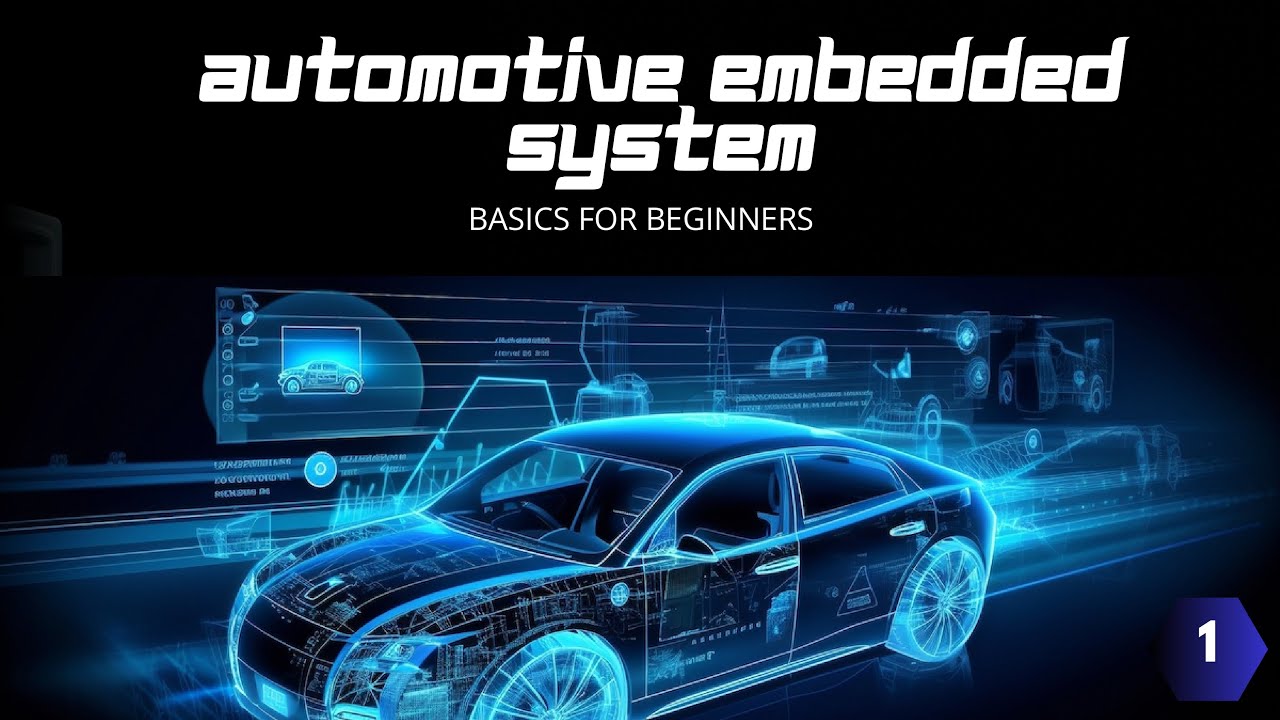
- Modern vehicles have 70-100+ ECUs; every one runs embedded C code on microcontrollers
- 18 episodes cover: C basics, variables, conditional/loops, arrays, memory management, CAN bus, diagnostics, UDS, ARM7 LPC2148, GPIO, SPI, UART, I2C, seven segment display, and LED interfacing
- CAN bus (Controller Area Network) is the backbone communication protocol of all automotive ECUs -- developed by Bosch in the 1980s, still the industry standard
- ARM7 LPC2148 is the most widely used microcontroller for learning automotive embedded systems in India
- Available at ABC Trainings Pune (Wagholi, Hadapsar) and Sambhajinagar (Cidco, Osmanpura) -- call 7039169629 for batch details
What Are Automotive Embedded Systems? The Foundation Every Engineer Needs
An embedded system is a computer system built specifically to perform one or a few defined tasks -- unlike a general-purpose PC that can run any program. In automotive engineering, embedded systems are the Electronic Control Units (ECUs) that manage specific vehicle subsystems. A modern premium vehicle contains between 70 and 100 ECUs: the Engine Control Module (ECM) manages fuel injection and ignition; the Transmission Control Module (TCM) handles gear shifts; the ABS module controls anti-lock braking; the airbag ECU fires the inflators in milliseconds upon impact. Each ECU contains: a microcontroller (typically ARM-based), sensors for input, actuators for output, and firmware written in C that runs on the microcontroller. The C programming language is used because it executes close to hardware speed, uses minimal memory, and gives the programmer precise control over every register and pin. ABC Trainings' 18-episode series starts exactly here -- from Episode 1 covering what embedded systems are and why C is the language of embedded development, through to live interfacing projects in the final episodes.
► Watch free on ABC's YouTube: Automotive Embedded Systems Introduction: What is an Embedded System and Why C? (Ep 1)

C Programming Basics: Variables, Data Types, and Operators for Embedded Development
C is the foundation of all embedded systems programming -- and the first three episodes of ABC Trainings' course build this foundation correctly. Variables in C are typed: you must declare what kind of data a variable holds before using it. Key data types for embedded systems: int (integer, typically 16 or 32 bits); unsigned int (positive integers only, doubles the positive range); char (single character or 8-bit value); float (decimal numbers); void (no return type, used for functions that just perform actions). Variable naming: begin with a letter or underscore, no spaces, no reserved keywords (int, for, while). Operators: arithmetic (+, -, *, /, % for modulo), assignment (=, +=, -=), comparison (==, !=, >, <, >=, <=), logical (&&, ||, !). Increment/decrement: i++ and i-- are fundamental in loop control; ++i (pre-increment) vs i++ (post-increment) behaves differently in expressions. In embedded C, every byte of memory matters -- using unsigned char instead of int for a 0-255 LED brightness value saves 3 bytes per variable, which matters when you have 8 KB of RAM. Episodes 2 and 3 of ABC Trainings' course build all these fundamentals with console-level demonstrations.
► Watch free on ABC's YouTube: Variables and Data Types in C Programming for Embedded Systems (Ep 2)
| Protocol | Wires | Speed | Use in Automotive |
|---|---|---|---|
| CAN | 2 (CAN H/L) | 1 Mbps (CAN FD: 8 Mbps) | ECU-to-ECU communication, engine, body, chassis |
| UART | 2 (TX, RX) | 115.2 kbps typical | GPS, Bluetooth, debug output, LIN bridge |
| SPI | 4 (MOSI, MISO, SCK, CS) | Up to 80 MHz | Flash memory, SD cards, displays, high-speed ADCs |
| I2C | 2 (SDA, SCL) | 100 kbps / 400 kbps | Temperature sensors, EEPROMs, RTC, accelerometers |
Control Flow in C: Conditional Statements and Loops for Microcontroller Programming
Control flow statements are what make embedded firmware respond to real-world conditions. If-else: the simplest decision -- if the sensor reading exceeds a threshold, trigger an alert; otherwise, continue normal operation. Example: if (engine_temp > 105) { trigger_cooling_fan(); } else { maintain_speed(); }. Switch-case: more efficient than a long else-if chain when checking one variable against many specific values -- commonly used in state machines (a fundamental embedded systems design pattern where the system is always in one of several defined states). Loops power repetitive operations in firmware. The while loop runs as long as a condition is true -- used for infinite main loops: while(1) { read_sensor(); process_data(); update_output(); } -- every embedded firmware main function is an infinite while loop. The for loop is used for counted repetitions: stepping through an array, sending N bytes of data, or generating a time delay. Do-while always executes at least once -- useful when you need an initial read before checking whether to continue. Memory management in embedded C (Episode 6): dynamic memory allocation (malloc/free) is generally avoided in automotive embedded systems due to unpredictable timing -- static allocation (declaring arrays with fixed sizes at compile time) is preferred for safety-critical systems.
► Watch free on ABC's YouTube: Conditional Branching Control Statements in C for Embedded (Ep 3)

CAN Bus Protocol: How Automotive ECUs Talk to Each Other (Updated August 2026)
CAN (Controller Area Network) is the dominant communication protocol in automotive embedded systems, developed by Bosch in the 1980s and standardized under ISO 11898. Before CAN, every ECU needed direct wired connections to every other ECU it communicated with -- a car with 20 ECUs would require hundreds of individual wires. CAN replaced this with a two-wire differential bus (CAN High and CAN Low) that all ECUs connect to in parallel. How CAN works: each ECU broadcasts messages as frames (packets) onto the bus. Every ECU receives every frame. Each frame has an identifier (11 or 29 bits) that tells the system what type of data it contains -- for example, identifier 0x123 might represent engine RPM. Lower identifier number = higher priority: if two ECUs transmit simultaneously, the one with the lower ID wins automatically (no collision handling needed). CAN bus speeds: 125 kbps (low-speed, comfort systems), 250 kbps (standard), 500 kbps (powertrain), 1 Mbps (fastest classic CAN). Modern vehicles also use CAN FD (up to 8 Mbps) and Automotive Ethernet for ADAS systems. Episode 8 of ABC Trainings' course covers the CAN bus structure in full: application layer (data generation), data link layer (LLC and MAC sub-layers), and physical layer (voltage signaling). ABC Trainings teaches CAN bus analysis using real-world automotive scenarios used at Bajaj Waluj and Skoda VW Shendra.
► Watch free on ABC's YouTube: CAN Bus Protocol: What It Is and How Automotive ECUs Communicate (Ep 8 intro)
UDS (Unified Diagnostic Services): How Mechanics Read and Reset ECU Fault Codes
UDS (Unified Diagnostic Services) is the standardized protocol that allows diagnostic tools (scan tools) to communicate with vehicle ECUs for reading fault codes, clearing DTCs, performing resets, and flashing new firmware. Standardized under ISO 14229, UDS replaced manufacturer-specific protocols and is now universal across all modern vehicles. How UDS works: a scan tool sends a request message to a specific ECU using the UDS service identifier. Key UDS services covered in Episode 10: 0x10 -- Diagnostic Session Control (starts a communication session with the ECU, like saying "hello, I want to talk to you"); 0x11 -- ECU Reset (reboots the ECU, like restarting a computer); 0x22 -- Read Data By Identifier (reads a specific parameter from the ECU -- engine temperature, VIN, battery voltage); 0x2E -- Write Data By Identifier (writes new configuration to the ECU -- used for coding options like enabling/disabling features); 0x14 -- Clear Diagnostic Information (erases all stored fault codes); 0x19 -- Read DTC Information (reads all stored Diagnostic Trouble Codes). Diagnostic testers used in industry: Bosch KTS, Launch X431, and OEM-specific tools at Bajaj, Skoda VW, and Mahindra workshops. Understanding UDS is essential for automotive electronics roles at these manufacturers in Sambhajinagar and Pune.
► Watch free on ABC's YouTube: UDS Unified Diagnostic Services: How Mechanics Talk to Automotive ECUs (Ep 10)
ARM7 LPC2148 Microcontroller: Architecture, GPIO Registers, and Pin Configuration
The ARM7 LPC2148 microcontroller is the most widely used platform for learning automotive embedded systems in Indian engineering colleges and training institutes. It is a 32-bit microcontroller based on the ARM7TDMI core, manufactured by NXP (formerly Philips). Key specifications: 512 KB Flash memory, 32 KB SRAM, 60 MHz maximum clock frequency, dual 10-bit ADC with 14 channels, two UART ports, two SPI ports, two I2C ports, USB 2.0 full-speed, and CAN 2.0B -- all the interfaces used in real automotive ECUs, in one chip. GPIO (General Purpose Input/Output): Episode 11 covers the IODIR register (Input-Output Direction Register) -- setting bit = 1 makes the pin an output, bit = 0 makes it an input. The IOSET register sets output pins HIGH; IOCLR sets them LOW. The PINSEL register configures each pin's function: PINSEL value 00 selects GPIO mode; 01, 10, or 11 select alternate functions (UART, SPI, CAN, etc.). Port 0 provides 32 I/O pins (P0.0 through P0.31); Port 1 provides 16 pins (P1.16 through P1.31). Understanding these registers is the first step to writing real embedded firmware -- every sensor read and actuator control goes through these registers.
► Watch free on ABC's YouTube: ARM7 LPC2148 Microcontroller Architecture and GPIO Registers (Ep 11)
Serial Communication Protocols: UART, SPI, and I2C Explained for Embedded Systems
Embedded systems use serial communication protocols to exchange data between the microcontroller and peripheral devices (sensors, displays, memory chips, other microcontrollers). Three protocols dominate automotive embedded applications. UART (Universal Asynchronous Receiver and Transmitter): the simplest serial protocol, uses just two wires (TX for transmit, RX for receive). Asynchronous -- no shared clock, both sides agree on baud rate (bits per second) in advance. Data frame: 1 start bit + 8 data bits + optional parity bit + 1 stop bit. Used for GPS modules, Bluetooth, debug output, and communication between ECUs where timing flexibility is acceptable. SPI (Serial Peripheral Interface): synchronous protocol with 4 wires -- MOSI (Master Out Slave In), MISO (Master In Slave Out), SCK (clock), SS/CS (chip select). Faster than UART and I2C (up to 80 MHz). Used for Flash memory, SD cards, displays, and high-speed ADCs. I2C (Inter-Integrated Circuit): synchronous, only 2 wires -- SDA (data) and SCL (clock). Supports multiple masters and multiple slaves on the same two wires, each with a unique 7-bit address. Speed: 100 kbps (standard), 400 kbps (fast mode). Used for sensors (temperature, pressure, accelerometers), EEPROMs, and real-time clocks. Episodes 14-16 of the ABC Trainings course cover all three protocols with LPC2148 code examples and hardware interfacing.
► Watch free on ABC's YouTube: SPI Protocol Explained for Automotive Embedded Systems (Ep 15)
Hands-On Projects: Seven Segment Display and LED Interfacing with LPC2148
The final episodes of ABC Trainings' automotive embedded series move from theory to hands-on hardware interfacing -- the skills that automotive companies actually test in technical interviews. Seven Segment Display (Episode 13): connect a common-cathode seven-segment display to LPC2148 Port 1 pins. Each segment (a through g) is a separate LED; the hexadecimal pattern array {0x3F, 0x06, 0x5B...} maps each digit 0-9 to the correct combination of segments. The firmware uses a while(1) loop with delay functions to cycle through digits. Key code elements: #include ► Watch free on ABC's YouTube: LED Interfacing with LPC2148 Microcontroller -- Hands-On Embedded Project (Ep 18)
Get the AI Powered Application Development Brochure + Fees + Batch Dates on WhatsApp
Free 1:1 counselling. Placement track record. CMYKPY/PMKVY eligibility check.
💬 Get Brochure on WhatsApp📞 Call 7039169629About the author: Rahul Patil. 12 yrs experience training engineers across Maharashtra.
Visit Our Centers
- Wagholi (Pune): 1st Floor, Laxmi Datta Arcade, Pune-Ahilyanagar Highway. Call 7039169629
- Hadapsar (Pune HQ): 1st Floor, Shree Tower, opp. Vaibhav Theater, Magarpatta. Call 7039169629
- Cidco (Chh. Sambhajinagar): Kalpana Plaza, opp. Eiffel Tower, N-1 Cidco. Call 7039169629
- Osmanpura (Chh. Sambhajinagar): S.S.C Board to Peer Bazar Road, near Jama Masjid. Call 7039169629
- Sangli: Shubham Emphoria, 1st Floor, Above US Polo Assn., Sangli-Miraj Rd, Vishrambag. Weekend batches available. Call 7039169629
FAQs
What prior knowledge do I need to start the automotive embedded systems course?
Basic computer literacy is sufficient. The course starts from the very definition of what an embedded system is (Episode 1), then builds C programming from scratch in Episodes 2-6. Prior knowledge of electronics or programming is helpful but not required. Many students who complete this series come from mechanical or electrical engineering backgrounds with no prior coding experience.
Is C programming difficult to learn for embedded systems?
C is actually one of the easier languages to learn for embedded systems because it is close to the hardware -- what you write has a direct relationship to what the microcontroller does. The embedded C dialect used in this course (for LPC2148) is simpler than full C++. The ABC Trainings course builds from variables to functions to hardware interfacing progressively over 18 episodes, so each step is manageable.
What job roles does this automotive embedded course prepare me for?
Completing this course prepares you for: Embedded Software Engineer at automotive OEMs (Bajaj, Skoda VW, Mahindra); ECU Testing Engineer at Tier-1 suppliers (Bosch, Continental, KPIT); Embedded Systems Trainee at automotive electronics companies. Fresher salaries at Bajaj Waluj and Skoda VW Shendra range Rs 3.5-5 LPA for embedded roles. KPIT Technologies (Pune) specifically hires automotive embedded engineers starting at Rs 4.5-6 LPA.
Where does ABC Trainings teach automotive embedded systems in Maharashtra?
ABC Trainings teaches automotive and embedded systems as part of the AI Powered Application Development and Industry 4.0 curriculum at Wagholi (Pune), Hadapsar (Pune), Cidco (Sambhajinagar), and Osmanpura (Sambhajinagar). Weekend batches are available for working engineers. Call 7039169629 or WhatsApp 7774002496 for schedules.