AUTOSAR Course in Pune 2026: Automotive Embedded Systems Training, Fees and Career Scope (Updated September 2026)
AUTOSAR (AUTomotive Open System ARchitecture) has become the backbone of modern vehicle software development. Every major OEM — from Bosch to Continental to Tata Motors — now demands engineers who can work within AUTOSAR's standardised software architecture. Pune, home to Bajaj Auto, Tata Motors, Cummins India and hundreds of Tier-1 automotive suppliers, is Maharashtra's best city to build an AUTOSAR career. This guide covers everything: what AUTOSAR training covers, which tools you will use, realistic fees, duration, and what salary you can expect after completing the course.
- AUTOSAR Classic Platform (CP) and Adaptive Platform (AP) both covered in quality courses
- Hands-on with Vector CANoe, DaVinci Configurator and ETAS ISOLAR tools
- Course fees in Pune: ₹40,000–₹70,000 for 3–4 months of training
- Entry-level AUTOSAR engineer salary in Pune: ₹4.5–₹7 LPA in 2026
- Maharashtra students eligible for CMYKPY stipend of ₹6,000–₹10,000 per month during training
What Is AUTOSAR and Why Does It Matter for Automotive Engineers?
AUTOSAR is an open, standardised software architecture for the automotive industry, developed jointly by BMW, Bosch, Continental, Daimler, Ford, GM, PSA, Toyota and Volkswagen. It separates application software from hardware, making it possible to reuse code across different vehicle platforms and suppliers. Any engineer working in automotive ECU development, ADAS, powertrain, body electronics or electric vehicle software needs AUTOSAR knowledge. Pune's automotive ecosystem — Bajaj Auto, Tata Motors, Force Motors, Cummins and 600+ Tier-1 and Tier-2 auto component manufacturers — actively recruits AUTOSAR-skilled engineers. Without AUTOSAR fluency, you cannot access the top 30% of embedded job openings in Pune's automotive sector. The architecture defines how Software Components (SWCs), the Runtime Environment (RTE), and Basic Software (BSW) modules interact. Learning it correctly — with real tools and project work — is the only way to get past HR filters at companies like Bosch, KPIT, Tata Elxsi and L&T Technology Services.
AUTOSAR Classic vs Adaptive Platform: Which Should You Learn First?
AUTOSAR Classic Platform (CP) is the original architecture, designed for deeply embedded, hard-real-time applications — think ABS, airbag control, engine management. It runs on AUTOSAR OS (OSEK-based) and is implemented in C. Classic Platform dominates production vehicles today and will continue doing so for the next decade because of its deterministic behaviour and ISO 26262 functional safety certification requirements. AUTOSAR Adaptive Platform (AP) is the newer architecture for high-compute domains — ADAS, autonomous driving, V2X communication and over-the-air updates. It runs on POSIX OS (Linux-based), uses C++14/17, and supports dynamic service-oriented communication via SOME/IP. AP is used in domain controllers and zonal ECUs in EVs and Level 3+ autonomous vehicles. For most engineers entering the field in 2026, start with Classic Platform — it has more job openings and is required for ISO 26262 project work. Add Adaptive Platform knowledge once you have 1–2 years of CP experience. A quality AUTOSAR course in Pune covers both, with Classic Platform as the primary focus.
What You Will Learn in an AUTOSAR Course in Pune
A well-structured AUTOSAR course covers theory and hands-on lab work in roughly equal measure. Core topics include: AUTOSAR layered architecture (Application Layer, RTE, BSW, MCAL), Software Component (SWC) design and configuration, Port Interface types (Sender-Receiver, Client-Server), BSW module configuration including ComStack, DCM, NvM and WDG, Diagnostic Communication Manager (DCM) and UDS protocol, CAN, LIN, FlexRay and Ethernet protocol integration, AUTOSAR OS task scheduling and interrupt handling, and ISO 26262 functional safety concepts relevant to AUTOSAR development. Hands-on labs use real automotive ECU hardware — typically NXP S32K, Infineon AURIX or Renesas RH850 targets — and industry-standard toolchains. Project work such as configuring a complete BSW stack, writing SWCs, and testing over CAN is what separates training centres that produce hirable graduates from those that do not. Ask any training centre before enrolling: what hardware do students work on? What tools are licensed? What is the ratio of lab hours to theory hours?
| Training Provider | Duration | Fees (Approx.) | Tool Access | Placement Support |
|---|---|---|---|---|
| ABC Trainings (Pune) | 3–4 months | ₹45,000–₹65,000 | Vector CANoe, DaVinci | Yes |
| C-DAC ACTS Pune | 6 months (PG-DAC bundle) | ₹80,000+ | — | Partial |
| Vector India (Pune) | 2–5 days (workshops) | ₹20,000–₹50,000 | Vector CANoe (vendor) | No |
| Online Platforms | Self-paced | ₹500–₹3,000 | No lab access | No |
AUTOSAR Tools You Will Use: CANoe, DaVinci and ISOLAR
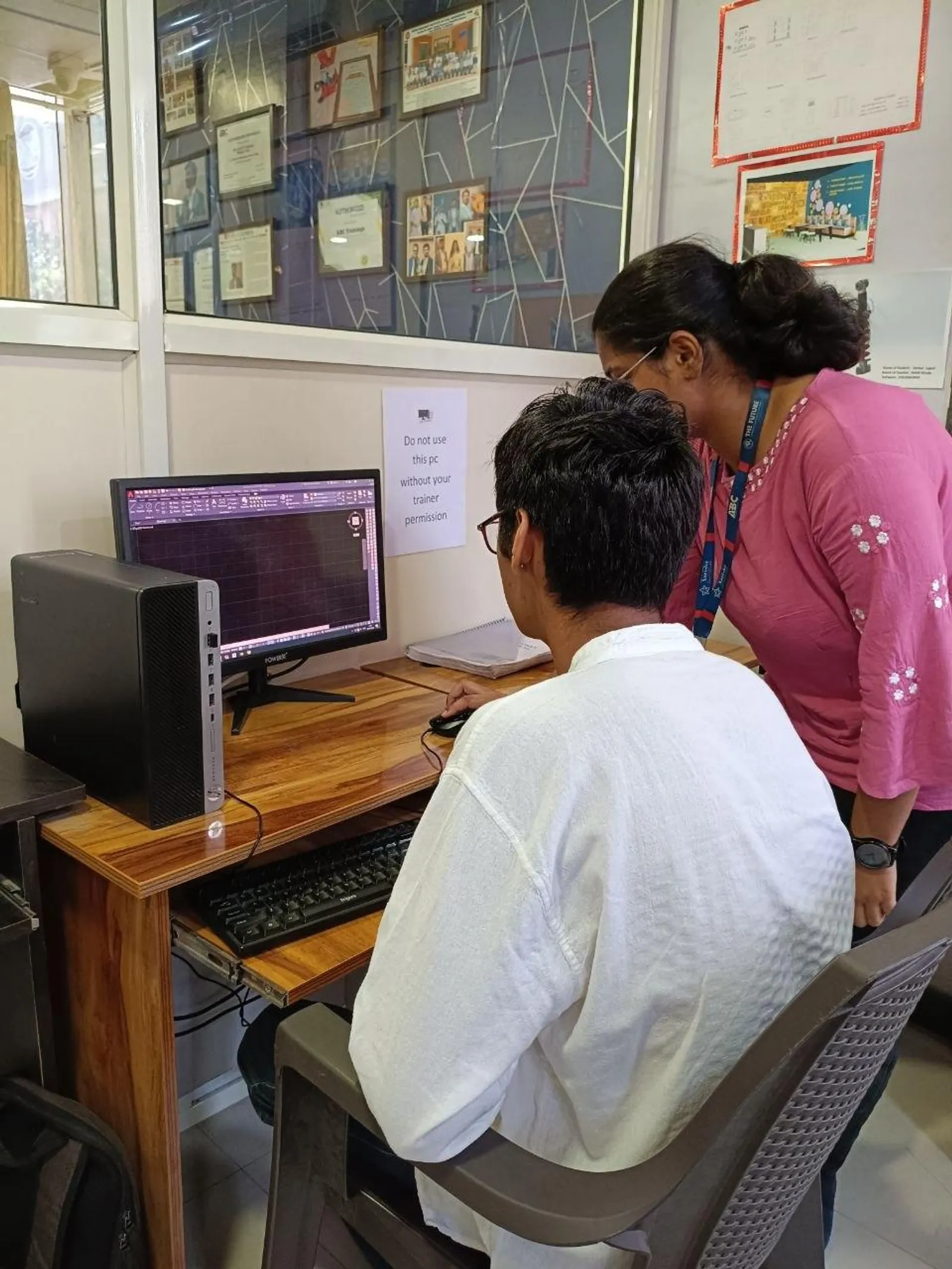
Three tool families dominate AUTOSAR development work in Indian companies: Vector Tools: Vector CANoe (network simulation and testing), Vector DaVinci Configurator Pro (BSW configuration) and Vector DaVinci Developer (SWC design). These are the industry standard — Bosch, KPIT and most Tier-1 suppliers use Vector tools. CANoe proficiency is listed as mandatory on the majority of AUTOSAR job descriptions in Pune. ETAS ISOLAR: ETAS ISOLAR-A (Adaptive Platform) and ISOLAR-EVE (virtual ECU testing). ETAS tools are used extensively in Bosch-derived projects and Continental supply chains. If you target Bosch Engineering or Continental Automotive roles in Pune, ETAS familiarity is a plus. MATLAB/Simulink + Embedded Coder: Model-based development with automatic AUTOSAR code generation. Essential for powertrain and body electronics teams. Understanding arxml import/export between Simulink and AUTOSAR tools is a practical skill that sets you apart. Good AUTOSAR training in Pune provides licensed or educational access to Vector CANoe and DaVinci. Without tool practice, your AUTOSAR theory is unemployable in Pune's job market.
AUTOSAR Course Fees in Pune 2026: What to Expect
AUTOSAR training in Pune ranges from ₹40,000 to ₹80,000 depending on depth, tool access and placement support. Short workshops of 1–2 weeks that are theory-heavy cost ₹15,000–₹25,000 but rarely lead to jobs because they skip tool work and project configuration. Full-course programmes of 3–4 months with CANoe lab access, live ECU hardware and placement preparation cost ₹45,000–₹70,000. ABC Trainings offers AUTOSAR Classic Platform training as part of its Automotive Embedded Systems track at Wagholi, Hadapsar and Cidco branches. Call or WhatsApp the branch for the current batch calendar, exact fees and EMI options. Payment plans are available, and Maharashtra government's CMYKPY scheme can provide ₹6,000–₹10,000 per month stipend during training — substantially reducing your out-of-pocket cost.
Career Scope and Salary After AUTOSAR Training in Pune
Pune is India's second-largest automotive hub after Chennai. AUTOSAR job openings in Pune come from KPIT Technologies, Tata Elxsi, L&T Technology Services (automotive division), Bosch Engineering, Continental Automotive, Cummins, Mahle, Magna, and dozens of Tier-2 embedded software firms. Entry-level AUTOSAR engineers (0–1 year experience) earn ₹4.5–₹7 LPA in Pune. With 2–3 years and Vector CANoe certification, you reach ₹9–₹14 LPA. Senior AUTOSAR architects with ISO 26262 functional safety expertise earn ₹18–₹28 LPA. AUTOSAR is not a crowded field. Unlike web or Android development, the pool of engineers with real AUTOSAR tool experience is small — demand consistently exceeds supply. This makes it one of the highest-ROI embedded courses an engineer in Maharashtra can take in 2026. The automotive software market in India is projected to grow at 18% CAGR through 2030, driven by EV transition and ADAS adoption, both of which are deepening AUTOSAR demand rather than replacing it.
CMYKPY Scheme: How Maharashtra Students Get Paid to Learn AUTOSAR
The Maharashtra government's Chatrapati Maha Jyotiba Phule Kaushalya Parishikshan Yojana (CMYKPY) provides a monthly stipend of ₹6,000 (for courses up to 3 months) to ₹10,000 (for courses 3–12 months) to eligible students enrolled in approved vocational and technical training programmes. If your AUTOSAR course at ABC Trainings qualifies under the scheme, you receive this stipend during the training period — which can cover 50–80% of your monthly living costs while you upskill. Eligibility criteria: Maharashtra domicile, age 18–45, household income below the scheme threshold, and enrolment in an approved training programme. Ask the ABC Trainings branch counsellor to verify CMYKPY eligibility for the current AUTOSAR batch. Documents typically needed: domicile certificate, Aadhaar card, income certificate and bank account details for direct benefit transfer.
Maharashtra students enrolled in the AUTOSAR Automotive Embedded track at ABC Trainings may be eligible for the CMYKPY government stipend of ₹6,000–₹10,000 per month during training. Ask your branch counsellor to confirm eligibility and assist with the application — it can significantly offset your training costs.Get the IT Engineering Brochure + Fees + Batch Dates on WhatsApp
Free 1:1 counselling. Placement track record. CMYKPY/PMKVY eligibility check.
💬 Get Brochure on WhatsApp📞 Call 7039169629About the author: Rutuja Maske, Electrical & Automation Trainer, ABC Trainings.
Visit Our Centers
- Wagholi (Pune): 1st Floor, Laxmi Datta Arcade, Pune-Ahilyanagar Highway. Call 7039169629
- Hadapsar (Pune HQ): 1st Floor, Shree Tower, opp. Vaibhav Theater, Magarpatta. Call 7039169629
- Cidco (Chh. Sambhajinagar): Kalpana Plaza, opp. Eiffel Tower, N-1 Cidco. Call 7039169629
- Osmanpura (Chh. Sambhajinagar): S.S.C Board to Peer Bazar Road, near Jama Masjid. Call 7039169629
- Sangli: Shubham Emphoria, 1st Floor, Above US Polo Assn., Sangli-Miraj Rd, Vishrambag. Weekend batches available. Call 7039169629
FAQs
Is AUTOSAR difficult to learn for mechanical or electronics engineers?
AUTOSAR has a steep initial learning curve — the architecture has many layers and the tooling takes time to master. However, electronics and mechanical engineers with C programming basics can complete the course in 3–4 months. The key is hands-on lab work with real ECU targets and tool configuration sessions, not just theory lectures. Most students who complete a structured AUTOSAR programme in Pune are placed within 2–4 months of finishing.
Which is better for a career in Pune: AUTOSAR training or general embedded systems training?
AUTOSAR training is the better choice if your target companies are in the automotive domain — KPIT, Tata Elxsi, Bosch, Continental, L&T Technology Services. Since Pune's largest embedded sector is automotive, AUTOSAR is the higher-ROI choice in 2026 for engineers targeting Pune-based roles. General embedded training is broader and suits IoT, consumer electronics and defence roles — choose based on which industry you want to enter.
Does ABC Trainings provide Vector CANoe software access during the AUTOSAR course?
The ABC Trainings Automotive Embedded track includes tool sessions with Vector CANoe for simulation and testing labs. Contact the Wagholi or Hadapsar branch for the current batch details, tool access policy and lab schedule. Batch sizes are kept small to ensure every student gets adequate tool time.
What is the difference between AUTOSAR and MISRA C?
MISRA C is a set of C coding guidelines for safety-critical embedded software — it tells you how to write safe, readable, testable C code. AUTOSAR is a complete software architecture — it specifies how Software Components, the Runtime Environment and BSW modules interact. MISRA C guidelines are typically applied within AUTOSAR projects to ensure ISO 26262-compliant code. They are complementary: AUTOSAR defines the architecture, MISRA C guides the coding standards used within it.