BIM for Interior Design and Commercial Fit-Out Projects in Pune: From Concept to Handover 2026
The interior design and commercial fit-out industry in Pune is experiencing a paradigm shift. Where traditional approaches relied on 2D floor plans, mood boards, and manual coordination, Building Information Modeling (BIM) is transforming how interior designers, MEP engineers, and fit-out contractors collaborate, visualize, and execute projects. This comprehensive guide explores how BIM enhances every stage of interior design and fit-out projects—from initial concept through final handover.
Why Fit-Out Projects Need BIM
Commercial fit-out and interior design projects in Pune are becoming increasingly complex. Modern office spaces, retail outlets, hospitality venues, and healthcare facilities require seamless coordination between multiple disciplines, precise material quantification, and stunning client visualizations. Traditional methods struggle with these demands.
The Coordination Challenge
Interior fit-out projects involve numerous interrelated systems and components:
- Ceiling Systems: Suspended ceilings, integrated lighting, HVAC distribution, fire protection, and acoustic treatments must be precisely coordinated to fit within the structural void.
- Partition Walls: Demountable partitions, full-height glass walls, and traditional masonry partitions must accommodate electrical outlets, plumbing chases, and acoustic performance requirements.
- MEP Systems: Electrical distribution, HVAC ductwork, plumbing, and fire suppression systems must be routed efficiently without conflicting with structural elements or finishes.
- FF&E (Furniture, Fixtures, and Equipment): Desks, cabinets, kitchen equipment, and other furnishings must fit within designed spaces and not interfere with access or safety requirements.
- Finishes and Materials: Flooring, wall coverings, paint, tiles, and other surface materials require precise dimensioning and specification.
In traditional workflows, these systems are designed separately, often on different 2D drawings maintained by different consultants. Coordination issues—a light fitting interfering with a ceiling void, a duct blocking access to equipment—are discovered during installation, leading to costly changes and delays.
Material Quantification and Waste Reduction
Accurate material quantities are essential for fit-out projects, where costs are tightly controlled and material waste directly impacts profitability. Traditional methods of manual quantity takeoffs from 2D drawings are prone to errors of 10-15%, leading to excess material, shortages, or budget overruns.
BIM generates automatic, accurate quantities for:
- Wall coverings and paint (square meters by surface)
- Flooring materials (by room and type)
- Suspended ceiling grids, tiles, and trim
- Lighting fixtures and their placement
- Ductwork, piping, and electrical cable lengths
- Partition systems and glass components
As design iterations occur, quantities update automatically, enabling real-time cost tracking and material planning.
Client Visualization and Decision-Making
Sophisticated clients—whether corporate organizations, retail chains, or hospitality operators—expect rich visual representations of their spaces before construction begins. 3D renders, walk-throughs, and immersive visualizations help clients make design decisions with confidence and reduce scope changes during execution.
Revit Interior Workflow: From Space Planning to Construction Documentation
Revit, Autodesk's BIM platform, provides a comprehensive toolset for interior design and fit-out workflows. Here's how the workflow typically progresses:
Phase 1: Space Planning and Programming
The process begins with space planning. Architects and interior designers use Revit to define room layouts, verify space requirements, and check compliance with standards:
- Room Planning: Creating rooms in Revit with correct dimensions, areas, and functional requirements.
- Space Utilization Analysis: Verifying that each space meets requirements (minimum ceiling height, natural light, acoustic privacy).
- Zoning and Functional Groups: Organizing spaces by function (open office, meeting rooms, breakout areas, etc.).
- Accessibility Verification: Checking compliance with accessibility standards (doorway widths, corridor widths, turning radiuses for wheelchairs).
Phase 2: Wall and Partition Modeling
Once space layouts are finalized, the interior model includes detailed partition systems:
- Partition Types: Different wall types—demountable partitions, full-height glass walls, masonry, lightweight partitions—are modeled with their respective properties.
- Door and Window Integration: Doors, windows, and glazing are placed with accurate dimensions, swing directions, and hardware specifications.
- Acoustic and Fire Rating: Properties such as sound transmission class (STC) and fire resistance ratings are attached to partition systems.
- Electrical Outlets and Switches: Locations for electrical outlets, data ports, and switches are integrated into the partition model.
Phase 3: Flooring and Finish Modeling
Flooring and finishes are modeled to enable accurate material quantification and visualization:
- Floor Finishes: Different flooring types (tiles, polished concrete, wood, carpet) are modeled by room or zone.
- Base and Trim: Baseboards, crown molding, and trim pieces are included.
- Wall Finishes: Paint, wall coverings, tile, and other surface finishes are applied to wall faces.
- Ceiling Finishes: Suspended ceiling systems, exposed concrete, or other ceiling treatments are modeled.
Phase 4: FF&E (Furniture, Fixtures, and Equipment) Coordination
Furniture and equipment placement is critical to fit-out success:
- Furniture Families: Office furniture, kitchen equipment, bathroom fixtures, and other FF&E are represented in the model with accurate dimensions and specifications.
- Spatial Planning: Furniture layouts are verified to ensure adequate space for circulation, clearance, and functionality.
- Access and Maintenance: The model verifies that equipment can be accessed for maintenance and replacement.
- Ergonomic Verification: For workspaces, furniture layouts are checked against ergonomic standards.
Phase 5: Ceiling and MEP Coordination
The ceiling void is one of the most complex areas requiring coordination:
- Structural and Mechanical Clearances: The model identifies available ceiling heights and void space.
- Ductwork Routing: HVAC ducts are routed efficiently while avoiding conflicts with structural elements, electrical systems, and piping.
- Lighting Integration: Light fixtures are placed within the ceiling plane and coordinated with HVAC diffusers and ceiling tiles.
- Sprinkler and Fire Protection: Sprinkler heads and fire suppression systems are coordinated with ceiling layout.
- Access Provisions: Access panels for equipment maintenance are located appropriately.
Clash detection identifies conflicts between these systems before installation, preventing costly rework.
Phase 6: Construction Documentation and Specifications
Once the design is coordinated and approved, BIM automatically generates:
- Construction Drawings: Plans, elevations, sections, and details extracted directly from the model.
- Material Schedules: Door schedules, finish schedules, furniture schedules, and fixture schedules.
- Bill of Quantities: Accurate quantities for all materials used in the project.
- Specifications: Detailed specifications for all materials and workmanship.
FF&E Coordination: Managing Furniture and Equipment
Furniture, Fixtures, and Equipment coordination is a specialized aspect of interior fit-out BIM. This involves:
FF&E Modeling Strategies
- Generic vs. Specific Families: Early in design, generic furniture families may be used for space planning. As design progresses, specific brands and models are substituted with actual product information.
- Procurement Integration: BIM models link to supplier catalogs, enabling real-time updates when products are discontinued or specifications change.
- Cost Integration: FF&E costs are linked to the model, enabling budget tracking and cost optimization.
FF&E Coordination Challenges
- Supply Chain Variables: Lead times, availability, and product changes require flexibility in the model.
- Installation Sequencing: The order in which FF&E is installed must be coordinated with fit-out trades to prevent conflicts and damage.
- Final Positioning: Precise positioning of furniture, especially in sensitive areas (operating rooms, laboratories), requires detailed coordination.
Lighting Design in BIM for Interior Spaces
Lighting design is critical to interior fit-out and increasingly integrated into BIM workflows:
Lighting Modeling
- Fixture Placement: Lighting fixtures are placed in the ceiling model with accurate spacing and positioning.
- Photometric Data: Fixture types include photometric properties, enabling lighting calculations within the BIM platform.
- Switching and Control: Lighting circuits, switches, and control systems are coordinated with electrical systems.
- Daylight Integration: Natural light from windows and skylights is analyzed in conjunction with artificial lighting to optimize energy efficiency and visual comfort.
Construction Documentation and Coordination
BIM-generated documentation for interior fit-out projects is significantly more accurate and detailed than traditional methods:
Drawing Sets
A typical interior fit-out drawing set from BIM includes:
- Demolition plans
- Structural plans (if modifications to the structure are needed)
- Interior architectural plans, elevations, and sections
- MEP coordination plans
- Reflected ceiling plans
- Flooring and finish plans
- Door schedules and details
- Furniture and equipment schedules
- Material and finish specifications
- Construction details
Coordination Meeting Support
BIM models are powerful tools for coordination meetings:
- 3D Visualization: Consultants and contractors can see potential conflicts in 3D, making issues more apparent than on 2D drawings.
- Issue Resolution: Design solutions are tested in the model before implementation.
- RFI Reduction: Clearer documentation reduces requests for information during construction.
Career Opportunities in Interior BIM in Pune
The growth of BIM in interior design and fit-out is creating new career opportunities in Pune. Professionals with expertise in interior BIM are in high demand across various roles:
Career Paths
- Interior BIM Coordinator: Manages BIM models for interior projects, coordinates between disciplines. Salary range: Rs 35,000-50,000 monthly.
- Interior Designer - BIM: Creates interior designs using BIM methodology, manages FF&E coordination. Salary range: Rs 45,000-70,000 monthly.
- BIM Manager - Interiors: Oversees BIM processes for fit-out projects at firm or project level. Salary range: Rs 60,000-90,000+ monthly.
- FF&E Coordinator: Specializes in furniture and equipment coordination. Salary range: Rs 40,000-60,000 monthly.
- Fit-Out Project Manager - BIM: Uses BIM for project planning, scheduling, and cost management. Salary range: Rs 55,000-80,000 monthly.
Skills in Demand
- Revit Architecture (interiors module)
- 3D visualization and rendering
- FF&E coordination
- Construction documentation
- MEP coordination basics
- Project management
- AutoCAD (for reference)
BIM Implementation Best Practices for Interior Projects
Successful BIM implementation on interior fit-out projects requires attention to several best practices:
Project Planning
- Define BIM objectives at project start (coordination, visualization, quantity extraction)
- Establish model structure and levels of detail required
- Create a BIM execution plan documenting roles, responsibilities, and workflows
Model Management
- Use a centralized model server for coordination between architects, interior designers, and MEP engineers
- Establish naming conventions and work-sharing protocols
- Regular model audits to ensure data quality
Coordination Protocols
- Schedule regular coordination meetings with model reviews
- Use clash detection software to identify conflicts systematically
- Document all coordination issues and their resolutions
Quality Assurance
- Verify that documentation extracted from the model is accurate and complete
- Cross-check quantities against manual takeoffs
- Review construction details for buildability and specification compliance
BIM for Interior Fit-Out: Training and Expertise
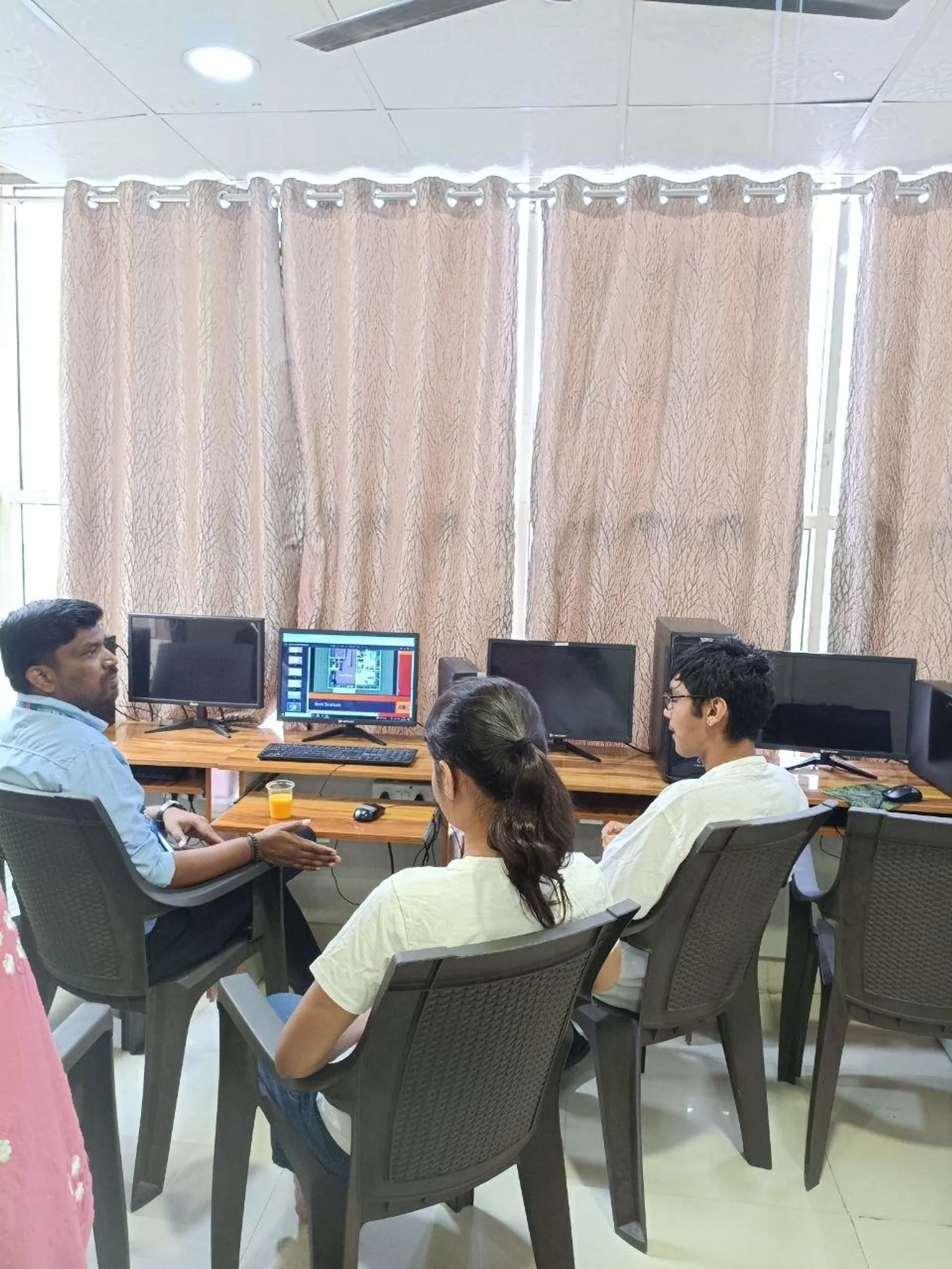
For professionals looking to develop expertise in interior fit-out BIM, comprehensive training is essential. Organizations like ABC Trainings offer specialized courses covering:
- Revit interiors fundamentals
- Space planning and room modeling
- FF&E coordination workflows
- Lighting design integration
- MEP coordination for interiors
- Construction documentation best practices
- Real-world case studies from Pune projects
Ready to master interior BIM? Connect with BIM training experts through WhatsApp for Interior BIM Training to discuss your professional development path.
FAQ: BIM for Interior Design and Fit-Out
Conclusion
BIM is transforming interior design and commercial fit-out in Pune. From initial space planning through final handover, BIM improves coordination, enables accurate visualization, reduces material waste, and accelerates project delivery. For interior designers, architects, fit-out contractors, and MEP engineers in Pune, BIM expertise has become essential for competitive success.
The shift toward BIM in interior fit-out is driven by increasing project complexity, client expectations for visualization and accuracy, and the need for efficient coordination across multiple disciplines. Organizations and professionals that embrace interior BIM are positioned to deliver superior projects and capture growing market demand for sophisticated fit-out solutions.
Get Brochure + Fees + Batch Dates on WhatsApp
Free 1:1 counselling. Placement track record. CMYKPY/PMKVY eligibility check.
💬 WhatsApp 7774002496📞 Call 7039169629Visit Our Centers
- Wagholi (Pune): 1st Floor, Laxmi Datta Arcade, Pune-Ahilyanagar Highway. Call 7039169629
- Hadapsar (Pune HQ): 1st Floor, Shree Tower, opp. Vaibhav Theater, near Bloom Hotel, Magarpatta. Call 7039169629
- Cidco (Chh. Sambhajinagar): Kalpana Plaza, opp. Eiffel Tower, N-1 Cidco. Call 7039169629
- Osmanpura (Chh. Sambhajinagar): S.S.C Board to Peer Bazar Road, near Jama Masjid. Call 7039169629
- Sangli: Shubham Emphoria, 1st Floor, Above US Polo Assn., Sangli-Miraj Rd, Vishrambag. Weekend batches available. Call 7039169629