Can AI Coding Tools Like Lovable and Replit Agent Replace Developers: An Honest 2026 Answer (Updated July 2026)
Here is the question every Indian CS student and working developer is quietly asking in 2026: if Lovable can generate a full-stack SaaS app from a text prompt in 20 minutes, what exactly is my job? TCS alone cut 12,000 positions in July 2025, NASSCOM-Deloitte projects 1.25 million AI-skilled professionals will be needed by 2027, and the gap between those two numbers is where the real answer lives. The honest answer is not that AI coding tools will replace developers — it is that they are changing what it means to be a developer faster than most training programmes are keeping up with, and the developers who understand exactly where these tools work and where they break are the ones getting hired in 2026.
- Lovable, Replit Agent, Bolt.new and v0 can generate full-stack web apps from prompts — but produce code that breaks under real business logic, scale or security requirements
- AI coding tools replace junior tasks (boilerplate, CRUD scaffolding, UI generation) not developer roles — they shift what developers spend time on
- Indian developers who know how to prompt, review, debug and extend AI-generated code earn 30–50 percent more than those who do not in 2026
- TCS, Infosys and Wipro are hiring AI-augmented developers — the skill is knowing which tool to use and when to throw away its output
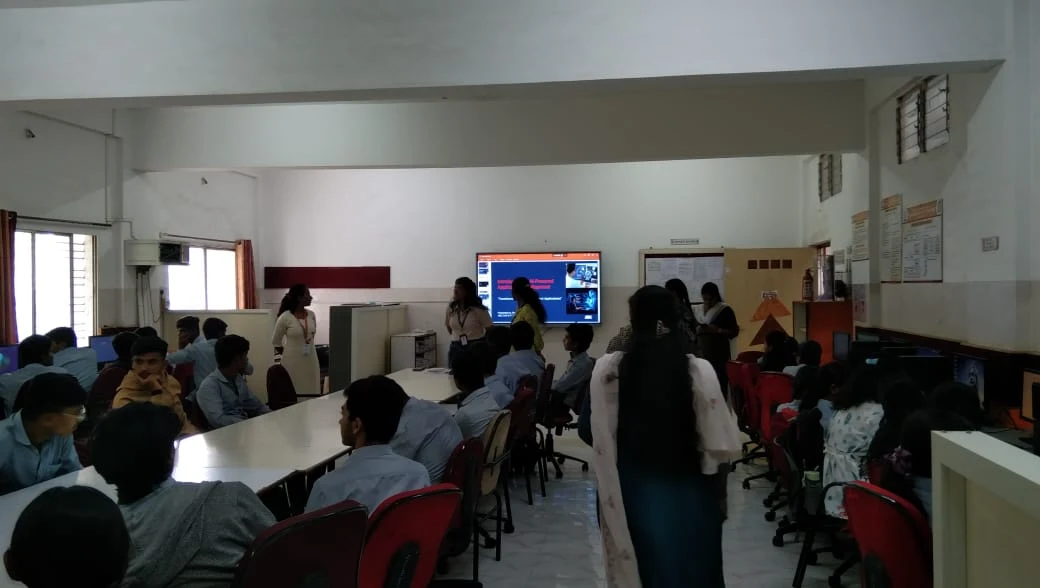
- ABC Trainings AI Powered Application Development workshop covers LLM integration, prompt engineering and building real AI apps at Pune and Sangli centres
What AI Coding Tools Like Lovable Replit Agent and Bolt.new Actually Do in 2026
To answer whether these tools replace developers, you need to understand exactly what they do. Lovable.dev takes a natural language description of an app (a SaaS dashboard, a booking form, a portfolio site) and generates a full Next.js or React front-end with Supabase database integration and Tailwind CSS styling. Replit Agent generates multi-file Python, Node.js or React apps from a conversational prompt and deploys them instantly to a Replit-hosted URL. Bolt.new (by StackBlitz) generates full-stack web apps in a browser-based dev environment with live preview. v0 by Vercel generates React UI components from prompts and screenshots, with shadcn/ui styling and instant preview. What all four of these tools have in common: they are extremely good at generating the first 60–70 percent of a standard web app from a prompt. A CRUD dashboard with user authentication, a landing page with a contact form, a simple booking system — any of these can be generated in 10–20 minutes. What they share as a limitation: the output is a first draft, not a production application. The generated code works in the happy path, often fails on edge cases, and rarely handles real business logic, multi-tenant data isolation, payment reconciliation or the kind of security hardening that a real production app requires.
The Honest Limits of AI Coding Tools: What They Cannot Do Without a Developer
The most important thing to understand about AI coding tools in 2026 is exactly where their output breaks down — because that boundary is precisely where developers are still essential. Business logic complexity: Lovable and Replit Agent generate excellent scaffolding. When your app needs to calculate GST on mixed-rate line items, handle refund policies that differ by product category, or enforce role-based access control across a multi-tenant system, the AI output needs a developer to implement the rules correctly — and to test that they do not break when edge cases hit. Security: AI-generated code regularly produces SQL injection vulnerabilities in raw database calls, missing rate limiting, exposed API keys and insecure direct object references. A junior developer who deploys AI-generated code to production without a security review is adding risk that their employer will eventually bear. Scale: A Lovable app that works for 100 users may start dropping requests at 10,000 because the generated database queries are not indexed, the API calls are not cached and the architecture assumes a single-server deployment. Integration with existing systems: real enterprise software development is 80 percent integration — connecting a new feature to a 6-year-old Django codebase, an ERP system, a payment gateway with a proprietary SDK, a legacy Oracle database. AI coding tools generate new code; they do not understand the architecture of your existing system. These are not failure modes that will be fixed in the next model version — they reflect the structural difference between generating plausible code and understanding business requirements.
| Task | AI Coding Tool Can Handle | Developer Still Required For |
|---|---|---|
| UI scaffolding (React, Next.js components) | Yes — Lovable, v0, Bolt.new generate in minutes | Accessibility, responsive review, brand customisation |
| CRUD API boilerplate (FastAPI, Django REST) | Yes — basic endpoints with auth scaffolding | Business logic, security hardening, multi-tenancy |
| Database schema generation | Yes — basic schemas with relations | Indexing for scale, data migration, normalization review |
| Payment gateway integration (Razorpay, PayU) | Partial — basic flow only | Webhook handling, refund logic, GST reconciliation |
| LLM and AI feature integration | Basic API call scaffolding | RAG pipelines, context management, eval and testing |
| Security audit of generated code | No — AI tools generate vulnerable code | OWASP review, injection testing, rate limiting |
| Assessment based on Lovable, Replit Agent, Bolt.new and v0 capabilities, July 2026. AI tool capabilities change quarterly — re-evaluate regularly. | ||
What the Rise of AI Coding Tools Means for Indian Software Developer Jobs
The effect of AI coding tools on Indian developer jobs is real, specific and different from the "AI will take all the jobs" narrative. Here is what is actually happening in 2026. What is being automated: boilerplate scaffolding (setting up a FastAPI project structure, generating CRUD endpoints, creating basic React components), documentation generation, simple test case generation, code explanation and basic debugging suggestions. A junior developer who spent 40 percent of their time on these tasks now spends 15 percent on them — which means companies can do more with the same headcount, reducing hiring of purely task-execution roles. What is not being automated: architecture decisions, requirement clarification with non-technical stakeholders, security review, performance optimisation, integration with complex existing systems, mentoring junior developers, and the judgment calls about what to build and what not to build. What is growing: demand for developers who can direct AI coding tools effectively — write prompts that produce useful output, review and debug generated code quickly, and extend AI scaffolding into production-grade applications. TCS, Infosys and Wipro are all running internal upskilling programmes for AI-assisted development in 2026; the direction of travel is AI-augmented developers, not AI replacement of developers.

How Indian Developers Should Use Lovable Replit Agent and Similar Tools in Practice
Here is the practical workflow for an Indian developer who wants to use these tools effectively rather than being displaced by them. Use Lovable or Bolt.new for early prototypes: when you need to show a client or a product manager what something could look like in 30 minutes, generate it with an AI tool, screen-record the walkthrough, and get feedback before writing any production code. This replaces weeks of back-and-forth on wireframes. Use v0 for UI components: any React component that is primarily visual — a data table, a card grid, a navigation sidebar — is faster to generate and adjust in v0 than to write from scratch. Review the output for accessibility and responsiveness before using it. Use Replit Agent for throwaway scripts: one-off data transformations, CSV cleaning scripts, simple automation tasks that will run once. The code quality does not need to be production-grade. Never use AI-generated code in production without: a manual security review of all database calls and API routes, a test suite that covers the key business logic paths, and a performance review of database queries for any data-intensive feature. The practical skill is switching fluently between "use the AI for the first draft" and "own the review and production hardening" — both halves are necessary.
The New Developer Skill Stack for 2026: What You Need Beyond Prompting
The developer skill stack that was competitive in 2023 — Python or JavaScript, basic SQL, Git, a framework — is now the minimum floor, not a differentiator, because AI tools generate that stack from a prompt. The new differentiator in 2026 is the layer above: knowing how to direct AI tools, evaluate their output, and build the things that AI tools cannot build. The five skills that have increased the most in value for Indian developers in 2026 are: Prompt engineering for code generation — writing prompts that consistently produce useful, reviewable code rather than plausible-looking boilerplate. LLM API integration — building applications that call Claude, GPT-4 or Gemini APIs, manage context windows, implement RAG pipelines and handle streaming responses. Security review of AI-generated code — OWASP Top 10 awareness applied to generated output, SQL injection and XSS detection in AI code, and rate limiting and authentication hardening. System design for AI-integrated applications — designing architectures that combine traditional APIs with LLM calls, vector databases and agent workflows. Evaluation and testing of LLM outputs — building evals, red-teaming AI features and measuring response quality. NASSCOM projects that AI-augmented developers earn 30–50 percent more than non-augmented peers with equivalent experience by 2027. The developers who are investing in this stack now are the ones that gap will benefit.
How Learning AI-Assisted Development Fits Into an Indian Tech Career in 2026
What most Indian CS students and junior developers are not yet doing in 2026 — but should be — is actively building portfolio projects that demonstrate AI-integrated development, not just traditional software projects. A GitHub portfolio with a Django CRUD app and a React dashboard tells a hiring manager you know the fundamentals. A portfolio that includes a RAG-powered customer support chatbot, an LLM-integrated document analysis tool and a multi-agent workflow built with CrewAI or LangChain tells them you understand where the industry is going. ABC Trainings covers AI-assisted development, prompt engineering and building LLM-integrated Python applications in the AI Powered Application Development workshop — a hands-on programme at Wagholi, Hadapsar, Cidco and Sangli centres designed for engineers who want to move from basic coding to building real AI products. The programme covers the Claude and GPT-4 APIs, RAG pipeline construction with vector databases, building tool-calling agents and deploying AI applications to production. The CMYKPY stipend of Rs 6,000–10,000 per month applies to eligible Maharashtra students enrolling in this programme. PMKVY 4.0, which has trained 2.1 crore students nationally, also covers AI and software development pathways.
CMYKPY / PMKVY: Maharashtra students learning AI-assisted development can claim Rs 6,000–10,000 per month under CMYKPY while enrolled in ABC Trainings AI Powered Application Development programme. PMKVY 4.0 has trained 2.1 crore students nationally — check eligibility at any ABC Trainings centre in one visit.
Get the AI and Tech Training Brochure + Fees + Batch Dates on WhatsApp
Free 1:1 counselling. Placement track record. CMYKPY/PMKVY eligibility check.
💬 Get Brochure on WhatsApp📞 Call 7039169629About the author: Mohd. Rafique Pasha, Data Science & AI Trainer, ABC Trainings.
Visit Our Centers
- Wagholi (Pune): 1st Floor, Laxmi Datta Arcade, Pune-Ahilyanagar Highway. Call 7039169629
- Hadapsar (Pune HQ): 1st Floor, Shree Tower, opp. Vaibhav Theater, Magarpatta. Call 7039169629
- Cidco (Chh. Sambhajinagar): Kalpana Plaza, opp. Eiffel Tower, N-1 Cidco. Call 7039169629
- Osmanpura (Chh. Sambhajinagar): S.S.C Board to Peer Bazar Road, near Jama Masjid. Call 7039169629
- Sangli: Shubham Emphoria, 1st Floor, Above US Polo Assn., Sangli-Miraj Rd, Vishrambag. Weekend batches available. Call 7039169629
FAQs
Can AI coding tools like Lovable and Replit Agent replace software developers in India
AI coding tools like Lovable, Replit Agent and Bolt.new cannot replace software developers in India in 2026 — they automate specific tasks (scaffolding, boilerplate, UI generation) and change what developers spend time on, but they do not handle business logic complexity, security requirements, system integration with existing codebases or performance at scale. TCS, Infosys and Wipro are hiring AI-augmented developers in 2026 — the competitive skill is knowing how to use these tools effectively and where to override their output, not avoiding them.
What can Lovable and Replit Agent actually build — and what are their limits
Lovable, Replit Agent, Bolt.new and v0 reliably build the first 60–70 percent of standard web applications from a prompt: CRUD dashboards, landing pages, booking forms, user authentication flows and basic data visualisation. Their output breaks on complex business logic (multi-rate GST calculation, role-based access control, multi-tenant data isolation), security (SQL injection, exposed API keys, missing rate limiting), performance at scale (unindexed queries, no caching architecture) and integration with existing codebases or proprietary systems. A developer reviewing and hardening AI-generated output is not optional — it is the core skill these tools require.
How should Indian developers use AI coding tools to stay relevant in 2026
Indian developers should use AI coding tools for the tasks they handle well — early prototypes, UI component generation, boilerplate scaffolding, throwaway scripts — and own the review, security hardening and production extension of generated code. The practical workflow: use Lovable or Bolt.new to generate a prototype for client or stakeholder feedback before writing production code; use v0 for React UI components; use AI assistants for code explanation and basic debugging. Never deploy AI-generated code to production without a security review (OWASP Top 10 check), a test suite covering business logic and a performance review of database queries.
What developer skills have become more valuable because of AI coding tools in 2026
The five developer skills that have increased most in value because of AI coding tools in 2026 are: prompt engineering for code generation (writing prompts that produce reviewable, usable code), LLM API integration (building Claude, GPT-4 or Gemini-powered features including RAG pipelines and agent workflows), security review of AI-generated code (catching OWASP Top 10 vulnerabilities in generated output), system design for AI-integrated applications, and evaluation and testing of LLM outputs. NASSCOM projects AI-augmented developers earn 30–50 percent more than non-augmented peers with equivalent experience by 2027.