CATIA Basics for Beginners Episode 4: Part Design Fundamentals (Updated June 2026)
What most people do not realize about CATIA is that 80 percent of everything you will ever model lives inside one workbench: Part Design. The Sketcher, the Pad, the Pocket, the Revolve — these four commands alone let you create 90 percent of the mechanical components used in automotive and aerospace production. NASSCOM-Deloitte projects 1.25 million AI-enabled engineering roles to open by 2027, and CATIA Part Design engineers sit at the core of that pipeline. Episode 4 of our beginner series goes deep into Part Design — not just what the tools do, but why they work the way they do and how to avoid the mistakes that trip up most learners.

- CATIA Part Design is the foundational workbench for creating 3D solid models from 2D sketches
- Sketcher is your starting point — fully constrained sketches prevent downstream errors
- Pad and Pocket are the core add/remove commands — master them first before any other tool
- Revolve creates rotational parts like shafts and flanges in seconds from a profile sketch
- CATIA Part Design engineers at Bajaj Auto and Tata Tech earn Rs 5 to 9 LPA with 2-3 years experience
What Is CATIA Part Design and Why Start Here
CATIA Part Design is the workbench where you create solid 3D parts from scratch. Every physical component — a bracket, a shaft, a housing, an engine cover — starts here as a 2D sketch and becomes a 3D solid through a series of feature operations. Part Design is parametric, meaning every dimension you enter is stored and can be changed later, with the part updating automatically. This is fundamentally different from drawing in AutoCAD or sketching on paper. You are not recording geometry — you are encoding design intent. Change the shaft diameter from 20mm to 25mm and every dependent feature (fillet, bore, assembly constraint) updates without you touching them.

The Sketcher Workbench: Building Fully Constrained Profiles
The Sketcher is where every Part Design feature begins. When you click Pad or Revolve, CATIA first asks you to select or create a sketch — that 2D profile is what gets extruded or rotated. The golden rule of Sketcher is full constraint: every line, arc and circle must have all its degrees of freedom locked through dimensions or geometric constraints (horizontal, vertical, coincident, tangent). An under-constrained sketch (shown in white in CATIA) will drift when you change other dimensions, causing errors further down the feature tree. An over-constrained sketch (shown in red) has conflicting definitions. You want the green state — fully constrained. Click Sketch Analysis under Tools to see your constraint count.
Pad and Pocket: The Add-Material and Remove-Material Commands
Pad adds material: select your sketch, click Pad in the toolbar, enter a length, and CATIA extrudes the 2D profile into a 3D solid. You can choose symmetric extrusion (equal depth on both sides), reversed direction, or add a draft angle for mold design. Pocket removes material: it cuts the sketch profile into an existing solid — think of drilling a hole or cutting a slot. Select the sketch, click Pocket, enter the depth. For blind pockets specify the exact depth. For through-all pockets, choose the Up-To-Last option and CATIA cuts through the entire body regardless of future dimension changes. The key insight: in CATIA you build up and cut away, layer by layer, just like a machinist removing material from a billet.

Revolve, Shaft and Groove for Rotational Components
When your part is rotationally symmetric — a shaft, a flange, a pulley, a bearing housing — use Revolve instead of Pad. Draw half the cross-section profile in Sketcher, then select the axis of rotation (usually a center line). CATIA rotates the profile through 360 degrees to create the solid. For cuts on rotational parts, use Groove — it is the rotational equivalent of Pocket. One profile, one axis, one click. A shaft that would take 20 minutes to model with Pad and Pocket operations takes 2 minutes with Revolve. Always check: if the part has a center line of symmetry in any cross-section, Revolve is your faster path.
Fillet, Chamfer and Draft Angle: Making Parts Manufacturable
Fillet rounds sharp edges — essential for parts that will be machined (sharp edges crack under stress) or molded (sharp corners prevent clean ejection). Select an edge or a set of edges, click Edge Fillet, enter the radius. CATIA rounds all selected edges simultaneously. Chamfer cuts a flat bevel instead of a round — common on bolt entry points and shaft ends. Draft Angle is critical for injection-molded and die-cast parts: it adds a small taper (typically 1 to 3 degrees) to vertical walls so the part releases cleanly from the mold. If you skip draft angles on a molded part design, the tool shop will send the file back. Learn this early and save everyone time on the project.
| CATIA Command | What It Does | When to Use | Common Mistake |
|---|---|---|---|
| Pad | Extrude sketch to solid | Base bodies, plates, brackets | Under-constrained sketch |
| Cut sketch into solid | Holes, slots, recesses | Sketch outside solid boundary | |
| Revolve | Rotate profile around axis | Shafts, flanges, pulleys | Profile crosses the axis |
| Fillet | Round sharp edges | Machined and cast parts | Radius larger than face width |
| Draft Angle | Add taper to walls | Injection mold, die cast | Skipping draft on molded parts |
CATIA Part Design Salary Data: What Freshers and Experienced Engineers Earn
AmbitionBox data shows: a fresher CATIA Part Design engineer earns Rs 3.5 to 5 LPA at Tier-2 automotive suppliers in Pune and Sambhajinagar. At Bajaj Auto (Waluj, Plot G-137), experienced CATIA Part Design and Assembly engineers with 3-5 years earn Rs 7 to 10 LPA. Tata Tech (Pune) pays CATIA Product Design specialists Rs 8 to 14 LPA. At OEMs and aerospace Tier-1 companies, senior CATIA engineers with Surface Design expertise reach Rs 14 to 22 LPA. The progression is clear: Part Design is entry point, and each workbench you add increases your market rate by 20 to 40 percent.
Learn CATIA Part Design at ABC Trainings: Locations and Batch Details
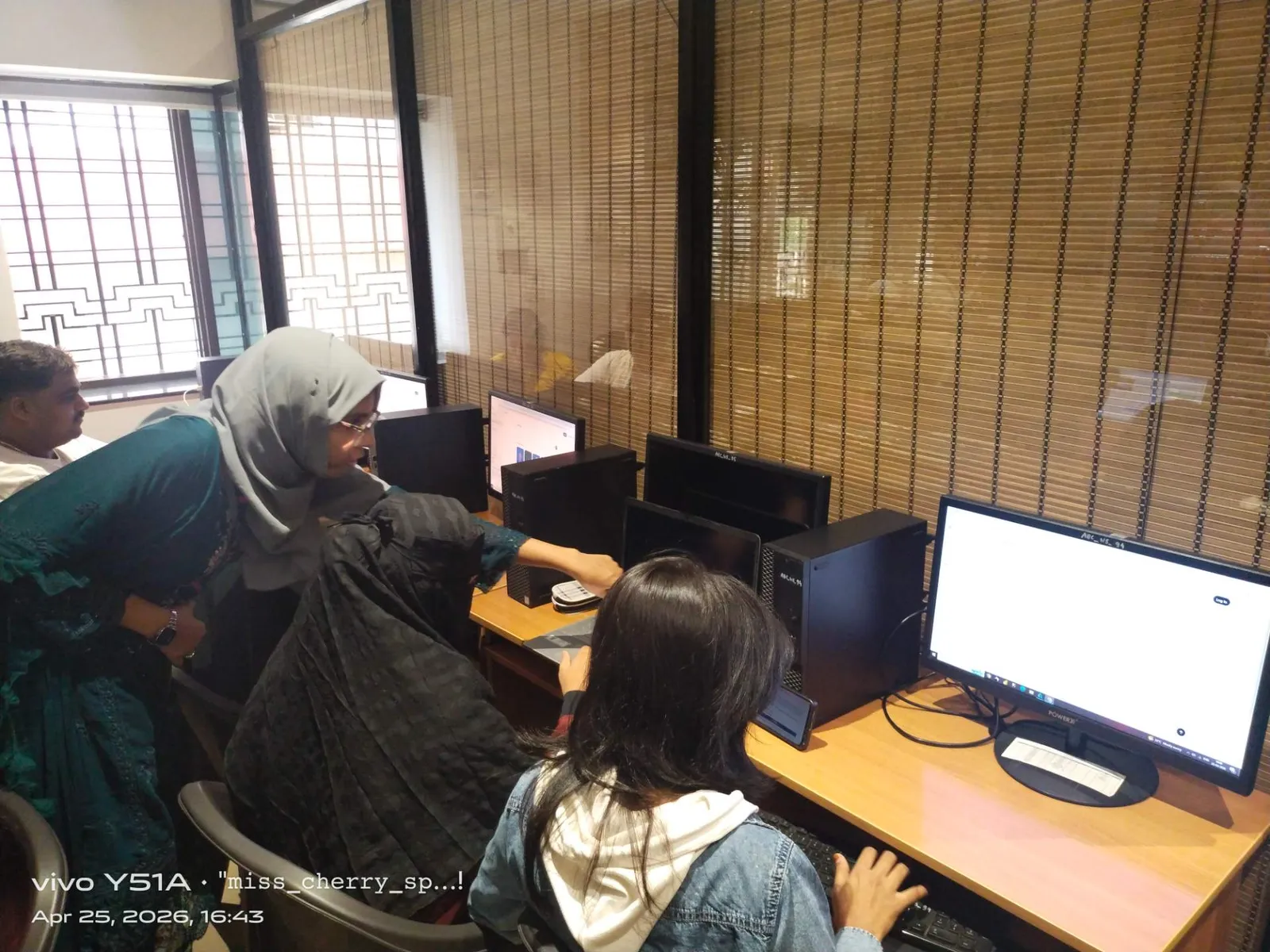
ABC Trainings delivers hands-on CATIA Part Design training at five centers. Wagholi, Pune: 1st Floor, Laxmi Datta Arcade, Pune-Ahilyanagar Highway — close to Ranjangaon and Chakan industrial corridors. Hadapsar, Pune: 1st Floor, Shree Tower, opposite Vaibhav Theater, near Magarpatta IT Park. Cidco, Sambhajinagar: Kalpana Plaza, N-1 Cidco, opposite Eiffel Tower. Osmanpura, Sambhajinagar: S.S.C Board to Peer Bazar Road, near Jama Masjid — central city location. Sangli: Shubham Emphoria, Above US Polo, Sangli-Miraj Road, Vishrambag. All centers run weekend and evening batches. Students work on real automotive part files from Day 1. Placement support available. Call 7039169629 for the next batch start date.
Get the AI Powered Product Design, Analysis & Simulation Brochure + Fees + Batch Dates on WhatsApp
Free 1:1 counselling. Placement track record. CMYKPY/PMKVY eligibility check.
💬 Get Brochure on WhatsApp📞 Call 7039169629About the author: Rahul Patil. 12 yrs experience training mechanical and CAD/CAM engineers across Maharashtra.
Visit Our Centers
- Wagholi (Pune): 1st Floor, Laxmi Datta Arcade, Pune-Ahilyanagar Highway. Call 7039169629
- Hadapsar (Pune HQ): 1st Floor, Shree Tower, opp. Vaibhav Theater, Magarpatta. Call 7039169629
- Cidco (Chh. Sambhajinagar): Kalpana Plaza, opp. Eiffel Tower, N-1 Cidco. Call 7039169629
- Osmanpura (Chh. Sambhajinagar): S.S.C Board to Peer Bazar Road, near Jama Masjid. Call 7039169629
- Sangli: Shubham Emphoria, 1st Floor, Above US Polo Assn., Sangli-Miraj Rd, Vishrambag. Weekend batches available. Call 7039169629
FAQs
What is the difference between the Sketcher and Part Design workbench in CATIA?
Sketcher is a 2D environment inside Part Design — you enter Sketcher to draw the profile (lines, arcs, circles), apply dimensions and constraints to fully define the geometry, then exit Sketcher back into Part Design to apply the 3D feature (Pad, Pocket, Revolve). Think of Sketcher as your drafting board and Part Design as your workshop. You switch between the two constantly while building a part — but Part Design is the parent workbench that holds the feature tree.
How long does it take to learn CATIA Part Design from scratch?
A focused learner working with real part exercises can get productive in CATIA Part Design in 3 to 4 weeks of daily practice, or 6 to 8 weeks on a weekend batch. The core commands (Pad, Pocket, Revolve, Fillet, Pattern) can be learned in the first two weeks. What takes longer is building good habits — fully constraining sketches, naming features, managing the specification tree cleanly. ABC Trainings structures our curriculum so students are building real automotive components by Week 2, which accelerates this learning significantly.
Which CATIA Part Design commands are tested in Bajaj Auto and Tata Tech interviews?
Companies like Bajaj Auto and Tata Tech typically test: ability to create a fully constrained sketch (draw a given 2D profile with dimensions), Pad and Pocket operations to a specified depth, Revolve for a rotational part, Boolean operations (Add/Remove multi-body), and pattern features (Rectangular and Circular Pattern). You will also need to explain the Part Design feature tree and what happens when you reorder or suppress a feature. ABC Trainings mock interviews cover all of these scenarios using actual CAD test files from manufacturing companies.
Can I learn CATIA Part Design on a weekend batch at ABC Trainings?
Yes. All ABC Trainings centers — Wagholi, Hadapsar (Pune), Cidco, Osmanpura (Sambhajinagar) and Sangli — offer weekend CATIA batches on Saturdays and Sundays. The weekend batches run for 3 to 4 months and cover Part Design, Assembly Design and Drafting fully. This format is specifically designed for final-year engineering students and working professionals who cannot attend weekday classes. WhatsApp 7774002496 or call 7039169629 for the next weekend batch dates.