Deep Learning in AIOps: How Self-Healing IT Systems Work (Updated July 2026) (Updated July 2026)
NASSCOM and Deloitte project demand for 1.25 million AI professionals in India by 2027 — and a growing chunk of that demand is for AIOps specialists who use deep learning to make IT infrastructure smarter, faster, and self-repairing. Self-healing IT is already running in production at TCS, Infosys, and Wipro delivery centres. The engineers who understand how it works are commanding significant salary premiums.
- AIOps uses AI/ML to automate IT operations — monitoring, incident detection, root-cause analysis, and auto-remediation
- Deep learning enables self-healing IT: LSTM and Transformer models detect anomalies, diagnose causes, and auto-fix without human intervention
- Key tools: Kubernetes (self-healing pods), AWS CloudWatch Anomaly Detection, Datadog ML alerts, New Relic AI observability
- AIOps engineers in India earn ₹8–38 LPA depending on experience and tool expertise
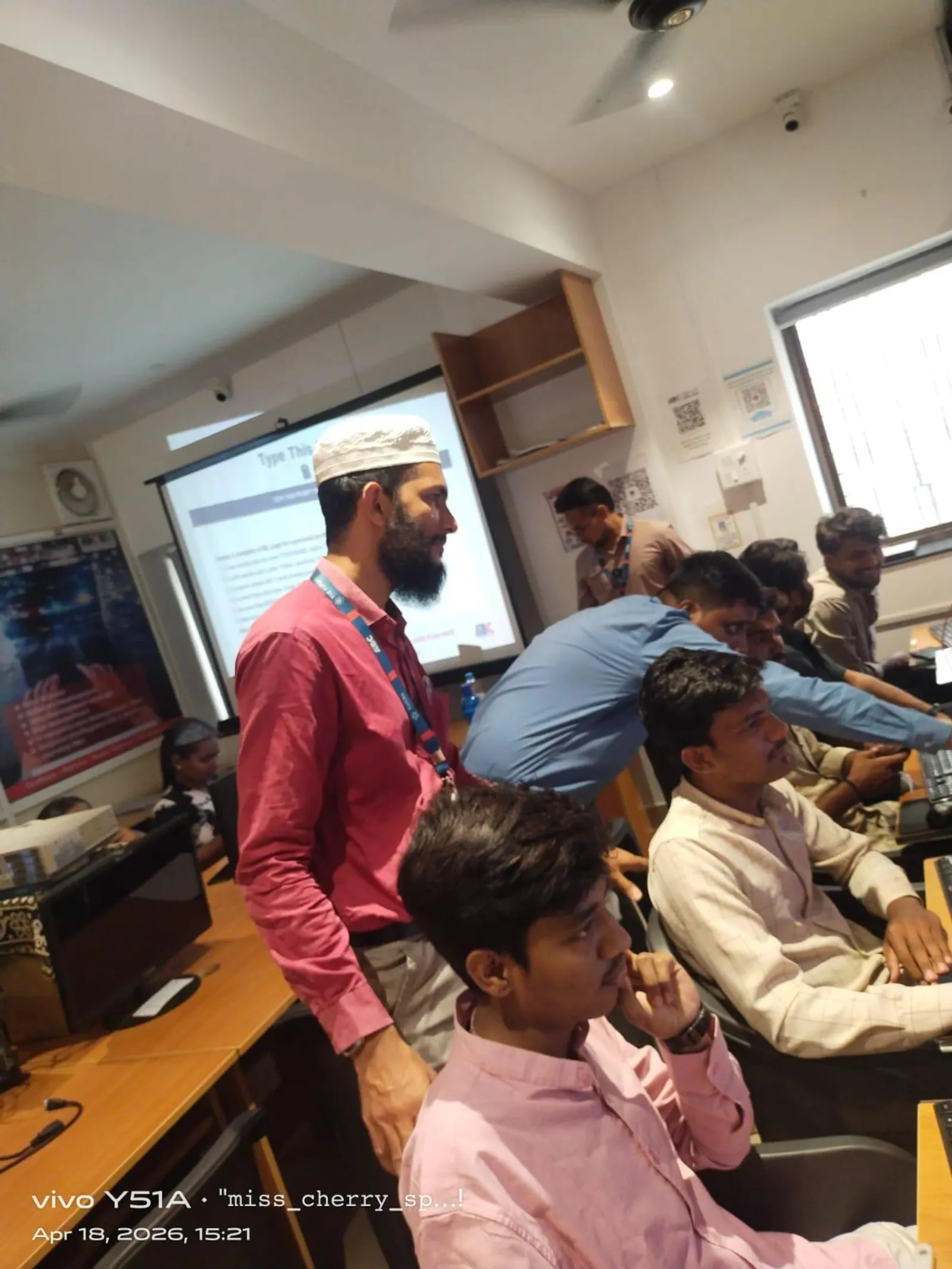
- Grounded in ABC Trainings live webinar on deep learning for autonomous IT decision-making
What Is AIOps and Why India's IT Industry Needs It Now
AIOps — Artificial Intelligence for IT Operations — is the practice of using machine learning and big data analytics to enhance and partially automate IT operations: monitoring, event correlation, incident management, and performance optimisation. Traditional IT operations relied on rule-based alerts: "if CPU exceeds 90% for 5 minutes, send a PagerDuty alert." AIOps replaces static rules with dynamic ML models that learn what normal looks like and alert on genuine anomalies — not the hundredth false positive of the week.
For India's IT services industry — TCS, Infosys, Wipro, HCL, Cognizant — AIOps is no longer optional. Enterprise clients (especially US and European banks and insurers) increasingly mandate SLA uptime of 99.95%+, which is impossible to achieve manually at scale. The only way to hit those numbers across hundreds of microservices is to let deep learning handle monitoring and auto-remediation while humans handle escalations and architecture decisions.
How Deep Learning Powers Self-Healing IT: The Technical Foundation
The deep learning connection to AIOps is specific: traditional ML models (decision trees, logistic regression) struggle with high-dimensional time-series data like server metrics, application logs, and network telemetry. Deep learning — specifically LSTMs (Long Short-Term Memory networks) and Transformer-based models — handles this well because they capture temporal dependencies across thousands of metrics simultaneously.
In practice, a self-healing IT system uses deep learning in three stages:
- Anomaly detection: LSTM models continuously analyse CPU, memory, disk I/O, network latency, and application response times. When a pattern deviates from the learned baseline, the model flags it as an anomaly — before it becomes an outage
- Root-cause analysis: Graph Neural Networks or correlation models trace which upstream service or infrastructure change caused the anomaly
- Automated remediation: Rule-based or reinforcement learning systems trigger pre-defined remediation scripts: restart a failing pod in Kubernetes, scale out an overloaded service, roll back a bad deployment
The system then logs what it did, verifies the fix worked, and updates its model — making it smarter every incident cycle.
| AIOps Concept | Traditional IT Ops | With Deep Learning / AIOps |
|---|---|---|
| Anomaly detection | Manual thresholds (CPU > 90% = alert) | ML baseline learns normal patterns; flags genuine deviations |
| Alert noise | Thousands of alerts/day; 80% false positives | 60–80% reduction; engineers see only real incidents |
| Incident resolution (MTTR) | 2–4 hours for P1 incidents | Seconds for auto-remediation; minutes for escalations |
| Root-cause analysis | Manual log review (hours) | Automated correlation; RCA in seconds |
| Documentation | Manual post-mortems (2–3 hrs) | Auto-generated incident reports with full timeline |
The Self-Healing IT Lifecycle: Detect, Diagnose, Fix, Learn
The ABC Trainings webinar on deep learning for autonomous IT systems walked through this four-stage lifecycle in detail. Here is how it works in a real production environment:
- Monitor: Continuous telemetry collection from application logs, infrastructure metrics, and network data — tools like Datadog, New Relic, Prometheus, and AWS CloudWatch feed this data into the AIOps engine in real time
- Detect: The deep learning model flags anomalies (e.g., a gradual memory leak in a Node.js service, or an unusually slow DB query pattern that predicts an outage 20 minutes before it happens)
- Diagnose: Correlation algorithms identify the root cause — "this memory spike is caused by a Docker container not releasing memory after job completion, introduced in the build deployed at 14:32"
- Remediate: An automated script restarts the leaking container, scales up a replacement, and opens a JIRA ticket with root-cause analysis pre-filled. The engineer gets a Slack notification: "Auto-fixed: container OOM at 15:47. Details in JIRA-4821"
The engineer's role shifts from firefighting to oversight and architecture — which is both a better use of their skills and a significantly higher-value job.
Key AIOps Tools Every Indian Engineer Should Know in 2026
You do not need to build deep learning models from scratch to work in AIOps. You need to know which tools use them and how to configure them. The AIOps tool stack in Indian IT companies in 2026:
- Kubernetes: The self-healing backbone — Kubernetes automatically restarts failed pods, redistributes load from unhealthy nodes, and rolls back bad deployments. Every Indian IT company running microservices uses it
- Datadog: ML-powered anomaly detection, APM (Application Performance Monitoring), and log management — widely used by product companies and IT services firms with US/EU clients
- New Relic: AI observability platform with natural-language querying of telemetry data
- AWS CloudWatch + Lookout for Metrics: Amazon's native AIOps tooling — mandatory knowledge for engineers on AWS-hosted systems
- Prometheus + Grafana: Open-source monitoring stack; Grafana ML plugins add anomaly detection
- PagerDuty + Event Intelligence: AI-powered on-call automation and incident triage
Python remains the glue language: writing Lambda functions for remediation, building custom anomaly detection notebooks in SageMaker, or scripting Kubernetes operators.
AIOps vs Traditional IT Operations: What Actually Changes on the Job
The practical difference between traditional IT ops and AIOps shows up immediately on the job:
- Alert volume: Traditional ops generates thousands of alerts per day — most are false positives. AIOps reduces alert noise by 60–80% using ML correlation, so engineers only see genuine incidents
- MTTR (Mean Time To Resolution): Traditional MTTR for a P1 incident: 2–4 hours. With self-healing systems, common incidents (container crashes, service restarts) resolve in seconds without waking anyone up
- Shift left: Predictive analytics catch failures 15–30 minutes before they happen, so fixes are applied during low-traffic windows rather than during peak hours
- Documentation: AIOps systems auto-generate incident reports with root-cause analysis, resolution steps, and timeline — saving 2–3 hours of manual documentation per incident
For fresh IT graduates in India, the practical takeaway: if you can configure Kubernetes, write Python automation scripts, and understand how ML anomaly detection tools work, you are already more valuable than someone who only knows Linux administration and traditional monitoring.
AIOps Career Scope and Salary in India 2026
AIOps is one of the fastest-growing specialisations in Indian IT in 2026. Based on Naukri, LinkedIn, and AmbitionBox data for Maharashtra-based IT roles:
- Junior AIOps / Site Reliability Engineer (0–2 yrs): ₹5–9 LPA
- Mid-level SRE / AIOps Engineer (3–5 yrs): ₹12–20 LPA
- Senior AIOps / Platform Engineering Lead (6–10 yrs): ₹22–38 LPA
Companies actively hiring AIOps-skilled engineers in Pune include Infosys (Hinjewadi Phase 2), TCS (Hinjewadi), Wipro (Kharadi), Cognizant (Magarpatta), and KPIT Technologies (Shivaji Nagar). Remote roles at US-based product companies — with dollar-linked packages — are also increasingly available to Indian engineers with strong Kubernetes + Datadog + Python skills.
How ABC Trainings AI Powered Application Development Workshop Covers AIOps
ABC Trainings AI Powered Application Development workshop covers the engineering skills that feed directly into AIOps roles: Python for automation, cloud platforms (AWS and Azure fundamentals), containerisation with Docker and Kubernetes, ML model basics, and monitoring tool configuration. The curriculum is hands-on — students build real automated pipelines, not just complete theory modules.
Batches run weekday (Mon–Fri, 9 AM–1 PM or 2–6 PM), weekend (Sat–Sun, 9 AM–5 PM), and live online. Our Chhatrapati Sambhajinagar and Pune centres are both equipped for this training. To book a free demo session, call 7039169629 or WhatsApp 7774002496.
Under the CMYKPY (Chhatrapati Shivaji Maharaj Kaushalya Vikas Yojana), Maharashtra government provides a ₹6,000–₹10,000 stipend to eligible students enrolled in approved skill development programmes — including AI and cloud computing training. ABC Trainings is an MSME-registered, government-affiliated institute. PMKVY 4.0 has trained 2.1 crore students nationwide since 2023. Ask our admissions team about scheme eligibility and stipend application process at the time of joining.
Get the AI Powered Application Development Brochure + Fees + Batch Dates on WhatsApp
Free 1:1 counselling. Placement track record. CMYKPY/PMKVY eligibility check.
💬 Get Brochure on WhatsApp📞 Call 7039169629About the author: ABC Trainings Faculty.
Visit Our Centers
- Wagholi (Pune): 1st Floor, Laxmi Datta Arcade, Pune-Ahilyanagar Highway. Call 7039169629
- Hadapsar (Pune HQ): 1st Floor, Shree Tower, opp. Vaibhav Theater, Magarpatta. Call 7039169629
- Cidco (Chh. Sambhajinagar): Kalpana Plaza, opp. Eiffel Tower, N-1 Cidco. Call 7039169629
- Osmanpura (Chh. Sambhajinagar): S.S.C Board to Peer Bazar Road, near Jama Masjid. Call 7039169629
- Sangli: Shubham Emphoria, 1st Floor, Above US Polo Assn., Sangli-Miraj Rd, Vishrambag. Weekend batches available. Call 7039169629
FAQs
What is AIOps and how is it different from traditional IT monitoring?
AIOps (AI for IT Operations) uses machine learning to automate monitoring, anomaly detection, incident management, and auto-remediation in IT systems. Traditional monitoring uses static rules (thresholds) that generate thousands of alerts — many false. AIOps uses deep learning models that learn what "normal" looks like and alert only on genuine deviations, reducing alert noise by 60–80% and enabling self-healing systems that fix themselves without human intervention.
Do I need to know how to build deep learning models to work in AIOps?
No — you do not need to build deep learning models from scratch. In practice, AIOps roles require you to use and configure tools like Datadog ML anomaly detection, AWS Lookout for Metrics, Kubernetes self-healing policies, and PagerDuty Event Intelligence. Python scripting for remediation automation and cloud platform knowledge (AWS/Azure) are more important daily skills than raw model building. Understanding the concepts behind the models (LSTMs, anomaly detection) helps you configure tools correctly and debug when they misbehave.
What salary can an AIOps engineer earn in Pune or Bangalore in India?
Based on current job postings and AmbitionBox/Naukri salary data for 2026: Junior SRE / AIOps Engineer (0–2 yrs) earns ₹5–9 LPA; mid-level (3–5 yrs) earns ₹12–20 LPA; senior AIOps/Platform Engineering leads (6–10 yrs) reach ₹22–38 LPA. Engineers with strong Kubernetes + Datadog + Python skills who work for US product companies remotely often earn even higher in dollar-linked packages.
Which companies in Pune hire AIOps or Site Reliability Engineers?
In Pune, active AIOps and SRE hirers include: Infosys (Hinjewadi Phase 2), TCS (Hinjewadi TCS Campus), Wipro (Kharadi), Cognizant (Magarpatta City), KPIT Technologies (Shivaji Nagar), Persistent Systems (Pune), and several product startups in Baner/Wakad. Most roles require Python, at least one public cloud platform, and either Kubernetes or a major observability tool (Datadog, New Relic, Grafana).