ETABS Nonlinear Analysis: Advanced Skills for Structural Engineers in Pune (Updated May 2026) (Updated May 2026)
Here's what separates a structural engineer who gets hired for high-value projects from one who stays on routine work: nonlinear analysis. With the Maharashtra government making BIM mandatory for all projects above ₹100 crore, and Pune Metro Line 3 officially launching in May 2026, the city's infrastructure boom is creating real demand for engineers who can run ETABS beyond basic linear static analysis. I've trained civil and structural engineers across Pune, Sambhajinagar, and Sangli for over a decade, and the shift is clear — project consultancies like L&T Construction and AECOM India now list ETABS nonlinear analysis as a required skill, not a nice-to-have. This guide covers the key nonlinear analysis types in ETABS, when to apply each, and what the skill is worth in the Pune job market.
- Nonlinear analysis in ETABS accounts for material yielding and geometric effects that linear methods miss
- Pushover analysis predicts building behavior under progressively increasing seismic loads
- Nonlinear time-history analysis is required for IS 1893 Zone III/IV structures above 15m
- P-delta effects can change column design forces by 10–20% in tall or slender structures
- BIM mandatory projects above ₹100 crore now expect nonlinear analysis reports from consultants
- Structural engineers with ETABS nonlinear skills earn ₹5–10 LPA in Pune and Mumbai
Why Nonlinear Analysis in ETABS — What Linear Analysis Cannot Capture
Linear static analysis assumes your structure behaves elastically under all loads — deflections are proportional to load, materials never yield, and geometry doesn't change significantly. That assumption works fine for most routine structures: a simple residential frame, a small commercial building in a low-seismic zone. But it fails you when the structure is tall, in a high seismic zone, uses irregular geometry, or must demonstrate performance beyond the elastic range. Nonlinear analysis removes these assumptions. It accounts for material yielding (reinforcement and concrete both), large deformations that change load paths, and the interaction between gravity loads and lateral displacement. If you're submitting structural reports for IS 1893 Zone III or IV projects in Pune's expanding real estate corridor, nonlinear analysis is increasingly expected by peer reviewers and government scrutiny committees.

Pushover Analysis in ETABS — Setup, Hinges, and Reading Results
Pushover analysis applies a gradually increasing lateral load pattern to your model and tracks how the structure deforms and which members yield first. In ETABS, you define plastic hinges at the ends of beams and columns — these are points where the member transitions from elastic to plastic behavior. FEMA 356 or IS 1893 hinge properties are built into ETABS. Run the pushover case under a modal or uniform load pattern. The output is a capacity curve (base shear vs. roof displacement) that shows your building's lateral strength. You then overlay demand spectrum from the earthquake code to find the performance point — where demand meets capacity. The result tells you whether your structure meets Immediate Occupancy (IO), Life Safety (LS), or Collapse Prevention (CP) performance levels.
| Analysis Type | When to Use | IS 1893 Applicability | ETABS Tool | Output |
|---|---|---|---|---|
| Linear Static | Regular buildings, low seismic zones | All zones, regular structures | Static Load Case | Forces, moments |
| Response Spectrum | Standard seismic design | Zones II–V, regular/irregular | Response Spectrum Case | Envelope forces |
| Pushover | Performance-based design | Irregular, Zone III/IV | Nonlinear Static Case | Capacity curve, hinges |
| Time-History (Linear) | Dynamic verification | Zone III/IV structures | Linear Time-History Case | Time-varying response |
| Nonlinear Time-History | High-importance or tall structures | Zone III/IV, >15m irregular | Nonlinear Time-History Case | Full inelastic response |
Nonlinear Time-History Analysis — When IS 1893 Demands It
Nonlinear time-history analysis (NLTHA) applies actual or synthetic ground motion records to your model over time and tracks the dynamic response step by step. IS 1893-2016 Part 1 requires NLTHA for irregular buildings over 15m in Zones III, IV, and V. In ETABS, you import ground motion records, apply them as load cases, and run with a small time step (0.01–0.02 seconds). You need at minimum 7 ground motion records (IS 1893 recommendation) and take the average of the results. NLTHA gives you actual story drifts, beam rotation demands, and column axial-moment interaction paths under dynamic loading — information that linear response spectrum analysis simply cannot provide. Pune Metro viaduct consultants are now required to submit NLTHA reports for pier and deck design.
P-Delta and Geometric Nonlinearity — Impact on Tall Structures
P-delta effect is the amplification of moments in columns caused by gravity loads acting on displaced geometry. When a column displaces laterally under earthquake or wind, the gravity load now acts with an eccentricity that creates additional moment — and that additional moment causes more displacement, which creates more moment. In tall structures or structures with slender columns, this feedback loop increases design forces significantly. In ETABS, enable P-delta analysis under the analysis options and specify the load combination that contributes gravity load (typically 1.0DL + 0.5LL). For structures taller than 15 storeys or with column slenderness ratios above 40, ignoring P-delta can underestimate column moments by 10–20%, which directly affects reinforcement design.
Material Nonlinearity — Concrete Cracking and Steel Yielding in ETABS
Material nonlinearity in ETABS covers two behaviors: concrete cracking under tension, and yielding of reinforcement. For accurate nonlinear analysis, assign fiber hinges or use the layered shell element for concrete walls and slabs. ETABS uses moment-curvature relationships derived from the assigned material properties — IS 456 or IS 800 for steel. What most training courses skip is the importance of correctly defining the confined concrete model for columns (Mander model is recommended) because the confinement provided by ties and stirrups significantly extends the ductility of columns beyond the unconfined peak. Getting this right is the difference between a pushover analysis that shows premature column failure and one that accurately predicts the ductile beam-hinge mechanism your design intends.
Seismic Performance Levels — IO, LS, and CP in Pushover Results
The three seismic performance levels from FEMA 356 and ATC-40 are Immediate Occupancy (IO), Life Safety (LS), and Collapse Prevention (CP). IO means the structure is usable immediately after the earthquake with minimal structural damage. LS means significant damage but the structure does not collapse — people can evacuate safely. CP means the structure is on the verge of collapse but life safety is maintained. In ETABS pushover results, these are displayed as zones on your capacity curve. For most residential and commercial buildings in Maharashtra under IS 1893, the design target is Life Safety for the Design Basis Earthquake (DBE). High-importance structures like hospitals and data centers must meet IO for the DBE.
Where These Skills Are in Demand in Pune and Maharashtra
Structural consultancies in Pune are hiring engineers with ETABS nonlinear skills right now. L&T Construction Pune (Yerwada office) and AECOM India Pune (Baner office) regularly take structural engineers with ETABS advanced analysis skills at ₹5–8 LPA. Design consultants for Pune Metro Phase 2 and Phase 3 contracts need engineers who can deliver peer-review-ready nonlinear reports. In Sambhajinagar, the AURIC smart city infrastructure projects — backed by ₹71,343 crore in investment — involve multi-storey industrial and commercial buildings where nonlinear analysis is part of the structural submission. Mumbai-based firms like Mahimtura Consultants and STUP Consultants hire Pune-based structural engineers with ETABS skills for remote project work at ₹6–10 LPA.
Building Advanced ETABS Skills at ABC Trainings
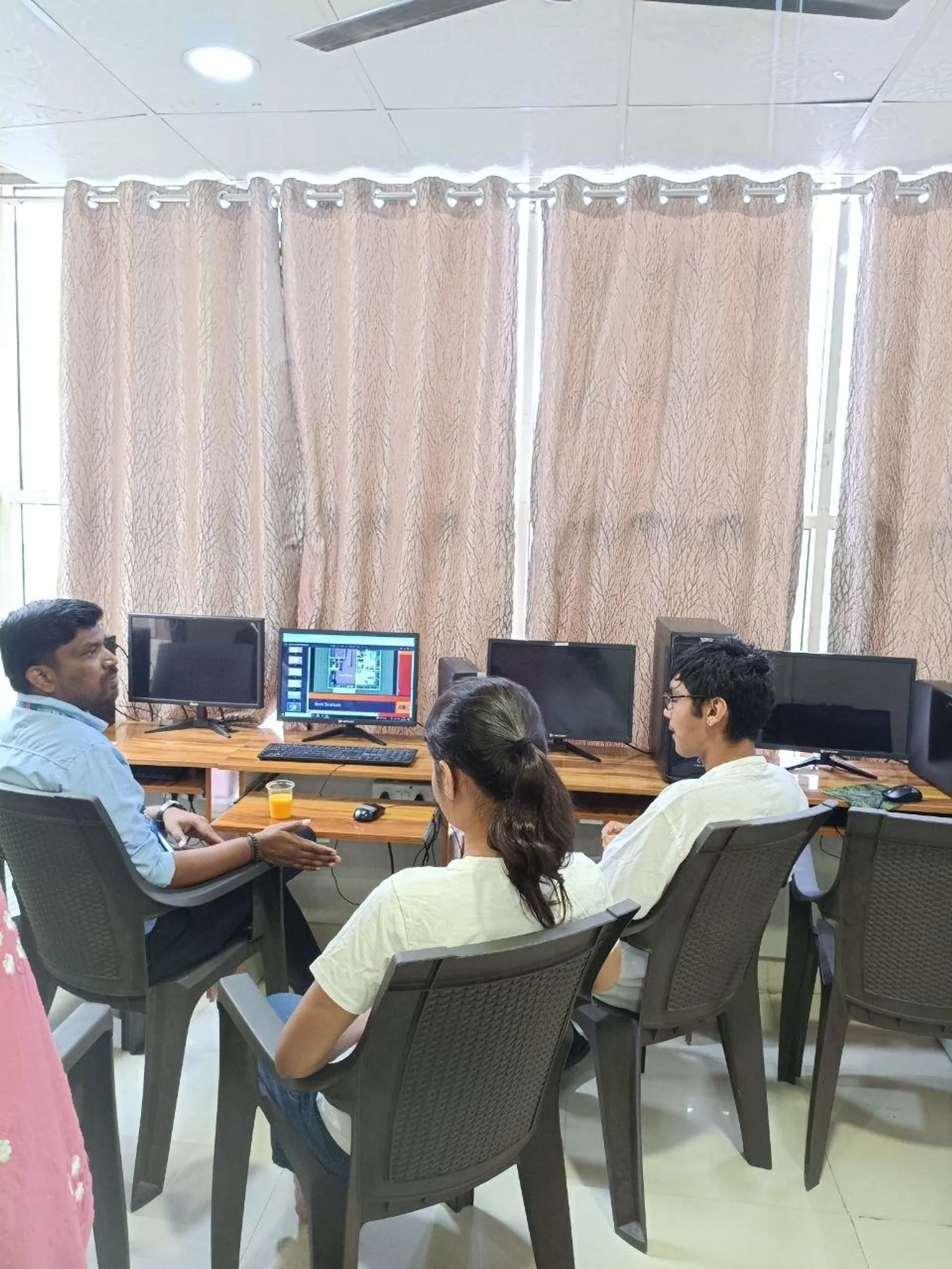
Our AI Powered Building Information Modeling (BIM) workshop at ABC Trainings covers ETABS from basic linear analysis through pushover analysis and IS 1893 seismic design. Students work on actual building models — a 10-storey RC frame, a 20-storey shear wall building — running both linear and nonlinear cases and comparing results. We teach how to interpret capacity curves, set performance objectives, and prepare analysis reports in the format expected by structural peer reviewers. Combined with Revit for BIM integration, the course prepares you for both design office and consultancy roles. Courses run at our Pune Wagholi, Hadapsar, CIDCO Aurangabad, Osmanpura, and Sangli centers. Call +91 7039169629 or WhatsApp 7774002496.
Civil and structural engineering graduates in Maharashtra can apply for the Mukhyamantri Yuva Karya Prashikshan Yojana (CMYKPY) — ₹6,000–₹10,000 monthly stipend during 6-month on-job training at structural consultancies and construction companies. Completing ABC Trainings' BIM course with ETABS and Revit gives you the skill certificate needed to apply for CMYKPY structural trainee positions at L&T Construction, AECOM Pune, and Pune Metro contractors. Register at mahayojana.gov.in after completing your course.Get the Civil Engineering Brochure + Fees + Batch Dates on WhatsApp
Free 1:1 counselling. Placement track record. CMYKPY/PMKVY eligibility check.
💬 Get Brochure on WhatsApp📞 Call 7039169629About the author: Rahul Patil. 12 yrs experience training engineers across Maharashtra.
Visit Our Centers
- Wagholi (Pune): 1st Floor, Laxmi Datta Arcade, Pune-Ahilyanagar Highway. Call 7039169629
- Hadapsar (Pune HQ): 1st Floor, Shree Tower, opp. Vaibhav Theater, Magarpatta. Call 7039169629
- Cidco (Chh. Sambhajinagar): Kalpana Plaza, opp. Eiffel Tower, N-1 Cidco. Call 7039169629
- Osmanpura (Chh. Sambhajinagar): S.S.C Board to Peer Bazar Road, near Jama Masjid. Call 7039169629
- Sangli: Shubham Emphoria, 1st Floor, Above US Polo Assn., Sangli-Miraj Rd, Vishrambag. Weekend batches available. Call 7039169629
FAQs
When is nonlinear analysis required for a building in India as per IS 1893?
IS 1893-2016 Part 1 requires nonlinear time-history analysis for irregular structures above 15 metres in Seismic Zones III, IV, and V. Pushover analysis is required or recommended for performance-based design of buildings in these zones. Regular structures in Zone II can use linear static or response spectrum analysis. Maharashtra's industrial corridor projects (AURIC, Pune Metro) are predominantly in Zone III, making nonlinear analysis increasingly mandatory.
What is a pushover analysis and what does the capacity curve tell you?
Pushover analysis applies a progressively increasing lateral load to your structure and tracks which members yield and in what sequence. The capacity curve plots base shear (total lateral force resisted) against roof displacement. The shape tells you the structure's lateral strength, ductility, and failure mode. Overlaying the IS 1893 demand spectrum gives you the performance point — the displacement your structure will reach under the design earthquake — and tells you whether it meets IO, LS, or CP performance targets.
How is P-delta analysis enabled in ETABS and when does it matter?
In ETABS, enable P-delta analysis in Analyze > Set Analysis Options and check 'Include P-Delta Effects'. Then define the P-delta load combination — typically 1.0DL + 0.5LL — which represents gravity loads present during the seismic event. P-delta matters most for structures over 10 storeys, slender columns (slenderness ratio > 40), and structures with significant lateral sway under gravity loads. For most 4–6 storey residential buildings in Pune, the P-delta effect is small but should still be checked per good practice.
What salary can a structural engineer with ETABS nonlinear skills expect in Pune?
Structural engineers with ETABS nonlinear analysis skills earn ₹5–8 LPA at consultancies in Pune such as L&T Construction, AECOM, and Mahimtura Consultants, based on Glassdoor India and AmbitionBox 2025 data. Engineers with 3–5 years of experience in advanced seismic design and BIM integration earn ₹8–14 LPA at Mumbai-based firms working on Pune and AURIC projects remotely. Freshers from ABC Trainings with portfolio projects in pushover analysis have joined consultancies at ₹3.5–5 LPA.