Git and Version Control Complete Beginners Guide for Developers (Updated June 2026) (Updated June 2026)
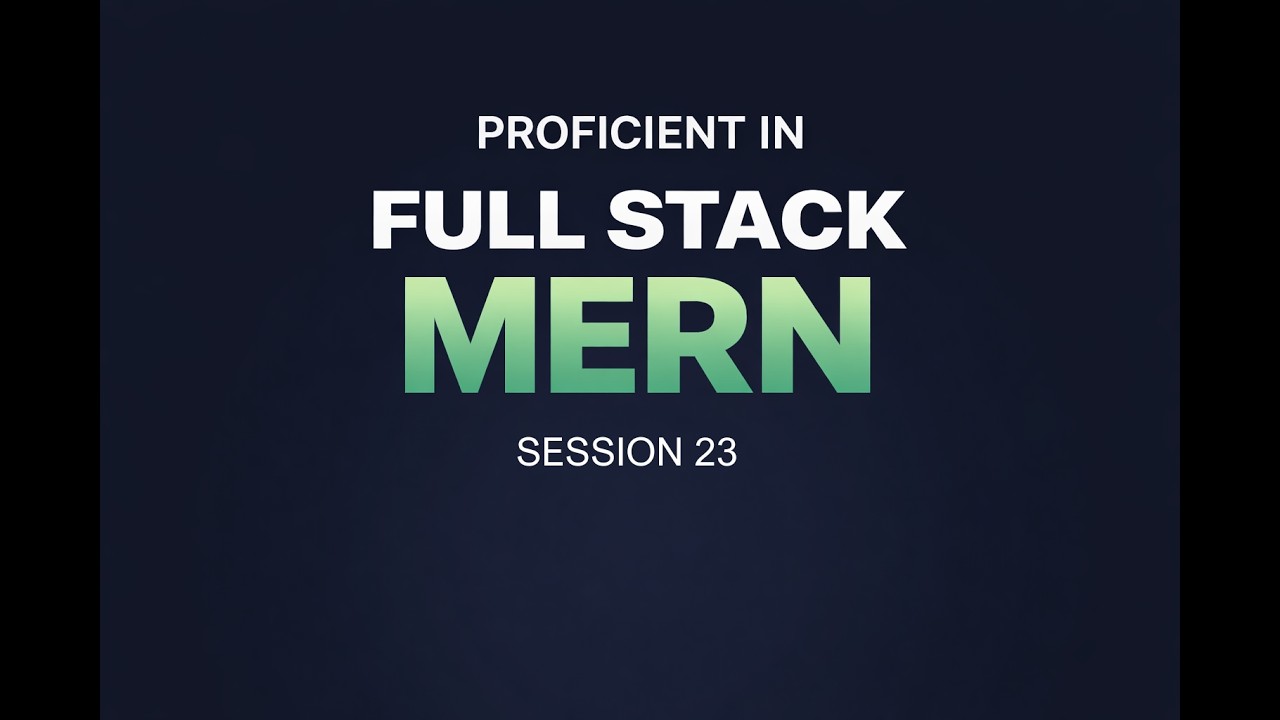
Here's the thing about Git: it's not optional. NASSCOM-Deloitte projects India will need 1.25 million AI-ready tech professionals by 2027 — and every single one of those job descriptions will say "proficiency in Git required." Not "preferred." Required. Episode 23 of the ABC Trainings Full Stack series covers version control from scratch. After this, you'll understand what a commit is, why branches exist, how to push your code to GitHub, and how to pull your teammate's changes without destroying your own work. Git is the one tool that separates "I learn to code" from "I actually work on software."
- Git is a distributed version control system — every developer has a complete copy of the project history on their local machine, which makes it fast and reliable
- The three-stage workflow is: edit files → git add (stage changes) → git commit (save snapshot) → git push (upload to remote like GitHub)
- Branches let you work on a new feature without breaking the main working code — create a branch, do your work, then merge it back when ready
- git pull fetches and merges your teammate's latest commits from GitHub into your local copy — do this every morning before starting work
- A GitHub portfolio with real commits is more convincing to recruiters at TCS, Infosys, and startups than any certificate — start committing today
What is Version Control and Why Does Every Developer Need Git?
Version control is a system that tracks every change made to your code over time. Instead of saving multiple copies of files with names like project_final.js, project_final2.js, and project_ACTUAL_final.js, version control keeps a structured history of every change, who made it, and when. Git is the most widely used version control system in the world — used by every professional software team from three-person startups to Google and Microsoft. What most people don't realise is that Git is distributed, meaning every developer has a complete copy of the entire history on their laptop. There is no single server whose failure loses all your work. This makes Git fast for most operations and resilient by default.

Installing Git and Setting Up Your Identity
Git works on Windows, Mac, and Linux. Install it from git-scm.com and run git --version to verify installation. Then set your identity — this is what appears in every commit you make: git config --global user.name "Your Name" and git config --global user.email "you@email.com". These are not login credentials; they are metadata attached to your commits so teammates (and future employers looking at your GitHub history) can see who made each change. Set these once on each computer you work on and Git remembers them. If you're using VS Code, the built-in Git panel makes it easier to stage and commit without typing commands — but understanding the command line first gives you the foundation to debug when the GUI behaves unexpectedly.
| Git Command | What It Does | When to Use |
|---|---|---|
| git init | Creates a new Git repository in the current folder | Once, when starting a new project |
| git add . | Stages all changed files for the next commit | After making changes you want to commit |
| git commit -m "msg" | Saves a snapshot of staged changes with a message | After staging — multiple times per session |
| git push origin main | Uploads commits to the remote repository (GitHub) | When you want to back up or share your work |
| git pull origin main | Downloads and merges teammates' latest commits | Every morning before starting work |
| git checkout -b name | Creates and switches to a new branch | When starting a new feature or bug fix |
| git merge branch-name | Merges changes from another branch into current | When a feature is complete and reviewed |
The Core Git Workflow: init, add, commit, and push
The core Git workflow has four steps you'll use every day. First: make changes to your files normally. Second: git add filename.js (or git add . for all changed files) — this stages the changes, telling Git "I want to include these in my next commit." Third: git commit -m "Add login form validation" — this creates a snapshot of all staged changes with your message describing what changed and why. Fourth: git push origin main — this uploads your commits to GitHub (or another remote) so your team can see them or so you have a backup. That's it. Every professional developer repeats this cycle dozens of times per day. The discipline of writing clear commit messages — what changed and why, not just "fixed stuff" — is a professional habit that makes you easier to work with and more visible to code reviewers.
Branches: Working Safely Without Breaking the Main Codebase
A branch is a parallel copy of your codebase where you can make changes without affecting the main version. The default branch is called main (or master in older repos). To create a feature branch: git checkout -b feature/login-page. Now you're working on feature/login-page — commits here don't touch main. When your feature is ready, switch back to main: git checkout main. Then merge: git merge feature/login-page. Git combines the changes. If Git can merge automatically (because you and main didn't change the same lines), it's instant. If there's a conflict, Git marks the conflicting sections in the file and waits for you to resolve them manually. Branching is the foundation of how professional teams at Infosys, TCS, and startups manage parallel feature development without stepping on each other.
Pulling Changes, Handling Merge Conflicts, and Collaboration on GitHub
Every morning when you start work on a shared project, run git pull origin main. This fetches any commits your teammates pushed since you last worked and merges them into your local copy. If someone changed the same files you were working on overnight, Git will flag a merge conflict — sections where both versions have different content. Open the conflicting file, find the conflict markers (<<<<<<, ======, >>>>>>>), decide which version to keep or combine the two, save the file, stage it with git add, and complete the merge with git commit. Merge conflicts look scary the first time — trust me, after three or four of them, they become routine. The real prevention is good branching discipline: work on separate branches for separate features and merge to main frequently so conflicts stay small.
Git in the Real World: How Teams Use It at Infosys, Startups, and Open Source Projects
In professional software teams, the standard workflow is: every feature or bug fix gets its own branch off main; a Pull Request (PR) on GitHub is opened for code review; one or two teammates review the code and leave comments; the author addresses feedback and updates the PR; once approved, the PR is merged to main and the feature branch is deleted. This flow is used by every software company — from Infosys and TCS to every funded startup in Hinjewadi. At companies like KPIT, Wipro Digital, and global GCCs in Pune, knowing Git branching, PR workflow, and rebasing is a baseline expectation, not a bonus skill. For freshers: a GitHub profile with regular commits, real projects, and clear commit messages is your most credible portfolio piece. Every recruiter we send students to at ABC Trainings checks GitHub. Call 7039169629 for the Full Stack batch details.
Get the Full Stack Development Brochure + Fees + Batch Dates on WhatsApp
Free 1:1 counselling. Placement track record. CMYKPY/PMKVY eligibility check.
💬 Get Brochure on WhatsApp📞 Call 7039169629About the author: Rahul Patil. 12 yrs experience training engineers across Maharashtra.
Visit Our Centers
- Wagholi (Pune): 1st Floor, Laxmi Datta Arcade, Pune-Ahilyanagar Highway. Call 7039169629
- Hadapsar (Pune HQ): 1st Floor, Shree Tower, opp. Vaibhav Theater, Magarpatta. Call 7039169629
- Cidco (Chh. Sambhajinagar): Kalpana Plaza, opp. Eiffel Tower, N-1 Cidco. Call 7039169629
- Osmanpura (Chh. Sambhajinagar): S.S.C Board to Peer Bazar Road, near Jama Masjid. Call 7039169629
- Sangli: Shubham Emphoria, 1st Floor, Above US Polo Assn., Sangli-Miraj Rd, Vishrambag. Weekend batches available. Call 7039169629
FAQs
Is Git the same as GitHub?
No. Git is the version control software installed on your local computer that tracks changes to your code. GitHub is a cloud platform (website) that hosts Git repositories so you can back up your code, share it with teammates, and collaborate via Pull Requests. Other platforms like GitLab and Bitbucket serve a similar purpose. Git works without GitHub — you can use it just for local history — but almost all professional teams use GitHub or a similar platform for remote collaboration.
What is the difference between git pull and git fetch?
git pull is shorthand for git fetch + git merge. git fetch downloads the latest commits from the remote repository but does not apply them to your working branch — you can inspect what changed before merging. git pull does both in one step: it fetches and immediately merges the remote changes into your current branch. For beginners, git pull is simpler and fine for daily use. As you work on more complex branching workflows, understanding git fetch separately gives you more control.
Do I need to use Git from the command line or can I use a GUI?
You can use both. VS Code has excellent built-in Git support — you can stage, commit, and push from the Source Control panel without typing any commands. GitKraken and GitHub Desktop are popular standalone GUI clients. However, learning the Git command line first is strongly recommended because: (1) it works everywhere, (2) you understand what the GUI is doing, and (3) when something goes wrong, the command line gives you the tools to fix it. At ABC Trainings, we teach Git command line first, then show students the VS Code Git panel as a productivity tool.
Does ABC Trainings teach Git as part of its Full Stack Development course?
Yes. Git and GitHub are covered in Episode 23 of the Full Stack Development course at ABC Trainings — before React, Node.js, and backend development. Every student creates a GitHub profile, pushes their first project, and follows a branching workflow from Week 1. This ensures that by the time they start building React and Node.js projects, their work is already on GitHub building a visible portfolio. Batches at Wagholi, Hadapsar, Cidco Sambhajinagar, Osmanpura, and Sangli. Call 7039169629 for schedule.