Industry 4.0 Skills for AURIC Aurangabad 2026: PLC SCADA Robotics and IoT Career Guide (Updated June 2026)
I spent fifteen years at Siemens India before joining ABC Trainings as an automation trainer, and I have watched the job market for electrical and automation engineers transform completely in the last four years. AURIC — the Aurangabad Industrial Development Corporation's Shendra-Bidkin industrial zone — is the single biggest driver of that transformation in Maharashtra outside of Pune. A Rs 71,343 crore investment anchoring 62,405 projected jobs is not a statistic; it is a decade of career opportunity for engineers from Sambhajinagar and the surrounding districts. What I tell every student at our Osmanpura and Cidco centres is this: the companies at AURIC are not looking for general engineers. They are looking for engineers who can stand in front of a Siemens S7-1500 PLC panel, understand what it is doing, and change a rung of Ladder Logic without shutting down the production line. This guide explains exactly what those companies need, what they pay, and what you need to do right now to be ready.
- AURIC Shendra-Bidkin: Rs 71,343 crore investment, 62,405 projected jobs — Industry 4.0 skills are the access key
- PLC programming (Siemens S7-1500, Allen-Bradley) is the foundational technical skill for all automation roles
- SCADA systems (Siemens WinCC, Ignition, Wonderware) connect PLC data to supervisory control and dashboards
- Industrial robotics (Fanuc, KUKA, ABB) skills are in demand at Skoda VW, Bajaj, and AURIC auto-component makers
- Industrial IoT (MQTT, OPC-UA, edge computing) adds the data connectivity layer for smart factory initiatives
- ABC Trainings Osmanpura and Cidco run hands-on Industry 4.0 courses with real PLC trainer kits
AURIC 2026: Why Industry 4.0 Skills Are the Ticket to 62000 New Jobs
The Aurangabad Industrial Development Corporation (AURIC) zone at Shendra-Bidkin is the most significant industrial investment in Maharashtra outside the Mumbai-Pune corridor. The Rs 71,343 crore committed investment covers auto manufacturing, specialty chemicals, pharmaceuticals, food processing, and electronics. Skoda VW's assembly plant at Plot A-1/1 Shendra is the anchor OEM. Bajaj Auto's Waluj facility at Plot G-137 continues to be one of India's largest two-wheeler manufacturing sites. Hyosung's Rs 3,000 crore spandex manufacturing plant at Bidkin AURIC uses continuous polymer processing lines that run on highly automated PLC-SCADA systems. Lubrizol's Rs 1,680 crore specialty chemical plant requires advanced process instrumentation and control. Toyota Kirloskar's AURIC facility, Ather Energy's Bidkin plant, and dozens of Tier-2 component suppliers fill in the rest of the zone. Every one of these facilities operates on Industry 4.0 principles: PLCs controlling production equipment, SCADA systems providing supervisory visibility, robots handling material movement and assembly, and IoT sensors feeding real-time data to analytics platforms. The engineers who understand these systems are the ones these companies fight over.
PLC Programming: The Foundation Every Automation Engineer Must Have
PLC — Programmable Logic Controller — is the computer that controls industrial equipment. Every conveyor, robotic arm, press, welding station, injection moulding machine, and assembly fixture in an AURIC factory is controlled by a PLC. The PLC reads inputs (sensors, buttons, limit switches) and controls outputs (motors, valves, actuators) according to a program written by a control engineer. Siemens S7-1500 and S7-300/400 are the dominant PLC brands at AURIC companies — Siemens is particularly strong in the chemical, pharma, and process industries. Allen-Bradley (Rockwell Automation) PLCs are used extensively at Tier-1 auto suppliers and at facilities with a US OEM pedigree. The primary programming languages are Ladder Logic (most common, resembles relay logic circuits), Function Block Diagram (for process and motion control), and Structured Text (for complex algorithms). What most engineering graduates do not understand is that a PLC programmer is not just a programmer — they need to understand the physical process (how a welding station sequence works, what happens if a sensor fails mid-cycle) and write code that handles failures safely. That process-plus-programming combination is what distinguishes an employable PLC engineer from someone who can write Ladder Logic on a training simulator.
| Skill Area | Key Tools / Platforms | AURIC Companies Hiring | Entry Salary |
|---|---|---|---|
| PLC Programming | Siemens S7, Allen-Bradley, TIA Portal | Skoda VW, Bajaj, Endurance | Rs 2.8-4.5 LPA |
| SCADA Systems | WinCC, Ignition, Wonderware | Hyosung, Lubrizol, Toyota Kirloskar | Rs 3.5-6 LPA |
| Industrial Robotics | Fanuc TP, KUKA KRL, ABB RAPID | Skoda VW, Bajaj Waluj | Rs 5-10 LPA |
| Industrial IoT | MQTT, OPC-UA, edge gateways | All AURIC smart factory sites | Rs 6-12 LPA |
SCADA Systems: Monitoring and Supervisory Control at Industrial Scale
SCADA — Supervisory Control and Data Acquisition — is the software layer above the PLC that gives production managers and engineers real-time visibility of the factory floor without standing next to every machine. A SCADA screen shows live values from every sensor in the plant: temperatures, pressures, flow rates, motor currents, production counts, and alarm states. Operators can acknowledge alarms, start and stop sequences, and adjust setpoints from the SCADA terminal without touching individual PLC panels. Siemens WinCC is the dominant SCADA at Siemens-PLC-equipped facilities throughout AURIC. Ignition by Inductive Automation is gaining ground because it is HTML5-based and runs in browsers without proprietary client software. Wonderware (AVEVA) is used at older chemical plant installations. At facilities targeting smart factory certification, OPC-UA connectivity from SCADA to MES (Manufacturing Execution System) and ERP (typically SAP) is mandatory. A SCADA engineer needs to understand both the PLC data tags they are connecting to and the HMI (Human-Machine Interface) design principles that make operator screens effective under production pressure. This combination of technical and UX thinking is rare and well-compensated.
Industrial Robotics and Cobots: Growing Demand at AURIC Manufacturers
Industrial robots are now standard equipment on AURIC assembly lines. Skoda VW's Shendra plant uses KUKA and ABB robots for body-in-white welding and door assembly. Bajaj Auto's Waluj lines use Fanuc robots for engine component handling and painting. Endurance Technologies at Plot E-92 uses robotic die-casting extraction and quality vision systems. The roles being created around these robots are: robot programming engineers (writing KUKA KRL, Fanuc TP, or ABB RAPID programs for new production sequences), robot integration engineers (integrating robots with PLC safety systems and SCADA data reporting), and robot maintenance engineers (diagnosing and repairing robot faults during production downtime). Collaborative robots — cobots — are also being deployed in assembly areas where human-robot collaboration is more efficient than full automation. Fanuc CR series and Universal Robots (UR3/UR5/UR10) cobots are used at several AURIC component suppliers for screwdriving, material handling, and inspection tasks. Cobot programming is more accessible than traditional robot programming — Universal Robots uses a teach pendant interface — but understanding PLC safety integration is still required because cobots operate in safety-zone coordination with PLCs.
Industrial IoT: Connecting Factory Floor Data to the Cloud
Industrial IoT is the layer that connects individual PLC and SCADA data to broader factory analytics, enterprise systems, and remote monitoring platforms. The key protocols are MQTT (a lightweight publish-subscribe messaging protocol used by IoT edge gateways), OPC-UA (the industrial standard for secure, structured data exchange between PLCs, SCADA, MES, and cloud platforms), and IO-Link (the standardised sensor and actuator interface for smart instruments). At AURIC smart factories, an edge gateway collects data from PLCs via OPC-UA, preprocesses it locally, and pushes it to a cloud platform (AWS IoT, Azure IoT Hub, or Siemens MindSphere) for analytics and predictive maintenance models. The engineer who understands this full data path — from PLC data tag to cloud dashboard — is the most valued Industry 4.0 profile in the job market right now. It requires PLC knowledge plus networking fundamentals plus basic cloud platform awareness. None of these individual skills is exotic, but finding someone who has all three is genuinely difficult for AURIC recruiters.
Salary for Industry 4.0 Engineers at AURIC Sambhajinagar 2026
Here are real salary figures from AmbitionBox and Naukri Salary Insights as of April 2026 for Industry 4.0 roles in and around Sambhajinagar. PLC programmer, fresher: Rs 2.8-4.5 LPA. PLC and SCADA engineer with two to three years: Rs 5-9 LPA. Robot programmer with Fanuc or KUKA certification: Rs 5-10 LPA. Industrial IoT engineer: Rs 6-12 LPA. Automation lead engineer with six or more years: Rs 12-20 LPA. At Skoda VW Shendra (Plot A-1/1), the automation engineer package including variable pay runs Rs 5-8 LPA for freshers from campus hiring. Bajaj Auto Waluj (Plot G-137) automation maintenance roles are in the Rs 4-7 LPA range for diploma and B.E. candidates. Hyosung Bidkin process automation roles start at Rs 4.5-7 LPA. The AURIC salary premium over Pune is narrowing as more skilled candidates become available — which means the time to build these skills and enter the market is now, not three years from now when the gap closes further.
How ABC Trainings Osmanpura Prepares You for AURIC Careers
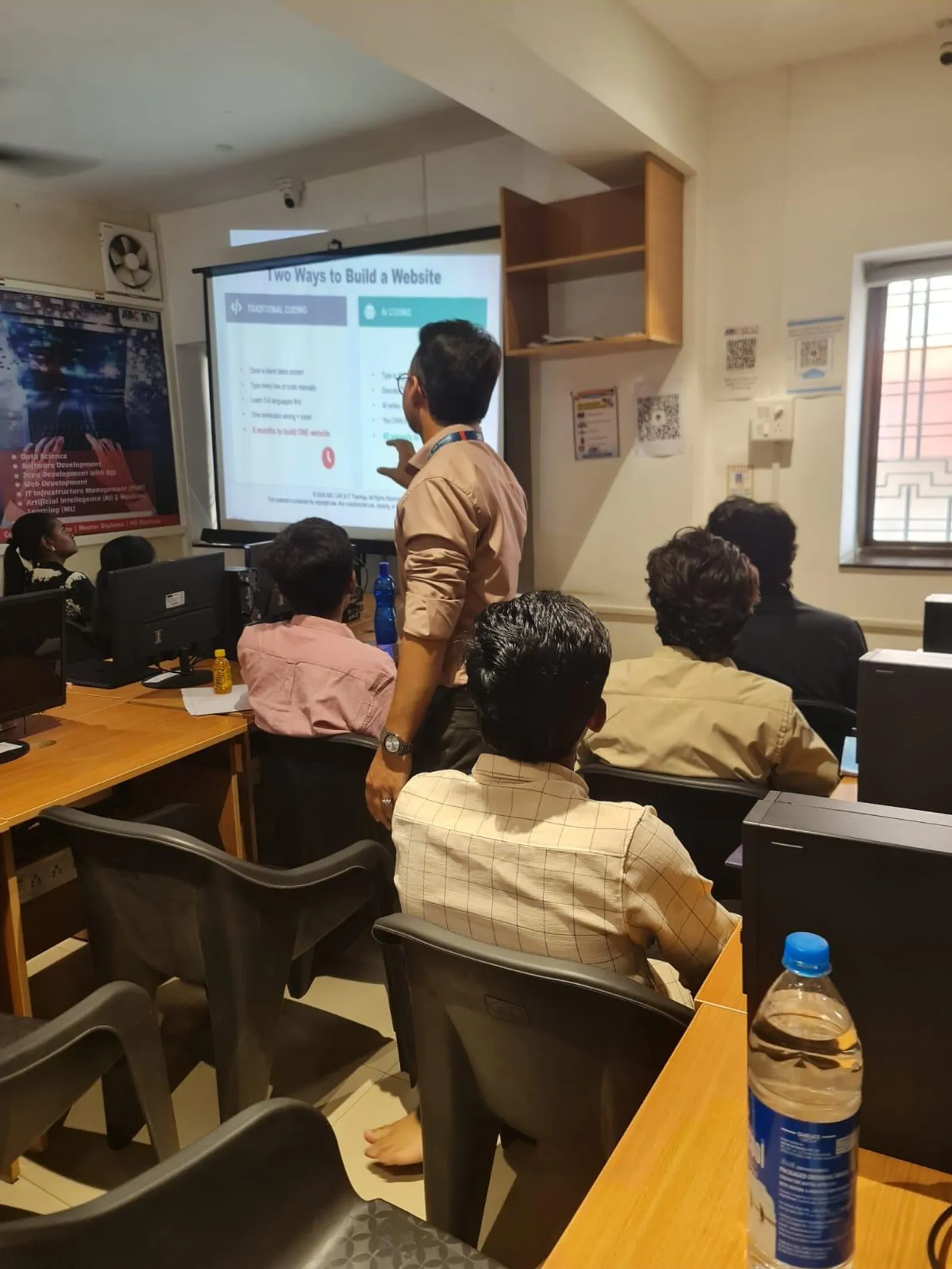
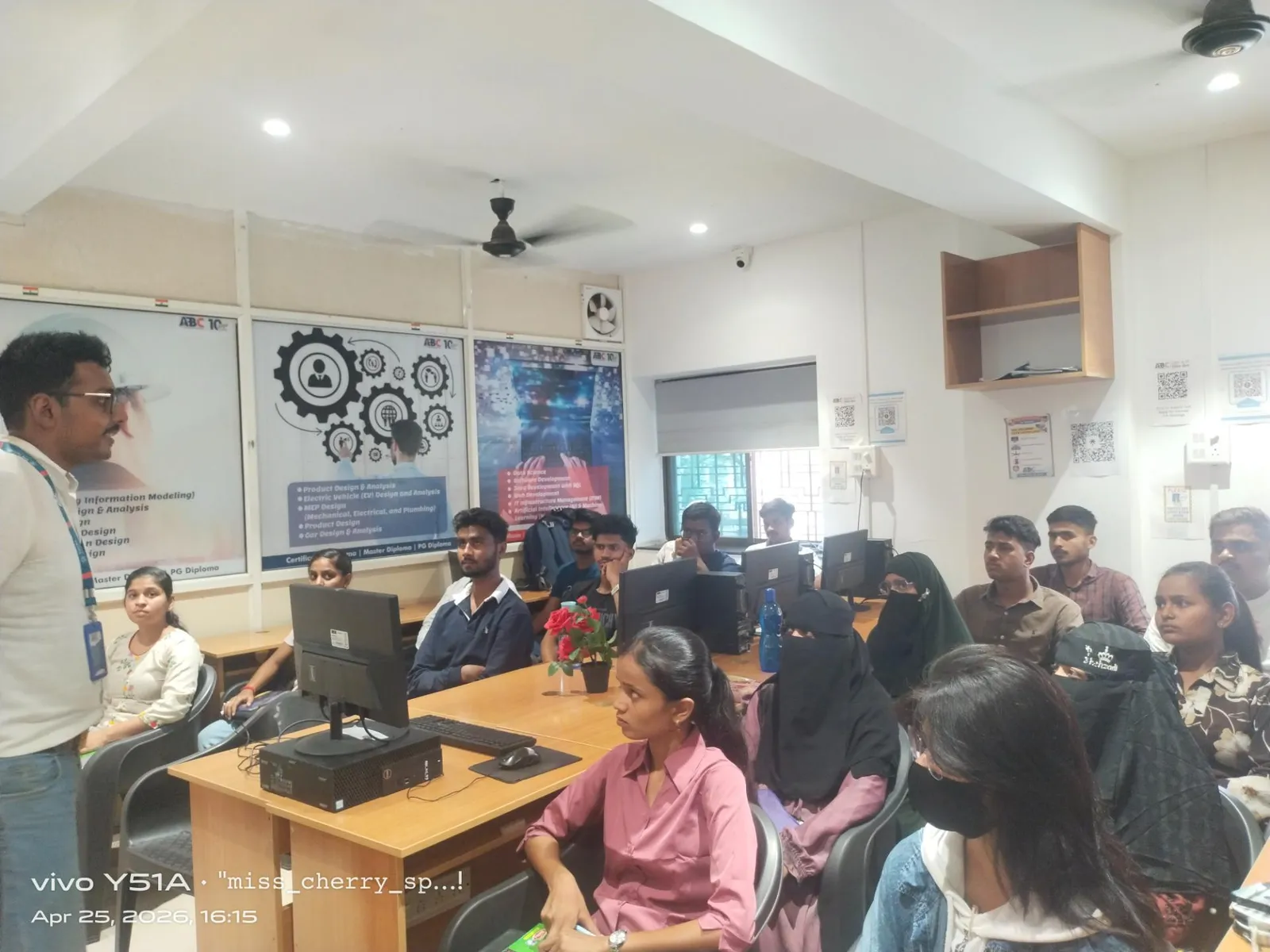
ABC Trainings' Industry 4.0 with AI and Industrial Automation course at Osmanpura and Cidco is built specifically around AURIC recruitment requirements. The course covers Siemens S7-300/S7-1500 PLC programming on real hardware trainer kits — not just software simulation — because AURIC companies test practical PLC skills during selection. SCADA integration using WinCC and Ignition is covered with live OPC-UA connectivity labs. Industrial IoT fundamentals using MQTT and edge gateway configuration are included in the advanced module. Our trainer Sunil Wagh has fifteen years of Siemens automation experience and carries industry relationships that translate directly to placement connections at AURIC-zone companies. Osmanpura centre (S.S.C Board to Peer Bazar Road, near Jama Masjid) is the closest training facility to the AURIC Shendra corridor. Cidco centre (Kalpana Plaza, N-1 Cidco) serves students from the CIDCO nodes. CMYKPY stipend of Rs 6,000-10,000 per month is available for eligible students — make the training cost-neutral while you prepare for AURIC placement. WhatsApp 7774002496 or call 7039169629 for the next batch date.
Get the Industry 4.0 with AI & Industrial Automation Brochure + Fees + Batch Dates on WhatsApp
Free 1:1 counselling. Placement track record. CMYKPY/PMKVY eligibility check.
💬 Get Brochure on WhatsApp📞 Call 7039169629About the author: Sunil Wagh. 15 yrs PLC/SCADA/EPLAN training, ex-Siemens India.
Visit Our Centers
- Wagholi (Pune): 1st Floor, Laxmi Datta Arcade, Pune-Ahilyanagar Highway. Call 7039169629
- Hadapsar (Pune HQ): 1st Floor, Shree Tower, opp. Vaibhav Theater, Magarpatta. Call 7039169629
- Cidco (Chh. Sambhajinagar): Kalpana Plaza, opp. Eiffel Tower, N-1 Cidco. Call 7039169629
- Osmanpura (Chh. Sambhajinagar): S.S.C Board to Peer Bazar Road, near Jama Masjid. Call 7039169629
- Sangli: Shubham Emphoria, 1st Floor, Above US Polo Assn., Sangli-Miraj Rd, Vishrambag. Weekend batches available. Call 7039169629
FAQs
Which PLC brand should I learn first for AURIC Aurangabad jobs in 2026?
Siemens S7-300/S7-1500 with TIA Portal is the best starting point for AURIC Aurangabad jobs. Siemens is dominant across chemical, pharma, and process industries at AURIC including Hyosung, Lubrizol, and Endress and Hauser. Skoda VW and Bajaj Auto also use Siemens heavily. Allen-Bradley (Rockwell) is a strong second choice if you are targeting auto Tier-1 suppliers. Starting with Siemens TIA Portal covers the largest share of AURIC job descriptions.
Do AURIC companies like Skoda VW hire freshers for automation roles?
Yes. Skoda VW Shendra (Plot A-1/1), Bajaj Waluj (Plot G-137), and Endurance Technologies (Plot E-92) all run campus and walk-in hiring for fresher automation, maintenance, and production engineering roles. Hands-on PLC skills tested on real hardware significantly improve fresher selection chances at these companies. AURIC campus drives typically happen in Q1 (January to March) and Q3 (July to September).
What is the difference between PLC and SCADA in industrial automation?
PLC is the control layer: a dedicated industrial computer that directly runs and controls machines and production equipment by reading sensor inputs and switching actuator outputs. SCADA is the supervisory layer: software running on a workstation that aggregates data from many PLCs across the factory, displays real-time operational status to operators and managers, logs historical data, and allows supervisory interventions like setpoint changes. In a factory, the PLC runs the welding robot arm; the SCADA screen shows the plant manager whether all welding stations are running, what the cycle counts are, and which alarms are active.
How long does it take to get job-ready for PLC and SCADA roles at ABC Trainings?
ABC Trainings' Industry 4.0 course runs for approximately four to five months covering PLC, SCADA, drives, and IoT fundamentals. Students who attend consistently and complete the lab projects are typically interview-ready within that period. Post-course, our placement team schedules mock interviews and submits profiles to AURIC-zone recruiters. Many students receive their first offers within two to three months of course completion. WhatsApp 7774002496 for the detailed syllabus and current batch timeline.