MEAN Stack Full Course 2026: MongoDB, Express, Angular & Node.js — Complete Free Video Series (Updated August 2026)
The MEAN stack — MongoDB, Express.js, Angular, and Node.js — is the enterprise-grade JavaScript full stack choice for large-scale web applications. While MERN uses React for the front end, MEAN uses Angular — Google's TypeScript-based framework built for structured, scalable enterprise applications. Banks, insurance companies, and large IT service providers in India increasingly specify Angular skills in their job requirements, making MEAN a strategic choice for engineers targeting corporate IT roles. ABC Trainings has produced a 25+ episode free series covering the MEAN stack from absolute basics, and this guide documents each module so you can plan your path from first commit to production deployment.

- 25+ free episodes covering the complete MEAN stack from MongoDB to Angular deployment — all on ABC Trainings' YouTube channel
- MEAN uses Angular (TypeScript-based, enterprise-grade) vs MERN's React — better suited for large corporate IT applications
- Series covers: MongoDB CRUD, Express.js routing, Angular components/services/routing, Node.js server, and full deployment
- MEAN stack developers in India earn ₹5–15 LPA (freshers to 3+ years experience in Pune/Hyderabad/Bangalore)
- ABC Trainings' AI Powered Application Development workshop provides classroom + project mentoring alongside this free series
What Is the MEAN Stack? Updated August 2026
MEAN stands for MongoDB (NoSQL document database), Express.js (Node.js web framework for RESTful APIs), Angular (Google's TypeScript-based front-end framework), and Node.js (JavaScript server runtime). What distinguishes MEAN from MERN is Angular — a full-featured, opinionated framework with a built-in structure for dependency injection, modules, routing, and reactive state management using RxJS. For large teams building enterprise apps (banking portals, insurance claim systems, ERP dashboards), Angular's structured architecture reduces inconsistency and makes code easier to maintain across 10, 50, or 100 developers. In 2026, Angular 18+ adds signals-based reactivity and standalone components — making it faster to learn without sacrificing enterprise-grade structure.
Full Series Overview — All 25+ Episodes by Module
The series spans 25+ episodes divided into four main stacks. Module 1 (Episodes 1–5) introduces the full stack concept, Node.js environment setup, and MongoDB database fundamentals. Module 2 (Episodes 6–12) covers Express.js REST API development — routes, middleware, authentication with JWT, and database integration. Module 3 (Episodes 13–20) dives deep into Angular — components, directives, pipes, services, HTTP client, routing, and reactive forms. Module 4 (Episodes 21–25+) covers Node.js advanced patterns, full application integration, and deployment on cloud platforms.
| Module | Episodes | Topics Covered |
|---|---|---|
| Node.js & MongoDB | Ep 1–5 | Setup, MongoDB CRUD, collections, aggregation |
| Express.js REST APIs | Ep 6–12 | Routes, middleware, JWT auth, DB integration |
| Angular Framework | Ep 13–20 | Components, services, routing, reactive forms, HTTP client |
| Advanced & Deployment | Ep 21–25+ | Full-stack integration, cloud deployment, CI/CD basics |
Module-by-Module Breakdown: What You Actually Learn
Here is how to use this series effectively: Episodes 1–5 focus on Node.js and MongoDB — spend one week here, practising CRUD operations on a local MongoDB instance. Episodes 6–12 build the Express.js API layer — create at least one REST API with full authentication (register, login, JWT token) before moving on; this is the foundation everything else connects to. Episodes 13–20 are the Angular deep-dive — Angular has a steeper learning curve than React initially, but by episode 18 (reactive forms + HTTP client), you will start building complete features fast. By episode 25, you are deploying a full-stack application: Angular front end served from Node.js, Express API connected to MongoDB Atlas. That deployed project URL is your interview portfolio — put it on your resume.
MEAN Stack Salary Guide — India 2026 (Glassdoor/AmbitionBox Data)
MEAN stack developer salaries in India (AmbitionBox/Glassdoor, 2026): Junior Full Stack Developer with Angular (0–1 yr) ₹5–7 LPA, Full Stack Developer (Angular + Node.js, 2–4 yrs) ₹9–16 LPA, Senior Angular Developer (4–7 yrs) ₹16–26 LPA, Angular Tech Lead ₹25–40 LPA. Pune's Hinjewadi and Kharadi phases offer a 15–20% premium over the national average for MEAN roles. Companies that mandatorily specify Angular (not just 'any JS framework') in their JDs include Cognizant, Capgemini India, Mphasis, and most banking technology subsidiaries — Infosys BPO, HDFC Bank Tech Division, and NPCI.
MEAN vs MERN vs Python Django — Which Full Stack in 2026?
MEAN and MERN are both JavaScript stacks — the front-end framework is the key difference. Use MEAN when your target employer specifically requires Angular (enterprise IT, banking, government portals — they standardise on Angular because of its opinionated structure). Use MERN when you are targeting product startups, SaaS companies, or roles where you own the tech stack choice (most Pune startups in Hinjewadi and Baner run React). Python Django is the right choice if your application is data-heavy, AI-integrated, or requires heavy server-side computation. For a single learner choosing just one: MERN first (faster to get a demo up and running, larger startup job market), then Angular skills once employed (most large companies will require it at some point).
Companies Hiring MEAN/Angular Developers in Pune 2026
Pune companies with Angular/MEAN in their 2026 JDs: Cognizant Technology Solutions (Hinjewadi), Capgemini India (Pune), Mphasis (Bagmane Pollux, Pune), Accenture (SDB Hinjewadi), Infosys BPM (Hinjewadi — banking tech), HDFC Life Insurance Tech (Pune), Bajaj Allianz Life Insurance (Pune — digital products team), L&T Technology Services (Pune), and 80+ product companies in Baner-Aundh corridor hiring Angular developers. Sambhajinagar: Aurangabad Electricals digital-factory projects, AURIC IT zone corporate offices. Key signal: Angular roles in banking/insurance typically pay 20–30% more than equivalent React roles at the same experience level.
Learn MEAN Stack at ABC Trainings — Pune, Sambhajinagar & Sangli
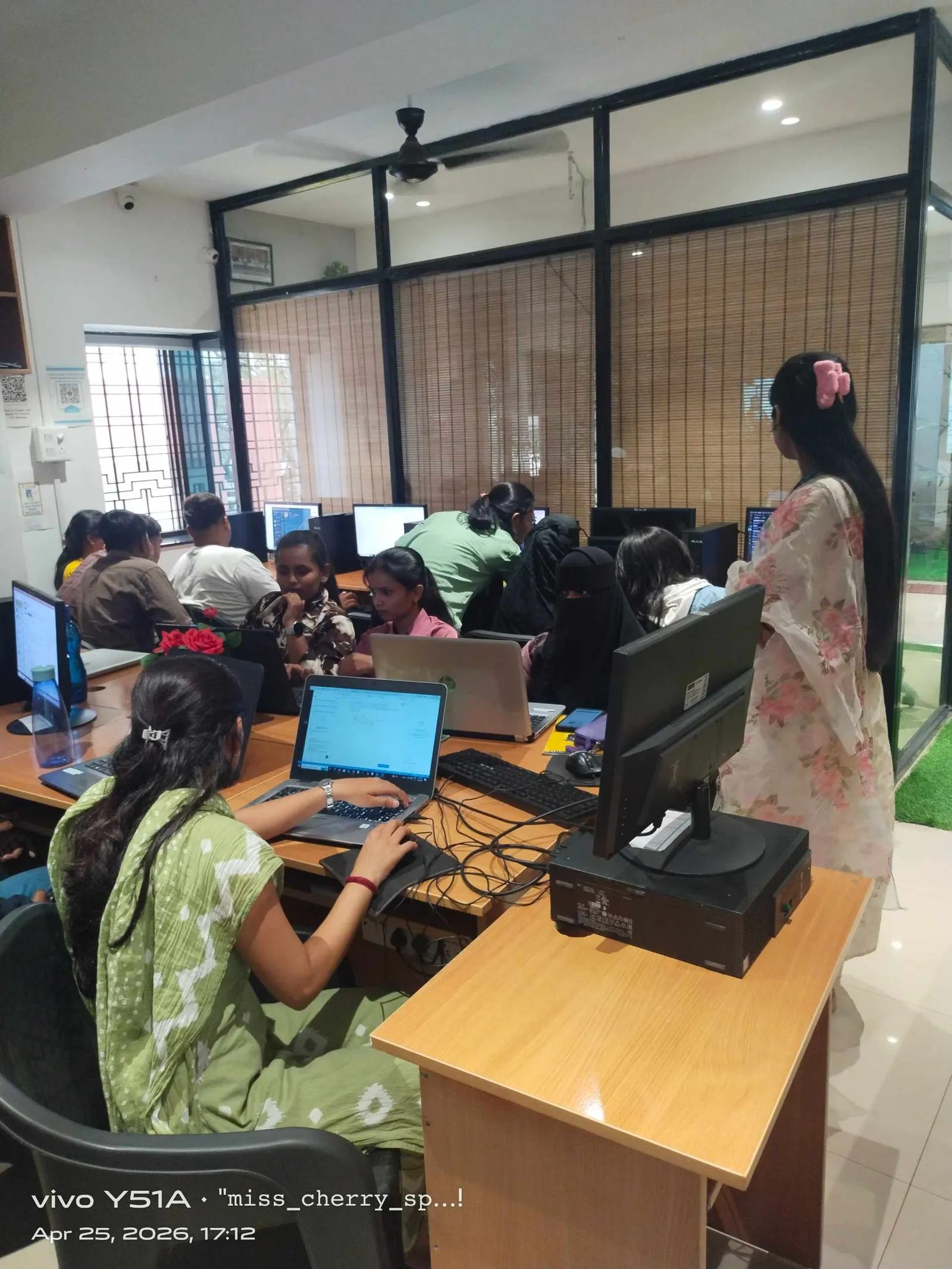
ABC Trainings' AI Powered Application Development workshop covers the MEAN stack with structured classroom sessions, project mentoring, and placement support. The workshop also covers Python, Java, and emerging AI-API integrations on top of Angular — giving you the skills to build enterprise applications with AI features. Batches at Wagholi (Pune), Hadapsar (Pune), Cidco and Osmanpura (Sambhajinagar), and Sangli. Call 7039169629 or WhatsApp 7774002496. CMYKPY and PMKVY 4.0 fee subsidy — ask at enrollment.
Get the AI Powered Application Development Brochure + Fees + Batch Dates on WhatsApp
Free 1:1 counselling. Placement track record. CMYKPY/PMKVY eligibility check.
💬 Get Brochure on WhatsApp📞 Call 7039169629About the author: Amit Kulkarni. 8 yrs leading IT training at ABC Trainings, ex-Infosys.
Visit Our Centers
- Wagholi (Pune): 1st Floor, Laxmi Datta Arcade, Pune-Ahilyanagar Highway. Call 7039169629
- Hadapsar (Pune HQ): 1st Floor, Shree Tower, opp. Vaibhav Theater, Magarpatta. Call 7039169629
- Cidco (Chh. Sambhajinagar): Kalpana Plaza, opp. Eiffel Tower, N-1 Cidco. Call 7039169629
- Osmanpura (Chh. Sambhajinagar): S.S.C Board to Peer Bazar Road, near Jama Masjid. Call 7039169629
- Sangli: Shubham Emphoria, 1st Floor, Above US Polo Assn., Sangli-Miraj Rd, Vishrambag. Weekend batches available. Call 7039169629
FAQs
Is MEAN stack better than MERN for getting a job in India in 2026?
It depends on your target employer. MEAN (Angular) is better for corporate IT, banking tech, insurance platforms, and large IT service companies (Cognizant, Capgemini, Infosys BPM) — they standardise on Angular for team scalability. MERN (React) is better for product startups, SaaS companies, and roles where you choose your own stack. For maximum employability: learn Node.js, Express, and MongoDB first (common to both), then add Angular — this lets you switch between MEAN and MERN projects easily.
How long does it take to learn MEAN stack from scratch?
At 1–2 hours of daily practice, completing the full 25+ episode series takes 3–4 months. Angular has a steeper initial learning curve than React, so budget extra time for Episodes 13–20. In ABC Trainings' structured classroom program, the same content is covered in 4 months with mentored project support, which significantly reduces time stuck on concepts.
Does this ABC Trainings series require prior programming knowledge?
No — Episode 1 genuinely starts from zero, assuming you can use a computer and a browser. The first 5 episodes cover Node.js environment setup and MongoDB basics with no prior programming assumed. However, the Angular module (Ep 13+) uses TypeScript — if you have no programming background, spend a few extra days on the TypeScript fundamentals before diving into components.
What is the fee for MEAN stack course at ABC Trainings?
Call 7039169629 or WhatsApp 7774002496 for current fee details and CMYKPY/PMKVY eligibility check. The classroom course includes placement support, mentored projects, and resume assistance. Batch types include weekday, weekend, and fast-track options.