
PLC Output Field Devices: Actuators, Motors and Contactors Explained (2026) (Updated August 2026)
The AURIC manufacturing corridor is attracting ₹71,343 crore in industrial investment and generating 62,405 direct jobs — and every new production line at Bajaj Auto (Waluj), Endurance Technologies, and Skoda VW (Shendra) depends on PLC output devices to translate digital control signals into physical machine actions. A PLC is only as useful as the output devices it controls. Relay outputs switch circuits on and off, contactors start and stop motors carrying hundreds of amps, solenoid valves open and close fluid paths, and indicator lamps show machine status to operators. This guide covers every major PLC output device, how each one works electrically, and how ABC Trainings teaches them in Pune and Chhatrapati Sambhajinagar.
- PLC output field devices receive electrical signals from the PLC output module and produce physical actions in the machine
- Relay: a protective switch that opens when current exceeds a threshold — protects motors and loads
- Contactor: a heavy-duty switching device for motor start/stop — controlled by a 24V DC coil from the PLC output
- Motor: converts electrical energy to mechanical torque — the most common PLC-driven output in manufacturing
- Solenoid valve: an electromechanical device that opens or closes a fluid or pneumatic path when energized by the PLC
What Are PLC Output Field Devices? (Direct Answer)
PLC output field devices are electromechanical or electronic actuators that receive output signals from the PLC's output module and convert those signals into physical actions — switching circuits, moving mechanical parts, opening valves, or illuminating lamps. While input devices give the PLC information about the process (sensors, switches), output devices carry out the PLC's decisions (motors running, valves opening, alarms sounding). PLC outputs are typically 24V DC digital outputs (transistor or relay type) or analog outputs (0–10V or 4–20mA) connected to output Q addresses in the ladder logic program.
Relay as a PLC Output — How It Works and When to Use It
A relay is a magnetically operated electrical switch: when current flows through its coil, it creates an electromagnetic field that moves an armature, mechanically opening or closing contacts that switch a separate, higher-voltage circuit. In PLC systems, output relays protect loads from overcurrent — when the motor draws more current than the thermal relay's setpoint, the relay trips and sends a fault signal back to the PLC digital input. Relay contacts are insulated from the coil circuit, meaning the PLC's 24V control side is fully isolated from the 415V power side. Relay output PLC modules use this same principle — each output channel has a small relay that the PLC energizes.
| Output Device | PLC Output Signal | Load Voltage | Application |
|---|---|---|---|
| Relay (overload) | Digital Output (Q) | 24V DC coil | Motor overcurrent protection |
| Contactor | Digital Output (Q) | 415V AC 3-phase | Motor start/stop switching |
| Motor (via VFD) | Analog Output (AQ) | Variable 0–415V AC | Variable speed conveyor, fan, pump |
| Solenoid Valve | Digital Output (Q) | 24V DC coil | Pneumatic cylinder, hydraulic valve |
| Indicator Lamp | Digital Output (Q) | 24V DC | Machine status display on panel |
Contactor in PLC Systems — Operation, Wiring and Coil Control
A contactor is a high-current-rated switching device used to repeatedly start and stop motors and other heavy loads. Its coil is rated for 24V DC (controlled directly by the PLC output Q terminal), and when energized, the electromagnetic coil pulls in the armature, closing the three main power contacts (L1, L2, L3 → T1, T2, T3) that connect the motor to 415V three-phase supply. Auxiliary contacts (NO and NC) provide feedback signals to the PLC — the NO auxiliary closes when the contactor pulls in, confirming motor run status on a PLC input. The contactor de-energizes when the PLC output turns OFF or power is removed, spring-opening the main contacts and stopping the motor.
Motor Control via PLC — Direct-On-Line and Star-Delta Starters
An electric motor is the most common PLC output device in manufacturing — it converts electrical energy into mechanical torque to drive conveyors, pumps, fans, and machine tools. The PLC controls the motor through a contactor (for simple on/off) or a Variable Frequency Drive (VFD) for speed control. Direct-On-Line (DOL) starting connects the motor directly to full voltage via a contactor — used for motors up to 7.5 kW. Star-Delta starting first connects in star (reduced voltage) then switches to delta (full voltage) after 5–10 seconds — used for larger motors to limit startup current. The PLC timer controls the star-to-delta transition automatically.
Solenoid Valve and Lamp as PLC Outputs
Solenoid valves are electromechanical devices that open or close a pneumatic or hydraulic fluid path when their coil is energized by the PLC output. When the PLC output goes HIGH (24V), current flows through the solenoid coil, creating a magnetic field that pulls a plunger and opens (or closes) the valve port. They are used to control cylinder extension/retraction in pneumatic automation, control coolant flow in CNC machines, and manage chemical dosing in process plants. Pilot lamps and tower lights are simple indicator outputs — wired to PLC Q terminals — that show machine status (green = running, red = fault, amber = alarm) to operators on the machine panel.
PLC SCADA Training at ABC Trainings — Output Devices Wiring Lab
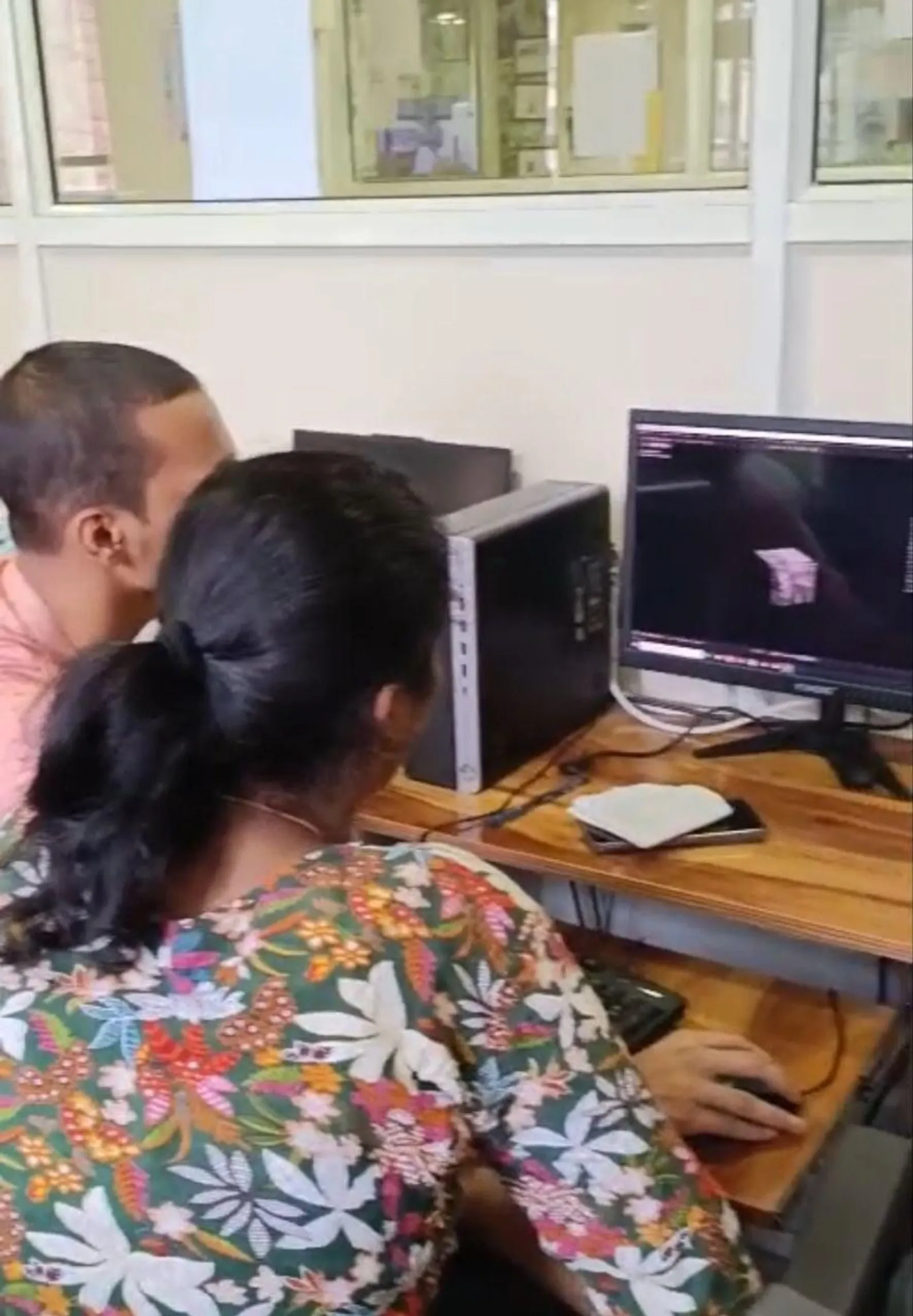
ABC Trainings' PLC and SCADA course includes wiring lab sessions where students connect relays, contactors, motors (using DOL and star-delta starters), solenoid valves, and indicator lamps to Siemens S7-300 and S7-1200 output modules. Students write the ladder logic program, download it to the PLC, and physically verify each output by watching the motor start, the valve open, and the lamp illuminate. This end-to-end wiring practice is what prepares students for panel wiring roles at MIDC automation companies in Pune. CMYKPY Maharashtra students receive ₹6,000–₹10,000/month stipend. Call 7039169629 or WhatsApp 7774002496 for batch details.
Get the PLC & SCADA Brochure + Fees + Batch Dates on WhatsApp
Free 1:1 counselling. Placement track record. CMYKPY/PMKVY eligibility check.
💬 Get Brochure on WhatsApp📞 Call 7039169629About the author: Sunil Wagh. 15 years of PLC, SCADA, and EPLAN training experience at ABC Trainings, ex-Siemens India. Has trained engineers for Bajaj Auto, Endurance Technologies, and Siemens automation projects across Maharashtra.
Visit Our Centers
- Wagholi (Pune): 1st Floor, Laxmi Datta Arcade, Pune-Ahilyanagar Highway. Call 7039169629
- Hadapsar (Pune HQ): 1st Floor, Shree Tower, opp. Vaibhav Theater, Magarpatta. Call 7039169629
- Cidco (Chh. Sambhajinagar): Kalpana Plaza, opp. Eiffel Tower, N-1 Cidco. Call 7039169629
- Osmanpura (Chh. Sambhajinagar): S.S.C Board to Peer Bazar Road, near Jama Masjid. Call 7039169629
- Sangli: Shubham Emphoria, 1st Floor, Above US Polo Assn., Sangli-Miraj Rd, Vishrambag. Weekend batches available. Call 7039169629
FAQs
What are PLC output field devices?
PLC output field devices are actuators and electrical devices connected to the PLC's output module that execute the control program's decisions in the physical world. Common outputs include contactors (motor switching), solenoid valves (fluid control), indicator lamps (status display), motor drives (speed control), and alarm buzzers. The PLC drives these devices by energizing its Q output addresses in the ladder logic program.
What is the difference between a relay and a contactor in PLC wiring?
A relay is a low-power switching device used for protection and signal isolation — its contacts carry control-level currents. A contactor is a heavy-duty switching device designed to carry motor-level currents (tens to hundreds of amps across 415V three-phase lines) and is rated for frequent make-break cycles. In PLC automation: a relay output module switches the 24V DC coil of a contactor; the contactor then switches the high-voltage motor power circuit. Never connect a 415V motor load directly to a PLC relay output module.
How does a PLC control a motor using a contactor?
The PLC controls a motor by energizing a Q output address in ladder logic, which sends 24V DC to the contactor coil. The energized coil creates a magnetic field that closes the main power contacts, connecting the motor to 415V three-phase supply. When the PLC output turns OFF (stop command, fault, or timer expiry), the coil de-energizes, the contacts spring open, and the motor stops. The contactor's auxiliary NO contact is wired back to a PLC input to confirm motor run status — this feedback is used in interlocking logic.
Does ABC Trainings teach PLC output wiring with contactors and motors?
Yes — ABC Trainings' PLC and SCADA course includes hands-on sessions where students wire DOL motor starters with contactors, connect to Siemens S7-300 output modules, and write the ladder logic to start, stop, and interlock motors. Students also wire solenoid valves, indicator lamps, and alarm outputs on panel boards. This practical training is directly aligned with the panel wiring and commissioning work done at Pune MIDC automation companies, and is part of why 85%+ of full-course students are placed within 3–6 months.