Programming Career Roadmap 2026: C, Java, Python, SQL and Full Stack Development (Updated July 2026)
Here is the question every engineering student and diploma holder asks at some point: which programming language should I start with — C, Java, Python, or go straight to Full Stack? The honest answer is that there is a roadmap, and skipping steps in that roadmap is exactly why so many students struggle to land their first IT job. NASSCOM and Deloitte project India will need 1.25 million AI and data-focused professionals by 2027 — and every single one of them needs programming skills as the foundation. According to the US Bureau of Labor Statistics, software developer jobs will grow by 17% from 2023 to 2033, far faster than most other professions. There are currently 4 million unfilled developer positions globally. The opportunity is enormous — but only for engineers who build their skills in the right sequence.
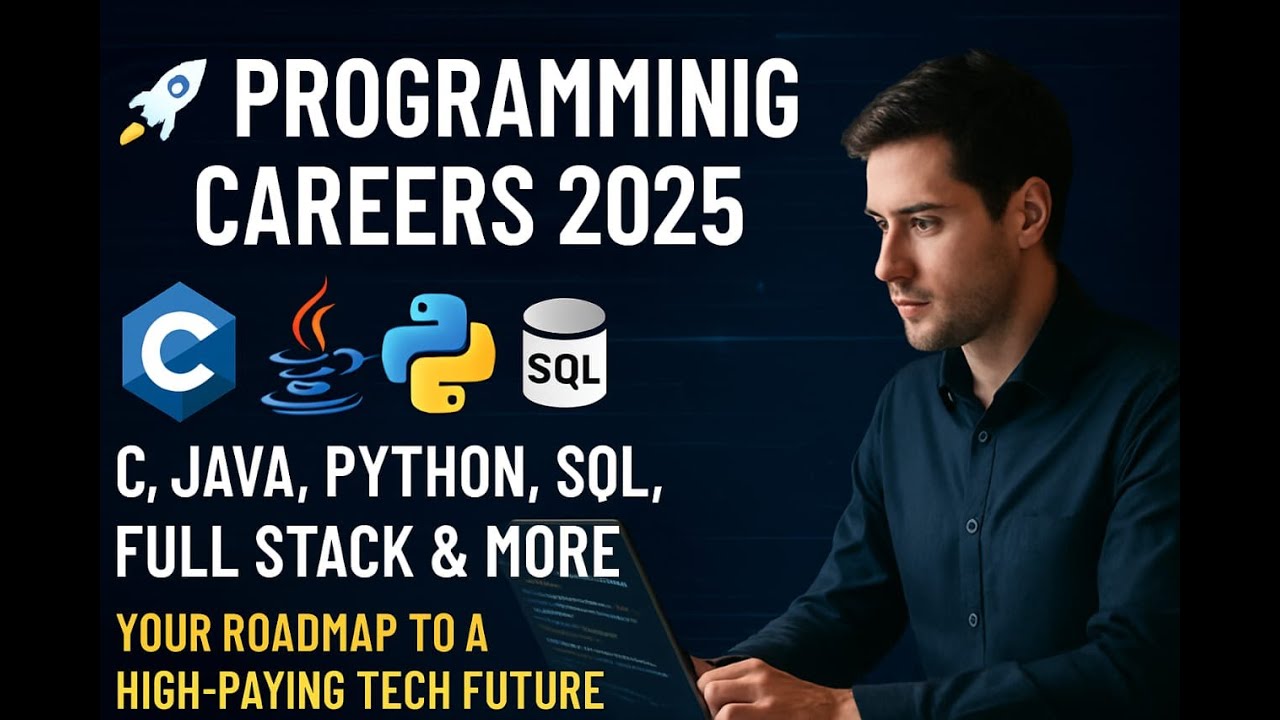
- Start with C for fundamentals, add C++ for object-oriented programming, then choose Java (enterprise/banking) or Python (AI/ML/data) based on your target career
- Python is the #1 language for AI, ML, and data science — freshers earn Rs.4–6 LPA, experienced professionals Rs.12–20 LPA
- Full Stack Development (JavaScript front-end + Node.js back-end + SQL database) is the most in-demand skill for startups and product companies
- SQL is mandatory for every developer role — stores, queries, and analyses application data in a structured format
Why Programming Skills Are Non-Negotiable in India's 2026 Job Market
India's IT sector employed 5.4 million professionals in 2024, and NASSCOM projects that number crossing 6 million by 2026 with AI and cloud computing driving the surge. The NASSCOM-Deloitte report projects 1.25 million AI-focused roles alone by 2027. What is fuelling this growth is that every sector — banking, manufacturing, healthcare, e-commerce, logistics — is now a technology company at its core. A Pune automotive OEM like Bajaj Auto or a bank like HDFC both run on software. The engineers who write and maintain that software are in demand. The entry barrier is simple: you need at least one programming language with real project practice behind it, plus a working knowledge of SQL for data storage. The students who fail to land IT jobs are almost always those who studied theory without building anything real.
The Programming Language Roadmap: C → C++ → Java → Python → Full Stack
The roadmap from beginner to job-ready developer follows a clear sequence. C is the foundation: it teaches memory management, pointers, functions, and structured programming — the mental models that make every subsequent language easier to learn. C++ adds object-oriented programming (OOP) to C: classes, inheritance, polymorphism, and encapsulation — essential for understanding Java and modern C++ in embedded systems, game engines, and IoT. Java is the backbone of enterprise applications: banking systems, e-commerce platforms, Android development. Java runs on 3 billion devices and is used by 12 million developers globally; it dominates in banking (HDFC, ICICI, SBI IT teams), insurance (LIC Tech), and large enterprise ERPs. Python is the fastest-growing language in AI, ML, data science, and automation. Once you have the OOP foundations from C++ or Java, Python's clean syntax feels simple — and its libraries (TensorFlow, PyTorch, Pandas, FastAPI) give you access to the most in-demand technology areas in 2026. Full Stack is not a language but a role — typically JavaScript (React for front end, Node.js for back end) — and it is what product companies and startups hire most readily because one person covers both sides of the application.
| Language / Stack | Primary Use Cases | Fresher Salary (India 2026) |
|---|---|---|
| C / C++ | Embedded systems, IoT, game engines, OS, foundations | Rs.3–5 LPA |
| Java | Banking, enterprise ERP, Android, large-scale web | Rs.4–6 LPA |
| Python | AI/ML, data science, web (Django/FastAPI), automation | Rs.4–6 LPA |
| SQL | Database queries, data analysis, backend data layer | Bundled with Python/Java/Full Stack role |
| Full Stack (JS) | Web apps, SaaS products, startups, API development | Rs.4–7 LPA |
Python: The AI and Data Science Language Every Developer Needs in 2026
Python's rise has been meteoric, and it is entirely justified by what the language can do. Python is the primary language for machine learning (scikit-learn, TensorFlow, PyTorch), data analysis (Pandas, NumPy), data visualization (Matplotlib, Seaborn), web development (Django, FastAPI), automation scripting, and cloud computing. Every major cloud provider — AWS, Azure, Google Cloud — has Python SDKs as first-class citizens. The NASSCOM-Deloitte projection of 1.25 million AI professionals by 2027 means Python developers are in one of the fastest-growing labour markets in India's history. Salary data from Glassdoor India 2026: Python developer freshers earn Rs.4–6 LPA; with 2–3 years of data science or ML project experience, Rs.10–14 LPA; senior ML engineers and data scientists at product companies (Flipkart, Swiggy, PhonePe, Infosys AI) earn Rs.16–24 LPA. For students in Pune: Persistent Systems (Pune), Infosys BPM, TCS Digital, Wipro Technologies, and Cognizant all actively recruit Python developers. ABC Trainings Python course covers syntax, OOP, file handling, Django, data libraries, and live project work.
SQL: The Database Language That Every Application Depends On
SQL — Structured Query Language — is the one skill that every developer, regardless of whether they specialise in front end, back end, data science, or DevOps, must know. SQL is how applications store, retrieve, update, and delete data in relational databases (MySQL, PostgreSQL, Microsoft SQL Server, Oracle). When you fill out a registration form, log into an application, place an order, or view your bank statement — SQL is executing behind the scenes. Common SQL databases in Indian industry: MySQL for web applications (most PHP and Python web apps), PostgreSQL for complex data workloads and analytics, Microsoft SQL Server for banking and ERP systems (SAP, Oracle EBS), and SQLite for mobile and embedded applications. Core SQL skills every developer needs: SELECT with WHERE, GROUP BY, JOIN (INNER, LEFT, RIGHT), sub-queries, indexes, and stored procedures. ABC Trainings covers SQL in both the Python and Full Stack programs — it is not an elective, it is a core module.
Full Stack Development: Why JavaScript Gives You Front-End and Back-End in One
Full Stack Development is the most in-demand role in India's startup ecosystem and product companies because a Full Stack developer can build a complete web application independently — designing the user interface, writing the server logic, and managing the database. The standard Full Stack stack in India's 2026 job market: Front end — HTML, CSS, JavaScript (React.js is the dominant framework); Back end — Node.js with Express.js (JavaScript all the way through, one language for both sides); Database — MongoDB (NoSQL) or PostgreSQL (SQL). The benefit of the JavaScript full stack is that you master one language and gain competence in both front-end and back-end environments. Salary data: Full Stack Developer freshers earn Rs.4–7 LPA; with 2 years of project experience and a portfolio of deployed applications, Rs.9–14 LPA; senior Full Stack engineers at product companies earn Rs.16–22 LPA (AmbitionBox 2026). Startups particularly favour Full Stack because one hire covers both front end and back end, reducing cost while accelerating development speed.
Programming Career Opportunities and Salaries in India (2026): What to Expect
India's IT job market in 2026 is strong but competitive — the students who get hired are those who combine language knowledge with a real portfolio of projects. Entry-level roles and their typical salaries: Software Engineer / Junior Developer (C++ or Java focus) Rs.3.5–5.5 LPA; Python Developer / Data Analyst Rs.4–6 LPA; Full Stack Web Developer Rs.4–7 LPA; QA / Automation Engineer (Python + Selenium) Rs.3.5–5 LPA. With 2–3 years of experience and live project exposure: Java Developer at banking or ERP company Rs.8–12 LPA; Python ML Engineer at tech company Rs.10–15 LPA; Full Stack Developer at a product startup Rs.9–14 LPA. In Pune, IT hiring is concentrated at: TCS, Infosys, Wipro, Cognizant, Persistent Systems, KPIT Technologies, Cybage Software, and dozens of product startups in Hinjewadi and Magarpatta. ABC Trainings IT courses at Wagholi (Pune), Hadapsar (Pune HQ), Cidco (Sambhajinagar), Osmanpura (Sambhajinagar), and Sangli — call +91 7039169629 or WhatsApp 7774002496.
Get the IT Brochure + Fees + Batch Dates on WhatsApp
Free 1:1 counselling. Placement track record. CMYKPY/PMKVY eligibility check.
💬 Get Brochure on WhatsApp📞 Call 7039169629About the author: Amit Kulkarni. 8 yrs leading IT training at ABC Trainings, ex-Infosys.
Visit Our Centers
- Wagholi (Pune): 1st Floor, Laxmi Datta Arcade, Pune-Ahilyanagar Highway. Call 7039169629
- Hadapsar (Pune HQ): 1st Floor, Shree Tower, opp. Vaibhav Theater, Magarpatta. Call 7039169629
- Cidco (Chh. Sambhajinagar): Kalpana Plaza, opp. Eiffel Tower, N-1 Cidco. Call 7039169629
- Osmanpura (Chh. Sambhajinagar): S.S.C Board to Peer Bazar Road, near Jama Masjid. Call 7039169629
- Sangli: Shubham Emphoria, 1st Floor, Above US Polo Assn., Sangli-Miraj Rd, Vishrambag. Weekend batches available. Call 7039169629
FAQs
Which programming language should I learn first — C, Java, or Python?
Start with C. It teaches memory management, structured programming, and the mental models that make every other language easier to learn. After C, move to C++ for object-oriented programming, then choose Java (banking, enterprise) or Python (AI/ML/data science) based on your career target. Jumping straight to Python without C/C++ foundations means you learn the syntax but miss the engineering discipline.
Is Python enough to get a software job in India in 2026?
Python alone can get you a fresher job as a Python Developer, Data Analyst, or Automation Engineer (Rs.4–6 LPA). But Python combined with SQL, basic Django or FastAPI web framework, and a portfolio of 2–3 real projects dramatically increases your hiring rate. Python with ML libraries (scikit-learn, TensorFlow) opens doors to data science and AI roles at Rs.8–14 LPA with 2 years of experience.
What is Full Stack Development and why is it so in demand?
Full Stack Development means building both the user interface (front end) and server logic (back end) of a web application. A Full Stack developer typically uses HTML/CSS/JavaScript (React) for front end and Node.js/Express for back end, with SQL or MongoDB for data storage. It is in demand because one Full Stack developer can build a complete product independently — making them especially valuable at startups where small teams must build fast.
Do I need to learn SQL even if I am a Python or Java developer?
Yes — SQL is mandatory for every developer role. Whether you are building a Python web API, a Java banking application, or a React front end, your application needs to store and retrieve data from a database, and SQL is how you interact with that database. SQL is not a specialisation — it is a baseline skill that all developers in all stacks must have.