Supervised Learning in Machine Learning: A Practical Guide for 2026 (Updated July 2026)
NASSCOM-Deloitte's projection of 1.25 million AI professionals needed in India by 2027 isn't filled by researchers — it's filled by engineers who understand supervised learning well enough to select the right algorithm, tune it sensibly, and explain the output to a business stakeholder. That's the practical threshold, and this guide is built around it.

- Supervised learning uses labelled data to train models that predict outputs for new inputs — the dominant ML paradigm in production
- Five algorithms dominate practical supervised ML: Linear Regression, Logistic Regression, Decision Trees, Random Forest, and SVM
- All five can be implemented in Python with scikit-learn in under 20 lines of code — the hard part is feature engineering and evaluation
- Maharashtra ML engineers earn ₹5-9 LPA entry level, ₹10-18 LPA at 3-5 years (PayScale 2026)
- ABC Trainings Data Science track covers all five algorithms with real datasets and GitHub-ready portfolio projects
What Is Supervised Learning and Why It Dominates Production ML
Supervised learning is the branch of machine learning where you train a model on labelled examples — input-output pairs — so it can predict outputs for new, unseen inputs. It's called "supervised" because the training process is guided by the correct answers. This is what almost every production ML system does: a fraud detection model trained on labelled fraudulent and non-fraudulent transactions; a demand forecasting model trained on historical sales data with known outcomes; a manufacturing defect classifier trained on images labelled "defect" or "pass." If you're going into an ML role in India, 70-80% of the work you'll actually do is supervised learning. Knowing it well isn't optional.
The Five Supervised Learning Algorithms You Must Know
The five supervised learning algorithms you need to master for Indian ML jobs in 2026: Linear Regression — for continuous outcome prediction (sales forecasting, price estimation). Logistic Regression — for binary classification (churn prediction, fraud detection); despite the name, it's a classifier, not a regression model. Decision Trees — for interpretable classification and regression; easy to explain to stakeholders. Random Forest — an ensemble of Decision Trees that usually outperforms a single tree; robust to noise and overfitting. Support Vector Machine (SVM) — effective for high-dimensional data and image classification basics. Every ML interview at Persistent Systems, KPIT, and Infosys Analytics covers at least two of these in depth. Know not just how they work, but when to use each and what their trade-offs are.
| Algorithm | Problem Type | When to Use | Weakness |
|---|---|---|---|
| Linear Regression | Regression | Continuous outcome, interpretability needed | Assumes linear relationship |
| Logistic Regression | Classification | Binary outcome, fast baseline model | Underperforms on complex boundaries |
| Decision Tree | Classification / Regression | Interpretability required, stakeholder-facing | Overfits easily without pruning |
| Random Forest | Classification / Regression | Default go-to; handles noise well | Slower to train, less interpretable |
| SVM | Classification | High-dimensional, small-medium datasets | Slow on large datasets, kernel choice matters |
Common Interview Questions on Supervised Learning for India Jobs
What gets asked at ML interviews in Pune and Sambhajinagar-area tech firms in 2026: "What's the difference between classification and regression?" — know this cold. "When would you use Random Forest over a single Decision Tree?" — the answer is almost always Random Forest in production, but you need to explain why (variance reduction via bagging). "What is overfitting and how do you detect it?" — train/validation split, cross-validation, learning curves. "Explain precision vs recall trade-off." — critical for fraud detection and medical diagnosis use cases. "How does Logistic Regression decide the classification boundary?" — sigmoid function, decision boundary at probability 0.5. Practice these answers out loud, not just in your head.
Building Your First Supervised Learning Project in Python
Here's a practical project that builds interview-ready skills: Take the publicly available UCI Bank Marketing dataset (predicting whether a bank customer will subscribe to a term deposit). Step 1: Load and explore with pandas. Step 2: Handle missing values, encode categoricals with LabelEncoder or pd.get_dummies. Step 3: Train a Logistic Regression model, evaluate with accuracy, precision, recall, and F1 score. Step 4: Train a Random Forest, compare results. Step 5: Use GridSearchCV to tune Random Forest hyperparameters. Step 6: Visualize feature importance. Step 7: Deploy as a simple Streamlit app and push to GitHub. This single project covers the full supervised learning pipeline and gives you something concrete to discuss in every ML interview you'll attend in Maharashtra's tech market.
Machine Learning Career Scope in Pune and Maharashtra in 2026
Machine learning engineering salaries in Maharashtra are genuinely strong relative to cost of living, especially compared to Bangalore with its higher rents. AmbitionBox and PayScale 2025-26 data: ML engineers in Pune at entry level (0-2 years) ₹5-9 LPA; mid-level (3-5 years) ₹10-18 LPA at product and MNC companies; senior ML engineers (5+ years) ₹18-30 LPA at KPIT, Persistent, and captive MNC centres. Companies actively hiring ML engineers in Pune: KPIT Technologies (Kharadi — automotive ML), Persistent Systems (ML for product engineering), TCS Digital (AI-ML operations), Infosys BPM Analytics (Hinjewadi — 100+ ML roles in Q1 2026). In Sambhajinagar, AURIC's smart manufacturing initiative is creating demand for ML engineers who can work with production sensor data.
Learn Supervised ML at ABC Trainings
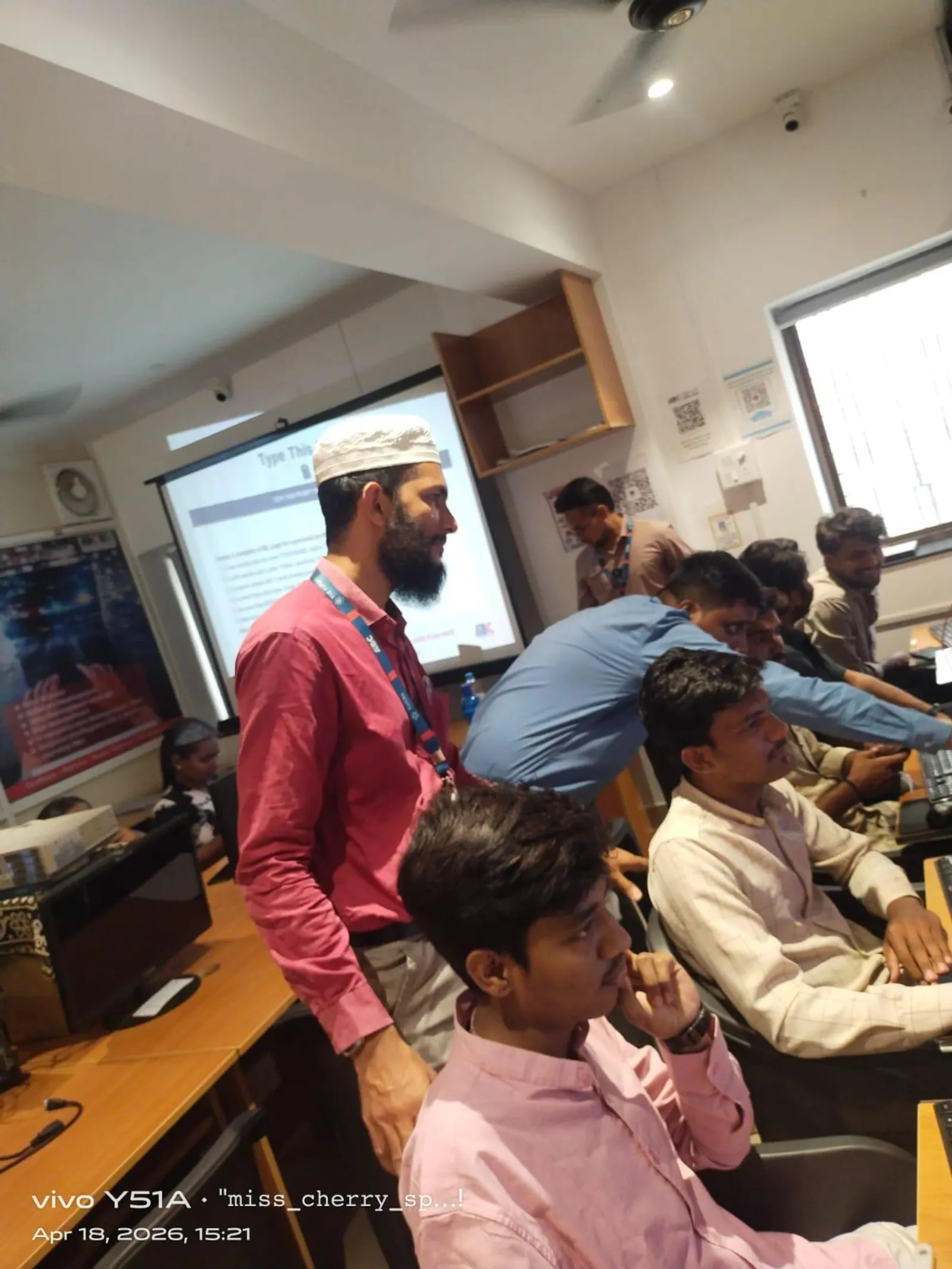
ABC Trainings' Data Science track covers supervised learning in full depth — Linear Regression through Random Forest, with model evaluation, cross-validation, and project deployment in Python. The curriculum includes three supervised learning projects that you build, test, and deploy as GitHub-hosted Streamlit apps. Trainers are ex-Infosys practitioners with real production ML experience. Batches at Pune (Wagholi, Hadapsar) and Sambhajinagar (Cidco, Osmanpura), with weekend options. Call 7039169629 or WhatsApp 7774002496 for current batch details and fees. CMYKPY reimbursement of ₹6,000-₹10,000 available for eligible Maharashtra residents under 35.
Get the AI Powered Application Development Brochure + Fees + Batch Dates on WhatsApp
Free 1:1 counselling. Placement track record. CMYKPY/PMKVY eligibility check.
💬 Get Brochure on WhatsApp📞 Call 7039169629About the author: Ankush Shendge, IT Trainer, ABC Trainings.
Visit Our Centers
- Wagholi (Pune): 1st Floor, Laxmi Datta Arcade, Pune-Ahilyanagar Highway. Call 7039169629
- Hadapsar (Pune HQ): 1st Floor, Shree Tower, opp. Vaibhav Theater, Magarpatta. Call 7039169629
- Cidco (Chh. Sambhajinagar): Kalpana Plaza, opp. Eiffel Tower, N-1 Cidco. Call 7039169629
- Osmanpura (Chh. Sambhajinagar): S.S.C Board to Peer Bazar Road, near Jama Masjid. Call 7039169629
- Sangli: Shubham Emphoria, 1st Floor, Above US Polo Assn., Sangli-Miraj Rd, Vishrambag. Weekend batches available. Call 7039169629
FAQs
What is the difference between supervised and unsupervised learning?
Supervised learning trains on labelled data — you have input-output pairs and the model learns the mapping. Unsupervised learning trains on unlabelled data and discovers hidden structure (clusters, associations, dimensionality reduction). In production ML, supervised learning dominates because most business problems have historical data with known outcomes. Unsupervised learning is used for customer segmentation, anomaly detection without labelled anomalies, and data exploration when you don't know what you're looking for.
Which supervised learning algorithm should a beginner learn first?
Start with Linear Regression. It introduces the core concepts — cost function, gradient descent, model evaluation with MSE and R² — in the simplest possible setting. Once you understand Linear Regression properly, Logistic Regression and Decision Trees follow naturally. Most ML practitioners would tell you that a junior candidate who deeply understands Linear Regression and can explain what a residual plot is saying is more impressive than one who can list 10 algorithms but can't explain any of them.
Do I need to implement ML algorithms from scratch or just use scikit-learn?
For interview preparation and real job work: use scikit-learn. Implementing algorithms from scratch is a useful learning exercise — and you should do it once for Linear Regression and Logistic Regression to understand what's happening underneath — but production code uses scikit-learn, and interview panels at Infosys, KPIT, and Persistent Systems test you on scikit-learn usage, not from-scratch implementations. Know the API, know the parameters, know how to evaluate the results.
What supervised learning skills do Pune companies look for in ML interviews?
Pune ML interview panels consistently test: ability to split data correctly (train/validation/test splits, no data leakage), cross-validation implementation, hyperparameter tuning with GridSearchCV or RandomizedSearchCV, model evaluation metrics for both regression (MSE, RMSE, R²) and classification (accuracy, precision, recall, F1, ROC-AUC), and feature importance interpretation. They also want to see that you can explain your model's predictions in business terms, not just technical metrics. Prepare a project where you've done all of the above and can walk through it end-to-end.