V-Ray Advanced Rendering Course 2026: 3ds Max Photorealistic Visualisation — Complete Free Series (Updated August 2026)
V-Ray is the industry-standard photorealistic rendering engine for 3ds Max, and in the architectural and interior design market, it is the technology that separates a ₹500 project render from a ₹15,000 one. When you see a real estate project brochure with renders so realistic you can count the reflections on the marble floor and see dust particles floating in the light — that is V-Ray. The ability to produce those renders commands premium freelance rates and is a direct gateway to senior roles at Pune's architectural visualisation studios (Shapoorji Pallonji, Kumar Urban, Kolte-Patil). ABC Trainings has produced a free 10-episode Proficient Course in Advanced Rendering with V-Ray that covers everything from the rendering engine setup to final render elements. This guide documents all 10 episodes.
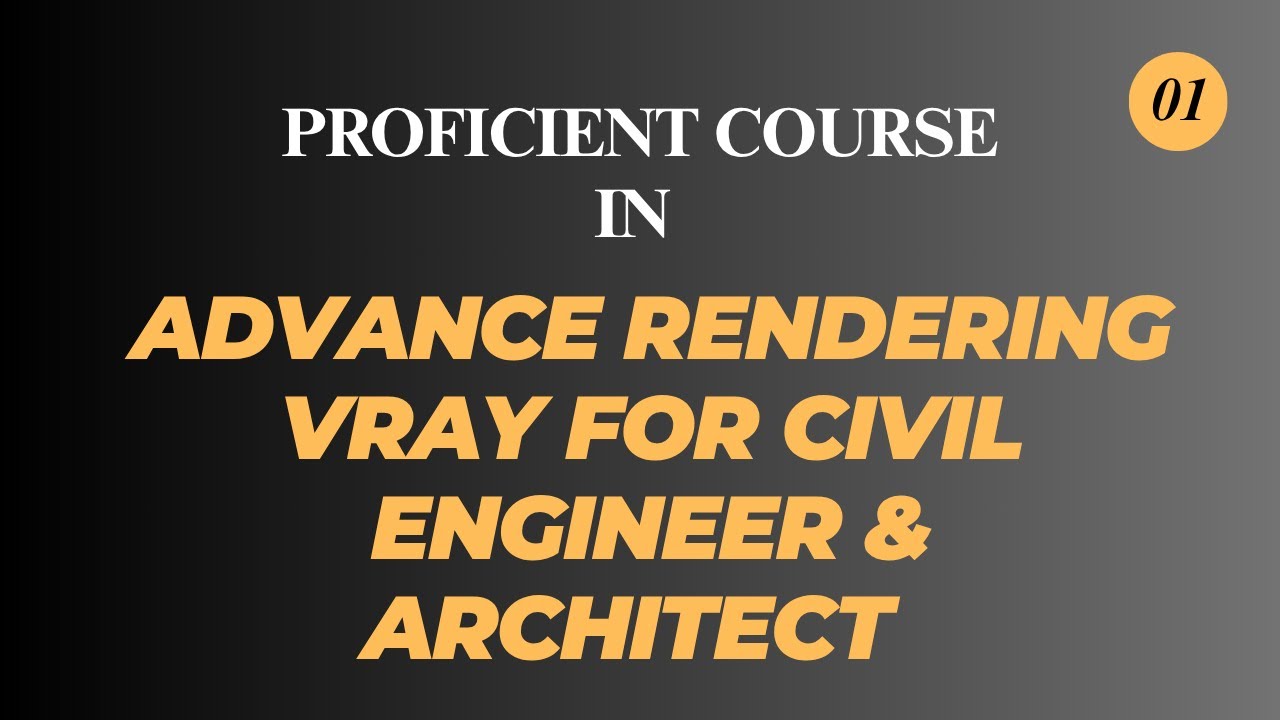
- 10 free episodes covering V-Ray for 3ds Max: rendering engines, image sampling, lights, GI, physical camera, materials, displacement, and render elements
- Prerequisite: 3ds Max modelling skills (creating and positioning objects) — V-Ray is the rendering layer on top of your 3D models
- V-Ray is used by 80%+ of architectural visualisation studios in India for residential and commercial renders
- V-Ray rendering artists in India earn ₹4–12 LPA (freshers to 5 years) plus freelance income of ₹10,000–₹80,000 per project
- ABC Trainings covers V-Ray alongside 3ds Max, AutoCAD, and SketchUp in its product design workshop
What Is V-Ray and Why Is It the Industry Standard? Updated August 2026
V-Ray (Chaos Group) is a physically-based rendering engine — it simulates real light behaviour: how light bounces off surfaces, penetrates translucent materials, creates caustics in glass and water, and how cameras with specific aperture and shutter speed capture scenes. Physical accuracy is what creates photorealism; other renderers (like older Scanline or basic Blender Cycles at default settings) approximate rather than simulate. V-Ray's dominance in India's architectural visualisation market comes from its flexibility: it handles everything from a simple 3-minute preview render for a client meeting to a 12-hour production render for a magazine-quality hero shot. The V-Ray 6.2+ release in 2025 added AI-accelerated denoising that cuts render times by 50–70% without quality loss — a productivity gain that mid-size studios are actively deploying.
Full Series Overview — All 10 Episodes
The 10-episode series covers V-Ray from first render to professional production output.
| V-Ray Episode | Topic | Why It Matters |
|---|---|---|
| 01 | V-Ray UI Overview & First Render | Orientation — understanding the render pipeline |
| 02–03 | Rendering Engines & Image Sampling | Quality control vs render time optimisation |
| 04–05 | V-Ray Lights & Global Illumination | The biggest determinant of render realism |
| 06 | V-Ray Physical Camera | Exposure, aperture, depth of field — real camera controls |
| 07–09 | Materials, Aerial Perspective & Displacement | Surface realism — marble, glass, fabric, terrain |
| 10 | V-Ray Render Elements | Post-production control without re-rendering |
Episode-by-Episode Breakdown: What You Learn
The learning path through V-Ray has a specific logic: you must understand the three pillars — light, camera, and material — before you can produce consistent results. Episode 01 gets you to first render (the excitement moment). Episode 02 explains why GPU rendering doesn't always give the same result as CPU (different computation paths, different GI approximations). Episode 03 is critical: image sampling controls quality vs render time — the most common beginner mistake is setting image sampling too high and waiting hours for renders that could be done in minutes with optimal settings. Episodes 04–05 (lights and GI) are where most render quality is determined — the difference between a flat-looking render and a photorealistic one is almost entirely lighting and GI setup. Episode 07 (materials) is where you spend most professional project time: creating convincing glass, polished marble, brushed stainless steel, fabric, and wood materials. Episode 10 (render elements) is what allows you to fix colour, lighting, and reflections in Photoshop post-render instead of re-rendering the entire scene — a huge productivity skill.
V-Ray Rendering Artist Salary & Freelance Income — India 2026
V-Ray rendering salaries and freelance income in India (2026): Junior Rendering Artist / Visualiser (0–2 yrs) ₹3.5–5.5 LPA, Senior Rendering Artist (3–5 yrs, V-Ray + Photoshop compositing) ₹6–12 LPA, Lead Visualiser at an architectural studio ₹10–18 LPA. Freelance income: ₹5,000–₹15,000 per room render (residential), ₹30,000–₹80,000 per project for a luxury residential or hospitality project with 10–20 renders. The key metric: a V-Ray artist who can produce a render that a client cannot distinguish from a real photograph commands 3–5x the rate of one whose renders look obviously computer-generated. That distinction comes entirely from mastering Episode 04 (lighting) and Episode 07 (materials).
V-Ray vs Lumion vs Enscape — Which Renderer to Learn First?
V-Ray, Lumion, and Enscape serve different use cases. V-Ray (for 3ds Max or SketchUp) produces the highest photorealism and is used for final marketing renders, magazine publications, and client-approval presentations. Lumion is real-time rendering — you click and see the render update live. Ideal for walkthroughs and quick client presentations, but lower photorealism ceiling than V-Ray. Enscape is plugin-based (Revit, SketchUp, Rhino) — architectural firms using Revit love it because it renders in the same application. For 2026: learn V-Ray for 3ds Max if your goal is maximum render quality and freelance income; learn Lumion if your goal is fast walkthroughs and quick client iterations; learn Enscape if you work in Revit-based architecture firms. V-Ray + 3ds Max is the highest-paying combination in the Indian market.
Clients & Industries Using V-Ray Renders in Maharashtra 2026
Maharashtra clients and industries using V-Ray renders in 2026: Luxury residential real estate (Kumar Urban — luxury towers, Pune; Kolte-Patil — Ivy Meadows, Life Republic; Godrej Properties — Alive Mamurdi); Hospitality architecture (Taj Hotels Mumbai expansion renders; The Leela Bhosari construction visual approvals); Commercial office design (WeWork India — Pune expansion; Embassy REIT — Pune office parks); Industrial architecture (AURIC master plan renders for Sambhajinagar factory buildings); Infrastructure visualisation (MSRDC Pune Ring Road corridor renders for public consultation). The common thread: every large project that needs client approval or public communication before construction now requires photorealistic renders — and V-Ray is the tool of choice.
Learn V-Ray at ABC Trainings
ABC Trainings' AI Powered Product Design, Analysis & Simulation workshop covers V-Ray alongside 3ds Max, AutoCAD, and SketchUp — giving you the complete design-to-photorealistic-render workflow. Batches at Wagholi (Pune), Hadapsar (Pune), Cidco and Osmanpura (Sambhajinagar), and Sangli. Call 7039169629 or WhatsApp 7774002496. CMYKPY and PMKVY fee subsidy available — ask at enrollment.
Get the AI Powered Product Design, Analysis & Simulation Brochure + Fees + Batch Dates on WhatsApp
Free 1:1 counselling. Placement track record. CMYKPY/PMKVY eligibility check.
💬 Get Brochure on WhatsApp📞 Call 7039169629About the author: Rahul Patil. 12 yrs experience training mechanical and CAD/CAM engineers across Maharashtra.
Visit Our Centers
- Wagholi (Pune): 1st Floor, Laxmi Datta Arcade, Pune-Ahilyanagar Highway. Call 7039169629
- Hadapsar (Pune HQ): 1st Floor, Shree Tower, opp. Vaibhav Theater, Magarpatta. Call 7039169629
- Cidco (Chh. Sambhajinagar): Kalpana Plaza, opp. Eiffel Tower, N-1 Cidco. Call 7039169629
- Osmanpura (Chh. Sambhajinagar): S.S.C Board to Peer Bazar Road, near Jama Masjid. Call 7039169629
- Sangli: Shubham Emphoria, 1st Floor, Above US Polo Assn., Sangli-Miraj Rd, Vishrambag. Weekend batches available. Call 7039169629
FAQs
Do I need 3ds Max before learning V-Ray?
Yes — you need 3ds Max modelling skills before V-Ray. V-Ray is the rendering engine that produces the final image; 3ds Max is where you build the 3D scene (geometry, cameras, basic material assignments). Minimum 3ds Max skills required: creating and positioning objects, basic material editor, camera placement, and importing external objects. If you are starting fresh, learn 3ds Max fundamentals for 2–3 months, then V-Ray adds 6–8 more weeks.
How much can a V-Ray rendering artist earn as a freelancer in India?
V-Ray freelance income varies widely with quality. At entry level (renders that look competent but not stunning): ₹2,000–₹5,000 per render. At mid-level (convincing photorealism, correct lighting, professional materials): ₹8,000–₹20,000 per room. At expert level (magazine-quality, lifestyle staging, HDR backgrounds, Photoshop-composited finals): ₹25,000–₹80,000 per project. The jump from entry to mid-level happens at Episode 07 (materials mastery) — it is the single highest-ROI episode in the series for freelance income potential.
Which version of V-Ray is taught in this ABC Trainings series?
The ABC Trainings series covers V-Ray for 3ds Max — the most recent stable release available at time of recording (V-Ray 6.x). The core concepts (lighting model, GI algorithms, material properties) are consistent across V-Ray 5, 6, and 7 — skills learned in this series transfer directly to the current version. The UI layout changes slightly between versions but the underlying workflow is identical.
Is V-Ray used for interior design projects in India?
Yes — V-Ray is the most widely used rendering engine for interior design in India, used by architectural visualisation studios, interior design firms, and real estate developers. The process: 3ds Max model of the interior space → assign V-Ray materials (marble floors, fabric sofas, glass pendants) → set up V-Ray lights (IES spotlights, HDRI sky light, V-Ray planes) → render at 4K resolution. This workflow is what premium residential projects (₹1 crore+ apartments in Pune, Mumbai, Bangalore) use to sell units before the building is constructed.