CATIA software is one of the most important CAD platforms used in automotive, aerospace, industrial equipment, and product engineering across India. If you've already seen basic sketching and part modeling, this is the next step: understanding what CATIA actually does at an industry level, which modules matter, and how professionals use it in real projects. Here's the thing — many students learn a few icons and commands, then assume they know CATIA. They don't. To work in companies like Tata Technologies, Mahindra Engineering, Bajaj Auto, Bosch, or Siemens, you'll need a much clearer picture of how CATIA fits into the full design workflow.

This lesson is fundamentally about introducing CATIA as a complete engineering platform, not just a 3D modeling tool. So let's go deeper than a beginner definition and look at the modules, practical use cases, and power-user thinking that actually matter in Maharashtra job markets like Pune, Chhatrapati Sambhajinagar, and Sangli.
What is CATIA software and why do Indian companies use it?

CATIA stands for Computer Aided Three-dimensional Interactive Application. It is developed by Dassault Systèmes and is widely used for CAD, CAM, and CAE work. But what most people don't realize is that CATIA is not just for making parts. It's built for complete product development — from concept surfaces to assemblies, mechanisms, manufacturing support, and product lifecycle workflows.
In India, CATIA is heavily used in automotive and manufacturing ecosystems. Think about OEMs and vendors working with Bajaj Auto, Tata Technologies, Mahindra Engineering, Bosch, Thermax, and Kirloskar. These companies don't want designers who only know how to draw. They want engineers who understand design intent, parametric control, assembly logic, and downstream manufacturability.
The good news is, once you understand CATIA module structure properly, your learning becomes much faster. Instead of randomly clicking commands, you'll know which workbench to use and why.
Which CATIA modules should you learn first for jobs in India?
If you're moving beyond basics, focus on the modules that directly connect to industry hiring:
- Sketcher – foundation for controlled 2D profiles
- Part Design – parametric solid modeling
- Assembly Design – product structure and constraints
- Drafting – manufacturing drawings and views
- Generative Shape Design – advanced surfacing for Class A and complex geometry
- Wireframe and Surface Design – precise control for non-prismatic parts
- Sheet Metal Design – bend-based components and flat patterns
- DMU Kinematics – motion and mechanism validation
Trust me, if you're aiming for entry-level design roles in Pune, don't stop at Part Design. Companies notice candidates who can model parts, assemble them, and create proper drawings with standards.
How is CATIA different from basic CAD software?
Basic CAD tools can create geometry. CATIA is built to manage engineering intent. That's a major difference. In a professional environment, a model isn't just a shape. It must update logically when dimensions change, maintain parent-child relationships, and support collaboration across teams.
For example, if a plastic housing changes wall thickness or mounting hole positions, a properly built CATIA model should update without breaking half the tree. That's where advanced users stand out. They don't just create geometry that looks correct. They create geometry that survives revisions.
Version awareness also matters. Many Indian training centers still discuss CATIA V5 because it remains widely used in manufacturing and vendor ecosystems. In enterprise environments, you'll also hear about 3DEXPERIENCE CATIA. If you're starting for jobs in 2026, CATIA V5 fundamentals are still highly relevant, especially for automotive supplier chains.
What advanced CATIA workflow basics should power users follow?
Once you know the interface, the next level is workflow discipline. Here's where serious improvement happens:
- Name your sketches and features instead of keeping default labels like Sketch.1 or Pad.2
- Use stable references such as planes, published geometry, and controlled datums
- Avoid over-dependent sketches that collapse when one upstream feature changes
- Build clean specification trees with logical feature order
- Control constraints fully so geometry doesn't drift during edits
- Use parameters and formulas where repetitive dimensions are expected
- Check update behavior often instead of waiting until the model becomes heavy
Here's the thing — many learners think advanced CATIA means only surfacing. Not true. A clean parametric tree in Part Design is already an advanced professional habit.
How do CATIA professionals handle assemblies better?
Assembly work is where beginners often struggle. They insert parts, apply random constraints, and the product becomes unstable. In actual projects, you need a repeatable assembly strategy.
Start with a fixed base component. Then apply only necessary constraints: coincidence, contact, offset, angle, and concentricity where appropriate. Don't over-constrain. If a part needs movement for mechanism checking, preserve that design intent.
Professionals also structure assemblies by sub-assemblies. For example, an automotive seat model might be split into frame, recliner mechanism, cushion supports, and mounting brackets. This makes navigation easier and improves collaboration.
At companies like L&T or Siemens, assembly clarity matters because multiple teams may touch the same product data. A messy assembly wastes engineering hours.
Why is surfacing in CATIA important for advanced learners?
If you want to move toward automotive body design, consumer products, aerospace panels, or ergonomic casings, surfacing matters a lot. Generative Shape Design is where CATIA becomes far more powerful than what most beginners expect.
With surfacing, you can create complex transitions, boundary surfaces, sweeps, blends, joins, and healing operations that are difficult in simpler modeling environments. This is especially useful for plastic parts, outer trims, fairings, and aesthetic product components.
What most people don't realize is that surfacing isn't only about looks. It's also about continuity, manufacturability, and downstream tooling quality. A surface may appear fine visually but still fail when checked for tangency or curvature continuity.
If you're serious about advanced CATIA, don't just learn commands. Learn why a multi-section surface fails, when to use boundary versus sweep, and how to repair gaps before converting surfaces into solids.
What CATIA skills help freshers get mechanical design jobs in Maharashtra?
For fresher roles in Pune and nearby industrial belts, recruiters usually value a practical combination of software and drawing knowledge. A student who can model, assemble, and draft properly has a better shot than someone who only says “I know CATIA.”
Useful job-ready skills include:
- Parametric part modeling
- Assembly constraints and structure management
- 2D manufacturing drawing creation
- GD&T reading basics
- Surface modeling exposure
- Sheet metal workflows
- BOM understanding
- Design change handling without model failure
Entry-level CATIA-related salaries in Maharashtra typically start around ₹2.4 lakh to ₹4.2 lakh per year for freshers, depending on city, portfolio, and internship exposure. In Pune, candidates with stronger assemblies, drawings, and surfacing basics can push toward ₹4.5 lakh. With 2 to 4 years of solid experience, many design engineers move into the ₹5.5 lakh to ₹8.5 lakh range, especially in automotive vendors and engineering service firms like KPIT Technologies or Tata Technologies.
How should you learn CATIA after the introduction stage?
Don't learn CATIA as isolated commands. Learn it as a sequence:
- Sketching discipline and constraint control
- Part Design with design intent
- Assemblies with structured constraints
- Drafting with industry-ready annotations
- Surfacing for complex product geometry
- Mini projects based on real components
Trust me, one properly built project teaches more than ten disconnected practice files. Model a bracket assembly, plastic enclosure, sheet metal cabinet, or fixture component. Then revise it. If your model survives change, you're learning correctly.
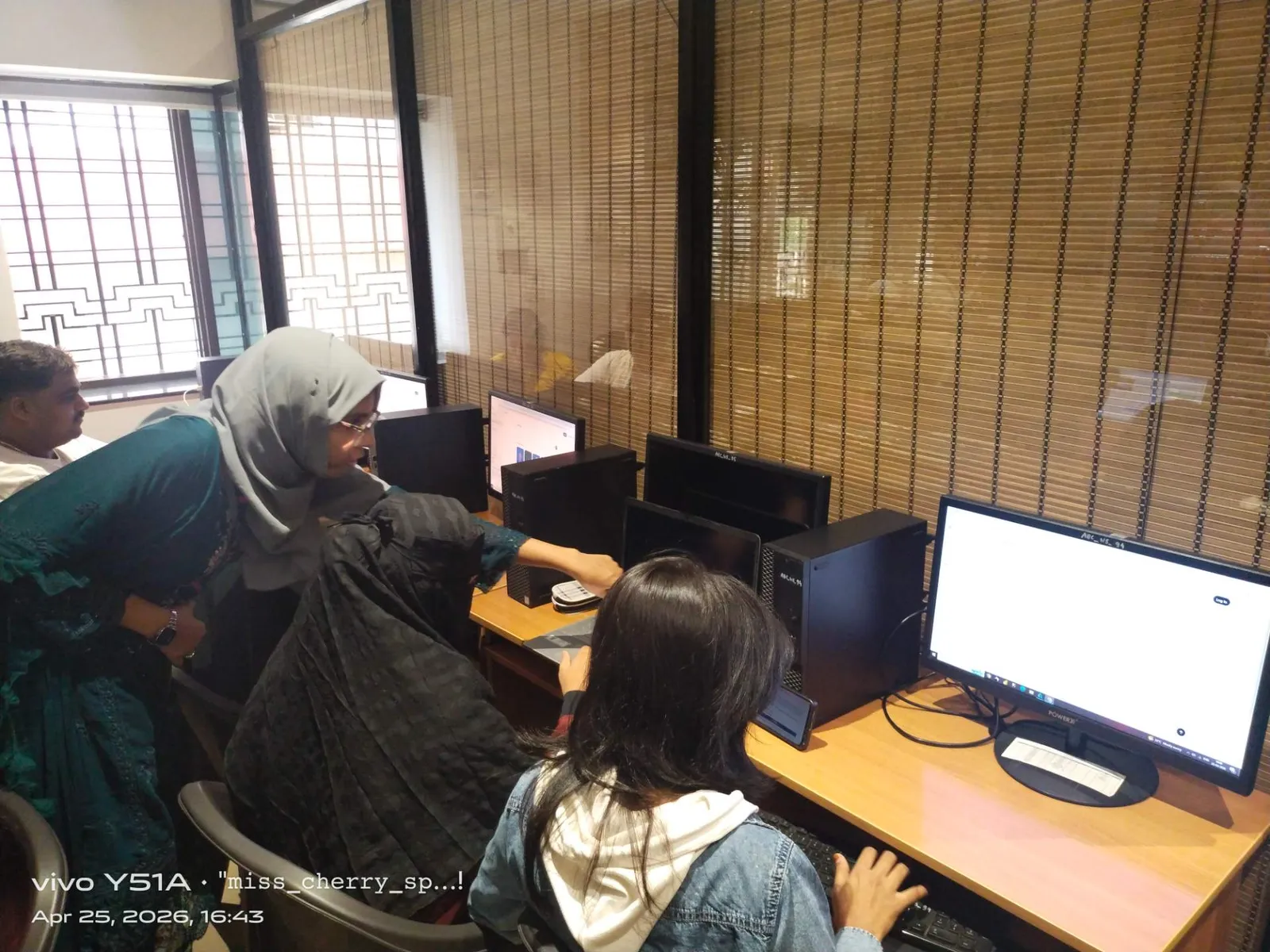
If you're in Chhatrapati Sambhajinagar, Pune, or Sangli and want guided CATIA training with practical projects, ABC Trainings can help you move from software basics to job-level workflows. You can call 8698270088 or WhatsApp 7774002496 for course details.
Is CATIA worth learning in India in 2026?
Yes, especially if you're targeting automotive, manufacturing, tooling, aerospace support, or product design roles. CATIA remains highly relevant in Indian engineering environments because many companies still depend on structured 3D design workflows built around Dassault tools.
The good news is, CATIA rewards serious learners. If you build strong fundamentals and then go deeper into assemblies, surfacing, and drafting standards, you'll stand out quickly. That's exactly why trainers at ABC Trainings focus not only on command knowledge, but on how real engineering teams actually work.
Is CATIA better than AutoCAD for mechanical jobs in Pune?
For most 3D mechanical design jobs, yes. AutoCAD is still useful for 2D drafting, but CATIA is much stronger for parametric parts, assemblies, surfacing, and product development workflows. If you're applying to automotive or manufacturing companies in Pune, CATIA usually carries more weight for design roles.
Which CATIA version should I learn in India in 2026?
CATIA V5 is still a practical choice because many Indian companies and supplier networks continue to use it. You should understand its core workbenches deeply before worrying about advanced enterprise platforms. Once your V5 foundation is strong, shifting to 3DEXPERIENCE concepts becomes easier.
Can a diploma student learn CATIA and get a job in Maharashtra?
Yes, diploma students in mechanical, production, and tool-related branches can absolutely learn CATIA and target design support roles. Your chances improve if you also know drafting standards, assemblies, and basic manufacturing concepts. A project portfolio and internship exposure matter more than only a course certificate.
How long does it take to learn CATIA beyond basics?
If you practice consistently, you can build strong core skills in 2 to 4 months. Reaching a more professional level in assemblies, drafting, and surfacing usually takes longer because revision handling and model stability need repeated practice. Daily hands-on work is the fastest route.
Visit Our Centers
Chhatrapati Sambhajinagar
Corporate Office (HQ)
2nd Floor, Kandi Towers, Jalna Road, Amarpreet Chowk, Chhatrapati Sambhajinagar, Maharashtra 431001
Osmanpura Branch
Plot No 14, Shanya Sect, Near Sant Eknath Rang Mandir, Osmanpura, Chhatrapati Sambhajinagar, Maharashtra 431005
CIDCO Branch
Plot No 4, N-3, Cidco, Opp. High Court, Chhatrapati Sambhajinagar, Maharashtra 431003
Pune
Wagholi Branch
1st Floor, ABC Trainings, Laxmi Datta Arcade, Pune - Ahilyanagar Hwy, Wagholi, Pune, Maharashtra 412207
Hadapsar Branch
Bloom Hotel, ABC Trainings 1st Floor, S.no 156/3 Shree Tower Pune - Solapur Rd, Hadapsar, Pune, Maharashtra 411028
Sangli
Sangli Branch
2nd Floor, Vasant Market, Opp. City High School, Sangli, Maharashtra 416416
Start Your Career Journey Today
Join 10,000+ students who transformed their careers with ABC Trainings.
💬 WhatsApp: 7774002496📞 Call: 8698270088