What Is Vibe Coding? Andrej Karpathy's Idea, How It Works, and Why Indian Developers Are Embracing It (2026) (Updated July 2026)
In February 2025, Andrej Karpathy — former OpenAI research director and Tesla AI lead — coined the term 'vibe coding' on X (formerly Twitter) to describe a style of software development where you describe what you want in plain English, let an AI coding assistant write the code, and iterate by refining the prompt rather than debugging the implementation. NASSCOM and Deloitte's 2026 forecast projects 1.25 million new AI-skilled professionals needed in India by 2027, with AI-assisted development tools appearing in job descriptions at TCS, Infosys, Wipro, and virtually every Pune-based tech startup. By 2026, vibe coding has moved from a curiosity to a workflow that junior and mid-level Indian developers are actively using — and arguing about. This guide explains what vibe coding actually is, what Karpathy meant, how Indian developers are using it in practice, and what it means for your career if you're learning to code or already working as a developer.
- Vibe coding = using AI tools (Cursor, GitHub Copilot, Claude) to generate most of the code; the developer describes, reviews, and iterates rather than writing line-by-line.
- Andrej Karpathy coined the term in February 2025 to describe this AI-first development flow.
- Indian developers at TCS, Infosys, startups, and freelance platforms are actively adopting vibe coding to accelerate delivery.
- Vibe coding does not eliminate programming jobs — it shifts the skill requirement toward problem-framing, code review, and system design.
- AI-assisted coding is already a listed skill in 20%+ of Indian tech job postings in 2026 (NASSCOM data); knowing it adds ₹1–3 LPA to your offer.
Andrej Karpathy's Original Idea: What Vibe Coding Actually Means
Karpathy's February 2025 post described a mode of working where 'you fully give in to the vibes, embrace exponentials, and forget that the code even exists.' What he was observing — and naming — was a shift where the cognitive work of programming moves from implementation (writing syntax, remembering APIs, debugging loops) to specification (describing what the program should do clearly enough that an AI can implement it). The good news is that vibe coding is not about being lazy; it's about working at a higher level of abstraction. A developer who can clearly describe a REST API endpoint, its inputs, outputs, edge cases, and error handling — and then verify that the AI-generated code actually implements this correctly — is doing more engineering, not less. The AI handles the boilerplate, the syntax, and often the first-pass logic; the developer handles intent, correctness, security, and architecture.
The Tools Indian Developers Use for Vibe Coding in 2026
Indian developers in 2026 primarily use four tools for vibe coding: Cursor (an AI-first IDE built on VS Code with Claude integration; ₹1,700/month), GitHub Copilot (integrated into VS Code and JetBrains; ₹830/month or included with GitHub Education), Claude (via the API or Claude.ai; used for complex reasoning, architecture planning, and code review), and Replit Ghostwriter (popular for rapid prototyping and students). Infosys, TCS, and Wipro have internal AI coding assistants built on these platforms or proprietary fine-tuned models. Pune's tech startups — particularly those in fintech, logistics, and healthcare SaaS — are using Cursor and GitHub Copilot as standard tooling. What most people don't realise is that knowing how to write effective prompts for these tools — what context to provide, how to specify edge cases, when to push back on generated code — is now a genuine skill that distinguishes fast developers from slow ones.
How Vibe Coding Works in Practice: A Realistic Example
Here's a realistic example of vibe coding for a Pune-based developer building a leave management feature for an HR SaaS product. Traditional approach: open VS Code, write the database migration for the leaves table, write the Express.js route handler, write the validation logic, write the service layer, write unit tests — 4–6 hours for a senior developer. Vibe coding approach: open Cursor, describe the feature ('create a POST /api/leaves endpoint that accepts employee_id, start_date, end_date, leave_type, validates that start_date is not in the past, checks available leave balance from the employee_leaves table, and returns a JSON response with the created record or error details'), review the generated code, add any edge cases the AI missed, run tests, iterate. Time: 45–90 minutes for the same feature. The time saving is real — but so is the risk if the developer doesn't understand the generated code well enough to catch logic errors.
Vibe Coding vs Traditional Coding: What Changes and What Doesn't
What changes with vibe coding: the time spent on boilerplate, API lookup, and repetitive implementation drops significantly. Developers write fewer lines of code themselves but review more AI-generated code. The premium on clear communication and system design thinking increases. What doesn't change: understanding of algorithms, data structures, and system architecture — you cannot debug or improve code you do not understand. Security awareness — AI tools frequently generate code with security vulnerabilities (SQL injection, missing auth checks, improper error handling); a developer who cannot spot these is a liability. Domain knowledge — understanding what the business logic should be is never delegated to AI. Testing and quality — AI-generated code fails in edge cases that the developer must anticipate and test.
| Aspect | Traditional Coding | Vibe Coding (AI-Assisted) |
|---|---|---|
| Time per Feature | 4–8 hrs (senior dev) | 45–120 mins (same feature) |
| Cognitive Focus | Implementation (syntax, APIs) | Specification, review, architecture |
| Error Risk | Developer syntax/logic errors | AI logic errors + security gaps |
| Required Skills | Strong implementation + debugging | System design + code review + prompting |
| Tools | VS Code, terminal, Stack Overflow | Cursor, Copilot, Claude, Replit |
| Salary Premium (India) | Baseline | +₹1–3 LPA for AI-tool proficiency |
Career Impact: Does Vibe Coding Help or Hurt Indian Developers?
Here's the thing: vibe coding in India is not eliminating developer jobs — it is sorting them. Developers who can use AI tools to deliver features 3–5x faster than non-AI developers are more valuable, not less. TCS's internal data (shared at their 2025 investor day) showed a 25–35% reduction in code implementation time when developers used AI assistants on well-scoped tasks. But TCS also reported a 12% increase in code review and testing time — because more code is being generated faster, and it needs checking. The net impact on employment is that firms are hiring fewer junior developers for boilerplate tasks but more senior developers who can architect systems, review AI-generated code for correctness and security, and move fast. Indian freshers entering the market in 2026 who cannot use AI coding tools are competing with developers who can — and losing on delivery speed.
How to Learn AI-Assisted Development (and What ABC Trainings Teaches)
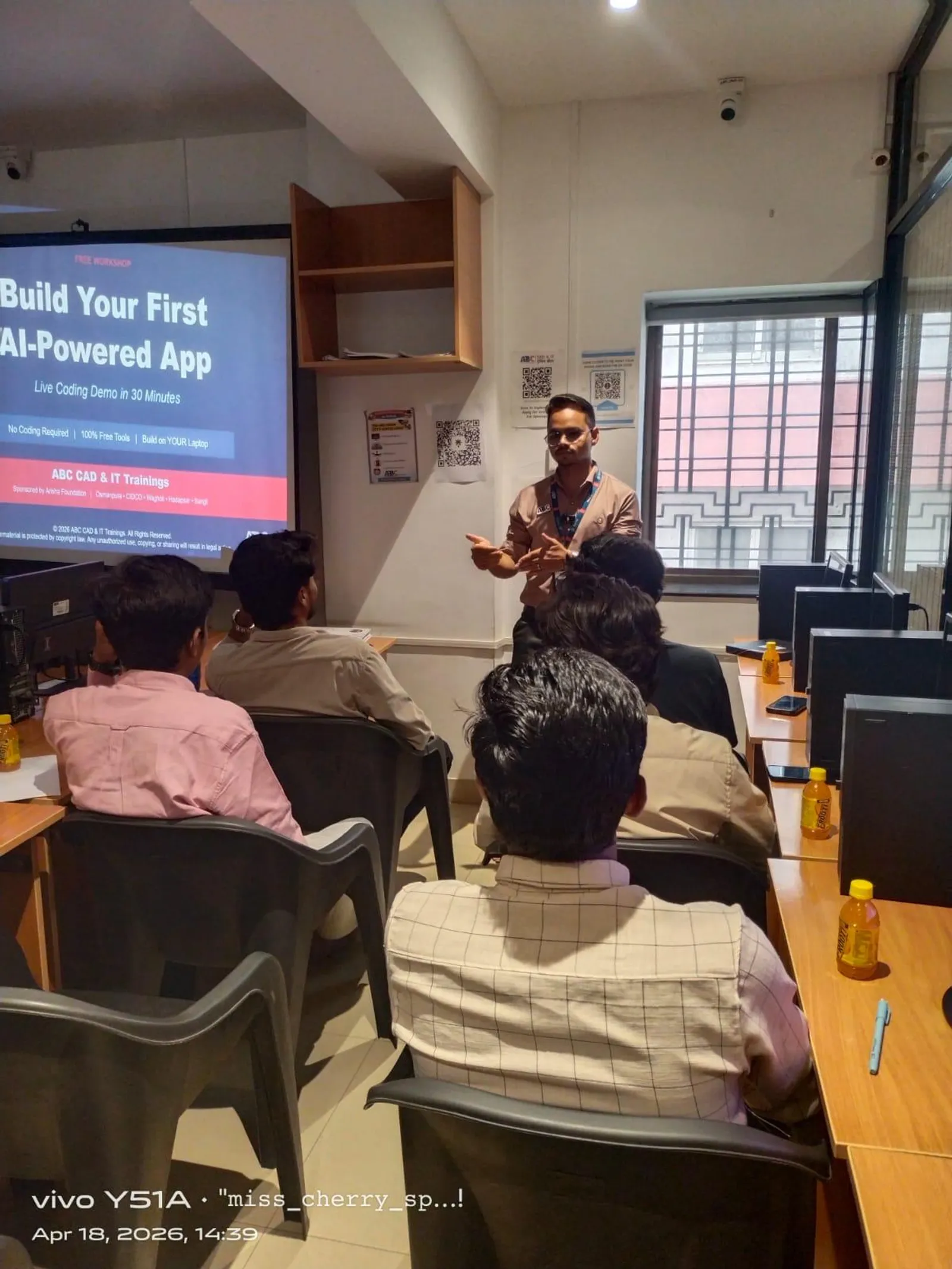
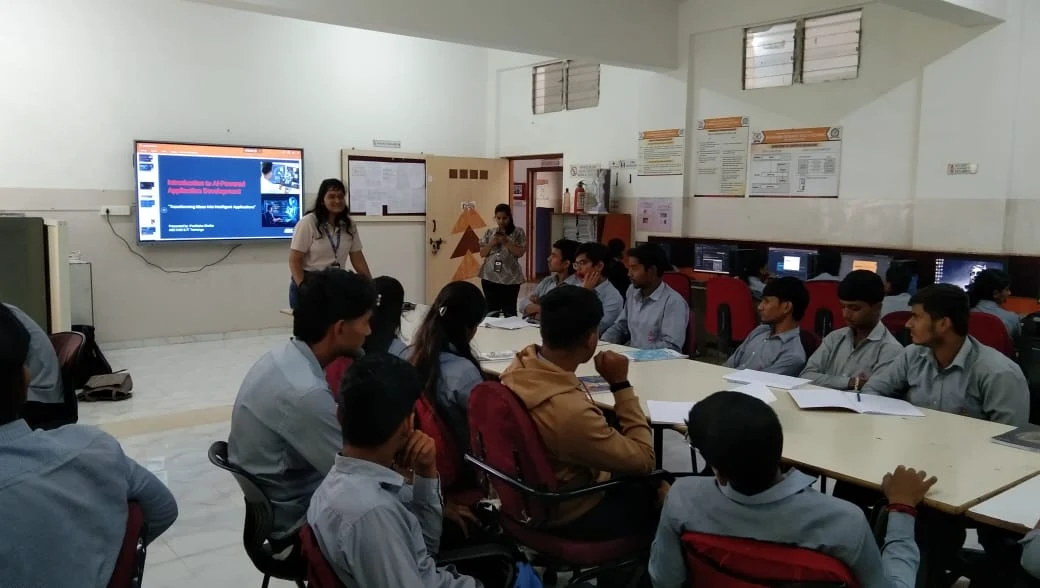
ABC Trainings' AI Powered Application Development program at Wagholi and Hadapsar covers Python, full-stack web development, and AI-assisted coding workflows including prompt engineering for code generation, code review with AI tools, and building production-ready applications using AI-first development environments. The program is designed for both freshers (BSc CS, BCA, BE CS graduates) and working professionals looking to upgrade. CMYKPY (Chief Minister Yuva Karya Prashikshan Yojana) provides ₹6,000–₹10,000/month stipends for eligible Maharashtra residents during training — call 7039169629 or WhatsApp 7774002496 to check eligibility and join the next batch.
CMYKPY Note: Maharashtra engineering and IT students may qualify for Chief Minister Yuva Karya Prashikshan Yojana (CMYKPY) monthly stipends of ₹6,000–₹10,000 during AI and software development training at ABC Trainings. Call 7039169629 to confirm eligibility before enrolling.
Get the AI & Software Development Brochure + Fees + Batch Dates on WhatsApp
Free 1:1 counselling. Placement track record. CMYKPY/PMKVY eligibility check.
💬 Get Brochure on WhatsApp📞 Call 7039169629About the author: ABC Trainings Faculty.
Visit Our Centers
- Wagholi (Pune): 1st Floor, Laxmi Datta Arcade, Pune-Ahilyanagar Highway. Call 7039169629
- Hadapsar (Pune HQ): 1st Floor, Shree Tower, opp. Vaibhav Theater, Magarpatta. Call 7039169629
- Cidco (Chh. Sambhajinagar): Kalpana Plaza, opp. Eiffel Tower, N-1 Cidco. Call 7039169629
- Osmanpura (Chh. Sambhajinagar): S.S.C Board to Peer Bazar Road, near Jama Masjid. Call 7039169629
- Sangli: Shubham Emphoria, 1st Floor, Above US Polo Assn., Sangli-Miraj Rd, Vishrambag. Weekend batches available. Call 7039169629
FAQs
Who invented vibe coding and what does it mean?
Andrej Karpathy — former Tesla AI lead and OpenAI research director — coined the term in February 2025 to describe AI-first software development where developers describe desired outcomes in natural language and AI tools generate the implementation. The developer's role shifts to specification, review, and architecture rather than line-by-line coding.
Does vibe coding make traditional programming skills obsolete in India?
No — vibe coding raises the bar, it does not lower it. Developers who cannot understand, review, or debug AI-generated code are a liability because AI tools regularly produce security vulnerabilities and logic errors. The demand for strong system design, code review, and domain-knowledge skills has actually increased. What's diminishing is demand for developers who can only write boilerplate and have no understanding of architecture or security.
Which Indian companies are using vibe coding or AI coding tools?
TCS, Infosys, Wipro, Persistent Systems, and nearly all Pune-based tech startups in fintech, logistics, and SaaS are actively using GitHub Copilot, Cursor, or proprietary AI coding assistants. TCS reported a 25–35% reduction in feature implementation time across teams using AI coding tools in their 2025 developer productivity initiative.
Does ABC Trainings teach AI-assisted coding and vibe coding workflows?
Yes — ABC Trainings' AI Powered Application Development program covers AI-assisted coding workflows, prompt engineering for code generation, Python, web development, and building production-grade applications. Available at Wagholi and Hadapsar in Pune. Call 7039169629 or WhatsApp 7774002496 for batch timing.