ANSYS Workbench interface and setup is where serious simulation work actually begins. Most learners rush to meshing or solving, but here's the thing: if your project schematic, units, geometry workflow, and analysis links aren't set correctly from the start, you'll waste hours fixing avoidable mistakes later. This lesson is about understanding how ANSYS Workbench is organized, how geometry creation and cleanup fit into the simulation chain, and how professionals in India build cleaner, faster projects in ANSYS 2024 R2 and similar versions.

If you already know the basics, this deep dive will help you work more like a real CAE engineer. Trust me, companies like Tata Technologies, Mahindra Engineering, Bosch, Bajaj Auto, and KPIT Technologies don't just want someone who can click through a wizard. They want engineers who can set up projects properly, maintain file discipline, and avoid solver-side problems before they start.
What is the ANSYS Workbench interface actually used for?
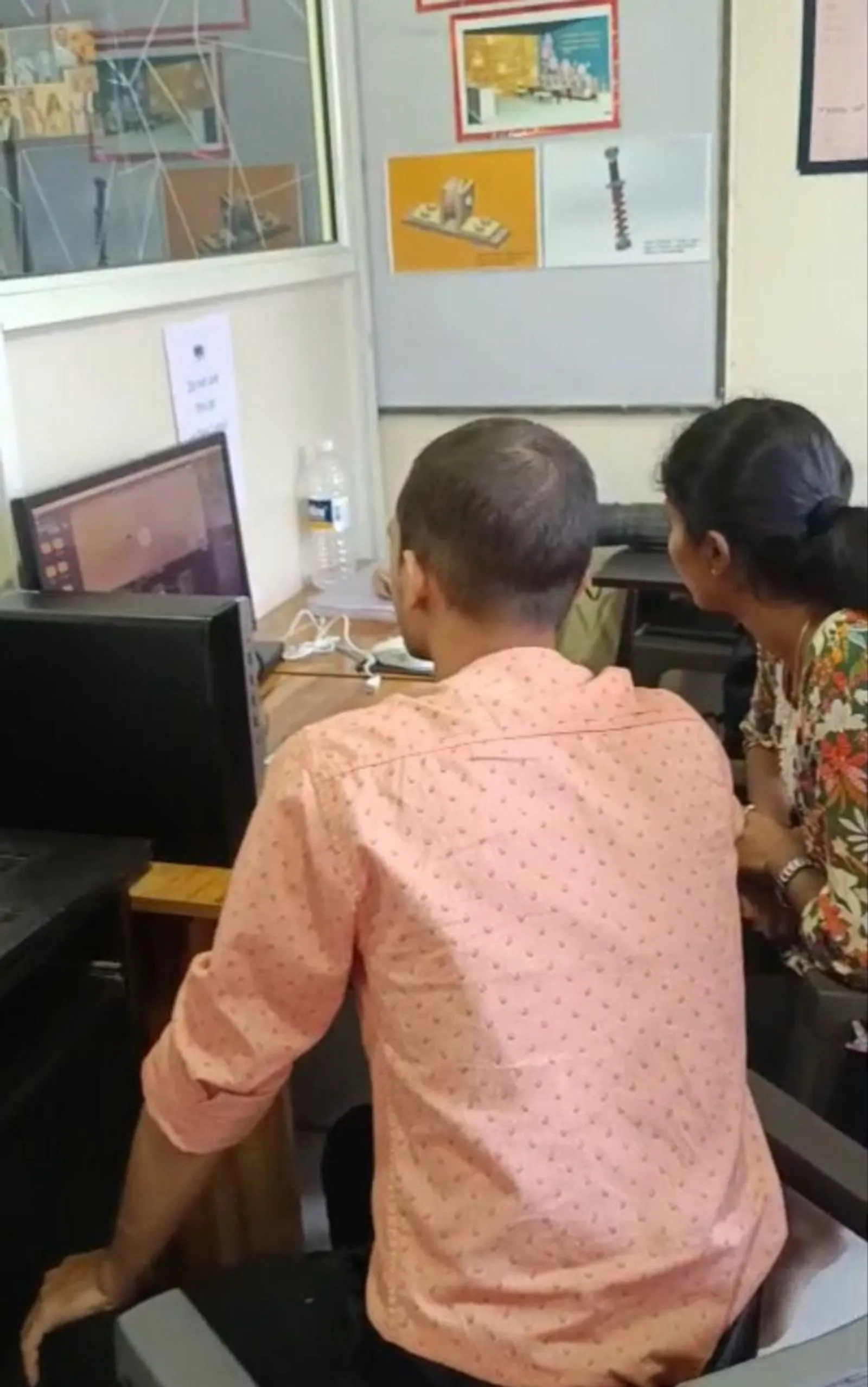
ANSYS Workbench is not just a launcher. It's the control center for your entire simulation workflow. The Project Schematic is where you connect engineering data, geometry, model, setup, solution, and results into one traceable chain. What most people don't realize is that this structure is exactly what makes Workbench powerful in production environments.
When you're handling static structural, thermal, modal, or CFD studies, Workbench lets you manage dependencies cleanly. If geometry changes, linked systems can update instead of forcing you to rebuild everything manually. That's a big deal when you're working on automotive brackets, pressure vessels, sheet metal parts, or machine frames.
For advanced users, the interface matters because speed comes from structure. A clean Workbench page means faster revisions, fewer broken links, and easier handover between design and analysis teams.
How should you set up a project in ANSYS Workbench like a professional?
Start with naming discipline. Don't leave systems as "Static Structural" and files as "New Project." Rename every analysis block based on component and load case. For example: "ControlArm_Static_5kN" or "Bracket_Thermal_80C." This sounds basic, but in real projects with multiple load cases, it's the difference between control and confusion.
Next, confirm units before importing or creating geometry. If your CAD comes from SolidWorks, CATIA, Creo, or SpaceClaim in millimeters and your material assumptions are in SI units, you need consistency from the first step. One wrong unit assumption can destroy stress, displacement, and contact results.
Use templates mentally, even if you're not using a saved company template. A good project setup usually follows this order:
Engineering Data → Geometry → Model → Setup → Solution → Results.
The good news is, once you understand this structure, you'll stop treating Workbench like disconnected windows. You'll start seeing it as one engineering pipeline.
How does geometry creation and cleanup fit into Workbench workflow?
The video description points directly to geometry creation and cleanup, and this is where advanced users separate themselves from beginners. Geometry is not just about shape. It's about solver readiness.
If you're creating geometry inside ANSYS tools like SpaceClaim or DesignModeler, the goal is not to make it visually perfect. The goal is to make it analysis-friendly. That means removing tiny fillets that don't affect results, suppressing cosmetic features, fixing gaps, and simplifying contact regions.
Here's the thing: every extra edge, sliver face, or tiny hole can create mesh problems. And once the mesh gets messy, solution time increases and accuracy often gets worse, not better. That's why experienced analysts simplify first and only keep features that affect stress flow, heat transfer, or fluid path.
For example, if you're analyzing a machine mounting bracket used in a Kirloskar or Thermax type manufacturing setup, logo embossing and decorative chamfers usually don't matter. Bolt holes, load paths, and support faces do. That's the mindset you need.
Which Workbench settings do advanced users check before modeling?
Before opening the Model cell, power users check a few things every single time. First is material library readiness. If Engineering Data is incomplete, your simulation is already weak. Add proper elastic modulus, Poisson's ratio, density, thermal conductivity, or yield strength depending on the analysis type.
Second is geometry update behavior. Make sure you know whether your geometry is associative with the original CAD file. If the design team sends a revised part, can your model update cleanly, or will links break? In companies like L&T, Siemens, and Tata Technologies, revision handling matters almost as much as the result itself.
Third is analysis system selection. Don't choose a study type just because it looks familiar. Static Structural, Modal, Steady-State Thermal, Transient Thermal, Fluent, and Explicit Dynamics all have different assumptions. Advanced work starts by matching the physics to the real problem.
Also check file locations. Keep projects in organized folders, ideally without overly long names or random desktop storage. Shared projects become messy fast when file references are broken.
How do you navigate the Project Schematic faster?
The Project Schematic is your command board. Learn to drag in systems, duplicate systems for comparison studies, and share engineering data or geometry across multiple analyses. This is one of the biggest efficiency tricks in Workbench.
Let's say you're comparing two loading conditions on the same component. Instead of rebuilding from scratch, duplicate the analysis system and share geometry. If material remains the same, share engineering data too. This saves time and reduces setup variation between cases.
What most people don't realize is that linked cells also help maintain consistency. If geometry updates, multiple studies can refresh from the same source. That's useful for design optimization, validation studies, and report preparation.
You should also get comfortable with right-click options on each cell. Update, refresh, import, edit, duplicate, transfer data, and view properties are not minor features. They're daily workflow tools.
Why do beginners struggle after geometry import?
Because they treat import as the finish line. It's actually the start of cleanup. Imported CAD often contains bad topology, unnecessary details, open edges, duplicate faces, or tiny features from manufacturing design intent. Those things may be acceptable for CAD, but not for simulation.
Trust me, if you've ever seen mesh failure around tiny blends or weird body splits, you know this pain already. The fix is not always to reduce mesh size. Very often, the real fix is smarter geometry preparation.
Advanced analysts ask three questions after import: Is the body watertight? Are contacts or shared topologies defined logically? Can this shape be simplified without losing engineering meaning? If you answer these early, your model becomes more stable.
What industry workflow do Indian CAE employers expect in 2026?
In Maharashtra and across India, employers expect more than software familiarity. A fresher applying for CAE, design validation, or simulation support roles in Pune, Chhatrapati Sambhajinagar, Nashik, or Sangli should know how to open Workbench, create a project, manage geometry, assign materials, and prepare a clean analysis route.
At entry level, ANSYS-skilled candidates in Pune can see salaries around ₹2.8 lakh to ₹4.5 lakh per year. If you can combine CAD interpretation, geometry cleanup, and disciplined Workbench setup, ₹4.8 lakh to ₹6.5 lakh becomes realistic in companies serving automotive and industrial clients. With 3 to 5 years of CAE workflow experience, engineers in firms linked to Bosch, Mahindra Engineering, or Siemens projects can move into the ₹7 lakh to ₹12 lakh range depending on domain.
That's why interface mastery matters. It sounds simple, but it's part of how employers judge whether you'll survive real project pressure.
How can you practice ANSYS Workbench setup the right way?
Don't just open random tutorials and copy clicks. Build repeatable mini-projects. Take one bracket, one base plate, one shaft support, or one enclosure part. Set up the project three times: once for static structural, once for thermal, and once for a revised geometry version. This trains your project organization skills.
Keep a checklist: units, material, geometry cleanup, named selections, contacts, mesh logic, boundary conditions, and output goals. Over time, you'll stop missing basics under pressure.
If you want guided practice, ABC Trainings works with students and professionals who need job-focused CAD and CAE skills, not just software demos. If you're in Pune, Chhatrapati Sambhajinagar, or Sangli and want structured ANSYS learning, call 8698270088 or WhatsApp 7774002496.
What should you master next after interface and setup?
Once your Workbench foundation is clean, move to geometry cleanup strategies, named selections, contact definitions, meshing controls, and solver settings. Here's the thing: advanced simulation is rarely about one magic feature. It's about getting the chain right from the first screen onward.
The good news is, once you understand Workbench as a system and not just a software window, everything after that starts making more sense. Your models become cleaner. Your errors reduce. Your turnaround gets faster. And that is exactly what industry wants.
If you're serious about building a simulation career in India, don't underestimate this stage. A strong Workbench setup habit is what turns a learner into someone teams can actually trust.
Is ANSYS Workbench enough to get a CAE job in Pune in 2026?
ANSYS Workbench is a strong starting point, but by itself it's usually not enough. Companies want you to understand geometry cleanup, meshing basics, boundary conditions, result interpretation, and engineering reasoning. If you combine Workbench with CAD reading skills and basic FEA concepts, your chances improve a lot for fresher roles in Pune and nearby industrial zones.
Which ANSYS version should students learn in India right now?
ANSYS 2024 R2 is a practical benchmark because many institutes and companies are moving around recent release cycles close to that environment. The exact version matters less than your understanding of workflow, interface logic, and analysis setup. If you can work confidently in one recent version, adapting to another is usually manageable.
Do mechanical engineers need geometry cleanup knowledge before meshing?
Yes, absolutely. Geometry cleanup often decides whether your mesh will be stable and whether the solution will run efficiently. In real industrial work, engineers simplify parts before meshing to reduce errors, save time, and keep results focused on the actual engineering problem.
Where can I learn ANSYS Workbench in Maharashtra with placement support?
You can look for job-focused training centers that teach Workbench with geometry handling, analysis workflow, and practical projects instead of only theory. ABC Trainings is one option for students in Maharashtra who want structured CAD and CAE learning support. You can contact them at 8698270088 or WhatsApp 7774002496 to check current batches and guidance options.
Visit Our Centers
Chhatrapati Sambhajinagar
Corporate Office (HQ)
2nd Floor, Kandi Towers, Jalna Road, Amarpreet Chowk, Chhatrapati Sambhajinagar, Maharashtra 431001
Osmanpura Branch
Plot No 14, Shanya Sect, Near Sant Eknath Rang Mandir, Osmanpura, Chhatrapati Sambhajinagar, Maharashtra 431005
CIDCO Branch
Plot No 4, N-3, Cidco, Opp. High Court, Chhatrapati Sambhajinagar, Maharashtra 431003
Pune
Wagholi Branch
1st Floor, ABC Trainings, Laxmi Datta Arcade, Pune - Ahilyanagar Hwy, Wagholi, Pune, Maharashtra 412207
Hadapsar Branch
Bloom Hotel, ABC Trainings 1st Floor, S.no 156/3 Shree Tower Pune - Solapur Rd, Hadapsar, Pune, Maharashtra 411028
Sangli
Sangli Branch
2nd Floor, Vasant Market, Opp. City High School, Sangli, Maharashtra 416416
Start Your Career Journey Today
Join 10,000+ students who transformed their careers with ABC Trainings.
💬 WhatsApp: 7774002496📞 Call: 8698270088