Artificial Intelligence Essential Beginner's Guide: Episode 9 — AI Tools, Real-World Applications and Career Roadmap (Updated June 2026)
By Episode 9, you understand what AI is, how machine learning learns from data, and why deep learning powers most of the impressive demos you see online. Now the question becomes: how does this actually work in the real world, and what tools do practicing AI engineers use every day? The answer matters more than ever — NASSCOM and Deloitte project that India will need 1.25 million AI and data science professionals by 2027, and right now the talent gap is enormous. Companies across every sector are scrambling to hire people who can apply AI — not just understand it in theory. Episode 9 bridges that gap. We look at the most-used AI tools in production environments, the industries where AI is creating the most jobs and highest salaries in India, and the specific career path that takes you from complete beginner to employed AI professional in 12 to 18 months.

- Top AI tools: TensorFlow, PyTorch, Scikit-learn, Hugging Face, OpenCV explained simply
- Real applications: AI in healthcare diagnostics, fraud detection, manufacturing quality control
- India's AI job market: Infosys, TCS, Wipro, startups hiring 50,000+ AI roles in 2025
- AI Engineer freshers earn Rs 5–9 LPA in Pune; seniors reach Rs 25–40 LPA at product companies
- 12-month roadmap: Python, ML basics, Deep Learning, specialisation, portfolio, job
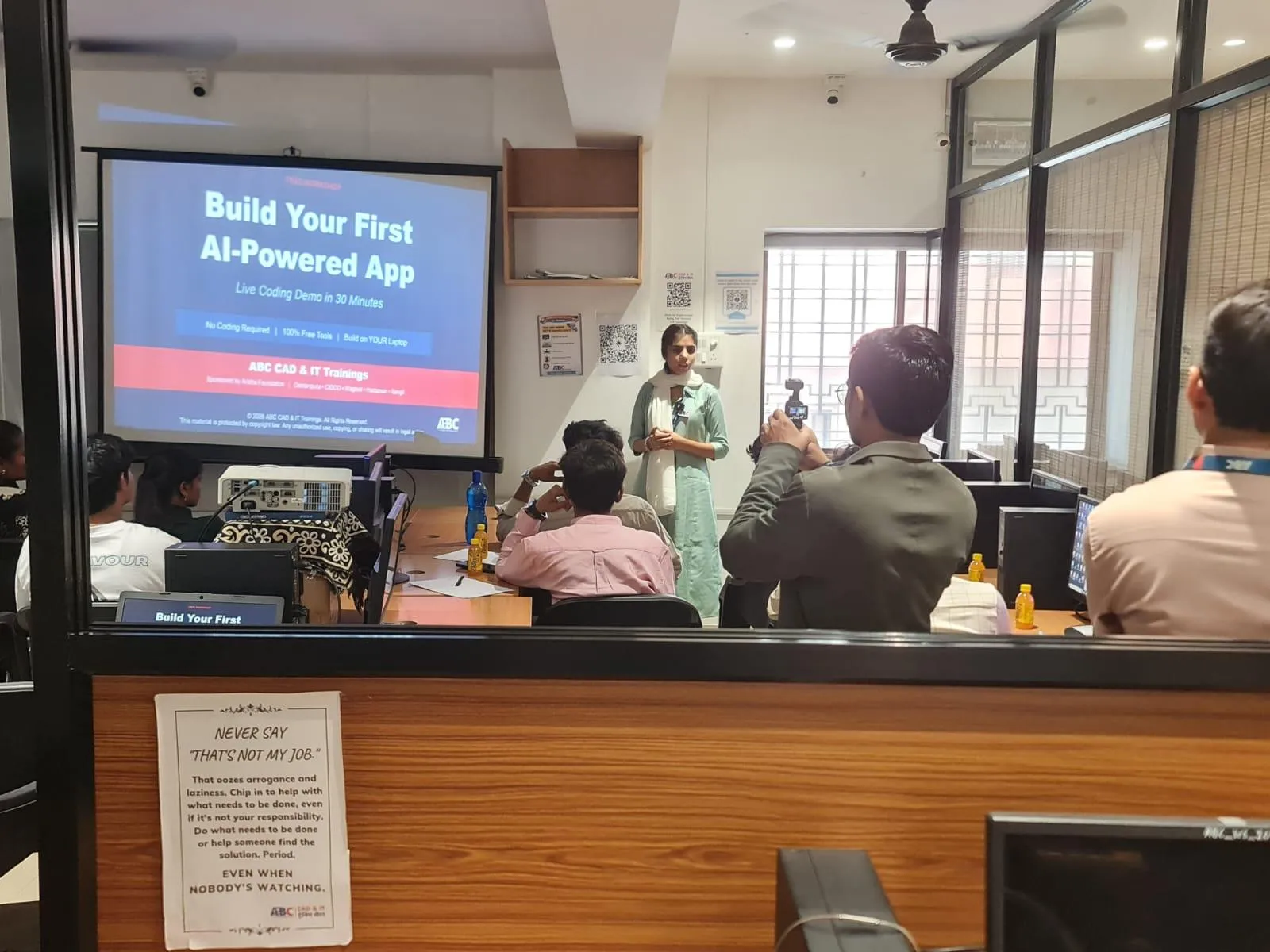
- ABC Trainings AI Powered Application Development course covers this full roadmap
The AI Tools You Actually Need to Know
There are hundreds of AI libraries and frameworks, and beginners often freeze trying to decide where to start. Here's the honest answer: you need four things. First, Python — the language that ties everything together. Second, Scikit-learn — the most beginner-friendly ML library, perfect for classification, regression and clustering with clean APIs. Third, TensorFlow or PyTorch — for deep learning. TensorFlow (Google) is dominant in production deployments; PyTorch (Meta) is preferred in research and increasingly in startups. Pick one and stick with it initially. Fourth, Pandas and NumPy for data manipulation — without these, you cannot prepare data for any model. What most people don't realize: Hugging Face Transformers has become the go-to library for NLP tasks in 2025. If you want to work with large language models, text classification or chatbots, Hugging Face is where the industry has landed. OpenCV handles computer vision. Matplotlib and Seaborn handle visualization. That's your complete starter toolkit.
Where AI Is Making the Most Impact in India Right Now
Healthcare: AI diagnostic tools are detecting diabetic retinopathy, tuberculosis and skin cancers from images with accuracy matching specialist doctors. Apollo Hospitals and Manipal Health are piloting AI-assisted radiology in Indian metros. Finance: HDFC Bank, ICICI and Paytm run fraud detection models that analyze thousands of transactions per second to flag anomalies. TCS has an entire AI division (TCS AI Cloud) serving banking clients. Manufacturing: Bosch's Indian plants use computer vision AI for defect detection on assembly lines — the same process done by a trained inspector but at camera speed, 24 hours a day. Bajaj Auto at Akurdi and Waluj is investing in AI-driven quality control systems. Agriculture: startups like Ninjacart use ML for demand forecasting and route optimization. Education: Byju's and NPTEL use adaptive learning algorithms. Every one of these applications creates a need for AI engineers who understand both the models and the domain.
| Tool / Library | Category | Best For | Difficulty |
|---|---|---|---|
| Scikit-learn | Machine Learning | Classification, regression, clustering | Beginner |
| TensorFlow | Deep Learning | Production model deployment | Intermediate |
| PyTorch | Deep Learning | Research, NLP, flexible prototyping | Intermediate |
| Hugging Face | NLP / LLMs | Text classification, chatbots, LLMs | Intermediate |
| OpenCV | Computer Vision | Image processing, object detection | Beginner–Int. |
From Data Collection to Deployment: The Real AI Workflow
Real AI projects follow a pipeline that rarely looks as clean as tutorials suggest. It starts with problem definition — this is the step that takes the most experience, because framing the wrong question leads to the wrong model. Then data collection and labeling — often the most time-consuming part; a supervised model needs labeled examples, and someone has to create them. Then exploratory data analysis (EDA) in Pandas and Matplotlib — looking for missing values, outliers, correlations. Then feature engineering — creating input variables that the model can actually learn from. Then model selection and training. Then evaluation using appropriate metrics (accuracy, precision, recall, F1 for classification; MAE, RMSE for regression). Then deployment — making the model available via an API using Flask, FastAPI or a cloud platform. Finally, monitoring — because real-world data changes and models drift over time. Understanding this full pipeline, not just the training step, is what makes you genuinely employable.
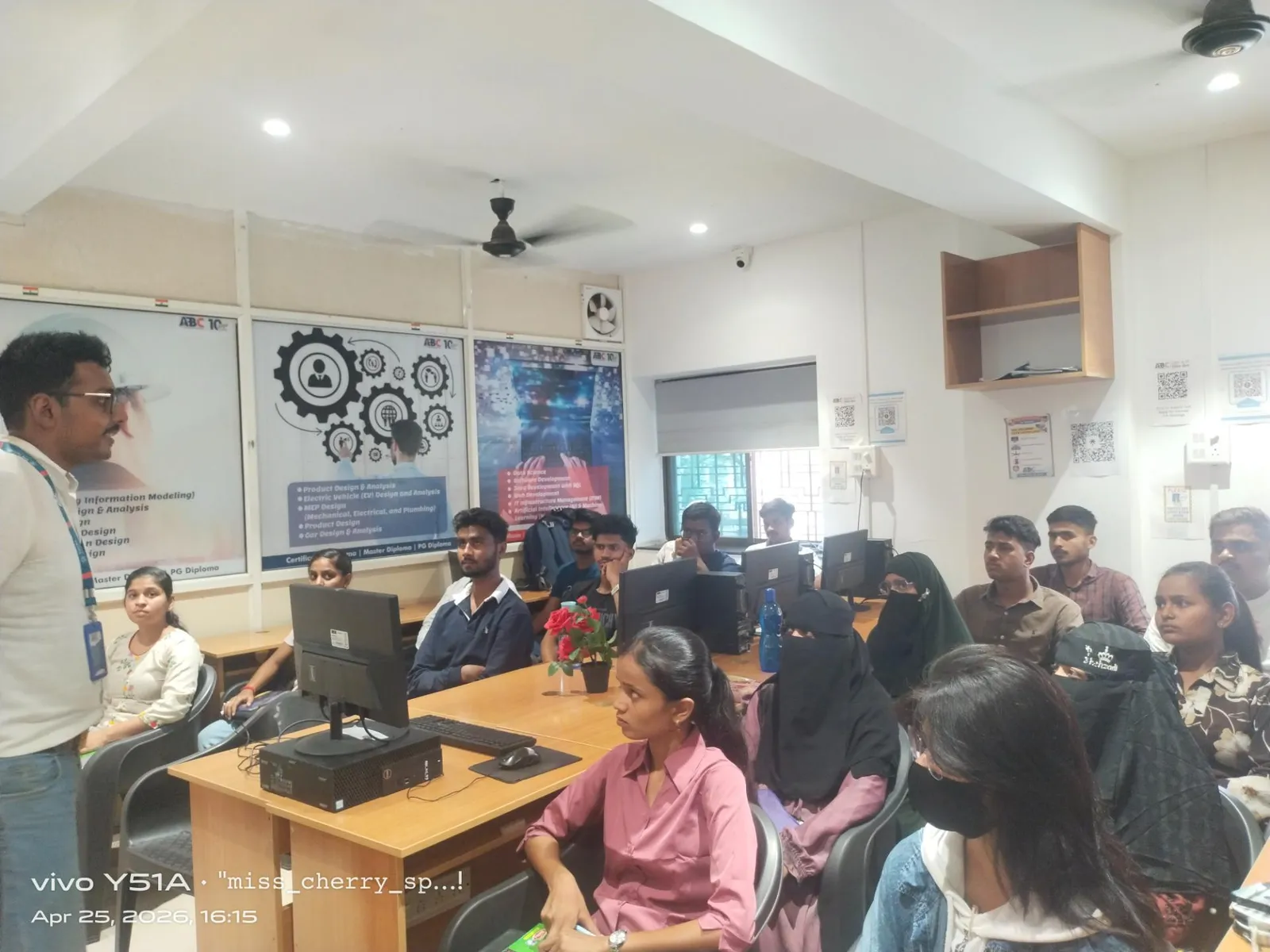
AI Career Paths: What Each Role Does and What It Pays
The AI job market has several distinct roles with different skills and salary bands. Data Analyst is the entry point for many: you clean data, build dashboards and generate business insights. Freshers earn Rs 3.5–6 LPA using SQL, Excel and Python. Machine Learning Engineer builds, trains and evaluates models: Rs 6–12 LPA at entry level, Rs 18–35 LPA with three to five years of experience at product companies (6figr data, 2025). Data Scientist combines statistical modeling and business problem-solving: Rs 7–14 LPA mid-level at Indian IT firms, Rs 25–50 LPA at top-tier product companies. MLOps Engineer manages the infrastructure for deploying and monitoring models: one of the fastest-growing roles, Rs 12–25 LPA. NLP Engineer specializes in language models and conversational AI: surging demand in 2025 due to LLM deployment. Computer Vision Engineer: strong demand in manufacturing, security and healthcare. Each path has a clear entry requirement and growth trajectory.
Your 12-Month Roadmap From Beginner to Job-Ready AI Professional
Here is the roadmap that gets most motivated learners from zero to employed in 12 months. Months 1–2: Python fundamentals — variables, functions, loops, OOP, Pandas, NumPy. Months 3–4: machine learning basics — Scikit-learn, supervised learning algorithms (linear regression, decision trees, random forests), model evaluation. Month 5: deep learning introduction — neural network fundamentals, TensorFlow or PyTorch, training a simple image classifier. Months 6–7: specialisation — pick one: computer vision (OpenCV + CNNs), NLP (Hugging Face Transformers), or time-series forecasting. Month 8: end-to-end project — build and deploy a model using Flask or FastAPI, host it on GitHub, document it properly. Months 9–10: interview preparation — practice on LeetCode (Python section), HackerRank, Kaggle. Months 11–12: apply actively — target startups and mid-size IT firms first. Build a portfolio of three GitHub projects. That combination — Python skills, an ML specialisation, a deployed project and a GitHub portfolio — is enough to land your first AI role in 2025–26.
AI Jobs in Pune, Sambhajinagar and Sangli — Local Opportunities
Pune has become one of India's top five AI hiring cities, driven by the IT corridor from Hinjewadi to Magarpatta. Infosys BPM (Hinjewadi Phase 2) and TCS Pune (Rajiv Gandhi IT Park) have combined AI/ML hiring in the hundreds per quarter. KPIT Technologies (Hinjewadi) focuses on automotive AI. Persistent Systems, Cognizant Pune and Wipro (Hinjewadi) run AI Centers of Excellence and regularly hire freshers. In Sambhajinagar, the Skoda Volkswagen plant (Shendra, Plot A-1/1) and Bajaj Auto (Waluj, Plot G-137) are building internal data and AI teams as they modernize operations under the AURIC framework — India's first greenfield smart industrial city, with Rs 71,343 crore in total investment. In Sangli, the IT sector at Kupwad MIDC and firms connected with the Sangli-Miraj-Madhavnagar industrial cluster are growing. Walchand College alumni average Rs 10.55 LPA — proof that strong technical training in Sangli has real market value. Call 7039169629 to discuss how ABC Trainings' AI Powered Application Development course can position you for these roles.
Get the IT Training Brochure + Fees + Batch Dates on WhatsApp
Free 1:1 counselling. Placement track record. CMYKPY/PMKVY eligibility check.
💬 Get Brochure on WhatsApp📞 Call 7039169629About the author: Rahul Patil. 12 yrs experience training engineers across Maharashtra.
Visit Our Centers
- Wagholi (Pune): 1st Floor, Laxmi Datta Arcade, Pune-Ahilyanagar Highway. Call 7039169629
- Hadapsar (Pune HQ): 1st Floor, Shree Tower, opp. Vaibhav Theater, Magarpatta. Call 7039169629
- Cidco (Chh. Sambhajinagar): Kalpana Plaza, opp. Eiffel Tower, N-1 Cidco. Call 7039169629
- Osmanpura (Chh. Sambhajinagar): S.S.C Board to Peer Bazar Road, near Jama Masjid. Call 7039169629
- Sangli: Shubham Emphoria, 1st Floor, Above US Polo Assn., Sangli-Miraj Rd, Vishrambag. Weekend batches available. Call 7039169629
FAQs
What AI tools should a complete beginner start with?
Start with Python (the foundation of everything), then Pandas and NumPy for data handling, then Scikit-learn for classical machine learning. Once you are comfortable with these, add TensorFlow or PyTorch for deep learning. Jupyter Notebook or Google Colab are the best environments to practice in. Hugging Face becomes essential when you move into NLP and LLM applications.
Is a degree required to become an AI engineer in India?
No. Many successful AI engineers in India are graduates of engineering, mathematics, physics or even commerce who transitioned into AI through self-learning and structured courses. What matters is demonstrable skills — a GitHub portfolio with working ML projects, understanding of model evaluation, and Python proficiency. An AI certification from a recognized training institute like ABC Trainings adds credibility to your application.
What is the average salary for an AI engineer in Pune?
Entry-level AI/ML roles in Pune pay Rs 5–9 LPA for freshers with strong Python and Scikit-learn skills (AmbitionBox 2025 data). With two to three years of specialised experience (NLP, computer vision, MLOps), salaries reach Rs 14–25 LPA at mid-size IT firms. Senior AI engineers at product companies and MNCs in Pune earn Rs 30–50 LPA. KPIT Technologies and Persistent Systems are among the top-paying employers for AI talent in the city.
Does ABC Trainings offer AI training for working professionals?
Yes. ABC Trainings offers weekend and evening AI batches designed for working professionals looking to upskill or switch roles. Our AI Powered Application Development course covers Python, ML, deep learning, and hands-on project work. Centres in Wagholi and Hadapsar (Pune), Cidco and Osmanpura (Sambhajinagar), and Sangli serve students across Maharashtra. Call 7039169629 or WhatsApp 7774002496 for batch timings and fees.