C++ Episode 9 – Constructors, Destructors & Virtual Functions Deep Dive (Updated June 2026) (Updated June 2026)
Most beginners learn how to define a C++ class — but Episode 9 goes deeper into what actually makes C++ powerful in production code: constructors (how objects are initialised safely), destructors (how resources are released without leaks), and virtual functions (how runtime polymorphism lets large codebases stay maintainable). TCS cut 12,000 jobs in July 2025 due to automation, but NASSCOM and Deloitte project demand for 1.25 million AI and software professionals by 2027. The engineers who stand out aren't the ones who know class syntax — they're the ones who understand object lifecycle and virtual dispatch, because that's what separates novice C++ from production-grade embedded or automotive software.
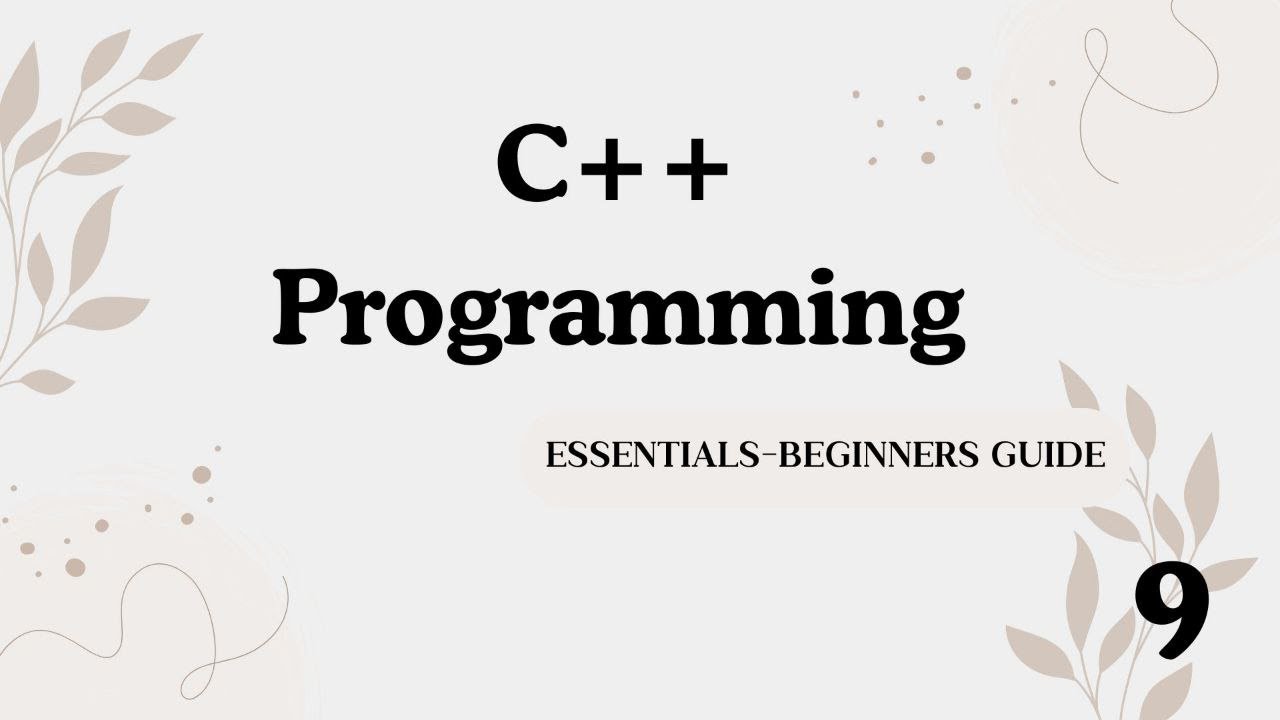
- C++ Episode 9 focuses on object lifecycle: default constructor, parameterised constructor, copy constructor, and destructor
- Virtual functions enable runtime polymorphism — a base-class pointer calls the correct derived-class method at runtime
- Pure virtual functions (= 0) create abstract base classes — used extensively in AUTOSAR, game engines, and OS kernels
- C++ with virtual function proficiency is essential at KPIT Technologies (AUTOSAR), Bosch India (embedded), and game development studios
C++ Constructors — Default, Parameterised, and Copy
A constructor in C++ is a special member function that runs automatically when you create an object. The default constructor (no parameters) initialises data members to safe starting values. The parameterised constructor accepts arguments: Car(string make, int year) : make_(make), year_(year) {} — the initialiser list (: make_(make), year_(year)) is the preferred style because it initialises members directly rather than assigning to them after construction. The copy constructor (Car(const Car& other)) creates a new object as a copy of an existing one — critical when your class manages dynamically allocated memory, because the default compiler-generated copy constructor does a shallow copy that leads to double-free bugs when two objects point to the same heap memory. Episode 9 demonstrates all three constructors with a complete BankAccount class that manages a heap-allocated transaction history.
Destructors and Resource Management in C++
A destructor (~Car()) runs automatically when an object goes out of scope or is explicitly deleted. Its job is to release any resources the object acquired during its lifetime: free heap memory (delete[] ptr), close file handles, release mutex locks, or shut down hardware peripherals. Trust me — the most common source of memory leaks and resource exhaustion bugs in embedded C++ at companies like KPIT Technologies Pune (AUTOSAR stack) and Bosch India (ECU software) is a missing or incomplete destructor. Episode 9 covers the Rule of Three: if you define a destructor, copy constructor, or copy assignment operator, you almost certainly need all three. In modern C++11 and later, this extends to the Rule of Five with move constructor and move assignment, which Episode 9 introduces briefly.
| C++ Special Function | Syntax | When It Runs |
|---|---|---|
| Default Constructor | ClassName() { } | Object created with no arguments |
| Parameterised Constructor | ClassName(T a, T b) { } | Object created with arguments |
| Copy Constructor | ClassName(const ClassName&) | Object copied from another |
| Destructor | ~ClassName() { } | Object goes out of scope / deleted |
| Virtual Function | virtual void fn() override | Runtime vtable dispatch |
Virtual Functions and Abstract Classes — Runtime Polymorphism Explained
Virtual functions are the mechanism behind runtime polymorphism in C++. Declare a function virtual in a base class: virtual void draw() const; — each derived class overrides it with its own implementation: void draw() const override { /* Circle-specific */ }. When you call draw() through a base-class pointer or reference, C++ uses the vtable (virtual dispatch table) to call the correct derived-class version at runtime. Pure virtual functions (virtual void draw() const = 0;) make the base class abstract — it cannot be instantiated directly, only subclassed. This pattern is everywhere in real C++ codebases: the AUTOSAR software architecture at KPIT uses abstract interfaces for every hardware abstraction layer. Unreal Engine's UObject hierarchy uses pure virtual interfaces for rendering, physics, and scripting. Episode 9 builds a complete Shape → Circle/Rectangle/Triangle hierarchy demonstrating the full vtable dispatch mechanism.
Where C++ Virtual Function Skills Lead in Indian IT (2025 Data)
C++ virtual function proficiency opens three career tracks in India. Automotive embedded: KPIT Technologies Pune (AUTOSAR, ECU, ₹5–12 LPA), Bosch India Pune (embedded systems, ₹5–10 LPA). Application/Systems: Siemens India Pune (₹8–18 LPA), Infosys/TCS product divisions. Game development: studios supplying Ubisoft, EA, mobile gaming — ₹4–15 LPA. C++ freshers with this depth of understanding start at ₹3.5–5.5 LPA; engineers with 3–5 years doing AUTOSAR or game engine work earn ₹10–20 LPA (Glassdoor 2025). The demand is structural: NASSCOM-Deloitte projects 1.25 million AI/software professionals needed by 2027, and embedded automotive roles are among the hardest to fill because they require exactly this level of C++ mastery. ABC Trainings' IT program builds to this level from fundamentals.
| Role | Company | Salary (LPA) |
|---|---|---|
| AUTOSAR C++ Engineer | KPIT Technologies, Pune | ₹6.0 – 12.0 |
| Embedded C++ Developer | Bosch India, Pune | ₹5.0 – 10.0 |
| Automotive SW Engineer | Tata Technologies, Pune | ₹4.0 – 8.0 |
| C++ Developer (Fresher) | Infosys / TCS, Pune | ₹3.5 – 5.5 |
| Sr. Systems Engineer | Siemens India, Pune | ₹10.0 – 18.0 |
Get the IT Training Brochure + Fees + Batch Dates on WhatsApp
Free 1:1 counselling. Placement track record. CMYKPY/PMKVY eligibility check.
💬 Get Brochure on WhatsApp📞 Call 7039169629About the author: Rahul Patil. 12 yrs experience training engineers across Maharashtra.
Visit Our Centers
- Wagholi (Pune): 1st Floor, Laxmi Datta Arcade, Pune-Ahilyanagar Highway. Call 7039169629
- Hadapsar (Pune HQ): 1st Floor, Shree Tower, opp. Vaibhav Theater, Magarpatta. Call 7039169629
- Cidco (Chh. Sambhajinagar): Kalpana Plaza, opp. Eiffel Tower, N-1 Cidco. Call 7039169629
- Osmanpura (Chh. Sambhajinagar): S.S.C Board to Peer Bazar Road, near Jama Masjid. Call 7039169629
- Sangli: Shubham Emphoria, 1st Floor, Above US Polo Assn., Sangli-Miraj Rd, Vishrambag. Weekend batches available. Call 7039169629
FAQs
What is the difference between a constructor and a destructor in C++?
A constructor runs automatically when a C++ object is created — its job is to initialise the object's data members to valid starting values. A destructor runs automatically when the object goes out of scope or is explicitly deleted — its job is to release any resources (heap memory, file handles, hardware locks) the object acquired during its lifetime. Together, they implement RAII (Resource Acquisition Is Initialization), the fundamental C++ idiom for safe resource management.
Why do I need a copy constructor in C++ if the compiler provides one automatically?
The compiler-generated copy constructor does a shallow copy — it copies pointer values, not the data they point to. If your class manages heap-allocated memory (any member that is a raw pointer), the shallow copy means two objects point to the same memory. When either object's destructor runs and frees that memory, the other object now holds a dangling pointer. Writing your own deep-copy constructor explicitly allocates new memory for the copy — this is safe. Any class that manages dynamic memory, file handles, or hardware resources needs a user-defined copy constructor.
What is a virtual function in C++ and how does the vtable work?
A virtual function is a member function declared with the virtual keyword in the base class. When called through a base-class pointer or reference, C++ looks up the correct function to call in the vtable — a per-class table of function pointers maintained by the compiler. This happens at runtime (not compile time), which is why it's called runtime polymorphism. The overhead is one indirect function call per virtual dispatch, which is negligible in most applications. Pure virtual functions (virtual void fn() = 0) make the base class abstract — it cannot be instantiated, only used as an interface.
Is C++ still relevant for IT jobs in India in 2025–2026?
Yes, C++ remains highly relevant and well-compensated in India in 2025–2026, especially in embedded systems (automotive ECU at KPIT, Bosch, Tata Technologies), game development, and high-performance computing. While Python has dominated web/AI, C++ dominates any domain where performance, determinism, or hardware proximity matters. AUTOSAR-compliant ECU software, real-time operating systems, and gaming engines are all C++ domains with strong hiring activity in Pune. ABC Trainings' C++ course prepares students for both embedded and application tracks. Call +91 7039169629 to enrol.