AutoCAD 3D Solid Modelling: EXTRUDE, REVOLVE, SWEEP and Boolean Operations for Mechanical Parts (Updated May 2026) (Updated May 2026)
Manufacturing investment at AURIC's Shendra-Bidkin industrial zone near Aurangabad has crossed Rs 71,343 crore, with 62,405 direct jobs and design engineer hiring accelerating every quarter. This tutorial marks the transition from 2D drawing into 3D solid modelling in AutoCAD — the capability that every mechanical interviewer at Bajaj, Tata Tech, or Bosch will ask you to demonstrate. By the end of this tutorial you will be able to model a real mechanical component from scratch using EXTRUDE, REVOLVE, SWEEP, and Boolean operations.

- Three core 3D commands covered: EXTRUDE (profile to solid), REVOLVE (profile to axisymmetric part), SWEEP (profile along a path)
- Boolean operations — UNION, SUBTRACT, INTERSECT — let you combine and cut solids into real part shapes
- Practice project: model a flanged shaft coupling from a 2D sketch profile using REVOLVE and SUBTRACT
- 3D AutoCAD modelling is tested at Bajaj Auto Akurdi, Tata Technologies Hinjewadi, and Bosch Pune technical interviews
- This 3D model becomes a fully dimensioned manufacturing drawing in the follow-up dimensioning tutorial
Why 3D Modelling in AutoCAD Still Matters When SolidWorks and CATIA Exist
Trust me, I get this question every batch: why learn 3D AutoCAD when everyone uses SolidWorks or CATIA? Here is the honest answer. Most Pune manufacturing companies run AutoCAD as their baseline CAD platform — it is on every PC, it handles 2D drawings, and it does basic 3D modelling well enough for many tasks. Companies like Bajaj Auto and Force Motors use MCAD software for complex parts but use AutoCAD for facility layout, jig design, and simpler component geometry. Knowing 3D AutoCAD also makes the transition to SolidWorks significantly faster because the underlying concepts are the same.
Setting Up AutoCAD 3D Workspace: What Changes from 2D
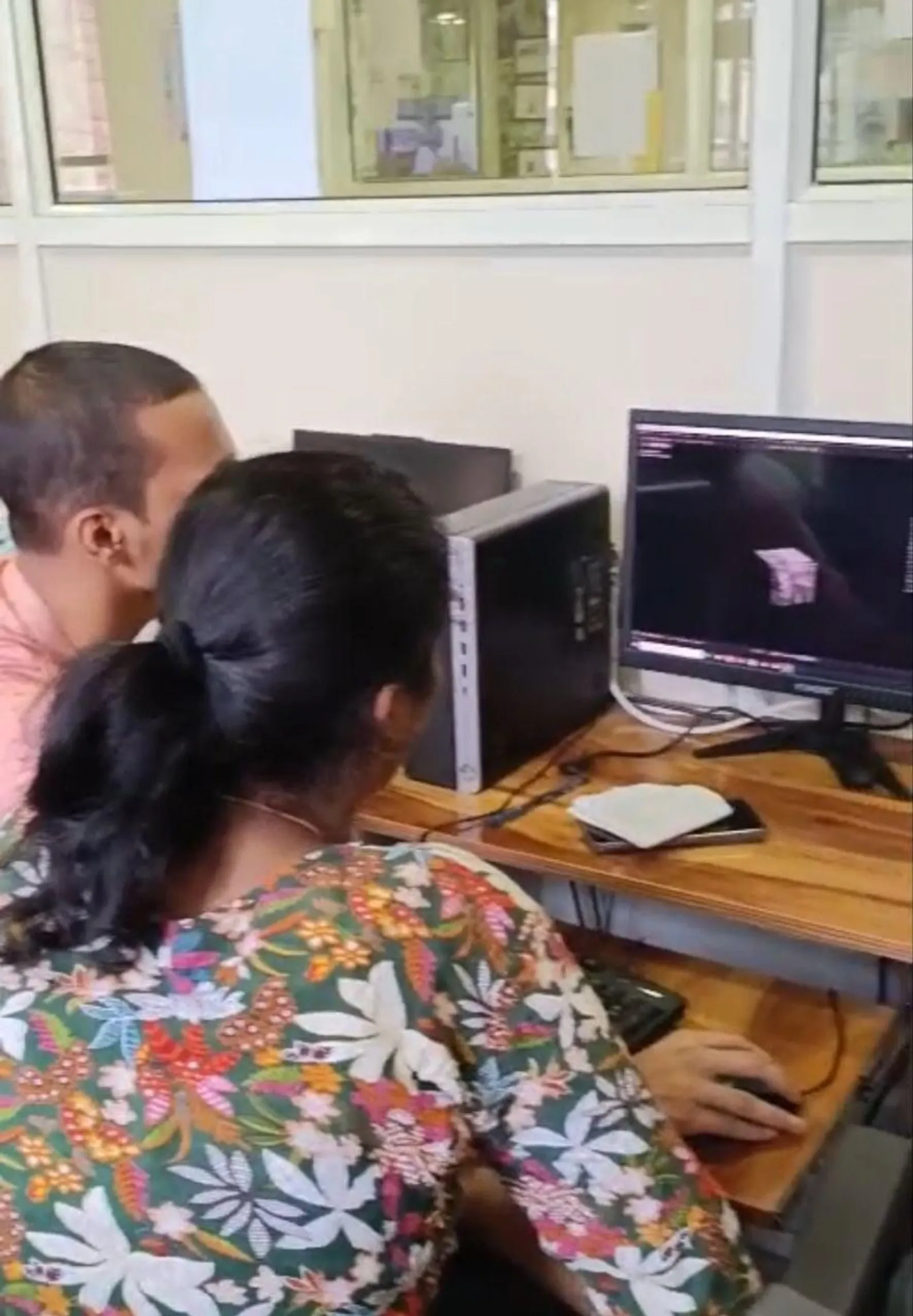
When you switch to AutoCAD's 3D Modelling workspace, three things change immediately. The UCS — User Coordinate System — becomes your most important tool because you will constantly reorient it to draw on different faces of a solid. The ViewCube in the top right corner replaces your standard 2D view controls. And ORBIT navigation using the 3DORBIT command or Shift plus Middle Mouse Button becomes essential for inspecting what you have built. Spend 30 minutes just navigating a simple box in 3D before attempting any modelling commands — discomfort with 3D navigation is the number one cause of frustration at this stage.
| 3D Command | Typical Use Case | Difficulty |
|---|---|---|
| EXTRUDE | Blocks, plates, brackets | Beginner |
| REVOLVE | Shafts, pulleys, flanges, wheels | Beginner-Intermediate |
| SWEEP | Pipes, springs, bent profiles | Intermediate |
| UNION | Merging solids into one body | Beginner |
| SUBTRACT | Holes, pockets, keyways, cutouts | Beginner |
EXTRUDE: The Most-Used 3D Command for Mechanical Parts
EXTRUDE converts any closed 2D profile into a solid. Draw a rectangle on the XY plane, run EXTRUDE, specify height, and you have a rectangular block. The command accepts straight extrusion with constant cross-section, tapered extrusion with a draft angle for mould design, and path extrusion where a profile follows a 3D path. Key rule: the profile must be a closed shape — use PEDIT or REGION to close any gaps before extruding or the command will fail. Practice EXTRUDE with three shapes: a rectangle for a block, a circle for a cylinder, and a hexagon for stock material.
REVOLVE and SWEEP: Creating Complex Mechanical Profiles
REVOLVE creates solids of revolution — the perfect command for shafts, pulleys, wheels, and flanges. Draw half the cross-section profile on one side of a centre axis, then REVOLVE around that axis by 360 degrees. The profile must stay on one side of the axis only — if it crosses the axis, AutoCAD creates a self-intersecting solid which causes problems in later Boolean operations. SWEEP is REVOLVE's more flexible counterpart: it takes a 2D profile and extrudes it along any 3D path, which is useful for springs, curved pipes, and bent extrusions. Draw your path, draw your profile perpendicular to the path start, then run SWEEP.
Boolean Operations: UNION, SUBTRACT, and INTERSECT in Practice
Boolean operations combine, cut, and intersect solids. UNION merges two overlapping solids into one continuous body. SUBTRACT removes one solid's volume from another — this is how you drill holes, cut keyways, and create pockets. INTERSECT keeps only the volume where two solids overlap. Create all your basic shapes first, then combine them with Booleans. The flanged coupling practice project uses SUBTRACT to drill bolt holes through the flange face: a CYLINDER subtracted from the flange solid. Practise SUBTRACT first because it is the most commonly used Boolean in mechanical part modelling.
Practice Project: Flanged Coupling from Sketch to 3D Solid
The practice project is a flanged coupling. Step 1: draw the shaft cross-section as a closed polyline showing bore, keyway, and outer diameter. Step 2: REVOLVE around the shaft centreline to create the body. Step 3: draw the flange as a separate EXTRUDE from a circle. Step 4: UNION the shaft body and flange into a single solid. Step 5: SUBTRACT six bolt hole cylinders from the flange face. Step 6: export as DWG ready for the dimensioning tutorial where we add full GD&T annotations. This is the project that most mechanical engineering interviewers at Tata Technologies and Bajaj Auto use to screen AutoCAD competency in candidates.
Maharashtra's Chief Minister Yuva Karya Prashikshan Yojana (CMYKPY) offers monthly stipends of Rs 6,000-10,000 to youth enrolled in technical skill training — CAD courses including AutoCAD qualify under the manufacturing and engineering training track. With PMKVY 4.0 having trained 2.1 crore professionals nationally, these skill schemes make quality engineering education accessible. Contact ABC Trainings at +91 7039169629 to check your CMYKPY eligibility.Get the CAD/CAM Brochure + Fees + Batch Dates on WhatsApp
Free 1:1 counselling. Placement track record. CMYKPY/PMKVY eligibility check.
💬 Get Brochure on WhatsApp📞 Call 7039169629About the author: Komal Chilwar, Civil & BIM Trainer, ABC Trainings.
Visit Our Centers
- Wagholi (Pune): 1st Floor, Laxmi Datta Arcade, Pune-Ahilyanagar Highway. Call 7039169629
- Hadapsar (Pune HQ): 1st Floor, Shree Tower, opp. Vaibhav Theater, Magarpatta. Call 7039169629
- Cidco (Chh. Sambhajinagar): Kalpana Plaza, opp. Eiffel Tower, N-1 Cidco. Call 7039169629
- Osmanpura (Chh. Sambhajinagar): S.S.C Board to Peer Bazar Road, near Jama Masjid. Call 7039169629
- Sangli: Shubham Emphoria, 1st Floor, Above US Polo Assn., Sangli-Miraj Rd, Vishrambag. Weekend batches available. Call 7039169629
FAQs
Can AutoCAD do 3D modelling as well as SolidWorks?
AutoCAD 3D is well-suited for prismatic parts including blocks, plates, shafts, and flanges, but is limited for complex organic shapes, large assemblies, and parametric modelling — which is where SolidWorks, CATIA, and NX excel. For design engineer and CAD drafter roles at most Pune companies, AutoCAD 3D is sufficient for portfolio building and component modelling. If you are targeting automotive product design at Bajaj Auto, Tata Technologies, or KPIT, add SolidWorks or CATIA after mastering AutoCAD 3D.
What is the difference between EXTRUDE and REVOLVE in AutoCAD?
EXTRUDE takes a flat 2D profile and pushes it perpendicular to its plane to create a linear solid, like pressing a cookie cutter into dough. REVOLVE takes a 2D profile and spins it around a defined axis to create a radially symmetric solid, like a lathe operation. EXTRUDE is used for brackets, blocks, and plates; REVOLVE is used for shafts, pulleys, wheels, and flanges.
Do Pune mechanical companies test 3D AutoCAD in interviews?
Yes. Most Pune mechanical companies including Bajaj Auto at Akurdi, Bosch in Pune East, and Tata Technologies at Hinjewadi include a 3D modelling task in technical interviews for design engineer and CAD drafter roles. The standard test is to create a simple solid part from a dimensioned sketch and produce a multi-view drawing from it. ABC Trainings AutoCAD course includes mock assessment drawings modelled on actual interview problems from these companies.
Does ABC Trainings teach AutoCAD 3D modelling in Pune?
Yes. ABC Trainings offers AutoCAD training in Pune covering 2D drafting, 3D solid modelling with EXTRUDE, REVOLVE, SWEEP, and Boolean operations, plus dimensioning and GD&T for manufacturing drawings. The course includes hands-on practice projects and placement support. Contact +91 7039169629 or visit our Wagholi, Hadapsar, or CIDCO centres in Pune.