If you're asking which software engineering students should learn in India 2026, here's the thing: the answer depends completely on your branch, your target job role, and how deep you want to go. Basic awareness is not enough anymore. Companies in Pune, Chhatrapati Sambhajinagar, Sangli, and across Maharashtra want students who can actually work inside industry software, not just list tool names on a resume. Whether you're aiming for design, analysis, drafting, automation, coding, or project delivery, the right software stack can change your placement outcome.
Trust me, after training students for years, I've seen one common mistake: students spend months learning random tools that don't match their branch. The good news is, if you already know the basics, you can now move into the advanced workflows that companies like L&T, Tata Technologies, Bajaj Auto, Bosch, Siemens, TCS, Infosys, and KPIT Technologies actually value.

Which software should Civil Engineering students learn in India 2026?
For Civil Engineering students, the core stack is still AutoCAD, Revit, and ETABS. But what most people don't realize is that simply drawing plans in AutoCAD or making a 3D model in Revit won't make you job-ready.
At an advanced level, Civil students should use AutoCAD 2026 for template-based drafting, layer standards, annotation scaling, dynamic blocks, sheet set workflows, and plotting discipline-wise drawings faster. If you're still drawing every detail manually, you're wasting time.
In Autodesk Revit 2026, go beyond walls and doors. Learn worksets, view templates, schedules, families, quantity takeoff logic, phasing, linked models, and clash-aware coordination. These are the workflows used in real commercial and infrastructure projects. A fresher who understands family parameters and sheet management is far more valuable than someone who only knows basic modeling.
For structural analysis, ETABS 22 should be used with proper load combinations, diaphragm settings, meshing control, response spectrum setup, and design code checks. Don't just run analysis and accept the first output. You need to know how to interpret drift, storey stiffness, torsion irregularity, and member optimization.
If you're targeting Pune construction firms or consultants working on high-rise and industrial projects, these advanced skills matter. Entry-level salaries for trained Civil software candidates often start around ₹2.8 lakh to ₹4.5 lakh per year, while BIM and structural-focused candidates can move toward ₹5.5 lakh to ₹7.2 lakh with project-ready skills.
Which software should Mechanical Engineering students master beyond basics?
Mechanical students usually hear the same advice: learn SolidWorks and Creo. That's correct, but only at the starting level. If you want roles in product design, manufacturing support, or automotive suppliers, you need deeper capability.
In SolidWorks 2025, advanced users should focus on top-down assembly modeling, design tables, sheet metal rules, weldments, GD&T, tolerance stack-up awareness, exploded views, configurations, and drawing automation. If you can create only single parts, you're not ready for real design teams.
In PTC Creo 11, professional workflows include skeleton modeling, family tables, relations, surfacing basics, mechanism setups, simplified reps, and large assembly handling. These features become important in automotive and industrial equipment environments where version control, repeatability, and parametric logic matter.
Students aiming at companies like Bajaj Auto, Mahindra Engineering, Tata Technologies, Kirloskar, and Thermax should also understand manufacturing intent. That means asking: can this part be machined, cast, bent, welded, or assembled efficiently? Software skill without design thinking won't take you far.
Freshers with basic CAD knowledge may start around ₹3 lakh to ₹4.2 lakh per year. Those with stronger assembly, drawing, and product-development workflows can realistically target ₹4.8 lakh to ₹7 lakh in Maharashtra's design and manufacturing ecosystem.
What should Electrical Engineering students learn apart from basic circuit tools?
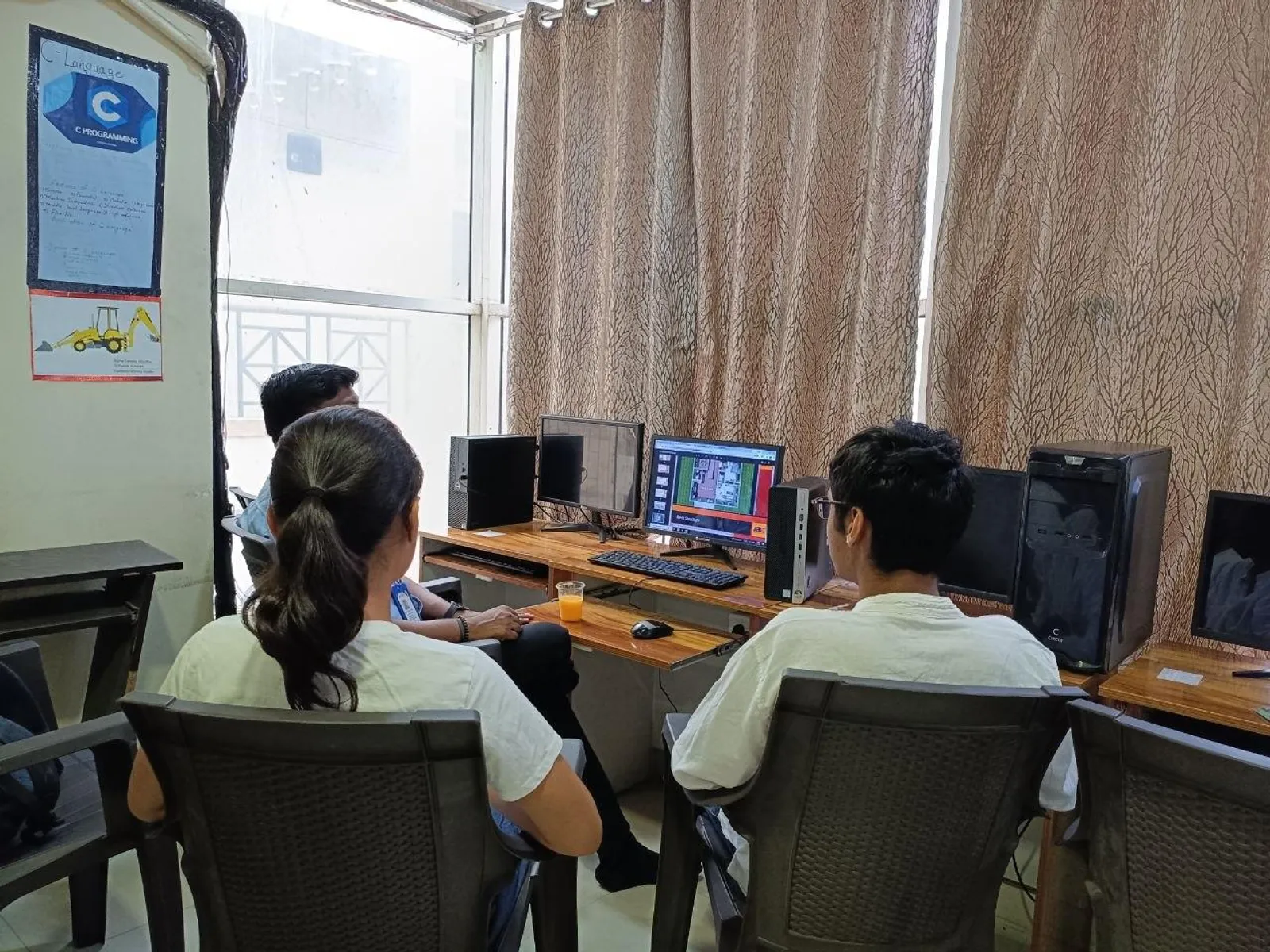
Electrical students often stay stuck with theory-heavy study and miss software that industry actually uses. The video points toward PLS, SKA, and ETAP. Depending on the company and job profile, these tools are highly useful in power systems, substation design, and electrical analysis roles.
With ETAP 24, don't stop at single-line diagrams. Learn load flow analysis, short-circuit studies, motor starting, relay coordination basics, arc flash concepts, cable sizing logic, and report generation. This matters if you want to work with industrial plants, utilities, or EPC companies.
For students moving toward transmission or utility-side work, software used for line and structural design can become a serious advantage. The exact tool mix may vary by employer, but the advanced mindset stays the same: model accurately, validate assumptions, and understand standards before generating outputs.
In industrial cities like Pune, Nashik, Kolhapur, and Chhatrapati Sambhajinagar, companies connected to power systems, panels, plant engineering, and automation value engineers who can read drawings, understand protection concepts, and use analysis software confidently. Salary ranges for entry-level roles usually start around ₹2.8 lakh to ₹4 lakh, with better-paying technical roles reaching ₹5 lakh to ₹6.5 lakh when software and domain knowledge come together.
Which software should IT students learn if they want real jobs?
For IT students, the recommended stack in the video is Python, Java, and Web Development. That's a strong foundation. But here's the thing: basic syntax won't get you shortlisted by Infosys, TCS, KPIT Technologies, or product-focused startups.
In Python 3.13, advanced learners should work on file handling, APIs, object-oriented programming, exception design, data structures, automation scripts, and SQL integration. If you can build mini-projects that connect Python with real data, your resume immediately improves.
In Java 21, go deeper into OOP, collections, JDBC, exception handling, multithreading basics, and backend logic. For web development, don't just make static pages. Learn responsive layouts, JavaScript DOM logic, forms, API calls, and basic deployment flow. A student who understands frontend-backend interaction is much stronger than someone who just knows HTML tags.
What most people don't realize is that IT hiring is now skill-demonstration driven. Your GitHub, projects, debugging ability, and database understanding matter more than memorized theory. In Maharashtra, fresher salaries in service companies may begin around ₹3 lakh to ₹4.5 lakh per year, while stronger project-based candidates can move toward ₹5.5 lakh to ₹8 lakh depending on stack and interview performance.
How do advanced learners choose the right software path for jobs?
The first rule is simple: choose software based on job role, not just branch name. A Civil student targeting BIM coordination needs a different depth than someone preparing for site execution. A Mechanical student aiming for product design needs a different workflow than one entering CNC or production support.
The second rule: learn one core tool deeply before collecting five beginner-level certificates. Trust me, recruiters can tell the difference in five minutes.
The third rule: build branch-specific outputs. Civil students should create sheets, BOQs, and structural reports. Mechanical students should produce assemblies, manufacturing drawings, and tolerance-ready models. Electrical students should create analysis cases and documentation. IT students should build working applications and code repositories.
If you want structured guidance, ABC Trainings helps students map software learning to actual job roles instead of random course selection. That's why many students from Sangli, Pune, and Chhatrapati Sambhajinagar ask for role-based roadmaps rather than generic software lists.
What are the power-user habits that make students look professional?
This is where advanced learners separate themselves from beginners. Use templates. Maintain naming standards. Save versions properly. Organize folders. Learn keyboard shortcuts. Understand export settings. Validate outputs before submission. Document your assumptions.
In CAD tools, that means layer discipline, reusable blocks, parametric constraints, and drawing standards. In analysis tools, it means checking units, load cases, mesh quality, and code parameters. In programming, it means clean code, comments where needed, modular logic, and version tracking.
The good news is, these habits are trainable. You don't need to be a topper. You need to be methodical.
If you're serious about choosing the right software and learning it at an advanced level, talk to ABC Trainings. Call 8698270088 or WhatsApp 7774002496 to discuss the right path based on your branch, city, and target job role.
Which software is best for Civil Engineering students in Maharashtra?
For most Civil students, AutoCAD, Revit, and ETABS are the most practical starting point. If you're targeting drafting, BIM, or structural roles, these tools match real hiring needs in Pune and nearby cities. The better approach is to learn one drafting tool, one modeling tool, and one analysis tool properly instead of staying at surface level in all three.
Should Mechanical students learn SolidWorks or Creo first?
If you're a beginner moving into design, SolidWorks is usually easier to start with because the interface is more student-friendly. If you're planning for automotive, large assemblies, or parameter-driven product workflows, Creo becomes very valuable. The best choice depends on the type of company and design role you want after graduation.
Is ETAP good for Electrical Engineering jobs in India?
Yes, ETAP is useful for students targeting power systems, industrial electrical design, plant engineering, and analysis-related roles. It becomes especially valuable when you understand load flow, protection basics, and short-circuit studies rather than only drawing diagrams. Companies prefer candidates who can interpret results, not just generate them.
What should IT students learn first for placements in 2026?
Start with one programming language such as Python or Java, then add SQL and web development basics. After that, build 2 to 3 working projects that show logic, database usage, and problem-solving. For placements, project quality and coding confidence often matter more than collecting multiple short certificates.
Visit Our Centers
Sangli
Sangli Branch
2nd Floor, Vasant Market, Opp. City High School, Sangli, Maharashtra 416416
Start Your Career Journey Today
Join 10,000+ students who transformed their careers with ABC Trainings.
💬 WhatsApp: 7774002496📞 Call: 8698270088