Career Stability vs Salary Growth: The Real Trade-Off Engineers Must Understand in 2026 (Updated May 2026)
After TCS announced 12,000 job cuts in July 2025, thousands of engineers across India started questioning everything about career stability. But here is what the data actually shows: NASSCOM and Deloitte project India needs 1.25 million new AI and tech professionals by 2027. The market is not collapsing — it is bifurcating. Engineers with deep, current skills are commanding premium salaries with multiple job options. Engineers with outdated or generic skills are genuinely vulnerable regardless of which company they are in. At ABC Trainings Latur, Anil R. Biradar discusses this stability vs salary trade-off every week. This guide gives you the framework to make this decision for your own career — with real Maharashtra numbers.

- The stability vs salary trade-off is real but not permanent — deep, current skills create both simultaneously
- TCS-style layoffs hit generalists — specialists with AutoCAD, PLC/SCADA or data skills face zero shortage of demand
- Government engineering roles in Maharashtra average Rs.3.5–5.5 LPA; private IT roles reach Rs.10–18 LPA within 5–7 years
- The 3-year rule: chase learning aggressively in years 1–3, then negotiate salary from a position of proven strength
- ABC Trainings Latur builds recession-proof skill combinations — AutoCAD, PLC, Python — that manufacturers and IT companies cannot easily replace
The Stability vs Salary Myth: What Actually Happens After Your Increment
Here is the thing about increments that nobody explains clearly: an increment is not the same as career stability. One of our ABC Trainings Latur graduates joined a Pune manufacturing company at Rs.3 LPA, got promoted to senior technician at Rs.4.5 LPA in 18 months, and felt secure — until the company restructured and outsourced his department to a third-party vendor. He had the title and the salary history, but not the portable, high-demand skill set that would have protected him. Real stability in 2026 comes from one thing: skills that are hard to replace and in active demand. An AutoCAD drafter at an AECOM infrastructure site, a PLC programmer at a Siemens-certified plant, or a Python developer at a KPIT automotive software team — these people do not worry about restructuring, because their next offer arrives before they have decided to leave.
Government Jobs vs Private Engineering in Latur and Marathwada — Real Numbers for 2026
The government job appeal in Latur and Marathwada is understandable — tenure, pension, and predictable hours. But here is what the salary data shows. Maharashtra State PWD, MSEDCL and MIDC infrastructure engineering positions start at Rs.3.5–5.5 LPA with annual increments of 5–8%. Private sector manufacturing roles in Latur MIDC (Plot No. N-6, Latur MIDC 413512) start at Rs.3–4 LPA and can reach Rs.8–10 LPA within 5–7 years if skills are kept current. IT roles for Marathwada engineers in Pune and Sambhajinagar start at Rs.4–6 LPA and reach Rs.10–18 LPA within 5–7 years. The honest answer: government jobs provide security of tenure, not security of income growth. Private sector provides income risk — the risk of obsolescence if you stop learning, and the reward of compounding income growth if you keep building skills.
| Career Track | Year 1 Salary | Year 5 Salary | Stability Risk |
|---|---|---|---|
| Government PSU Engineering | Rs.3.5–5.5 LPA | Rs.5–7 LPA | Low (tenure) |
| Private Manufacturing (MIDC) | Rs.3–4.5 LPA | Rs.7–10 LPA | Medium — skill-dependent |
| Private IT and Software | Rs.4–7 LPA | Rs.10–18 LPA | Low for specialists, high for generalists |
| Domain and Software Hybrid | Rs.4–6 LPA | Rs.10–15 LPA | Very Low — hardest to replace |
When to Chase Salary and When to Protect Stability — A 3-Year Career Framework
Here is the framework I give every ABC Trainings Latur student who asks this question. Years 1–3: chase learning opportunities aggressively over raw salary. Take the Rs.3.5 LPA job at a company that will teach you CATIA, Python or PLC over the Rs.4 LPA job where you will stagnate technically. The skill differential you build in these 3 years determines your entire compensation trajectory for the next 20. Years 3–7: negotiate from strength. If you have built real domain expertise and market-valued software skills, you should be at Rs.6–10 LPA or actively moving toward it. This is when stability matters — because your depth of skill means multiple employers want to keep you. Year 7 onwards: you are the market. At this level, high salary and stability are not opposites — they are the same thing. Engineers who follow this framework consistently out-earn and out-survive those who optimise for safety too early.
The Skill Stack That Delivers Both High Pay AND Job Security in 2026
The most resilient career profile in 2026 combines domain expertise with complementary software skills. For mechanical engineers in Latur and Marathwada: AutoCAD plus SolidWorks plus PLC/SCADA basics creates a profile that manufacturing companies will not willingly let go — replacing this combination requires training two separate people. For civil engineers: AutoCAD plus Revit BIM plus MS Project. For IT backgrounds: Python plus cloud computing plus one domain specialisation like supply chain or healthcare analytics. These combinations make you "too expensive to lose" because your replacement cost is 6–12 months of training two engineers. This is the career insurance policy that no government job or company name can provide — it lives in your skills, not in your employer's goodwill.
ABC Trainings Latur: Building Career Resilience for Marathwada Engineers
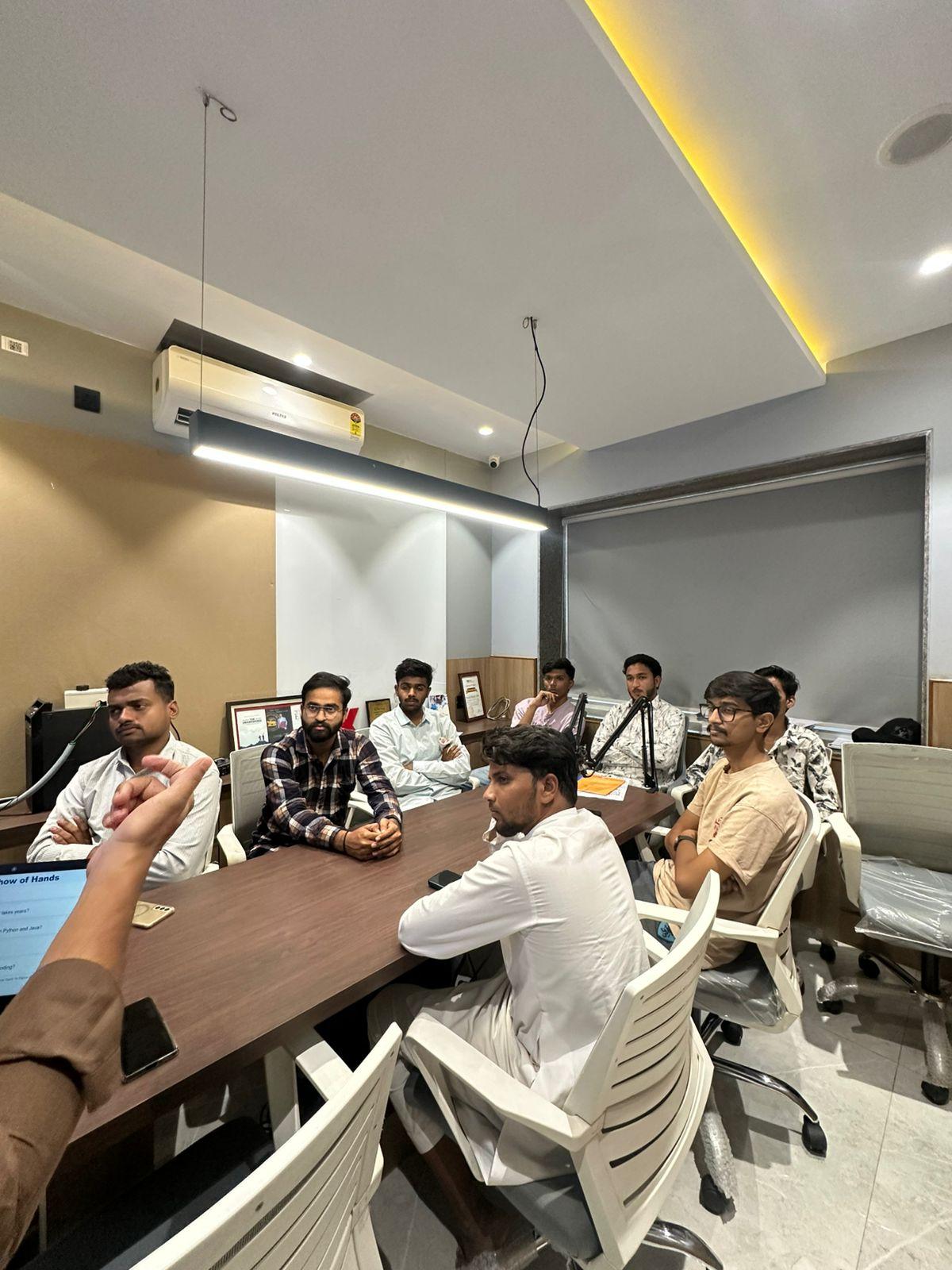
Latur engineers have historically faced a geography challenge — major job clusters are in Pune, 350 km away, and Sambhajinagar, 150 km away. But what has changed in the last 5 years is that software skills are completely portable. A Python developer or PLC-certified engineer from Latur can join KPIT in Pune, Skoda VW in Sambhajinagar, or work remotely with IT companies — and the certification from ABC Trainings Latur is recognised everywhere. Our Latur centre at Barshi Road, Besides Honda Showroom, opp. Hanuman Mandir, Latur 413517 runs batches for AutoCAD, SolidWorks, PLC/SCADA, Python and Civil Engineering Software. We provide placement support for both Latur MIDC opportunities and Pune and Sambhajinagar placements through our ABC Trainings network. Call 7039169629 or walk in any weekday between 9 AM and 7 PM for a free career counselling session.
CMYKPY: Build Recession-Proof Skills With Government Support
Maharashtra's CM Yuva Kaushalya Yojana (CMYKPY) offers Rs.6,000–Rs.10,000 for eligible students building vocational technical skills at approved centres. ABC Trainings Latur is an approved centre. Call 7039169629 or WhatsApp 7774002496 to check eligibility before your batch starts.
Get the Career Guidance Brochure + Fees + Batch Dates on WhatsApp
Free 1:1 counselling. Placement track record. CMYKPY/PMKVY eligibility check.
💬 Get Brochure on WhatsApp📞 Call 7039169629About the author: Rahul Patil. 12 yrs experience training engineers across Maharashtra.
Visit Our Centers
- Wagholi (Pune): 1st Floor, Laxmi Datta Arcade, Pune-Ahilyanagar Highway. Call 7039169629
- Hadapsar (Pune HQ): 1st Floor, Shree Tower, opp. Vaibhav Theater, Magarpatta. Call 7039169629
- Cidco (Chh. Sambhajinagar): Kalpana Plaza, opp. Eiffel Tower, N-1 Cidco. Call 7039169629
- Osmanpura (Chh. Sambhajinagar): S.S.C Board to Peer Bazar Road, near Jama Masjid. Call 7039169629
- Sangli: Shubham Emphoria, 1st Floor, Above US Polo Assn., Sangli-Miraj Rd, Vishrambag. Weekend batches available. Call 7039169629
FAQs
Is it better to prioritise salary growth or job stability as an engineer in Maharashtra?
In years 1–3, always prioritise learning and skill-building over raw salary — the skills you build in this period determine your compensation trajectory for the next decade. By year 5, if you have built current, market-valued technical skills, you will find that high salary and stability converge — because multiple employers want engineers who cannot easily be replaced. Engineers who optimise for safety too early consistently earn less over 10 years than those who took calculated learning risks early.
What is the average engineering salary in Latur and Marathwada?
Entry-level engineering roles in Latur MIDC and Nanded MIDC start at Rs.2.8–4 LPA for fresh graduates (AmbitionBox, PayScale India 2025). With 2–3 years experience and an industry software certification in AutoCAD, PLC/SCADA or SolidWorks, salaries reach Rs.5–7 LPA locally. Pune-based roles for Marathwada engineers start at Rs.4–7 LPA in IT and Rs.3.5–6 LPA in manufacturing — and the software certification is what determines which salary band you start in.
How do TCS-style layoffs affect career stability for engineers in Maharashtra?
TCS's 12,000 job cuts in July 2025 primarily affected employees in service lines with declining project demand — largely generic IT roles without specialised skills. Engineers with domain specialisations — automotive software at KPIT, PLC/SCADA at Siemens-authorised plants, BIM at L&T — faced zero layoffs in that same period. The protection against restructuring is not a company brand or job title — it is specific, current, hard-to-replace technical skills.
What skills make an engineer irreplaceable and recession-proof in 2026?
The most resilient combinations in 2026 are: AutoCAD plus PLC/SCADA for manufacturing engineers (hardest to replace on a plant floor); Python plus domain-specific analytics for IT professionals (specialist data engineers are in shortage); and Revit BIM plus STAAD.Pro for civil engineers (BIM mandate makes these permanently in demand). These combinations typically take 6–12 months for a company to replace, so companies simply do not cut these engineers. ABC Trainings Latur can build your resilient skill stack in 3–5 months.