If you've already opened CATIA, created a few sketches, and built basic parts, the next step is learning how professionals actually work inside the software. This guide on CATIA 3D product design workflow in India 2026 is for that stage. We're not repeating beginner theory. We're focusing on the deeper workflow that matters in real mechanical design teams at companies like Tata Technologies, Mahindra Engineering, Bajaj Auto, Bosch and Siemens. Here's the thing: basic commands get you started, but clean modeling strategy is what gets you hired and trusted on live projects.

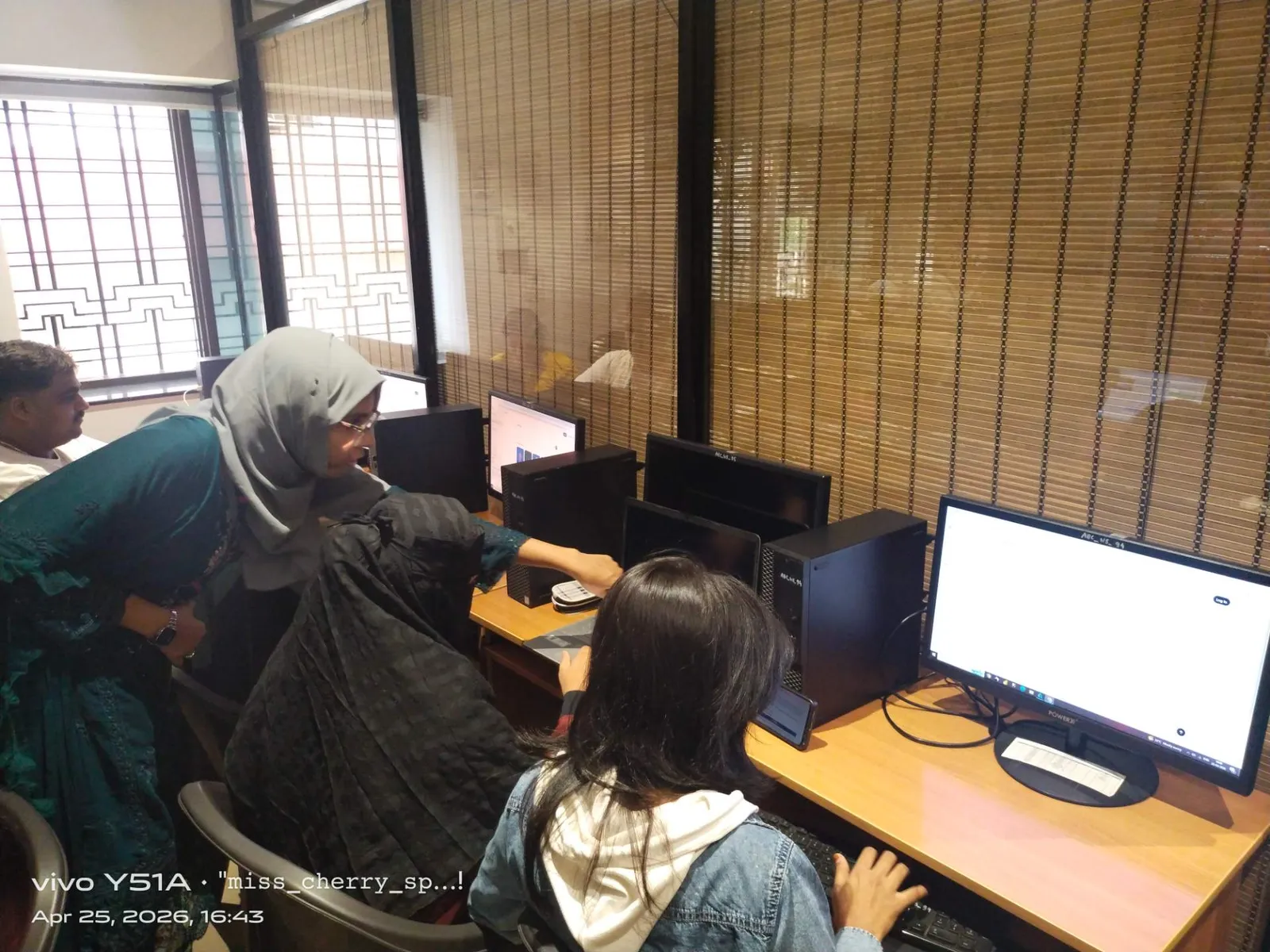
At ABC Trainings, many students come in knowing sketch and pad features, but they struggle when a model changes, an assembly fails, or drawings don't update properly. Trust me, that's where advanced understanding starts. The good news is, once you build the right CATIA habits, your speed and model quality improve together.
What is the professional CATIA workflow after basic commands?

What most people don't realize is that CATIA is not just a 3D modeling tool. It's a workflow tool. In industry, especially in automotive and machine design, the order of operations matters almost as much as the geometry itself.
A practical workflow usually looks like this: define design intent, create stable reference geometry, build controlled sketches, create primary features, add secondary details, validate with assemblies, and then generate production drawings. If you jump randomly between commands, you'll get a model that looks fine today but breaks tomorrow when dimensions change.
For example, if you're designing a bracket used in a fixture, don't start with fillets and holes just because they're easy. Start with the main shape that controls mounting faces and load direction. Then build supporting features. Keep cosmetic details for later. This top-down thinking is common in OEM workflows and supplier environments across Pune, Chhatrapati Sambhajinagar and Nashik.
How should you set up CATIA before starting a serious model?
Before modeling, check your units, tree structure discipline, sketch support planes and naming habits. It sounds small, but this is where professionals save hours.
Use millimeters unless your client standard says otherwise. Name important sketches and bodies clearly. Instead of leaving features as Sketch.3 or Pad.5, rename them to Base_Profile, Mount_Hole_Pattern or Rib_Support. When your team lead opens your file, your model tree should explain itself.
Also, use axis systems, planes and points intelligently. If you're working on parts that may be mirrored, assembled or reused, reference geometry becomes your safety net. In CATIA V5, well-organized reference elements reduce feature failure during edits. That's especially useful in tooling, sheet metal support structures and machine component design.
How do advanced users create stable sketches in CATIA?
Stable sketches are the backbone of strong models. Don't fully depend on edge projections from temporary geometry unless there's a clear reason. Instead, constrain sketches using origin, axes, construction lines and master dimensions.
Here's a power-user approach: keep one sketch focused on one design function. If one sketch controls outer profile, don't overload it with every internal cut, slot and decorative edge. Split logic across features. That way, if one requirement changes, the whole part won't collapse.
Use dimensional constraints intentionally. Avoid under-constrained sketches, but don't over-constrain them with unnecessary relations either. If you're creating a parametric part family, keep critical dimensions easy to identify and edit. This matters when you're designing variants of clamps, housings, flanges or support arms for different machine sizes.
The good news is, well-structured sketches make downstream modifications much faster. That's a big advantage if you're targeting design roles paying ₹22,000 to ₹35,000 per month as a fresher, and ₹45,000 to ₹75,000 per month after solid project experience in cities like Pune and Mumbai.
Which Part Design features matter most beyond Pad and Pocket?
Once basics are clear, go deeper into rib, slot, shaft, groove, hole definitions, draft angle control, shell and pattern strategy. These are the features that start making your models look industry-ready.
Use Hole feature settings carefully instead of cutting all holes manually with pockets. Why? Because threaded, counterbored and countersunk hole definitions carry more design meaning. In many production environments, that clarity helps during drawing creation and manufacturing review.
Rib and Slot features are useful when geometry follows a guiding profile. Shell is powerful for plastic and housing concepts, but only if your base geometry is clean. Draft matters for molded parts and casting-related workflows. If you're planning to work with vendors serving automotive or consumer product industries, these features are not optional knowledge.
Patterning is another area where beginners lose efficiency. Don't recreate repeated features one by one. Use rectangular, circular and user-defined patterns where possible. But be careful: pattern only after the parent feature is fully stable. Otherwise every future edit becomes risky.
How do you manage design changes without breaking the CATIA model?
This is where advanced users separate themselves from beginners. In real jobs, no model stays unchanged. A boss changes thickness. A client shifts hole location. A supplier asks for more clearance. If your CATIA model breaks every time, your speed doesn't matter.
Build from primary references. Keep feature dependencies logical. Avoid referencing final edges for early-stage sketches when a plane or axis can do the job better. Update the model step by step and watch which feature fails first. CATIA usually gives clues in the tree if your history is clean.
Another smart habit is to delay fillets and chamfers until later in the tree unless they control function. Why? Because edge treatments often fail when upstream geometry changes. This one trick alone can make your models much more resilient.
How is Assembly Design used properly in CATIA?
Many students learn part design but stay weak in assemblies. That's a mistake. Companies like L&T, Kirloskar and Thermax don't just need part modelers. They need people who understand fit, constraint logic and component relationships.
In Assembly Design, use constraints with purpose: coincidence, contact, offset, angle and fixing. Don't over-constrain. Start by fixing the base component, then assemble around it. Sub-assemblies help a lot when products become complex.
What most people don't realize is that assembly work is also about communication. A well-structured assembly should tell another engineer how the product is built. Keep part names meaningful. Group standard hardware separately if needed. Check for interferences early, not after drafting starts.
If you're aiming for automotive supplier jobs in Pune, Chakan or Aurangabad industrial areas, assembly understanding can push your profile beyond entry-level drafting into design support and product development roles.
How do professionals make CATIA faster to use every day?
Speed in CATIA doesn't come only from mouse movement. It comes from decision-making. Still, there are practical efficiency habits you should adopt.
Use keyboard shortcuts for common views, updates and workbenches. Customize toolbars around your actual workflow. Keep specification tree visibility under control. Use hide/show smartly so the screen stays clean. Save often, but also save versions when making risky changes.
Another useful trick is to think in templates. If you repeatedly design similar mounting plates, covers, brackets or machine frames, create starter files with standard planes, parameters and naming conventions. Trust me, this is how experienced users reduce repetitive setup time.
In training labs and industry systems, CATIA V5 performance also depends on hardware discipline. Close unnecessary applications, manage large assemblies carefully and avoid bloating a part with unnecessary feature history when a cleaner method exists.
What kind of jobs use these CATIA skills in Maharashtra?
Advanced CATIA workflow is valuable in automotive, industrial equipment, fabrication support, tooling, machine design and product development. Pune remains the biggest hub, especially around Chakan, Pimpri-Chinchwad and Hinjawadi-linked engineering ecosystems. Chhatrapati Sambhajinagar also has strong demand from manufacturing and vendor units.
Freshers with good CATIA part and assembly skills usually start around ₹18,000 to ₹28,000 per month. If you can handle design changes, assemblies and drawings confidently, ₹30,000 to ₹45,000 is realistic in the right company. With 3 to 5 years of experience, CATIA designers in automotive and heavy engineering setups can earn ₹5.5 lakh to ₹9 lakh annually depending on domain and software stack.
That's why structured learning matters. ABC Trainings helps students move from command knowledge to job workflow, which is exactly what recruiters test in practical rounds. If you want course details, call 8698270088 or WhatsApp 7774002496.
How should you practice CATIA if you want real job confidence?
Don't practice random shapes only for portfolio screenshots. Practice parts that reflect industry use: brackets, covers, housings, flanges, shafts, clamps and assembly fixtures. Rebuild the same part in two different ways and compare which method is cleaner. Edit your dimensions after modeling and see whether the part survives. That's how real learning happens.
Also, connect your part design to assemblies and drawings. A model is only half the story. If it cannot be assembled, dimensioned and revised properly, it's not ready for industry.
Here's the thing: CATIA rewards disciplined thinking. Once you move beyond beginner commands and start modeling with intent, the software becomes much more powerful. And your career options get wider too.
Is CATIA still in demand in India in 2026?
Yes, especially in automotive, aerospace suppliers, machine design and industrial product development. In Maharashtra, companies linked to Pune, Chakan, Nashik and Chhatrapati Sambhajinagar continue to use CATIA V5 heavily. If you know part design, assemblies and drafting properly, you can target both fresher and experienced design roles.
Should I learn CATIA V5 or CATIA 3DEXPERIENCE first?
For most students in India, CATIA V5 is still the practical starting point because many companies and vendors continue to use it in day-to-day work. Once your modeling logic is strong, shifting to newer environments becomes easier. If your target company specifically asks for 3DEXPERIENCE, you can add that after mastering core design workflow.
Can I get a CATIA job in Pune with only basic modeling knowledge?
You may get an internship or trainee-level role, but basic modeling alone usually limits your growth. Recruiters often test whether you can handle edits, assemblies, drawings and clean feature history. If you want better salary options, focus on workflow depth, not just command familiarity.
Where can I learn CATIA in Maharashtra with practical training?
You should look for training that includes part design, assembly design, drafting practice and project-based exercises, not just software demo sessions. ABC Trainings is one option many students consider for CAD training in Maharashtra. For batch details, you can call 8698270088 or WhatsApp 7774002496 and ask about CATIA practical modules.
Visit Our Centers
Chhatrapati Sambhajinagar
Corporate Office (HQ)
2nd Floor, Kandi Towers, Jalna Road, Amarpreet Chowk, Chhatrapati Sambhajinagar, Maharashtra 431001
Osmanpura Branch
Plot No 14, Shanya Sect, Near Sant Eknath Rang Mandir, Osmanpura, Chhatrapati Sambhajinagar, Maharashtra 431005
CIDCO Branch
Plot No 4, N-3, Cidco, Opp. High Court, Chhatrapati Sambhajinagar, Maharashtra 431003
Pune
Wagholi Branch
1st Floor, ABC Trainings, Laxmi Datta Arcade, Pune - Ahilyanagar Hwy, Wagholi, Pune, Maharashtra 412207
Hadapsar Branch
Bloom Hotel, ABC Trainings 1st Floor, S.no 156/3 Shree Tower Pune - Solapur Rd, Hadapsar, Pune, Maharashtra 411028
Sangli
Sangli Branch
2nd Floor, Vasant Market, Opp. City High School, Sangli, Maharashtra 416416
Start Your Career Journey Today
Join 10,000+ students who transformed their careers with ABC Trainings.
💬 WhatsApp: 7774002496📞 Call: 8698270088