CCNA Basics for Beginners: Complete Course Guide 2026 — From Networking Fundamentals to Cisco Certification (Updated August 2026)
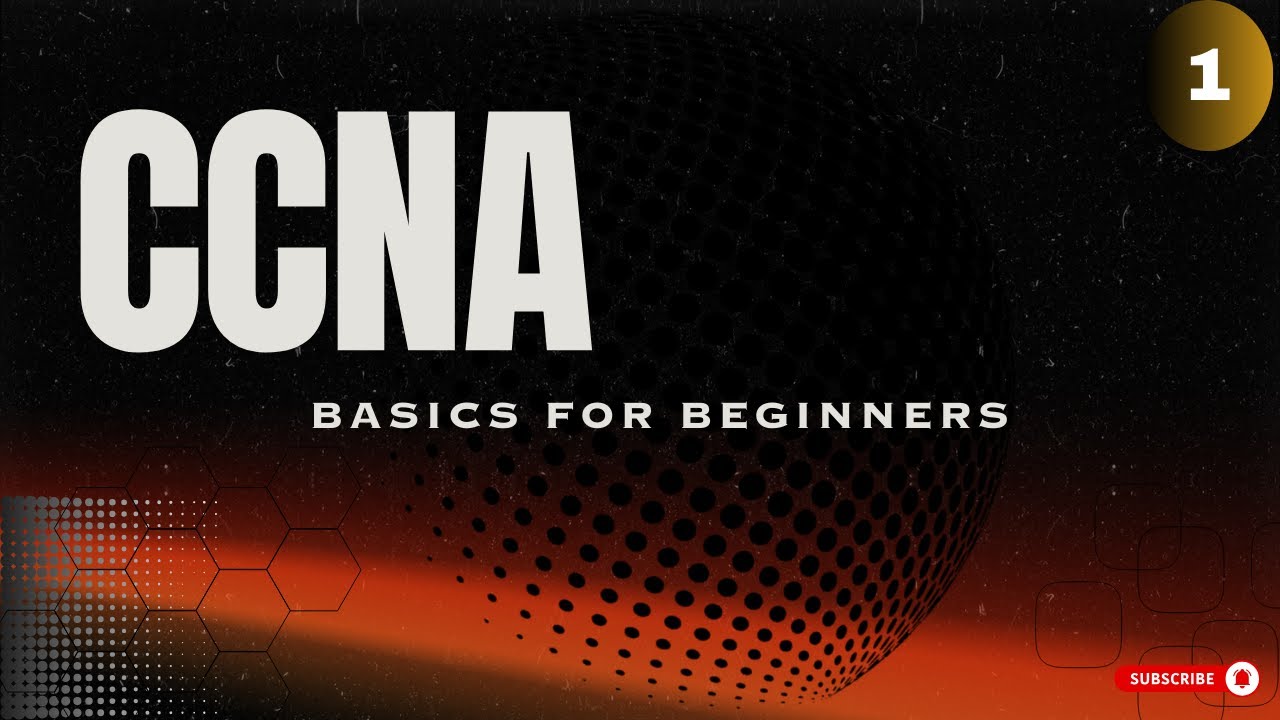
Cisco certifications are the global benchmark for networking professionals, and CCNA (Cisco Certified Network Associate) is the entry-level credential that every IT infrastructure, network support and NOC engineer in India needs to break into networking careers. India's digital infrastructure expansion — 5G rollout, data center growth, enterprise network modernization — is generating consistent demand for CCNA-certified engineers across Pune, Bengaluru, Hyderabad, Mumbai and Tier-2 cities. ABC Trainings' CCNA Basics for Beginners series covers the core networking concepts that every CCNA aspirant must master: networking fundamentals and the OSI model, TCP/IP, IP addressing, subnetting, Cisco IOS configuration, VLANs, routing protocols (RIP, OSPF) and basic switching — all explained by an experienced ABC trainer in clear, structured episodes designed for freshers and career-changers with no prior networking background.
- CCNA is the most recognized entry-level networking certification globally and the fastest path to network engineer and NOC analyst roles paying ₹3–7 LPA in India
- This guide covers the full ABC CCNA Basics series: networking fundamentals and OSI model → TCP/IP → IP addressing → subnetting and VLSM → Cisco IOS → VLANs and routing
- CCNA-certified network engineers in Pune earn ₹2.8–6 LPA at TCS, Wipro, Infosys, HCL and telecom companies; senior network engineers with CCNP reach ₹8–15 LPA
- CCNA exam (200-301) vouchers cost approximately ₹25,000–₹30,000 — ABC Trainings prepares students with Cisco Packet Tracer lab practice to pass in 3–4 months
- ABC Trainings offers CCNA training at Wagholi, Hadapsar, Cidco, Osmanpura and Sangli — weekday and weekend batches with simulator lab access
What Is CCNA and Why Every IT Student in India Should Get Certified
CCNA (Cisco Certified Network Associate) is Cisco's entry-level networking certification — the industry's most recognized credential for network engineers, IT support specialists, NOC (Network Operations Center) analysts and system administrators who manage network infrastructure. In practical terms, CCNA proves you can configure, manage and troubleshoot Cisco routers and switches, which are the dominant network devices in enterprise environments across India. Why does it matter in 2026? India's digital expansion is fundamentally a networking story: 5G tower rollouts require radio access network engineers; data center growth at AWS India, Microsoft Azure India, Google Cloud India and Jio Cloud requires certified network and infrastructure engineers; enterprise IT modernization at banks, hospitals and manufacturing companies requires network redesign and ongoing management. CCNA is the threshold credential that filters candidates for these roles. In Pune's IT corridor (Hinjewadi, Kharadi, Baner), virtually every IT infrastructure job description for network support, L1/L2 NOC and junior network engineer roles either requires or strongly prefers CCNA certification. For BCA, B.Sc IT, BTech CSE and diploma students who want IT careers but not software development roles, CCNA is the most direct, well-structured path available.
Networking Fundamentals: OSI Model, TCP/IP and How Data Actually Travels
Episode 1 of ABC's CCNA series starts at the conceptual foundation every networking course must establish first. The trainer explains what a computer network is, why protocols exist, and introduces the OSI (Open Systems Interconnection) model — the 7-layer framework (Physical, Data Link, Network, Transport, Session, Presentation, Application) that describes how data moves from one device to another across a network. For CCNA, the most important layers are Layer 1 (Physical — cables, signals, NICs), Layer 2 (Data Link — Ethernet frames, MAC addresses, switches), Layer 3 (Network — IP addresses, routing, routers) and Layer 4 (Transport — TCP vs UDP, port numbers, connection establishment via the three-way handshake). The TCP/IP model (the 4-layer practical equivalent used in real networks) is covered alongside OSI — how an HTTP request from your browser travels through Application → Transport → Internet → Network Access layers and back. Episode 2 continues with Ethernet fundamentals: how LAN switches operate at Layer 2, the difference between collision domains and broadcast domains, and why large networks need VLANs to prevent broadcast storms and segment traffic by department.
▶ Watch this step free on ABC's YouTube: CCNA Basics for Beginners: Networking Fundamentals and OSI Model (Episode 1)
▶ Watch this step free on ABC's YouTube: CCNA Basics: Ethernet, LAN Switches and Broadcast Domains (Episode 2)
IP Addressing, Subnetting and VLSM: The Most Critical CCNA Skill
If there is one CCNA topic that every trainer and every online resource agrees is the make-or-break skill, it is subnetting. IP addressing and subnetting are covered in Episodes 3 and 4 of ABC's series. Episode 3 covers IPv4 addressing from scratch: why IP addresses are 32-bit numbers written in dotted decimal, the five address classes (A, B, C, D, E), what a subnet mask does and how it divides an IP address into network and host portions. Private address ranges (10.x.x.x for large enterprises, 172.16.x.x–172.31.x.x for medium networks, 192.168.x.x for home and small office networks) and their use in corporate LANs are explained alongside public vs private addressing and NAT (Network Address Translation) which allows private networks to communicate with the internet. Episode 4 covers subnetting using the borrowing-bits method and VLSM (Variable Length Subnet Masking) — the technique that divides a large IP block into subnets of different sizes to avoid wasting IP addresses. In the CCNA 200-301 exam, subnetting questions appear in every test — being able to calculate the network address, broadcast address, first usable host and last usable host for any given CIDR block within 30 seconds is a required skill. ABC's trainer walks through the binary method and the shortcut method, with timed practice until students can subnet reliably.
▶ Watch this step free on ABC's YouTube: CCNA Basics: IP Addressing, Address Classes and Subnet Masks (Episode 3)
▶ Watch this step free on ABC's YouTube: CCNA Basics: VLSM and Subnet Calculation Practice (Episode 4)
Cisco IOS, VLANs, Routing Protocols and Switching: Core CCNA Configuration
The second half of CCNA preparation moves into hands-on Cisco device configuration using Cisco IOS — the command-line operating system on Cisco routers and switches. The CLI structure has three main modes: User EXEC mode (limited show commands), Privileged EXEC mode (full access, entered with the enable command), and Global Configuration mode (entered with configure terminal). Key commands every CCNA student must know: show ip interface brief (summary of all interfaces and IP addresses), show running-config (current configuration in RAM), show ip route (the routing table), show vlan brief (VLAN assignments on a switch), copy running-config startup-config (save configuration to NVRAM). VLANs are configured by creating them on the switch (vlan 10, name Finance), assigning access ports to VLANs (switchport access vlan 10), and configuring trunk ports (switchport mode trunk) to carry multiple VLANs between switches. Inter-VLAN routing — allowing traffic to flow between VLANs — uses either a Router-on-a-Stick configuration (a single router interface with subinterfaces, one per VLAN) or a Layer 3 switch with Switched Virtual Interfaces (SVIs). Routing protocols are the automated systems routers use to learn about remote networks: static routes are manually configured; RIP (Routing Information Protocol) is the simplest dynamic protocol but limited to 15 hops; OSPF (Open Shortest Path First) is the industry-standard link-state protocol heavily tested in CCNA 200-301 and used in virtually every enterprise network. STP (Spanning Tree Protocol) prevents switching loops in redundant Layer 2 topologies; EtherChannel bundles multiple physical links into one logical high-bandwidth link.
CCNA Jobs and Salary in Pune, Bengaluru and Pan-India (2026)
Based on Naukri, LinkedIn and AmbitionBox data for 2026: entry-level Network Support Engineers (L1 NOC) with CCNA in Pune earn ₹2.8–4.5 LPA at IT services companies including TCS, Wipro, HCL, Tech Mahindra, Cognizant and Capgemini. Junior Network Engineers with 1–3 years of hands-on experience and CCNA certification earn ₹4.5–7 LPA. Mid-level Network Engineers with CCNA plus CCNP (Cisco Certified Network Professional) or hands-on experience with BGP, MPLS, SD-WAN and firewall configuration earn ₹7–12 LPA. Senior Network Engineers and Network Architects with CCNP or CCIE and 5+ years of enterprise experience earn ₹12–25 LPA at Tata Communications, Bharti Airtel, Jio, NTT Data, HSBC Global Technology and international banks. Non-IT companies are a growing source of CCNA hiring: hospital networks (for patient management and IoT device connectivity), manufacturing plants (for OT/IT network convergence in Industry 4.0 environments), government departments (for NIC-connected and state e-governance infrastructure) and smart city projects. Hyderabad, Bengaluru and Pune are the top cities for networking roles by volume; Pune's IT parks in Hinjewadi and Kharadi have particularly active hiring for L1/L2 NOC positions from freshers with CCNA certification.
CCNA vs CompTIA Network+ vs CCNP: Which Networking Certification to Pursue First
Three certifications dominate entry-level networking discussions among Indian IT aspirants: CCNA, CompTIA Network+ and JNCIA (Juniper Networks Associate). CompTIA Network+ is vendor-neutral — it covers general networking concepts without Cisco-specific syntax — and is recognized primarily in US and EU markets. For India-based hiring at TCS, Infosys, HCL, Wipro and telecom companies, CCNA is the recognized standard; most Indian recruiters are unfamiliar with Network+ and it does not appear in Indian job descriptions at the volume CCNA does. JNCIA (Juniper) is relevant if your target is an ISP or telco environment where Juniper routers and switches are used alongside Cisco (Airtel, Jio, Tata Communications have significant Juniper deployments), but the hiring volume for JNCIA-only roles is lower than CCNA roles. CCNP is the next step after CCNA — it validates advanced networking skills in enterprise routing and switching (CCNP Enterprise), data center networking (CCNP Data Center) or security (CCNP Security). The recommended path for Indian IT aspirants: CCNA 200-301 first (3–4 months of structured preparation with lab practice) → 1–2 years of work experience in NOC or network support → CCNP for the salary jump past ₹8 LPA. Attempting CCNP without CCNA-level foundation and practical experience is a common and expensive failure mode.
| Certification | Vendor | Scope | Exam Cost (India) | India Job Market |
|---|---|---|---|---|
| CCNA 200-301 | Cisco | Routing, switching, security, automation | ₹25,000–30,000 | High — most recognized in India |
| CompTIA Network+ | Vendor-neutral | General networking concepts | ₹18,000–22,000 | Low — US/EU focused |
| JNCIA-Junos | Juniper | Junos OS, routing | ₹15,000–20,000 | Moderate — ISP/telco niche |
| CCNP Enterprise | Cisco | Advanced enterprise networking | ₹40,000–50,000 | High (2–5 yrs experience) |
CCNA Training at ABC Trainings: Course, Lab Access and Enrollment
ABC Trainings offers CCNA training at centers in Wagholi (Pune), Hadapsar (Pune HQ), Cidco (Sambhajinagar), Osmanpura (Sambhajinagar) and Sangli. The course is designed for freshers and IT support professionals looking to transition into networking careers — no prior networking knowledge is required. Course content covers all CCNA 200-301 exam domains: networking fundamentals (OSI model, TCP/IP, Ethernet, basic network device roles); network access (VLAN configuration, EtherChannel, STP and RSTP); IP connectivity (static routing, OSPF for IPv4 and IPv6); IP services (DHCP, DNS, NAT, NTP, SNMP, Syslog); security fundamentals (ACLs, port security, SSH over Telnet, DHCP snooping, wireless security — WPA2, WPA3); and automation and programmability (REST APIs, JSON data format, SDN concepts, Ansible basics for network automation). Lab sessions use Cisco Packet Tracer (the free Cisco network simulator) and GNS3 for more complex topologies — students practice every configuration command in a simulated environment before the exam. Maharashtra CMYKPY and PMKVY 4.0 subsidies of ₹6,000–₹10,000 are available for eligible students. Call 7039169629 or WhatsApp 7774002496 to register for the next batch.
Maharashtra CMYKPY and PMKVY 4.0 subsidies of ₹6,000–₹10,000 are available for eligible students enrolling in CCNA networking training. Call 7039169629 to check eligibility at your nearest ABC Trainings center.Get the AI Powered Application Development Brochure + Fees + Batch Dates on WhatsApp
Free 1:1 counselling. Placement track record. CMYKPY/PMKVY eligibility check.
💬 Get Brochure on WhatsApp📞 Call 7039169629About the author: Rahul Patil. 12 yrs experience training engineers across Maharashtra.
Visit Our Centers
- Wagholi (Pune): 1st Floor, Laxmi Datta Arcade, Pune-Ahilyanagar Highway. Call 7039169629
- Hadapsar (Pune HQ): 1st Floor, Shree Tower, opp. Vaibhav Theater, Magarpatta. Call 7039169629
- Cidco (Chh. Sambhajinagar): Kalpana Plaza, opp. Eiffel Tower, N-1 Cidco. Call 7039169629
- Osmanpura (Chh. Sambhajinagar): S.S.C Board to Peer Bazar Road, near Jama Masjid. Call 7039169629
- Sangli: Shubham Emphoria, 1st Floor, Above US Polo Assn., Sangli-Miraj Rd, Vishrambag. Weekend batches available. Call 7039169629
FAQs
Is CCNA worth pursuing in India in 2026 and does it have good job prospects?
Yes — CCNA is consistently one of the best-value IT certifications for the Indian job market in 2026. Unlike software development skills where the job market is crowded with self-taught and bootcamp-trained candidates, CCNA requires structured learning and lab practice that filters the candidate pool. Every company that runs its own IT infrastructure — from a 200-person manufacturing firm to a large IT services company — needs networking staff. India's 5G rollout, data center expansion and Industry 4.0 OT/IT convergence are creating new demand for network engineers. The ₹25,000–₹30,000 exam investment has one of the highest ROI ratios in IT certifications for Indian freshers.
How long does it take to prepare for and pass the CCNA 200-301 exam?
A motivated fresher who dedicates 2–3 hours daily to study and lab practice can be exam-ready in 3–4 months. The CCNA 200-301 exam is 120 minutes, covers approximately 100–110 questions (multiple choice, drag-and-drop and lab simulations), and requires a score of approximately 825/1000 to pass. The hardest sections for most students are subnetting (requires calculation speed), OSPF configuration (requires understanding of area design and LSA types) and the automation and programmability section (new since 2020, requires JSON and REST API basics). ABC's course is structured to cover all domains with lab reinforcement for the high-weight topics.
Do I need a networking background to start CCNA training at ABC?
No prior networking knowledge is required to start CCNA training at ABC. The course begins from absolute basics — what a network is, why computers need to communicate, what cables and NICs do — and builds systematically to router and switch configuration. Basic computer literacy (using Windows, understanding file systems, typing commands) is the only prerequisite. Many ABC students come from non-IT backgrounds including civil engineering, commerce and arts graduates who are career-switching into IT infrastructure roles.
What is the salary of a CCNA-certified fresher in Pune in 2026?
CCNA-certified freshers in Pune with 0–1 year of experience typically get starting salaries of ₹2.8–4 LPA in L1 NOC, help desk with networking responsibility or IT support roles at IT services companies and corporate IT departments. After 1–2 years of work experience, salaries move to ₹4.5–6 LPA for junior network engineer roles. The fastest salary growth happens when CCNA is combined with hands-on experience in specific technologies: firewall management (Cisco ASA or Palo Alto), cloud networking (AWS or Azure networking basics) or wireless networking (Cisco WLAN) — these specializations push salaries to ₹6–9 LPA at the 2–3 year mark.