COBie and Facility Asset Data in Pune 2026: The Quiet BIM Skill That Commercial Landlords Now Demand
Most BIM articles in Pune focus on modelling, rendering, and clash detection — the visible, graphical side of BIM. The quietest, least-covered, highest-leverage BIM skill in 2026 is invisible on screen. It is structured asset data: the rows, columns, and parameters that travel with a Revit model from the design stage, through construction, and into the facility management systems that run the building for the next thirty years. In industry language this is COBie — the Construction-Operations Building information exchange — and a small group of Pune engineers who have specialised in it are quietly commanding some of the highest BIM salaries in the city.
This article explains what COBie actually is, why Pune's commercial real estate landlords have started demanding it, which firms hire for COBie-capable engineers, and how a civil or MEP professional in Pune can add COBie fluency to their skill set inside four to six months.
What COBie Actually Is and Why It Matters
A finished building has two information lives. The first is the design and construction phase — drawings, models, bills of quantities, specifications. The second and much longer life is the operational phase — the 20 to 50 years the building runs, during which facility managers maintain chillers, replace valves, service VRF outdoor units, swap light fittings, and track every serviceable asset across possibly a million square feet.
Historically these two information worlds never spoke to each other. Design information existed in drawings, and FM information existed in paper logs or legacy computer-aided facility management (CAFM) systems that were manually populated at handover. COBie is the structured data format designed to bridge them. It is essentially a spreadsheet with formally defined sheets — Facility, Floor, Space, Zone, Type, Component, System, Assembly, Resource, Job, Document — that carries every maintainable asset in a building with the attributes a facility manager needs: manufacturer, model, serial number, warranty, service schedule, nameplate data.
A BIM model properly authored for COBie export can generate this spreadsheet automatically at handover, and the FM team can import it directly into systems like IBM Maximo, IBM TRIRIGA, Planon, or Archibus.
Why Pune's Commercial Landlords Now Insist on It
Three specific local market dynamics have pulled COBie into the Pune conversation in the past 24 months. First, the large commercial landlord segment — K Raheja Corp, Panchshil Realty, Marvel, RMZ, EON IT Park owners, Pune Central (Brookfield) — have signed tenants whose global real estate teams demand structured asset handover. Anchor tenants like TCS, Cognizant, Accenture, Capgemini, and Deloitte have worldwide FM standards that specify COBie-compliant handover for new leased properties.
Second, the commercial property management industry in Pune has professionalised rapidly. JLL, Cushman & Wakefield, and CBRE now operate large portfolios in Pune with structured CAFM implementations that expect COBie ingestion. Landlords whose buildings deliver complete COBie packages command rental premiums of ₹10 to ₹25 per square foot per month — a commercially meaningful number on a 500,000 square foot tower.
Third, the Maharashtra Smart City framework and RERA disclosure requirements are gradually formalising expectations of digital handover. Early-mover landlords who build their handover practice around COBie today are positioning for what will become regulatory norm within three to five years.
The Specific Work COBie Specialists Do in Pune
A COBie specialist in Pune typically does five distinct categories of work on a project. The first is authoring — working with the BIM coordinator during design to ensure all relevant Revit families carry the parameters COBie will eventually read. The second is validation — running tools like Solibri Model Checker or the official COBie QA suites to verify the model is COBie-complete. The third is export — producing COBie spreadsheets at defined project milestones — concept, design, construction, handover. The fourth is reconciliation — matching model data against actual installed equipment during commissioning, because supplied manufacturer and serial-number data almost always differs from what the model assumed. The fifth is FM integration — supporting the landlord or tenant FM team in ingesting COBie into Maximo, Archibus, or Planon.
The skill overlap with pure BIM modelling is only partial. COBie specialists need to be comfortable with Revit family authoring and shared parameters, strong in Excel and data validation, fluent in one or two validation tools, and conversationally capable with CAFM systems.
Who Is Hiring for COBie in Pune
The hiring signal for COBie-capable professionals in Pune in 2026 comes from four distinct employer types. Large design consultancies with BIM departments — Arcadis, AECOM, WSP, Turner & Townsend, Cundall Pune — hire BIM engineers with COBie specialisation for international project delivery. Landlord in-house BIM teams at Panchshil, K Raheja Corp, and Pune Central now hire COBie-literate engineers for portfolio standardisation work. Facility management firms — JLL, CBRE, Cushman & Wakefield, Colliers — hire FM-side engineers who understand COBie ingestion. Finally, independent BIM consultancies including the small specialised practices in Baner and Koregaon Park take on COBie coordination work for developer clients.
Salaries for COBie-fluent engineers in Pune sit noticeably above the general BIM market. A three-to-five-year engineer earning ₹9 to ₹12 LPA in general BIM coordination typically commands ₹12 to ₹16 LPA with COBie on the CV. Senior specialists with five-plus years and a portfolio of delivered projects command ₹18 to ₹26 LPA — and sometimes more at the international consultancies.
The Training Pathway
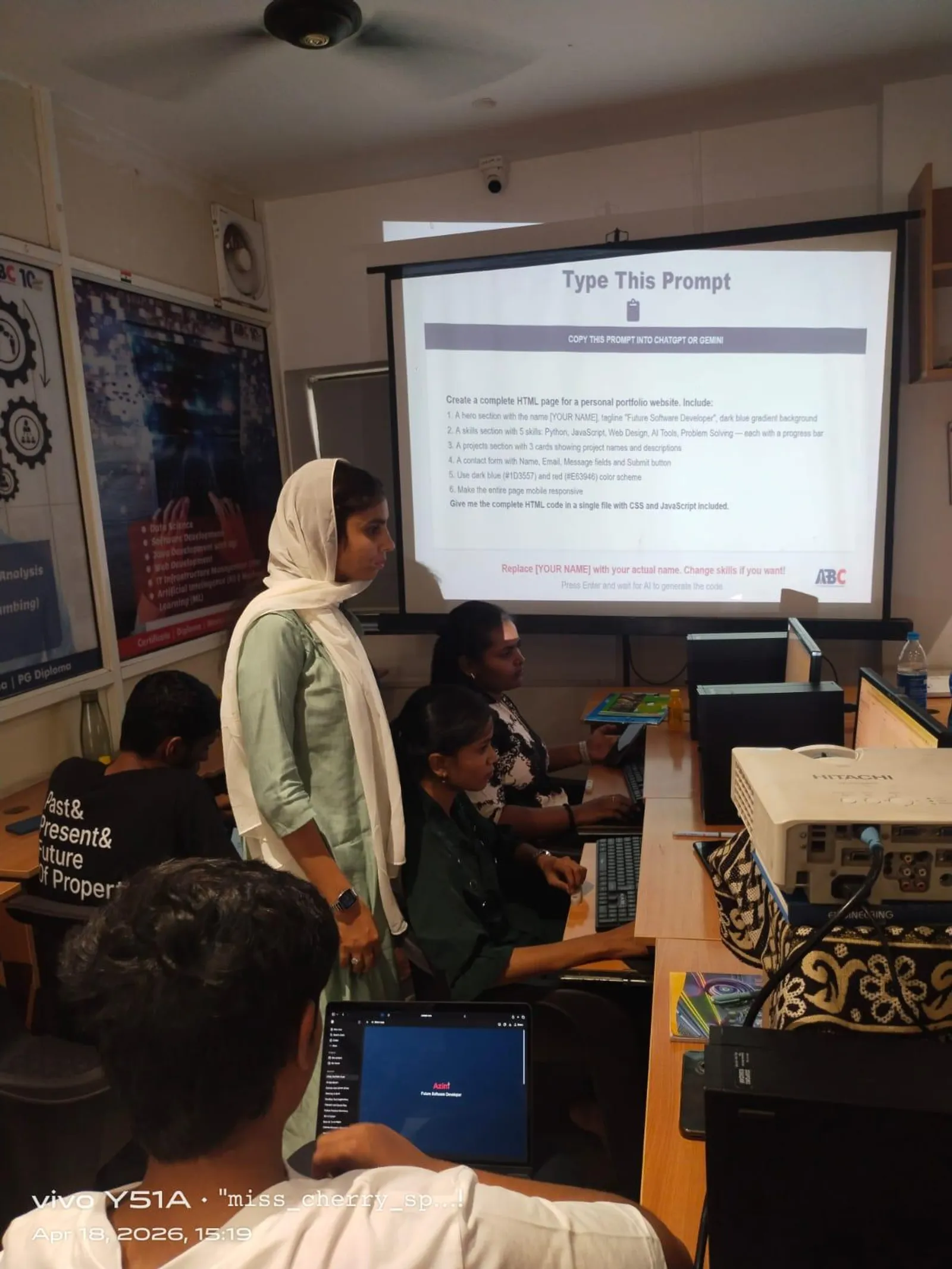
A Pune engineer adding COBie to an existing BIM skill base typically needs 16 to 24 weeks of structured study, assuming baseline Revit fluency. The pathway at ABC Trainings Wagholi and Hadapsar is sequenced as follows.
Weeks one to four — Revit family authoring at professional depth, shared parameters, and model auditing. COBie success depends entirely on correctly authored families carrying the right parameters, so this foundation is non-negotiable.
Weeks five to ten — COBie data structures. Reading the COBie spec, understanding each sheet and its semantics, and manually walking a small project from model to COBie workbook.
Weeks 11 to 16 — Validation tooling. Solibri Model Checker, NBS BIM Toolkit-style verification, and either the native Revit COBie export or third-party tools like BIM Interoperability Tools and IFC-based exports.
Weeks 17 to 22 — CAFM integration. Tutorial exposure to Maximo, Archibus, and Planon ingestion flows. The goal is not to become a CAFM administrator but to speak the language of the downstream system.
Weeks 23 to 24 — Capstone project. Delivering a full COBie workbook on a structured training project, validated and reconciled end to end.
Why This Skill Is Underpriced in 2026
Most BIM training programmes in India still treat COBie as an afterthought — one session in a broader curriculum. The supply of genuinely COBie-competent engineers in Pune is probably under 200 people as of early 2026. Demand is at least three times that. The arbitrage window will not last. Within two to three years, COBie will likely become as common on job descriptions as Navisworks is today. Engineers who position themselves now are positioning for the highest-yield BIM specialisation in the Pune market.
How to Get Started
ABC Trainings runs both standalone COBie modules and full BIM pathways with COBie integration from its Wagholi and Hadapsar campuses in Pune. Counselling on whether the standalone module or the full pathway suits a given candidate's background is available on WhatsApp at 7774002496 or by calling 7039169629.
COBie is the least visible, most valuable BIM skill in Pune's commercial real estate market in 2026. The landlords who pay for it know exactly why. The engineers who can deliver it are already in the minority — and that minority is commanding the premium.