C++ programming fundamentals are still one of the smartest skills to build in India if you're serious about software development, embedded systems, automation, testing tools, or even product companies. If you already know the very basics, this is where you stop treating C++ like a college subject and start using it like a professional skill. Here's the thing: most students learn syntax, print a few outputs, and think they're progressing. They aren't. Real growth starts when you understand how variables, control statements, functions, arrays, and OOP connect inside actual problem-solving workflows.

This lesson is essentially a foundational map of C++ syntax, first-program structure, data types, operators, loops, functions, arrays, and object-oriented programming concepts like classes, objects, and inheritance. So let's go deeper than a beginner checklist and look at how serious learners in Pune, Chhatrapati Sambhajinagar, and Sangli should study C++ in 2026 if they want interview-ready confidence.
What should you actually master in C++ basics first?
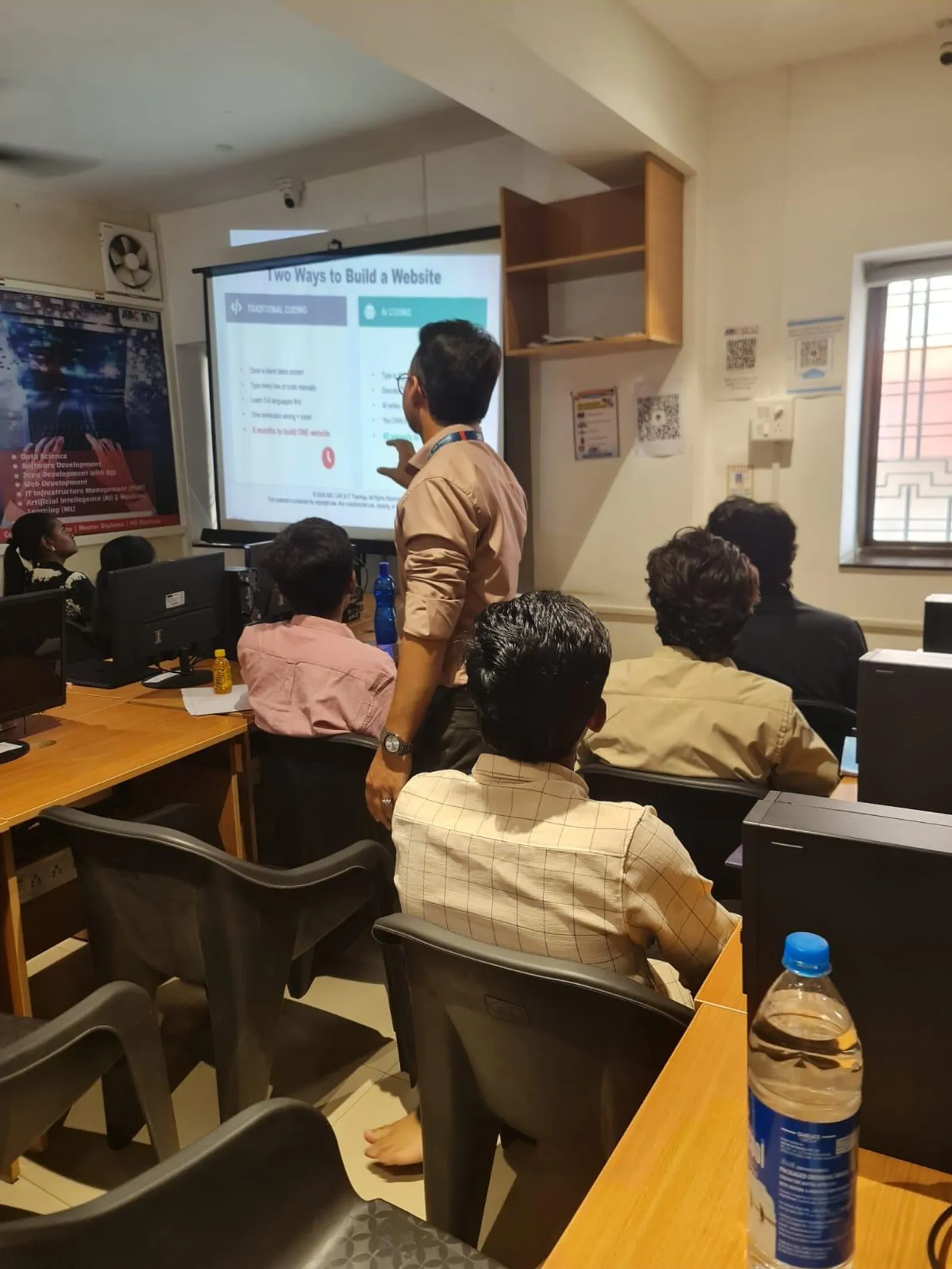
The first layer is syntax, but not in the shallow way most tutorials teach it. You should know how a C++ program is structured: headers, namespace usage, main function, statements, blocks, and output. But what most people don't realize is that clean structure matters from day one. If your indentation is messy, variable names are random, and braces are inconsistent, your code becomes harder to debug as soon as logic grows.
Start with a disciplined setup. Write small programs that use int, float, double, char, bool, and string correctly. Then test what happens when values change type. That is where you begin understanding memory, precision, and output quality. Trust me, students who take data types seriously write better code later when they move into DSA, embedded C++, or application logic.
Use a modern compiler setup like GCC with Code::Blocks, Visual Studio 2022, or VS Code with MinGW. Industry teams at Infosys, TCS, KPIT Technologies, and Bosch may use different environments, but the coding discipline remains the same.
How do operators and control statements become powerful in real coding?
Operators are not just arithmetic symbols. They control decision-making and logic flow. Assignment, comparison, logical, increment, decrement, and modulus operators show up in almost every real program. The good news is, once you stop memorizing and start combining them, your coding speed improves quickly.
Take control statements. Beginners learn if, else, switch, for, while, and do-while. Advanced learners ask a better question: when should I use each one for cleaner logic?
- Use
if-elsewhen conditions are range-based or layered. - Use
switchwhen options are fixed and readable. - Use
forloops when count is known. - Use
whileloops when termination depends on runtime conditions.
Here's the thing: your goal is not to use all structures. Your goal is to use the right one with minimum confusion. In placement rounds, especially for software trainees in Pune or entry-level coding roles around Hinjewadi, interviewers notice whether your logic is clean or patched together.
How should you practice your first C++ program like a serious learner?
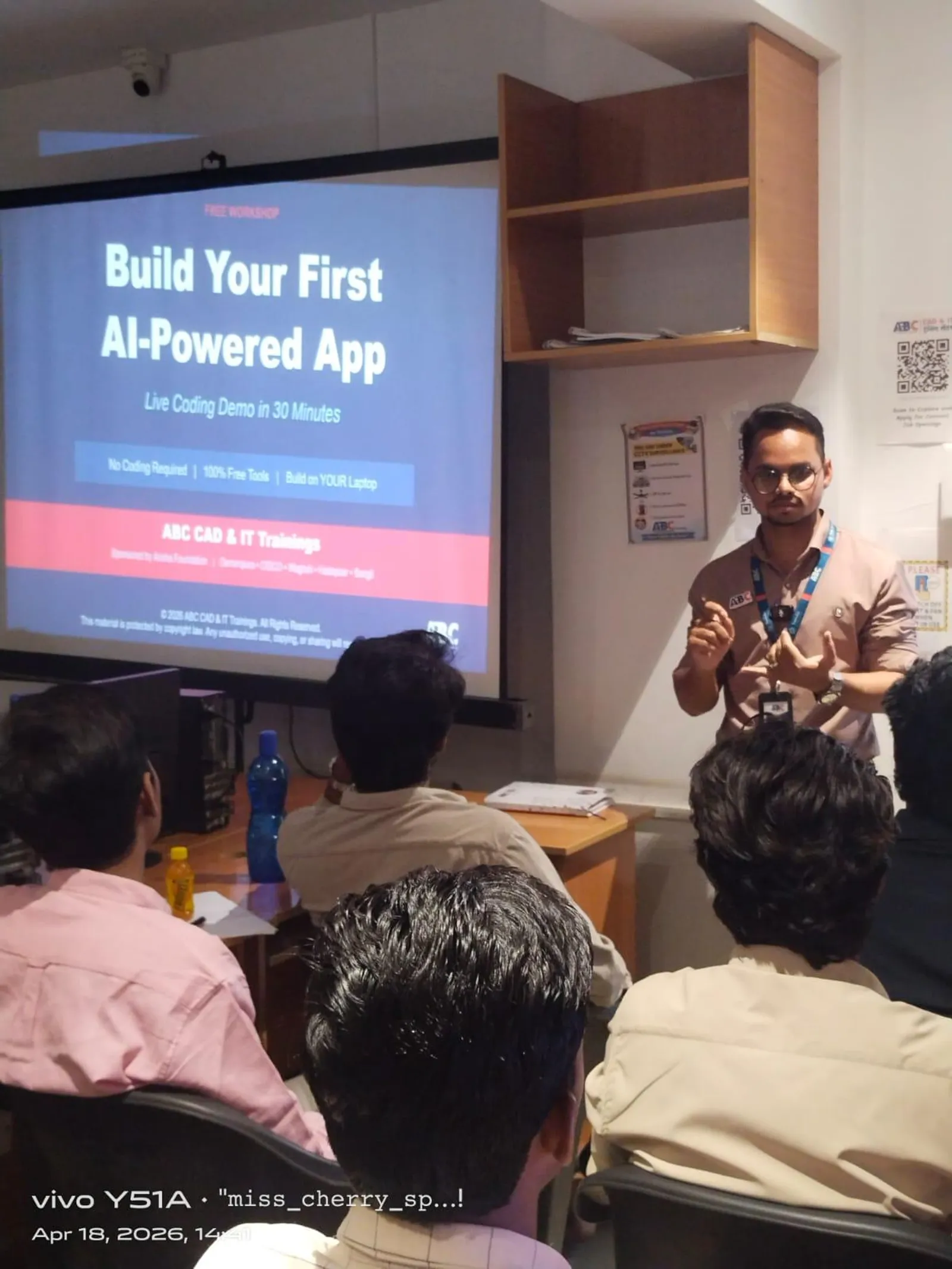
Writing your first C++ program sounds basic, but there is an advanced way to practice it. Don't stop at “Hello World.” Expand that same file into input, processing, and output. Then add validation. Then move repeated logic into a function. Then format the output properly.
For example, a simple student marks program can teach you:
- data input
- arithmetic operators
- conditional grading logic
- function calls
- array storage for multiple students
That one exercise already reflects how real coding grows. This is how trainers with experience teach progression. At ABC Trainings, we often tell students not to collect random programs. Build layered programs that teach multiple concepts together. That's how confidence becomes employable skill.
Why do functions matter so much in C++ interviews?
Functions are where C++ starts becoming professional. A student who writes everything inside main() is still at a beginner level. A student who breaks logic into functions is learning modular programming.
You should know:
- function declaration and definition
- parameters and arguments
- return types
- void vs non-void functions
- pass by value basics
Once you're comfortable, start focusing on naming and purpose. One function should do one job. That habit prepares you for larger applications, debugging, and teamwork. Companies like Siemens, Tata Technologies, and Mahindra Engineering value code readability because software is rarely written by one person forever.
What most people don't realize is that functions also improve your thinking. They force you to define inputs, outputs, and logic boundaries. That is exactly what coding tests are measuring.
How do arrays fit into real C++ problem solving?
Arrays are often introduced as a storage topic, but they are really your first step into scalable logic. If you only know single variables, your program handles one item at a time. The moment you use arrays, your code starts handling collections of data.
Practice with arrays for marks, salaries, temperatures, item prices, and attendance records. Then combine arrays with loops and conditions. For example, find highest marks, average salary, failed students, or duplicate values. That combination is exactly where coding questions start getting interesting.
In Indian hiring assessments, even for fresher roles paying around ₹3.2 lakh to ₹5.8 lakh per year, array-based logic is common. In embedded or performance-focused roles, especially around Pune automotive and manufacturing ecosystems linked to Bajaj Auto, Kirloskar, and Thermax, C++ fundamentals with structured logic still matter a lot.
How should you approach OOP in C++ after learning the basics?
Object-oriented programming is where many students get intimidated. Don't. OOP is simply a better way to organize code when data and behavior belong together. Classes, objects, inheritance, encapsulation, and basic abstraction are not just theory terms for exams. They are practical ways to write maintainable software.
Start with a class that models something real: Student, Employee, Account, Vehicle, or Product. Define data members and member functions. Create objects. Call methods. Then move to constructors and inheritance.
Trust me, the biggest mistake students make is jumping into advanced OOP terminology without building 10 to 15 small class-based programs first. You need repetition. Once that clicks, concepts like inheritance become natural.
For instance:
- Class: blueprint
- Object: real instance
- Inheritance: reuse and extension
- Encapsulation: controlled access to data
The good news is, even a basic command over OOP can make you stand out in diploma, BCS, BCA, BE, and BTech placements across Maharashtra.
What is the best advanced study workflow after this C++ fundamentals lesson?
If this lesson is your foundation, your next step should be structured progression, not random YouTube hopping. Here's a workflow I recommend:
- Write 20 short syntax and logic programs.
- Practice conditions and loops with number and pattern problems.
- Build 10 function-based programs.
- Create 10 array problems with searching, totals, and comparisons.
- Develop 8 to 10 class-and-object programs.
- Then move into file handling, pointers, STL, and DSA basics.
This sequence works because each topic supports the next one. Students who skip steps usually get stuck when interviewers ask them to explain their own code.
If you're learning in Maharashtra and want guided practice instead of confusion, getting mentor feedback helps a lot. ABC Trainings supports students who want practical software skills, not just certificate completion. You can call 8698270088 or WhatsApp 7774002496 if you want to discuss a coding learning path.
Which jobs in India use C++ skills in 2026?
C++ is not limited to one career path. That's why it's still relevant. With strong fundamentals, you can move toward:
- software development trainee roles
- embedded systems programming
- automation software support
- game programming basics
- test tool development
- DSA and competitive coding preparation
Entry-level salaries vary by city, skill depth, and company. In Pune, fresher software roles using coding fundamentals may start around ₹3 lakh to ₹4.5 lakh per year. Better problem-solving and project quality can push offers toward ₹5.5 lakh or more, especially in product-linked or specialized technical roles. If you later combine C++ with embedded systems, automotive software, or algorithms, opportunities improve further in companies connected to Bosch, KPIT Technologies, Siemens, and Tata Technologies.
Is C++ still worth learning in Maharashtra in 2026?
Yes, absolutely. C++ is still valuable for software logic, embedded systems, automotive programming, and technical interview preparation. In Pune especially, students targeting product, automation, and electronics-linked software roles benefit from strong C++ fundamentals. If you learn it deeply instead of casually, it stays useful for years.
How much C++ should a beginner know before applying for jobs?
You should be comfortable with syntax, data types, operators, loops, functions, arrays, and basic OOP. Beyond that, you should be able to write small working programs without copying. Indian employers don't expect magic from freshers, but they do expect clarity, logic, and clean code. A few solid projects matter more than memorized definitions.
Can C++ help after diploma or engineering in Pune and Sambhajinagar?
Yes. Diploma and engineering students can use C++ as a base for software jobs, embedded careers, and technical aptitude rounds. It also helps when you later learn data structures, competitive coding, or system-level programming. Students from Pune and Chhatrapati Sambhajinagar often gain an advantage when they combine C++ with regular coding practice.
Where can I get practical C++ training with guidance in Maharashtra?
Look for training that includes hands-on coding, logic building, functions, arrays, and OOP practice with mentor review. That's much better than only watching theory videos. You can contact ABC Trainings at 8698270088 or WhatsApp 7774002496 to check current coding training options and guidance based on your background.
Visit Our Centers
Chhatrapati Sambhajinagar
Corporate Office (HQ)
2nd Floor, Kandi Towers, Jalna Road, Amarpreet Chowk, Chhatrapati Sambhajinagar, Maharashtra 431001
Osmanpura Branch
Plot No 14, Shanya Sect, Near Sant Eknath Rang Mandir, Osmanpura, Chhatrapati Sambhajinagar, Maharashtra 431005
CIDCO Branch
Plot No 4, N-3, Cidco, Opp. High Court, Chhatrapati Sambhajinagar, Maharashtra 431003
Pune
Wagholi Branch
1st Floor, ABC Trainings, Laxmi Datta Arcade, Pune - Ahilyanagar Hwy, Wagholi, Pune, Maharashtra 412207
Hadapsar Branch
Bloom Hotel, ABC Trainings 1st Floor, S.no 156/3 Shree Tower Pune - Solapur Rd, Hadapsar, Pune, Maharashtra 411028
Sangli
Sangli Branch
2nd Floor, Vasant Market, Opp. City High School, Sangli, Maharashtra 416416
Start Your Career Journey Today
Join 10,000+ students who transformed their careers with ABC Trainings.
💬 WhatsApp: 7774002496📞 Call: 8698270088