ITI/Diploma to Automation Engineer in Sambhajinagar 2026
If you're searching for a real ITI/Diploma to Automation Engineer career roadmap in Chhatrapati Sambhajinagar, you're asking the right question at the right time. I’ve trained students for years, and here's the thing: many ITI and diploma students think automation is only for B.E. engineers. It’s not. I’ve seen students from ITI Electrician, Wireman, Fitter, Electronics, and diploma branches build solid careers in PLC, SCADA, HMI, panel design, and industrial maintenance.
In Chhatrapati Sambhajinagar, the demand is growing because factories, OEMs, system integrators, and maintenance teams need people who can handle machines, sensors, drives, and control systems. Companies connected to manufacturing ecosystems like Bajaj Auto, Siemens vendors, Bosch suppliers, Tata Technologies projects, and L&T-linked industrial work need practical people who can solve problems on the shop floor. The good news is, you do not need perfect English or a fancy degree to start. You do need the right roadmap.
Can ITI and diploma students really become automation engineers?
Yes, absolutely. But let’s be honest about the title. Freshers usually start as trainee technician, PLC trainee, maintenance trainee, service engineer, panel wiring technician, or junior automation engineer. After 1 to 3 years, if your skills are strong, that job title changes fast.
What most people don't realize is that industry cares less about your college label and more about whether you can read wiring diagrams, understand inputs and outputs, troubleshoot sensors, connect a VFD, and modify a PLC logic safely. I’ve seen diploma students get placed faster than degree holders simply because they were more hands-on.
What skills do you need to become an automation engineer in 2026?
If you're from ITI or diploma, don’t try to learn everything at once. That’s one of the biggest mistakes beginners make. Build your foundation in this order:
1. Electrical basics first
You must understand relays, contactors, MCBs, overloads, transformers, control panels, star-delta logic, and industrial safety. If this base is weak, PLC learning becomes confusing.
2. Sensors and actuators
Learn inductive sensors, photoelectric sensors, proximity switches, solenoid valves, encoders, motors, and pneumatic basics. In real factories, automation is not just software. It's hardware plus logic.
3. PLC programming
Start with ladder logic. Siemens TIA Portal V18, Allen-Bradley basics, Delta PLC, and Mitsubishi concepts are useful depending on the company. For most beginners in Maharashtra, Siemens PLC basics are a strong starting point.
4. HMI and SCADA
After PLC, learn how operators monitor machines. HMI screens, alarms, trends, tags, and SCADA basics matter a lot. WinCC and common SCADA concepts help you understand plant-level control.
5. VFD and drives
Variable Frequency Drives are used everywhere. Trust me, a student who can wire, parameterize, and troubleshoot a VFD gets noticed quickly during interviews.
6. Panel reading and troubleshooting
This is where placements happen. Companies want students who can open a panel, identify components, follow a drawing, and find faults logically without panic.
What mistakes do beginners in automation always make?
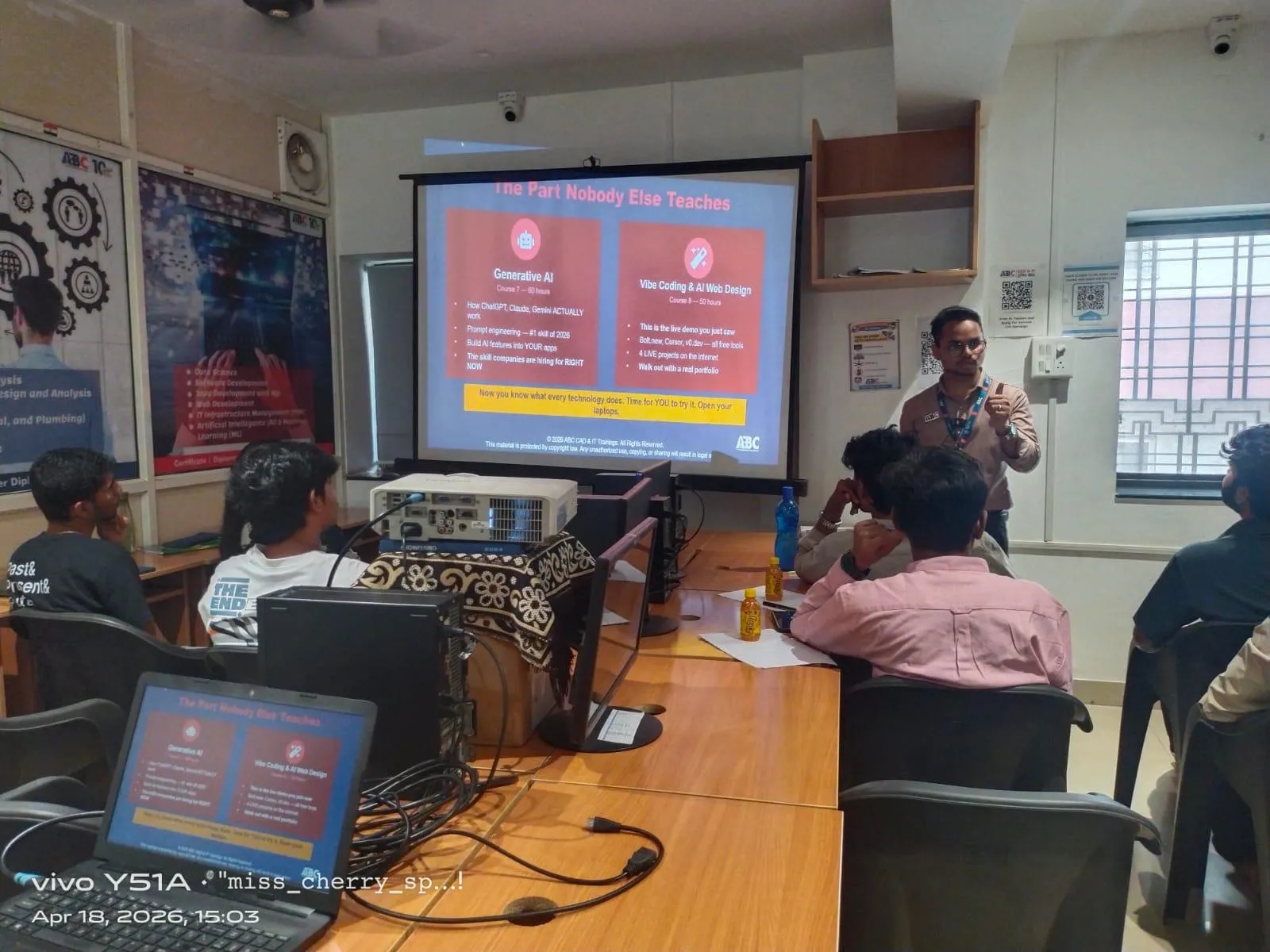
After training 1000+ students, I can tell you the same mistakes keep repeating.
Mistake 1: Chasing software without understanding wiring
Students want PLC programming on day one. But when I ask them to identify a relay or explain NO and NC contacts, they freeze. Automation starts from control logic and electrical understanding, not just laptop screens.
Mistake 2: Memorizing programs instead of understanding sequence
Many students copy ladder programs line by line. In interviews, the panel asks, “What happens if sensor 2 fails?” and the student has no answer. Learn sequence thinking. Why is this rung added? What is the interlock? What is the safety condition?
Mistake 3: Ignoring troubleshooting practice
Placement depends heavily on fault-finding ability. The student who can say, “First I’ll check power supply, then input status, then output signal, then field wiring” sounds employable. The one who says “I learned PLC” but cannot diagnose a simple issue gets rejected.
Mistake 4: Poor documentation habits
Engineers who get promoted know how to label wires, note IP addresses, save backups, and maintain project files. What most people don't realize is that discipline creates trust. Companies like Mahindra Engineering, Thermax vendors, or Kirloskar-linked plants value dependable people.
Mistake 5: Unreal salary expectations in the first job
Freshers sometimes expect ₹30,000 to ₹40,000 immediately. In Chhatrapati Sambhajinagar, a realistic starting salary for ITI/diploma students in automation-related roles is often ₹12,000 to ₹18,000 per month for trainee positions. With 1-2 years of solid work, many move to ₹20,000 to ₹28,000. Skilled PLC/SCADA engineers with 3-5 years can reach ₹35,000 to ₹55,000, and in Pune, Nashik, or Ahmedabad, the growth can be even faster.
What separates placed students from those who stay stuck?
Here’s the difference, and it’s very practical.
Placed students build a job-ready routine
They revise daily, practice ladder logic, trace wiring diagrams, and ask smart questions. They don’t disappear for a week and then expect miracles.
Placed students touch real hardware
If you only watch YouTube and never handle panels, terminals, PLC modules, and sensors, your confidence stays low. The students who get jobs are the ones who become comfortable around actual equipment.
Placed students can explain their work clearly
You don’t need polished corporate English. But you must explain a motor start-stop logic, a sensor feedback loop, or a VFD connection in simple words. Infosys or TCS may focus more on software communication, but in industrial roles, practical clarity matters more.
Placed students are open to starting small
Many successful students begin in maintenance, commissioning support, panel building, or site support. That first role teaches more than six months of passive learning.
What is the best career roadmap after ITI or diploma?
Let’s keep it simple.
Step 1: Strengthen core electrical and control basics
Spend the first phase mastering components, symbols, wiring logic, safety, and basic troubleshooting.
Step 2: Learn PLC, HMI, SCADA in sequence
Don’t jump randomly between brands. Start with one platform, understand logic deeply, then expand.
Step 3: Practice mini industrial projects
Create tank level control, motor interlocking, conveyor counting, traffic light sequence, or pump automation projects. These help in interviews.
Step 4: Build a simple portfolio
Keep photos of panels, project summaries, logic screenshots, and a list of components you’ve worked on. Trust me, this makes a big difference.
Step 5: Apply for trainee and junior roles aggressively
Look in Chhatrapati Sambhajinagar, Pune, Chakan, Ranjangaon, Waluj MIDC, Nashik, and even Bengaluru if you're open to relocation.
Step 6: Upgrade after your first job
Once you're working, add advanced PLC, industrial networking, servo basics, and commissioning skills. That’s how you move from technician to engineer-level responsibility.
Which companies and industries hire automation learners?
Automation skills are useful in automotive, packaging, food processing, pharma, water treatment, machine manufacturing, and process industries. Students often target vendors or integrators working around Bajaj Auto, Bosch, Siemens, L&T, Tata Technologies, Thermax, KPIT Technologies, and Kirloskar ecosystems. Not every fresher joins these brands directly, and that's okay. Many start with subcontractors, panel manufacturers, and machine builders, then move up.
What are my pro tips as a trainer?
First, stop saying “I am from only ITI” or “I am from only diploma.” That mindset kills confidence before interviews even begin. Second, learn to use a multimeter properly. I’m serious. Third, maintain a notebook of faults and solutions. The students who write down real problems improve much faster. Fourth, never fake practical knowledge in an interview. If you haven’t done SCADA live, say you’ve learned the basics and are ready to work on real projects. Honest students are easier to hire and train.
If you're serious about entering this field, get trained where practical exposure, interview preparation, and local placement support are available. At ABC Trainings, we regularly guide students from Maharashtra on skill-building and job readiness. You can call 8698270088 or WhatsApp 7774002496 to ask about the right path based on your ITI or diploma background.
The good news is that automation is still a skill-based field. If you stay practical, patient, and consistent, you can absolutely grow from shop-floor trainee to automation engineer. I’ve seen it happen many times in Chhatrapati Sambhajinagar, Pune, and across Maharashtra.
Can an ITI electrician become an automation engineer in Chhatrapati Sambhajinagar?
Yes, an ITI electrician can move into automation if the student builds strong basics in electrical control circuits, PLC, sensors, HMI, and troubleshooting. Most begin with trainee technician or maintenance roles and then grow into junior automation profiles. In local industrial areas and MIDC zones, practical skill matters a lot more than just your academic label.
What salary can a diploma student get in automation as a fresher in Maharashtra?
For freshers, salaries usually start around ₹12,000 to ₹18,000 per month in trainee or junior roles. If the student has good practical exposure in PLC, panel wiring, VFD, and fault finding, ₹18,000 to ₹22,000 is possible in some companies. After 2 to 3 years, many automation professionals move to ₹25,000 to ₹40,000 depending on city, company, and site work.
Which software and systems should beginners learn first for automation jobs?
Beginners should first learn electrical control basics, then PLC ladder logic, then HMI and SCADA. Siemens TIA Portal V18 is a good starting point because many students understand industrial logic well through it. Along with software, they should also learn sensors, relays, contactors, VFD basics, and panel troubleshooting.
Is automation a good career after diploma in electrical or electronics in 2026?
Yes, it is a strong career path in 2026 because factories are increasing their use of PLCs, drives, HMIs, and automated systems. Students from electrical, electronics, instrumentation, and related diploma branches can build stable careers in maintenance, commissioning, and control systems. The key is to become hands-on and not remain limited to theory alone.
Visit Our Centers
Chhatrapati Sambhajinagar
Corporate Office (HQ)
2nd Floor, Kandi Towers, Jalna Road, Amarpreet Chowk, Chhatrapati Sambhajinagar, Maharashtra 431001
Osmanpura Branch
Plot No 14, Shanya Sect, Near Sant Eknath Rang Mandir, Osmanpura, Chhatrapati Sambhajinagar, Maharashtra 431005
CIDCO Branch
Plot No 4, N-3, Cidco, Opp. High Court, Chhatrapati Sambhajinagar, Maharashtra 431003
Start Your Career Journey Today
Join 10,000+ students who transformed their careers with ABC Trainings.
💬 WhatsApp: 7774002496📞 Call: 8698270088