Machine Learning Clustering Algorithms Explained: K-Means, Hierarchical and DBSCAN Guide (Updated August 2026) (Updated August 2026)
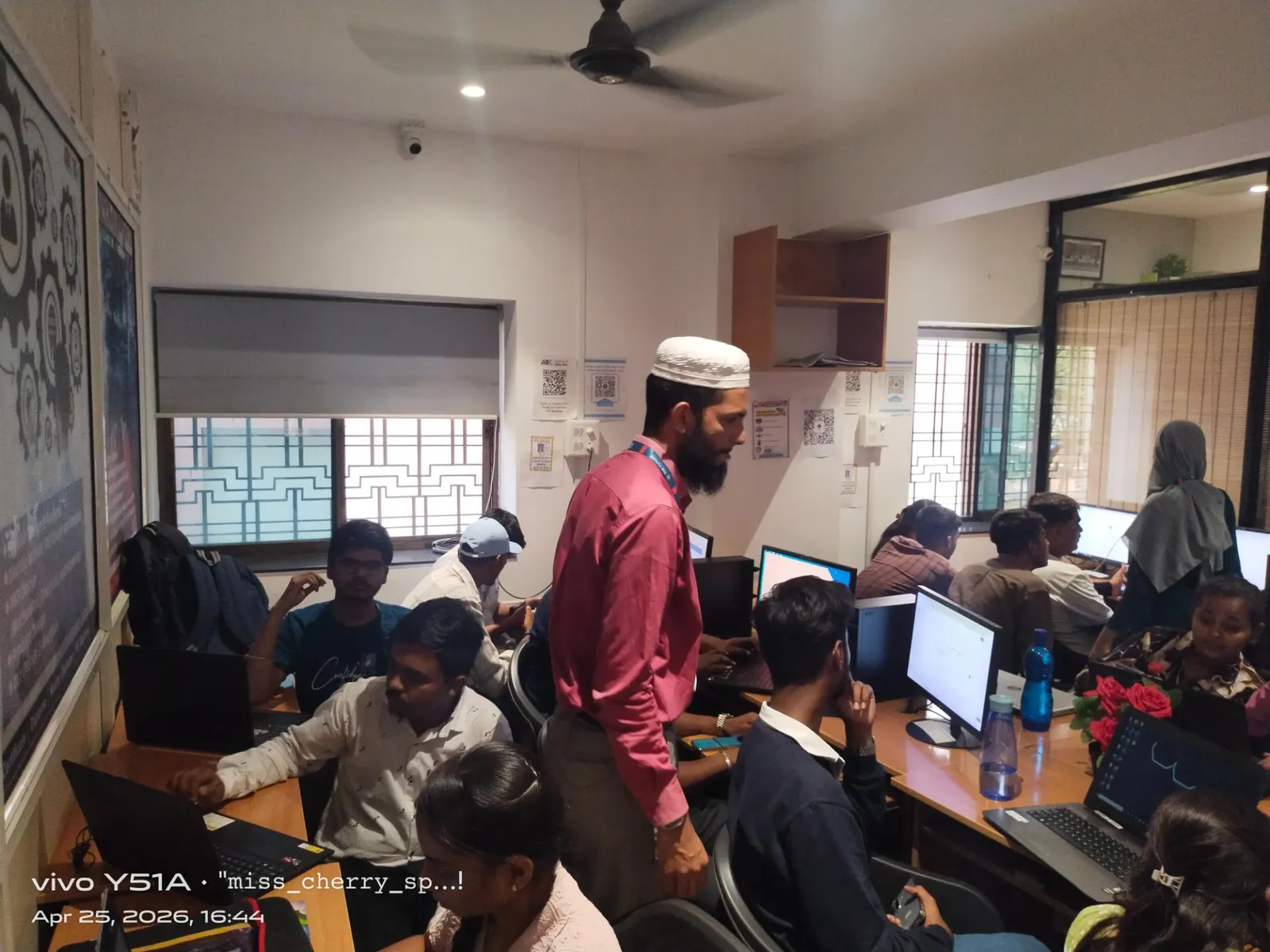
Here's the thing — in the real world, most of the data you'll encounter doesn't come with labels. There's no column that says 'this customer is loyal' or 'this scan shows a tumour'. That's exactly where clustering algorithms come in. The NASSCOM-Deloitte report says India will need 1.25 million AI and data professionals by 2027 — and a significant chunk of those roles require people who can work with unlabelled data. Clustering is the skill that separates a basic data analyst from a machine learning practitioner. In this guide, grounded in what our ABC Trainings ML faculty actually teaches in their Proficient ML course, you'll understand why clustering exists, how the major algorithms work, and where you'll actually use them on the job.
- Clustering groups similar data points without labels using unsupervised learning
- The three most used algorithms are K-Means (partition-based), Hierarchical (tree-based) and DBSCAN (density-based)
- Each has specific strengths depending on your data shape and size
What Is Clustering in Machine Learning and Why Does It Matter?
Clustering is a type of unsupervised learning — which means the algorithm finds structure in data without being told what the output should be. In classification, you train a model on labelled examples (this image is a cat, this transaction is fraud). In clustering, there are no labels. What you give the algorithm is raw data points, and it identifies which points are similar to each other and groups them. The trainer in our ML course puts it plainly: not every business problem comes with a target variable. If you're a bank trying to segment customers for product targeting, nobody hands you a spreadsheet with 'loyal', 'at-risk' and 'dormant' already filled in — you have to find those groups yourself. That's clustering.
K-Means Clustering: How It Works Step by Step
K-Means is the most widely taught and deployed clustering algorithm. Here's how it works: you specify K (the number of clusters you want), the algorithm randomly picks K centroids, assigns every data point to the nearest centroid, recalculates the centroid as the mean of all points in that cluster, and repeats until the assignments stop changing. What most people don't realize is that the choice of K is not trivial — a common technique is the 'elbow method' where you plot inertia (sum of squared distances) vs K values and look for the bend. In the ABC Trainings ML sessions, students practise K-Means on customer transaction datasets to understand how the algorithm converges and why random initialisation matters. The sklearn implementation in Python uses `KMeans(n_clusters=3, random_state=42)` — clean, repeatable, and industry-standard.
| Algorithm | Type | Needs K upfront? | Handles outliers? | Best for |
|---|---|---|---|---|
| K-Means | Partition-based | Yes | No | Customer segmentation, fast clustering of large data |
| Hierarchical | Tree-based | No | Partial | Genomics, document groups, unknown cluster count |
| DBSCAN | Density-based | No | Yes (noise label) | Fraud detection, spatial data, anomaly identification |
Hierarchical Clustering: Building a Dendrogram
Hierarchical clustering builds a tree of clusters called a dendrogram. Unlike K-Means, you don't need to specify the number of clusters upfront — you choose the cut-off after viewing the tree. Agglomerative (bottom-up) hierarchical clustering starts by treating each point as its own cluster, then merges the closest pairs step by step until everything is one cluster. Divisive (top-down) does the reverse. The linkage criterion — single, complete, average, or Ward — determines how 'distance' between clusters is measured. Ward linkage minimises variance and is generally the safest default. Where you'd use this: genomics research, document clustering, and any use case where the number of natural groups isn't known in advance.
DBSCAN: Density-Based Clustering for Noisy Data
DBSCAN (Density-Based Spatial Clustering of Applications with Noise) works differently — instead of starting with centroids or trees, it groups points based on density. Two parameters drive it: epsilon (the radius for finding neighbours) and min_samples (the minimum number of points to form a dense region). Points with enough neighbours are 'core points', points near core points are 'border points', and everything else is noise. DBSCAN's power is that it can find clusters of arbitrary shape and doesn't force every point into a cluster — outliers are left as noise. This makes it extremely useful for fraud detection, spatial data analysis, and anomaly detection tasks where you specifically want to identify the outlier points, not just the groups.
Choosing the Right Clustering Algorithm: A Practical Framework
The right algorithm depends on three things: data shape, data scale, and whether outliers matter. K-Means works well when clusters are roughly spherical and similarly sized, you know roughly how many clusters exist, and speed matters (it scales to millions of rows). Hierarchical clustering works best when you need to understand the full grouping hierarchy, data is small to medium, and you want to explore different numbers of clusters without re-running. DBSCAN is your tool when clusters are irregular shapes, noise and outliers must be identified explicitly, and you can't estimate the number of clusters. Trust me — in real industry work, you'll often run two or three algorithms and compare silhouette scores before committing to one approach.
Real-World Applications of Clustering in Indian Industries
Clustering is actively used in India's IT, e-commerce, banking and healthcare sectors. Infosys and TCS data teams use customer segmentation clustering to personalise CRM campaigns for banking clients. KPIT and Mahindra Tech apply clustering to vehicle sensor data for predictive maintenance grouping. India's healthcare analytics startups use clustering on patient records to identify unknown patient profiles for targeted care. For e-commerce firms like Flipkart and Myntra, clustering is how recommendation engines group similar users for collaborative filtering. The good news is that Pune's expanding IT corridor — Hinjawadi, Magarpatta, Kharadi — has steady demand for data scientists and ML engineers who understand these algorithms at a practical level, not just theory.
Career Scope After Learning Clustering and ML in Pune 2026
After completing a machine learning course that covers clustering and unsupervised learning, common entry-level roles include Data Analyst (₹3.5–₹6 LPA), Junior Data Scientist (₹5–₹8 LPA), and ML Engineer Trainee (₹5.5–₹9 LPA) in Pune. Companies actively hiring ML freshers in Pune and Sambhajinagar in 2026 include Infosys Pune (Hinjawadi), Wipro Pune, Accenture, Cognizant (Hadapsar), TCS Pune, and several AI product startups around Baner and Kalyani Nagar. With 3+ years of experience and specialisation in clustering-heavy domains (fraud, medical imaging, recommender systems), salaries move into ₹12–₹20+ LPA. The key credential: a portfolio with real clustering projects — not just a completion certificate. Attend ABC Trainings' free weekend ML workshop to see how we approach this: call 7039169629 or WhatsApp 7774002496.
Eligible students can apply for CMKPY (Chief Minister Yuva Karyaprasaran Yojana) skill training reimbursement of ₹6,000–₹10,000 toward approved ML and data science courses. Ask ABC Trainings whether the current ML batch is CMKPY-empanelled when you enquire.Get the Machine Learning Brochure + Fees + Batch Dates on WhatsApp
Free 1:1 counselling. Placement track record. CMYKPY/PMKVY eligibility check.
💬 Get Brochure on WhatsApp📞 Call 7039169629About the author: Amit Kulkarni. 8 yrs leading IT training at ABC Trainings, ex-Infosys.
Visit Our Centers
- Wagholi (Pune): 1st Floor, Laxmi Datta Arcade, Pune-Ahilyanagar Highway. Call 7039169629
- Hadapsar (Pune HQ): 1st Floor, Shree Tower, opp. Vaibhav Theater, Magarpatta. Call 7039169629
- Cidco (Chh. Sambhajinagar): Kalpana Plaza, opp. Eiffel Tower, N-1 Cidco. Call 7039169629
- Osmanpura (Chh. Sambhajinagar): S.S.C Board to Peer Bazar Road, near Jama Masjid. Call 7039169629
- Sangli: Shubham Emphoria, 1st Floor, Above US Polo Assn., Sangli-Miraj Rd, Vishrambag. Weekend batches available. Call 7039169629
FAQs
What is clustering in machine learning in simple terms?
Clustering is an unsupervised learning technique that groups data points based on similarity without using pre-labelled categories. The algorithm finds natural patterns in raw data — for example, grouping customers by purchase behaviour without being told how many segments to create.
What is the difference between clustering and classification?
Classification is supervised — you train on labelled data where each example already has a category (spam/not-spam). Clustering is unsupervised — there are no labels, and the algorithm discovers the groups itself. Both are critical ML skills, but they solve fundamentally different problems.
Which clustering algorithm should a beginner learn first?
K-Means is the standard starting point. It is easy to implement, fast to run, and available in sklearn with one line of code. Once you understand K-Means thoroughly — including the elbow method and silhouette scoring — hierarchical and DBSCAN become much easier to learn as conceptual extensions.
What jobs use clustering algorithms in India in 2026?
Data Scientist and ML Engineer roles at Infosys, TCS, Wipro, Cognizant and KPIT in Pune actively use clustering for customer segmentation, fraud pattern identification, sensor-data anomaly detection and recommendation engine grouping. Entry-level salaries start at ₹5–₹8 LPA with a strong portfolio.