Statistics and Probability for Machine Learning: Complete Beginner Guide (Updated August 2026) (Updated August 2026)
If you've ever wondered why your machine learning model gives a wrong prediction, the answer almost always lives in statistics. The NASSCOM-Deloitte report projects 1.25 million AI and data professionals will be needed in India by 2027. What separates the ones who get hired from those who don't? Depth of mathematical understanding — not just tool familiarity. Our faculty at ABC Trainings starts every Proficient ML course with this question: can you look at a dataset and tell whether its distribution is normal? Can you say with confidence that two groups are actually different, or just look different by chance? If the answer is uncertain, statistics is the missing piece. This guide covers the essentials — mean, median, probability, distributions, and why all of this matters before you write a single line of sklearn code.

- Statistics provides the tools to summarise and understand data (descriptive) and to draw conclusions beyond your sample (inferential)
- Probability quantifies uncertainty — and every ML algorithm from logistic regression to neural networks is built on probability calculations at its core
Why Do Machine Learning Engineers Need to Know Statistics?
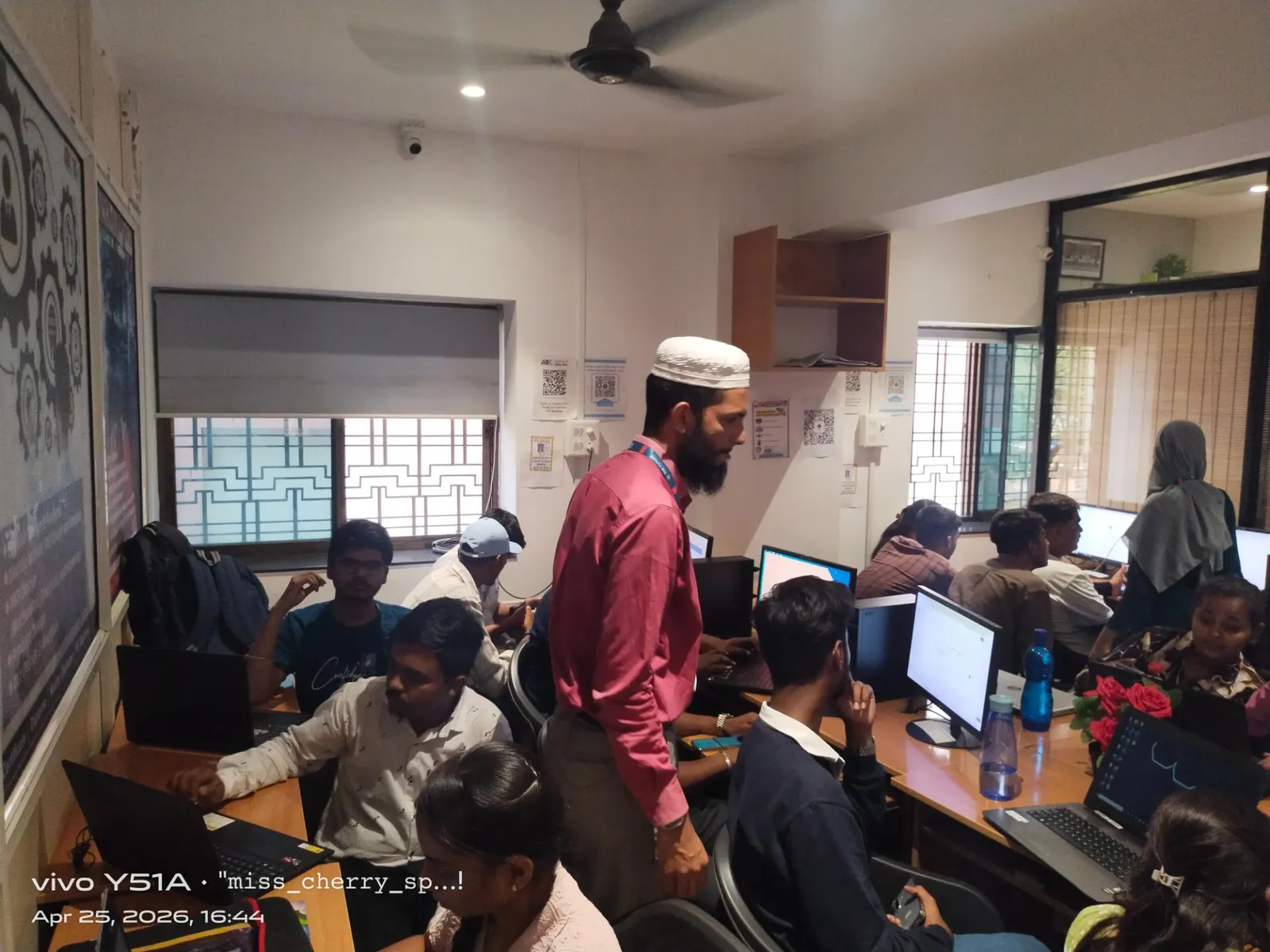
The trainer in ABC's Proficient ML course opens with a blunt truth: machine learning without statistics is like building a house on sand. Every supervised learning algorithm — from linear regression to gradient boosting — makes statistical assumptions about your data. If those assumptions are violated, your model will underperform or mislead. A logistic regression model assumes linear separability in log-odds space. A naive Bayes classifier assumes feature independence. K-Means assumes spherical, equally sized clusters. Knowing statistics means knowing when these assumptions are likely to hold and when you need a different approach. It also means you can debug models — when your training accuracy is 95% but test accuracy is 60%, statistical thinking tells you whether that's an overfitting problem, a data distribution shift, or a labelling error.
The Core Statistical Measures: Mean, Median, Mode and Variance
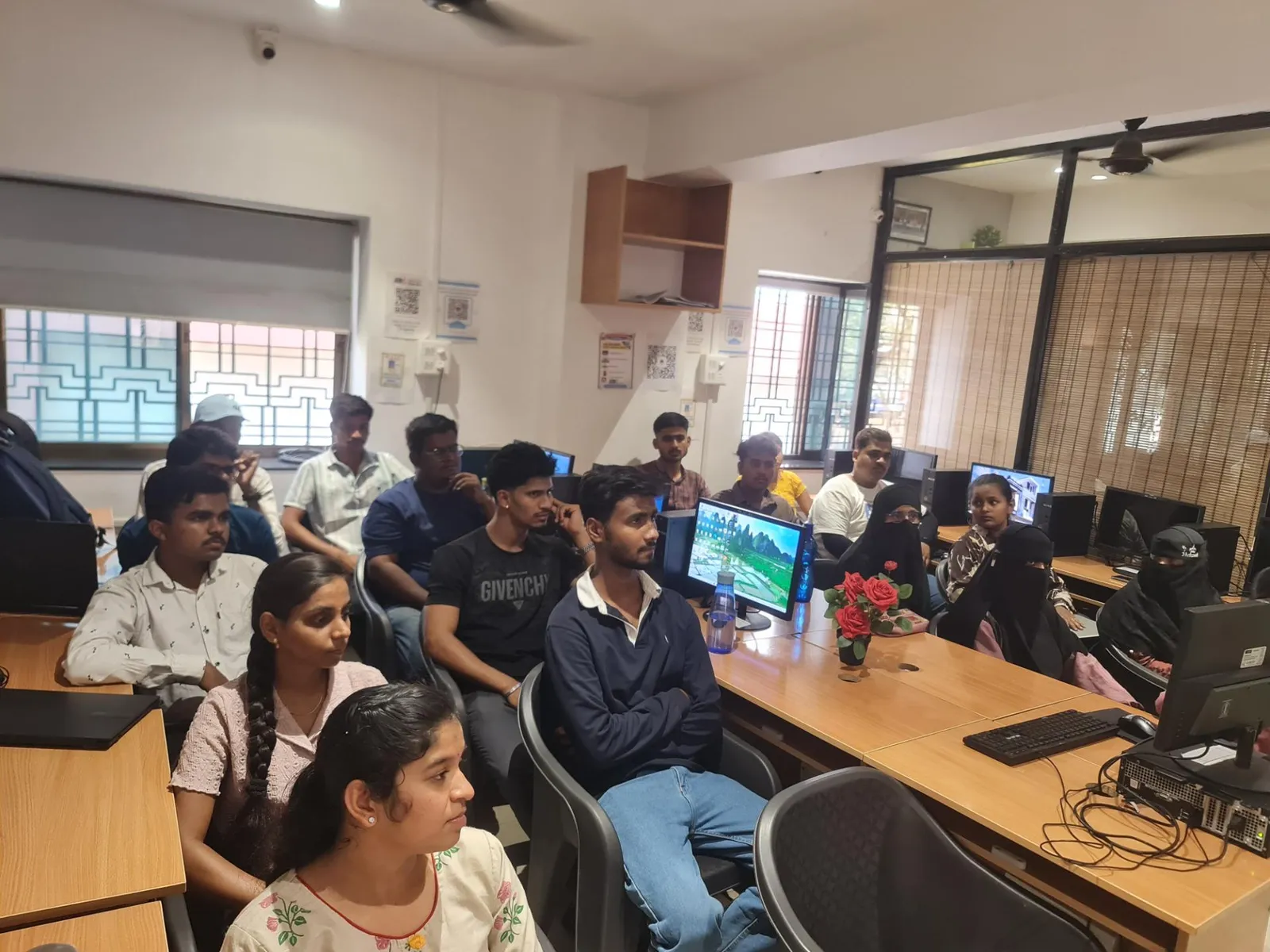
Before any ML algorithm touches your data, you need to understand its shape. Mean (average) tells you the central value. Median is the middle value — more robust to outliers than mean. Mode is the most frequent value. Variance measures how spread out the data is (average squared deviation from the mean). Standard deviation is the square root of variance — in the same units as your data, making it interpretable. Here's why this matters practically: if you have a salary dataset for Pune IT companies (Infosys, Wipro, TCS), the mean salary might be ₹12 LPA but the median might be ₹7.5 LPA because a few senior architects earning ₹50+ LPA pull the mean up. A model trained to predict salary without accounting for this distribution skew will give systematically wrong predictions for mid-level roles.
| Measure | What it tells you | ML use case |
|---|---|---|
| Mean | Central value of the data | Feature scaling, baseline prediction |
| Variance | Spread of data points | Model error analysis, PCA |
| Normal distribution | Symmetric bell curve | Regression assumptions, feature normalisation |
| P-value | Probability result is by chance | A/B testing model variants |
Descriptive vs Inferential Statistics: What's the Difference?
Descriptive statistics summarise what you already have — mean, median, mode, standard deviation, percentiles, histograms. They answer: what does my dataset look like? Inferential statistics let you draw conclusions about a population based on a sample — hypothesis testing, confidence intervals, p-values. They answer: is this pattern real, or could it have appeared by chance? In machine learning, you use descriptive statistics in the EDA (Exploratory Data Analysis) phase to understand your features. You use inferential statistics when comparing model variants — is Model A genuinely better than Model B, or is the difference within statistical noise? Understanding p-values and confidence intervals is what separates ML practitioners who can justify their model choices from those who just pick the one with the higher accuracy number.
Probability Fundamentals Every ML Practitioner Must Know
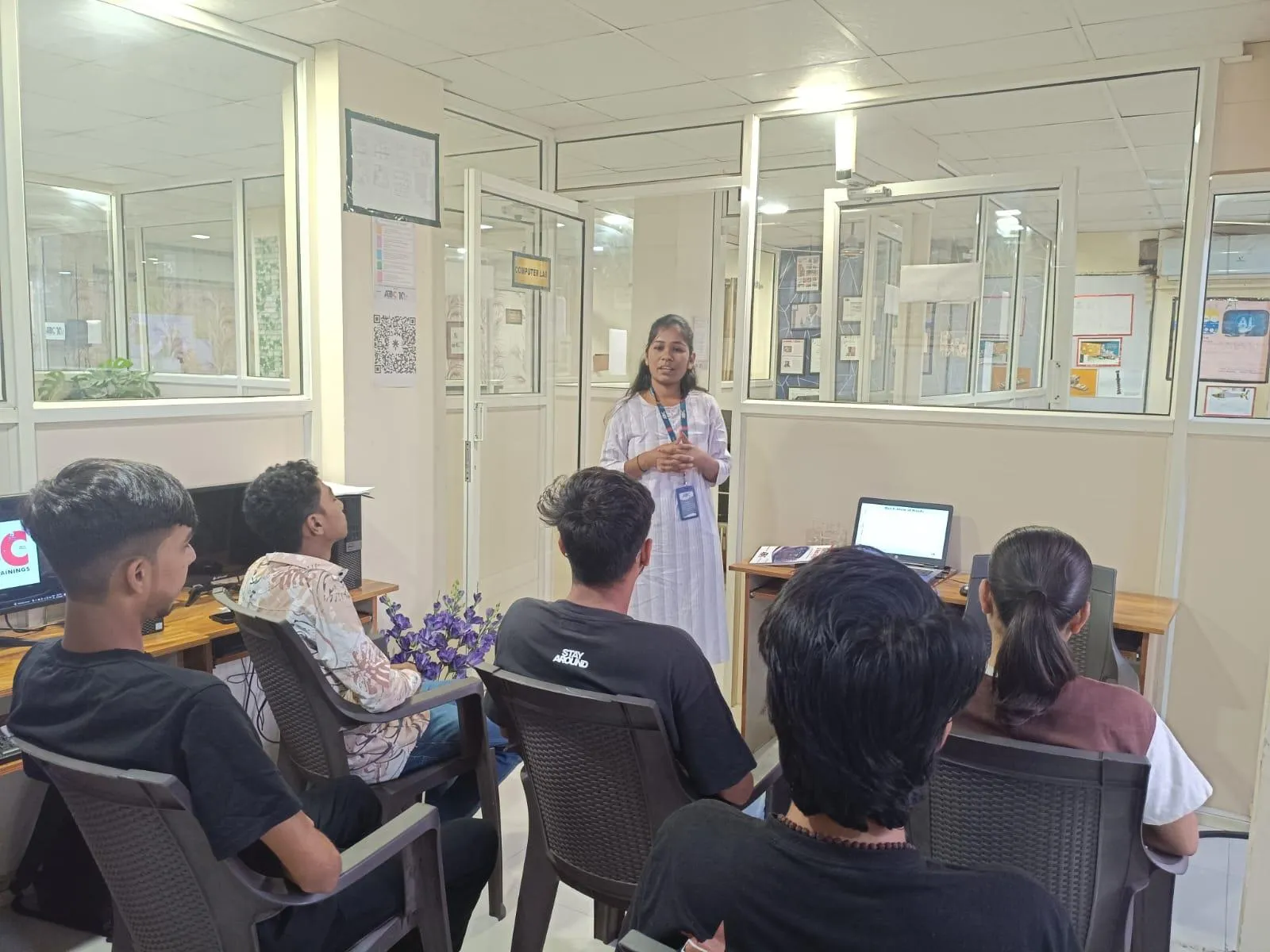
Probability is the numerical measure of how likely an event is, expressed between 0 (impossible) and 1 (certain). The three rules that underpin all of ML probability: the multiplication rule for independent events (P(A and B) = P(A) × P(B)), the addition rule for mutually exclusive events (P(A or B) = P(A) + P(B)), and Bayes' theorem (P(A|B) = P(B|A) × P(A) / P(B)). Bayes' theorem is especially critical — it's the mathematical engine behind naive Bayes classification, the basis for Bayesian neural networks, and the underlying framework for how we update beliefs with new evidence. The trainer walks through a customer churn example: given that a customer has contacted support three times, what is the probability they'll cancel within 30 days? That's a conditional probability — exactly what Bayesian inference answers.
Probability Distributions Used in Machine Learning
Several probability distributions appear constantly in ML work: Normal (Gaussian) distribution — the bell curve — underpins linear regression's error assumptions and is used in feature normalization. Bernoulli distribution models binary outcomes (0/1, yes/no) — used in logistic regression's target variable. Binomial distribution models the number of successes in n independent Bernoulli trials. Poisson distribution models count data (how many support tickets per day). Uniform distribution is used in parameter initialization. The reason this matters in practice: if you assume your target is normally distributed but it's actually Poisson, your loss function choice will be wrong, and your model will underfit. Distribution awareness is what an experienced data scientist brings to feature engineering.
How Statistics Connects to ML Algorithms Directly
The connection is direct and unavoidable. Linear regression minimises mean squared error — which is a statistical measure derived from variance. Logistic regression outputs a probability using the sigmoid function, then uses a log-likelihood statistical objective. Decision trees split on information gain or Gini impurity — both are statistical measures of uncertainty. Neural networks are trained with stochastic gradient descent — the 'stochastic' means random sampling, which is a probability concept. k-NN uses distance measures that directly relate to statistical similarity. Understanding the statistical mechanism behind each algorithm helps you tune it correctly: for regression, check residuals for normality; for classification, check class balance; for clustering, use silhouette scores from cluster cohesion statistics.
Statistics and ML Career Path in Pune 2026
For students coming out of ML training in Pune in 2026, roles that specifically require statistical depth include Data Scientist at Infosys, TCS Digital, or Mahindra Tech (₹5.5–₹9 LPA fresher), ML Research Analyst at analytics firms in Hinjawadi and Magarpatta IT corridor (₹6–₹11 LPA), and Data Analyst roles at fintech companies in Pune and Sambhajinagar (₹4.5–₹7 LPA). Companies hiring steadily in 2026: Wipro Analytics, KPIT Technologies, L&T Technology Services, and a growing cluster of AI product startups in Baner, Balewadi and Kharadi. The interview tests typically include statistical problem-solving — be prepared to explain the difference between variance and bias, and when to use which statistical test.
CMKPY scheme provides ₹6,000–₹10,000 reimbursement for eligible Maharashtra students enrolling in approved technology skill courses including data science and machine learning. PMKVY 4.0 has trained 2.1 crore candidates nationally — ask ABC Trainings if your chosen batch qualifies.Get the Machine Learning Brochure + Fees + Batch Dates on WhatsApp
Free 1:1 counselling. Placement track record. CMYKPY/PMKVY eligibility check.
💬 Get Brochure on WhatsApp📞 Call 7039169629About the author: Amit Kulkarni. 8 yrs leading IT training at ABC Trainings, ex-Infosys.
Visit Our Centers
- Wagholi (Pune): 1st Floor, Laxmi Datta Arcade, Pune-Ahilyanagar Highway. Call 7039169629
- Hadapsar (Pune HQ): 1st Floor, Shree Tower, opp. Vaibhav Theater, Magarpatta. Call 7039169629
- Cidco (Chh. Sambhajinagar): Kalpana Plaza, opp. Eiffel Tower, N-1 Cidco. Call 7039169629
- Osmanpura (Chh. Sambhajinagar): S.S.C Board to Peer Bazar Road, near Jama Masjid. Call 7039169629
- Sangli: Shubham Emphoria, 1st Floor, Above US Polo Assn., Sangli-Miraj Rd, Vishrambag. Weekend batches available. Call 7039169629
FAQs
Do I need to know maths to learn machine learning?
You need to understand statistics and probability at a conceptual level, not necessarily derive formulas from scratch. Focus on understanding mean, variance, distributions, and probability — enough to know when an assumption is violated and why a model behaves a certain way. Good ML courses build this foundation before moving to algorithms.
What is the most important statistical concept for machine learning?
Probability — specifically conditional probability and Bayes' theorem — is the most fundamental. It underlies classification algorithms, Bayesian models and uncertainty quantification. Second is variance/bias understanding, which determines whether to collect more data or change the model architecture.
How is probability used in machine learning algorithms?
Probability appears in classification outputs (a logistic regression outputs P(class=1|features)), loss functions (cross-entropy loss is derived from log-likelihood in probability theory), regularisation (L1/L2 can be viewed as Bayesian priors), and in ensemble methods like random forests (probability voting).
Which machine learning course in Pune covers statistics properly?
ABC Trainings' Proficient ML course starts with statistics and probability before touching algorithms. The trainer uses real dataset examples — salary distributions, customer churn rates — to build statistical intuition first, then shows how each algorithm connects back to those concepts. Call 7039169629 or WhatsApp 7774002496 for batch details.