If you already know the basics of structural analysis and design, the real question is this: how do you move from classroom-level understanding to the level companies actually expect on live projects? That’s exactly where an advanced structural design course in India makes the difference. Based on the success story behind ABC Trainings Sangli’s structural design program, this guide is for civil engineers, diploma holders, and site professionals who don’t just want software exposure—they want industry-level workflow, detailing accuracy, and the confidence to handle real RCC and steel projects.

Here’s the thing: many students learn ETABS or STAAD.Pro buttons, but they never learn how to think like a structural designer. Trust me, companies in Pune, Chhatrapati Sambhajinagar, Sangli, Kolhapur, and Bengaluru can spot that gap immediately. The good news is, once your basics are clear, the next jump is very practical. You need better load interpretation, cleaner modeling habits, code-based settings, detailing logic, and project-style documentation.
What advanced structural design skills do companies actually expect in 2026?
What most people don't realize is that employers rarely hire only for software names. They hire for output. If you’re applying to design consultancies, contractors, prefab firms, or industrial project teams, they expect you to do more than run analysis.
By 2026, a serious structural design candidate should be comfortable with:
- RCC building modeling with correct member releases, diaphragm settings, and load combinations
- Steel structure design for sheds, industrial buildings, and support frames
- Foundation logic using SAFE or equivalent slab and footing workflow
- Manual checks to validate software output
- Structural drafting and bar bending clarity
- Reading architectural drawings and coordinating with MEP and site teams
- IS code-based design decisions, not blind software defaults
This is why students travel across states for good training. A learner coming from Karnataka to Sangli for a postgraduate diploma is not just choosing a classroom. He’s choosing a faster route to job confidence.
How do advanced learners use ETABS and STAAD.Pro more effectively?
If you’ve already modeled a few buildings, let’s go deeper. The biggest upgrade in ETABS 21 and STAAD.Pro CONNECT Edition is not just speed—it’s model discipline. A clean model saves hours of correction later.
Start with grid and story control
Don’t rush into drawing beams and columns. Set story data, levels, offsets, and naming conventions properly. In real offices, messy model organization creates errors during revision rounds. Use clear labels for transfer beams, floating columns, shear walls, and podium levels.
Use load patterns with intent
Dead load, live load, wall load, floor finish, staircase load, water tank load, and seismic load should never be mixed casually. Advanced users define load cases so design revisions remain manageable. When a client changes wall thickness or usage category, your model should adapt without becoming a mess.
Check analysis warnings, don’t ignore them
Trust me, one of the biggest beginner mistakes is clicking through warnings. Advanced engineers always review instability messages, meshing issues, diaphragm assignment problems, and unrealistic deflection values. That’s where real learning happens.
Validate with hand checks
Even if software gives a design result, do quick manual checks for tributary area, beam depth suitability, column size logic, and slab span behavior. Firms working on industrial and commercial projects for clients like L&T, Thermax, Kirloskar, and Siemens value engineers who question output intelligently.
Which structural design workflow helps you handle live projects faster?
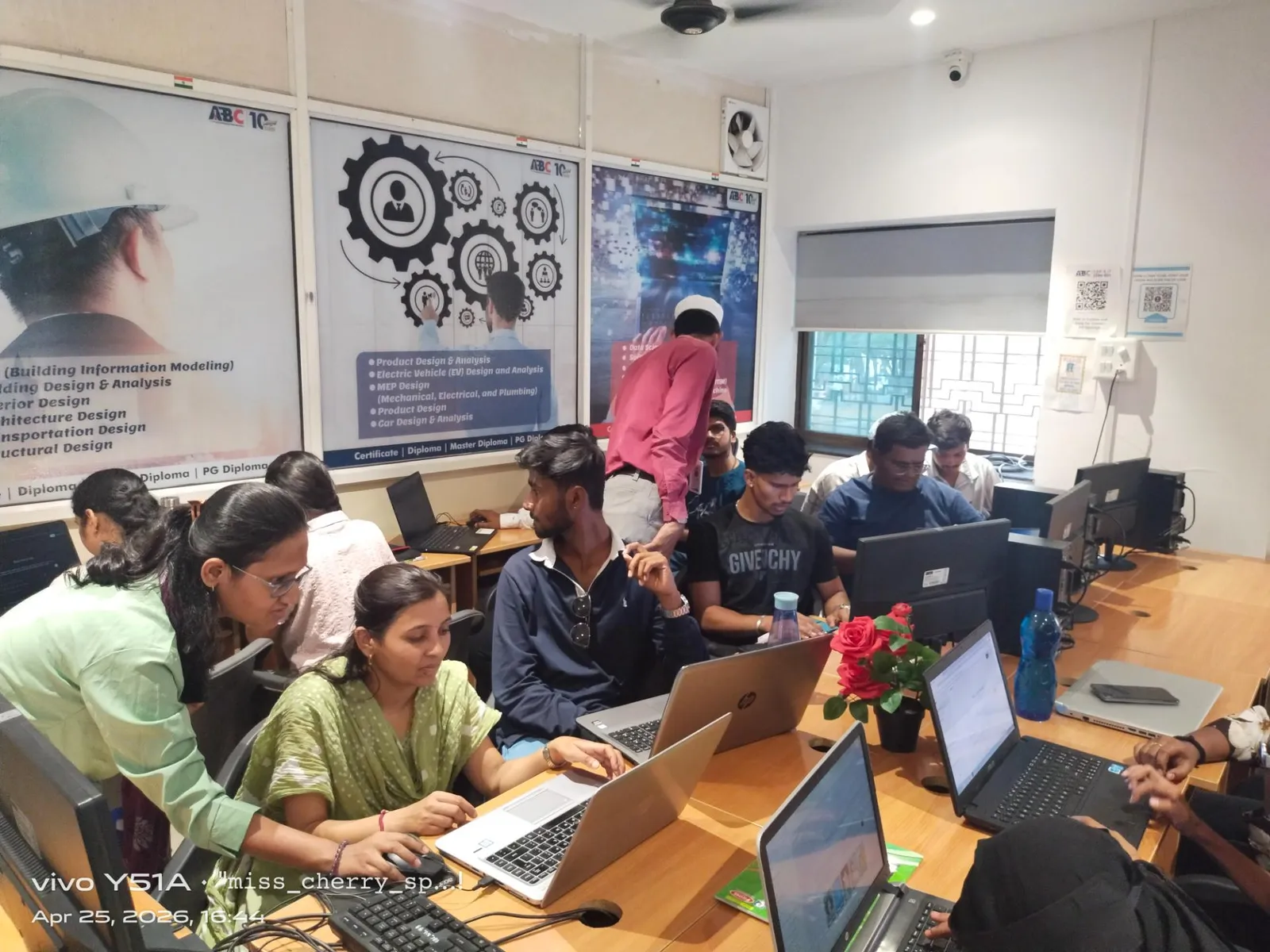
The best professionals follow a repeatable workflow. That’s what separates a trained fresher from someone who only watched tutorials.
- Study drawings first – Understand the architectural intent, column positions, slab system, staircase zones, and opening locations.
- Fix design assumptions – Soil bearing capacity, concrete grade, steel grade, loading standard, seismic zone, and occupancy type.
- Create the analysis model – With proper supports, offsets, section properties, and load paths.
- Run preliminary sizing – Don’t overdesign from the start. Size rationally, then optimize.
- Review critical members – Short columns, transfer beams, edge beams, torsion-prone members, and irregular zones.
- Design foundations and slabs – Check punching, settlement assumptions, and reinforcement practicality.
- Prepare drawings and BOQ-linked outputs – Detailing should match the design model, not contradict it.
Here’s the thing: this workflow is exactly what helps students become useful in offices from day one. At ABC Trainings, that practical bridge between software and project execution is what students usually remember most.
What are the advanced detailing techniques civil engineers should learn?
Analysis gets attention, but detailing gets projects built. And poor detailing is where many otherwise smart engineers struggle.
RCC detailing that site teams respect
You should know anchorage length, lap locations, curtailment logic, beam-column joint congestion control, slab reinforcement direction, and staircase detailing. If your drawing looks fine on screen but cannot be executed on site, it’s incomplete.
Steel detailing basics are not enough anymore
For industrial jobs, advanced learners should understand base plate concepts, gusset arrangement logic, bracing connectivity, connection notation, and fabrication-friendly member layout. Even if Tekla Structures is handled by a separate detailing team, a designer who understands steel connection practicality is far more valuable.
Revision control matters
What most people don't realize is that one of the most respected skills in design offices is revision clarity. Mark changed member sizes, updated rebar notes, and revised foundation schedules properly. This saves site delays and avoids costly confusion.
How can structural design students become job-ready in Maharashtra?
If your goal is a job, not just a certificate, then your portfolio matters. Build 3 to 5 project types, not 20 random files. A smart project set could include:
- G+4 RCC residential building
- Industrial steel shed with crane loading basics
- Commercial building with staircase and lift core
- Isolated footing and combined footing design file
- Structural drafting sheet set with bar bending schedule
This kind of portfolio helps when applying to firms in Pune, Sangli, Kolhapur, Satara, Nashik, and Chhatrapati Sambhajinagar. It also gives you stronger interview answers because you can explain design choices instead of saying, “I have learned the software.”
Freshers with practical structural software and detailing skills typically start around ₹2.4 lakh to ₹4.2 lakh per year in smaller consultancies and regional firms. In Pune, strong candidates with project-ready software knowledge can see ₹4.5 lakh to ₹6.5 lakh per year after gaining 1 to 3 years of solid experience. If you move toward industrial structures, coordination, or design-review roles, growth gets better.
Why do serious students travel for a structural design diploma?
Because outcomes matter more than distance. When a student travels from Karnataka to Sangli for training, it usually means one thing: local options taught theory, but not enough practice. The good news is, once you get the right mentorship, progress becomes much faster.
A proper postgraduate diploma should not stop at software interface training. It should cover design logic, code awareness, project files, drafting standards, and interview preparation. That’s the difference between “course completed” and “job ready.”
If you want that level of practical training, ABC Trainings has built strong trust across Maharashtra with 10,000+ students. For course details, call 8698270088 or WhatsApp 7774002496.
What should you look for before joining an advanced structural design course?
Before you enroll anywhere, ask these questions directly:
- Will I learn complete project workflow or only software commands?
- Are ETABS, STAAD.Pro, AutoCAD, and foundation design tools taught together?
- Will I create drawings, reports, and detailing outputs?
- Are faculty from real project backgrounds?
- Will I get interview support and portfolio guidance?
Trust me, these questions save both money and time. A serious course should help you think like a designer, communicate like a professional, and deliver like someone who has seen real projects.
Is structural design a good career in Maharashtra in 2026?
Yes, especially if you combine analysis software with practical detailing and drawing skills. Demand remains steady in Pune, Sangli, Kolhapur, Nashik, and Chhatrapati Sambhajinagar because residential, industrial, and commercial projects continue to need trained structural engineers. Companies don’t just want degree holders now—they want people who can model, check, detail, and explain their decisions.
Which software should I master after learning basic structural design?
Start by becoming strong in ETABS and STAAD.Pro, then add AutoCAD for drafting and SAFE for slab and foundation work. If you’re interested in industrial or steel projects, exposure to Tekla-based detailing concepts also helps. The right combination depends on whether you want to work on RCC buildings, steel structures, or mixed project environments.
Can a diploma or BE civil student get a job after a structural design course?
Yes, if the course includes real project workflow, not just theory. Diploma and BE civil students often get shortlisted faster when they can show building models, footing design files, and structural drawing sheets during interviews. In smaller consultancies, practical software skill can make a fresher employable much faster.
How do I choose the best structural design institute in Sangli?
Look at project-based training, faculty background, software depth, student outcomes, and whether previous learners came from other cities or states to join. That usually shows trust. If you want to understand the course structure at ABC Trainings Sangli, call 8698270088 or WhatsApp 7774002496 and ask specifically about advanced structural design modules.
Visit Our Centers
Sangli
Sangli Branch
2nd Floor, Vasant Market, Opp. City High School, Sangli, Maharashtra 416416
Start Your Career Journey Today
Join 10,000+ students who transformed their careers with ABC Trainings.
💬 WhatsApp: 7774002496📞 Call: 8698270088