CATIA is one of the most important CAD platforms used in automotive, aerospace, industrial equipment, and product engineering. If you're searching for what is CATIA in India 2026, here's the thing: the basic answer is easy. It's a 3D CAD/CAM/CAE software from Dassault Systèmes. But if you want to work at companies like Tata Technologies, Mahindra Engineering, Bajaj Auto, Bosch, Siemens, or L&T, you need to understand how CATIA is actually used in professional workflows, not just how to sketch and pad a part.
That is where most beginners get stuck. They know a few commands, but they don't know the workbench strategy, model tree discipline, assembly logic, or settings that make CATIA usable in real projects. This guide is for that next step.

What is CATIA and why do Indian companies still prefer it?

CATIA stands for Computer Aided Three-dimensional Interactive Application. It is a multi-platform engineering software suite developed by Dassault Systèmes and widely used for design, simulation, manufacturing support, and product lifecycle workflows. In India, CATIA remains highly relevant in automotive and heavy engineering because it handles complex part modeling, surfacing, large assemblies, and downstream manufacturing intent very well.
What most people don't realize is that CATIA is not just a modeling tool. It is a platform built around workbenches. That means the software changes based on the task you are doing: Part Design, Generative Shape Design, Assembly Design, Drafting, Sheet Metal, Wireframe, DMU, and more. This modular approach is exactly why large engineering teams prefer it.
At companies like Tata Technologies, KPIT Technologies, Thermax, Kirloskar, and automotive vendors around Pune, Chhatrapati Sambhajinagar, and Nashik, CATIA is valued because it supports structured product development. That matters when multiple engineers are working on interdependent components.
Which CATIA workbenches matter most for advanced users?
If you already know the basics, don't spend all your time in Part Design alone. Trust me, that's a beginner trap. Advanced users understand when to switch workbenches and why.
Part Design
This is where prismatic parts are built using sketches, pads, pockets, ribs, shafts, holes, patterns, and boolean operations. The advanced side of Part Design is not the command list. It's feature order, parent-child dependency control, and update stability.
Generative Shape Design
This is critical for complex surfaces, Class A-friendly workflows, guide curves, sweeps, multi-section surfaces, joins, trims, boundary checks, and continuity management. If you're targeting automotive exterior or plastic product design, this workbench matters a lot.
Assembly Design
You'll use constraints, sub-assemblies, fix/reference logic, clash review, and component organization. For real projects, assembly discipline matters more than flashy part geometry.
Drafting
Manufacturing drawings still drive production. Advanced users know standards, projection setup, dimension associativity, view generation, sectioning, BOM preparation, and annotation control.
How should you set up CATIA for professional modeling?

The good news is that a lot of CATIA efficiency comes from proper setup. Many students in Maharashtra ignore this and lose time every day.
Start with units, standards, and file naming. If your company works in millimeters, don't casually import geometry built in another unit system without checking scale. Set drafting standards based on project requirements. Use structured part names, body names, and geometric set names. A tree full of PartBody, Sketch.1, Sketch.2, Pad.1 is fine for practice. It is not fine for industry.
Use this discipline instead:
- Name sketches by function
- Group wireframe and surface references in Geometrical Sets
- Keep master references separate from final solid features
- Avoid circular dependencies between features
- Control updates after major operations, especially in surface-heavy models
Here's the thing: model quality is not judged only by final shape. It is judged by how safely another engineer can edit it six months later.
How do advanced CATIA users build stable parametric models?
Stable parametric modeling is one of the biggest differences between a student user and a production-ready engineer. In CATIA V5, your feature tree can become fragile if references are picked carelessly.
Use published geometry or stable reference planes where possible. Build master sketches only when they add control, not because someone on YouTube said every model needs one. Keep external references under control. If a surface trim depends on unstable edges from an earlier feature, your model may fail after small edits.
A better workflow is to create clean reference geometry first, then drive solids or surfaces from that logic. This is especially useful in automotive brackets, housings, fixtures, and sheet metal support parts. At Bajaj Auto or Mahindra Engineering supplier environments, engineers are expected to revise parts quickly without breaking downstream drawings or assemblies.
How is CATIA used in automotive and aerospace design in India?
CATIA has strong adoption in automotive and aerospace because it handles shape complexity and assembly relationships very well. In automotive, you may see it used for BIW components, trim parts, mounting brackets, plastic housings, dashboard sub-parts, and fixture design. In aerospace, it is useful for structural layouts, complex surfaces, routed geometry contexts, and highly controlled assemblies.
That doesn't mean every engineer uses every module. A fresher may start with part modeling and drafting. But if you want better roles, you should understand the full workflow: concept geometry, parametric solid creation, assembly fitment, drawing release, and manufacturing coordination.
In Pune, skilled CATIA users with strong modeling and drafting ability can start around ₹2.8 lakh to ₹4.2 lakh per year. With 2 to 4 years of relevant experience in automotive design support, salaries often move to ₹4.5 lakh to ₹7.5 lakh. Specialized surfacing, BIW, or product design roles can go higher depending on OEM or vendor exposure.
What advanced CATIA habits improve speed and accuracy?
Let's talk about power-user habits that actually save time.
- Use design intent, not random geometry: Build models around editable dimensions and stable references.
- Minimize sketch clutter: One overloaded sketch is harder to edit than a few clean sketches.
- Control constraints carefully: Over-constrained sketches and unnecessary assembly constraints slow everything down.
- Reuse geometry smartly: Patterns, symmetry, user-defined features, and templates can reduce repetitive work.
- Check update status often: Don't wait until the end of the model to discover broken parents.
- Use section views and measure tools during assembly checks: This helps catch fitment issues early.
What most people don't realize is that speed in CATIA does not come from clicking faster. It comes from building fewer mistakes into the model.
Is CATIA better than other CAD tools for mechanical engineers?
It depends on the job role. CATIA is especially strong where complex surfaces, large assemblies, and automotive-style product development matter. SolidWorks is often easier for smaller product design teams and faster beginner adoption. Creo is also strong in parametric mechanical design. But CATIA has a strong place in OEM-linked workflows and design ecosystems tied to Dassault tools.
If your target is automotive design, supplier engineering, aerospace support, or high-end product engineering, CATIA is a serious career tool. If you're in Maharashtra and aiming for jobs in Pune, Chhatrapati Sambhajinagar, Nashik, or even vendor clusters supporting Chennai and Bengaluru projects, CATIA can absolutely be worth learning deeply.
How can students in Maharashtra learn CATIA the right way?
Don't learn CATIA as a command list. Learn it as an engineering workflow. Start with sketch discipline, then part design, then assemblies, drafting, and surface basics. After that, practice revision control, drawing interpretation, and project-style modeling. That sequence gives much better job readiness.
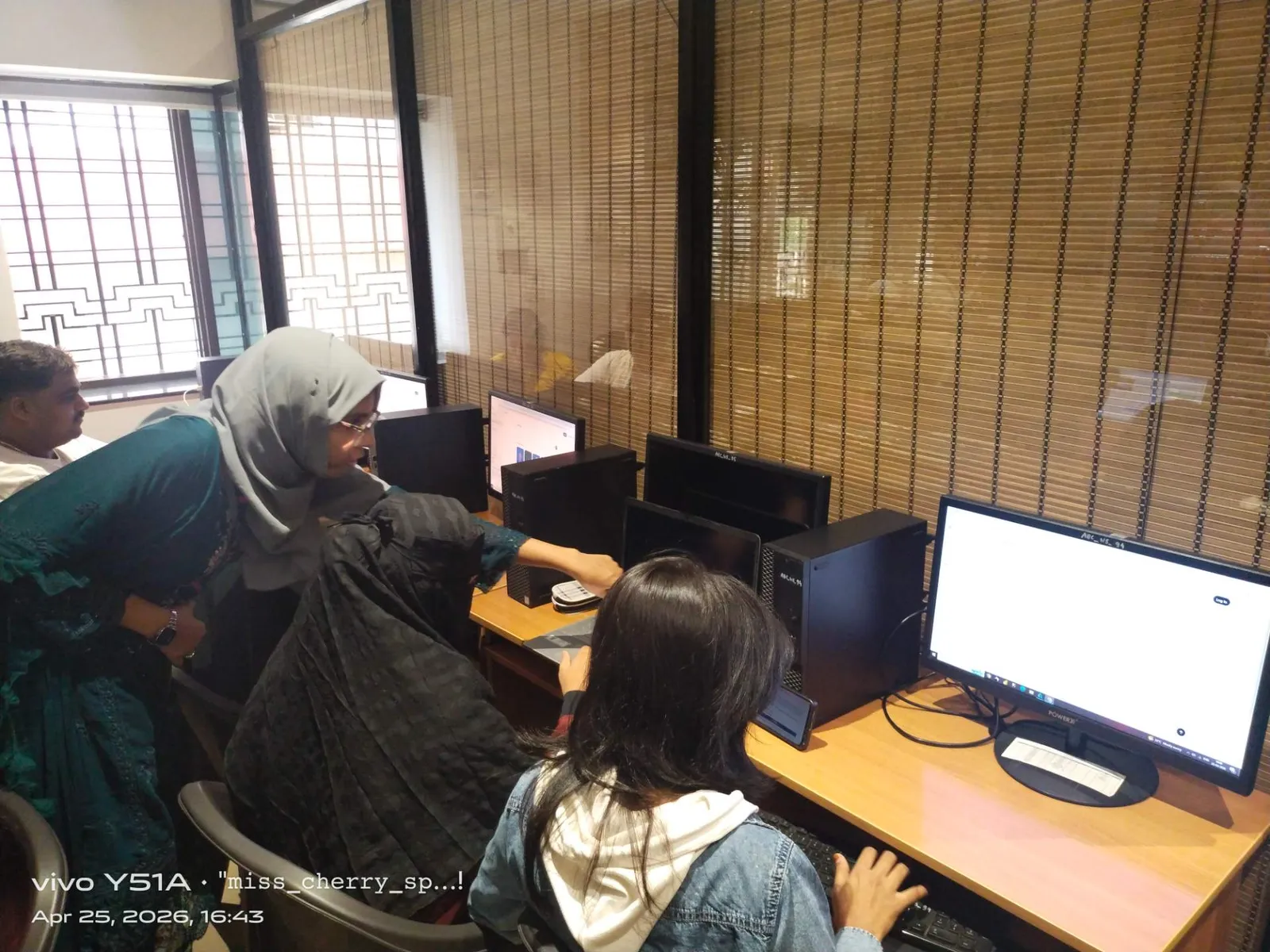
At ABC Trainings, we usually tell students to build portfolio parts that reflect real industrial logic: brackets, housings, sheet metal supports, mating assemblies, and drawing sheets with toleranced dimensions. That approach works better than random decorative models. If you want to ask about CATIA training, you can call 8698270088 or WhatsApp 7774002496.
The good news is that CATIA is still a serious skill in India. If you combine it with GD&T, manufacturing basics, and drawing interpretation, you'll stand out far more than someone who only knows how to create a 3D shape.
Should you learn CATIA in 2026 for jobs in India?
Yes, if your goal is mechanical design, automotive product development, aerospace support, or industrial equipment design. Here's the thing: companies don't hire for software alone. They hire for useful output. CATIA becomes valuable when you can create editable models, production-ready drawings, and assemblies that make engineering sense.
So if you already know the basics, go deeper now. Learn workbench strategy. Learn model tree discipline. Learn stable references. Learn drawing standards. Trust me, that is what separates a course completer from a hireable engineer.
Is CATIA good for freshers in Pune and Maharashtra?
Yes, especially for freshers targeting automotive vendors, mechanical design support firms, and manufacturing companies. Pune has strong demand because of the automotive and industrial ecosystem. If you pair CATIA with GD&T, drafting, and basic manufacturing knowledge, your chances improve a lot.
Which CATIA version should students learn in India in 2026?
Many training centers and companies still work with CATIA V5 because it remains common in industry workflows. Some enterprises are moving toward 3DEXPERIENCE-based environments, but V5 is still highly relevant for learning part design, assemblies, surfacing, and drafting. Start with V5 fundamentals and then understand platform-based workflows later.
What salary can a CATIA designer get in Maharashtra?
For freshers, salaries typically start around ₹2.8 lakh to ₹4.2 lakh per year depending on city, project type, and interview performance. With 2 to 4 years of strong experience, many designers move into the ₹4.5 lakh to ₹7.5 lakh range. Specialized roles in surfacing or OEM-linked projects can pay more.
Where can I learn CATIA in Chhatrapati Sambhajinagar or Pune?
Look for training that includes industry-style projects, drafting standards, assembly practice, and revision-based exercises, not just basic commands. ABC Trainings offers practical CAD learning aligned to job needs in Maharashtra. You can call 8698270088 or WhatsApp 7774002496 to check current CATIA batches and course details.
Visit Our Centers
Chhatrapati Sambhajinagar
Corporate Office (HQ)
2nd Floor, Kandi Towers, Jalna Road, Amarpreet Chowk, Chhatrapati Sambhajinagar, Maharashtra 431001
Osmanpura Branch
Plot No 14, Shanya Sect, Near Sant Eknath Rang Mandir, Osmanpura, Chhatrapati Sambhajinagar, Maharashtra 431005
CIDCO Branch
Plot No 4, N-3, Cidco, Opp. High Court, Chhatrapati Sambhajinagar, Maharashtra 431003
Pune
Wagholi Branch
1st Floor, ABC Trainings, Laxmi Datta Arcade, Pune - Ahilyanagar Hwy, Wagholi, Pune, Maharashtra 412207
Hadapsar Branch
Bloom Hotel, ABC Trainings 1st Floor, S.no 156/3 Shree Tower Pune - Solapur Rd, Hadapsar, Pune, Maharashtra 411028
Sangli
Sangli Branch
2nd Floor, Vasant Market, Opp. City High School, Sangli, Maharashtra 416416
Start Your Career Journey Today
Join 10,000+ students who transformed their careers with ABC Trainings.
💬 WhatsApp: 7774002496📞 Call: 8698270088