What Is Industry 4.0? Simple Explanation with Indian Factory Examples (Updated July 2026) (Updated July 2026)
If someone asks you "what is Industry 4.0?" and you have been avoiding the question because the explanations you found were full of jargon, this post is for you. Industry 4.0 is simply the fourth major shift in how factories are run — and it is happening right now in Waluj, Shendra, and Pimpri-Chinchwad. You can see the results at Bajaj Auto, Skoda VW, and Bosch. By the time you finish reading this, you will be able to explain it to anyone.
- Industry 4.0 is the fourth industrial revolution: factories where machines talk to each other, to the cloud, and to engineers — in real time
- The four pillars are: IIoT (connected machines), AI and Big Data (smart analytics), Digital Twins (virtual factory copies), and Cyber-Physical Systems (automated, self-adjusting production)
- In Maharashtra, Bajaj Auto, Skoda VW, Tata Motors, and Bosch are already running Industry 4.0 systems on their production lines
- Industry 4.0 is not replacing factory workers — it is changing what factory workers do, creating more senior and better-paid roles
- Engineers with Industry 4.0 skills earn ₹5–25 LPA in Maharashtra; CMYKPY stipend of ₹6,000–10,000 helps fund training
What Does Industry 4.0 Mean in Simple Words?
Industry 4.0 means factories where machines, computers, and people are all connected — and where data flows automatically between the shop floor, the office, and the cloud. The "4.0" refers to the fourth industrial revolution: the first used steam power, the second used electricity and mass production, the third used computers and automation. Industry 4.0 adds intelligence and connectivity on top of that automation.
Here is the simplest way to understand it: in a traditional factory, a machine breaks down, a worker notices it, reports it, and maintenance comes to fix it — losing 2–6 hours of production. In an Industry 4.0 factory, a vibration sensor on that machine detects the developing fault 3 weeks before it fails, the system alerts the maintenance team automatically, and the repair is scheduled for a planned maintenance window with zero production loss. That is Industry 4.0 in practice.

The Four Pillars of Industry 4.0: Explained Without Jargon
You will hear many technical names in Industry 4.0 — IIoT, digital twins, cyber-physical systems, AI. Here is what each one actually means in plain terms:
- IIoT (Industrial Internet of Things): Your factory machines get connected to the internet — sensors send their data (temperature, vibration, production speed) to a cloud platform where you can monitor them from your phone or a dashboard screen. Think of it as making your machines "smart" the same way your smartphone is smart.
- Digital Twin: A virtual copy of a machine or an entire production line, running on a computer and updated with live data from the real machine. Engineers use it to test changes, simulate problems, and predict failures — without touching the actual equipment.
- AI and Big Data: ML algorithms analyse the huge amount of data your machines produce and find patterns humans cannot see. For example: detecting from current and vibration data that a bearing will fail in 22 days.
- Cyber-Physical Systems: Machines that can adjust themselves based on data. For example, a robot arm that changes its weld settings automatically when a sensor detects that the metal plate is slightly thicker than normal.
Real Industry 4.0 Examples from Maharashtra Factories
Industry 4.0 is not happening in Germany or the USA only. Here are real examples from Maharashtra factories you can visit or apply to:
- Bajaj Auto, Waluj MIDC (Plot G-137): Bajaj has deployed IIoT sensors on their powertrain assembly lines. Real-time production data flows to dashboards that production managers review every shift. Predictive maintenance alerts have reduced unplanned stoppages on their conveyor lines.
- Skoda Volkswagen India, Shendra MIDC (Plot A-1/1): One of the most technologically advanced automotive plants in India. Their weld shop uses computer vision AI to inspect every weld bead in real time. Digital twin simulations are used for new model launches to validate production sequences before physical trials.
- Bosch India, Pimpri (Pune): Bosch's Connected Industry initiative has turned their Pune plant into a showcase for Industry 4.0. Energy monitoring, predictive maintenance, and OEE dashboards are all running live.
- Endurance Technologies, Waluj MIDC (Plot E-92): IIoT-connected die casting machines with edge computing gateways that monitor cycle time, temperature, and pressure in real time for quality control.
These companies are not planning to do this — they are already doing it. And they need engineers who understand how these systems work.

How Is Industry 4.0 Different from Industry 3.0 and Earlier?
Here is a simple comparison of the four industrial revolutions:
- Industry 1.0 (1760s–1840s): Steam power replaced manual labour — the first mechanical production machines
- Industry 2.0 (1870s–1914): Electricity and mass production — the assembly line, interchangeable parts, standardised manufacturing (Ford Model T era)
- Industry 3.0 (1960s–2000s): Electronics and computers — PLCs, CNC machines, robotics. This is the automation most Indian factories were built on. Machines still needed humans to program, operate, and monitor them manually.
- Industry 4.0 (2010s–present): The internet and AI added to Industry 3.0. Now the machines not only run automatically — they also collect and share data, analyse it, and in some cases adjust themselves. The human's job shifts from operating machines to managing and improving the data-driven system.
Most Maharashtra factories are currently somewhere between Industry 3.0 and 4.0 — they have CNC machines and PLCs but are adding IIoT, sensors, and cloud connectivity progressively. This is where the opportunity is for engineers who get trained now.
| Industrial Revolution | What Changed | India Example |
|---|---|---|
| Industry 1.0 | Steam power, mechanical production | Textile mills (Ahmedabad, Mumbai, early 1900s) |
| Industry 2.0 | Electricity, mass production, assembly lines | Tata Steel Jamshedpur, early Indian auto plants |
| Industry 3.0 | PLCs, CNC machines, robots, computers | Bajaj Auto Waluj (1990s–2010s), Maruti Manesar |
| Industry 4.0 | IIoT, AI, digital twins, connected factories | Skoda VW Shendra, Bosch Pune, Bajaj Waluj today |
Is Industry 4.0 Replacing Factory Workers in India?
This is the question every engineer asks, and the honest answer is: Industry 4.0 is changing factory jobs more than eliminating them — at least in India, and at least for the foreseeable future.
What is changing: Repetitive manual tasks (checking gauges, manually entering production data into logbooks, doing routine inspections) are being automated by sensors and dashboards. These tasks are being replaced by machines.
What is growing: Engineering roles that design, deploy, maintain, and improve IIoT systems. Data analyst roles that turn machine data into maintenance schedules and production improvements. AI/ML roles that build predictive models. These are all new roles that did not exist in most Indian factories five years ago — and they pay significantly more than the repetitive tasks they are replacing.
India's manufacturing sector still needs hundreds of thousands of automation engineers. The AURIC corridor alone has committed to creating over 62,000 jobs in the next few years — many of them in the Industry 4.0 space. The engineers who get trained now will be the ones filling those roles.
How to Build an Industry 4.0 Career in Maharashtra in 2026
Here is the most practical path to an Industry 4.0 career in Maharashtra in 2026:
- Step 1 — Core automation skills: If you do not already know PLC programming, learn Siemens TIA Portal first. This is the foundation for everything else in Industry 4.0.
- Step 2 — Add IIoT: Learn MQTT, OPC UA, and how to connect a PLC to a cloud platform (AWS IoT Core or Azure IoT Hub). Build a working project: sensor data from a PLC flowing to a cloud dashboard.
- Step 3 — Add data skills: Learn Python basics — enough to query a time-series database and plot sensor data. This makes you useful for the analytics layer.
- Step 4 — Portfolio project: Build and document a complete small-scale IIoT system (PLC to edge gateway to cloud to dashboard). This becomes your interview demonstration piece.
- Step 5 — Target the right companies: AURIC companies (Bajaj, Skoda VW, Endurance), Pune MIDC companies (Bosch, L&T, Siemens India), and systems integrators who serve these factories.
Where to Learn Industry 4.0 in Pune and Aurangabad
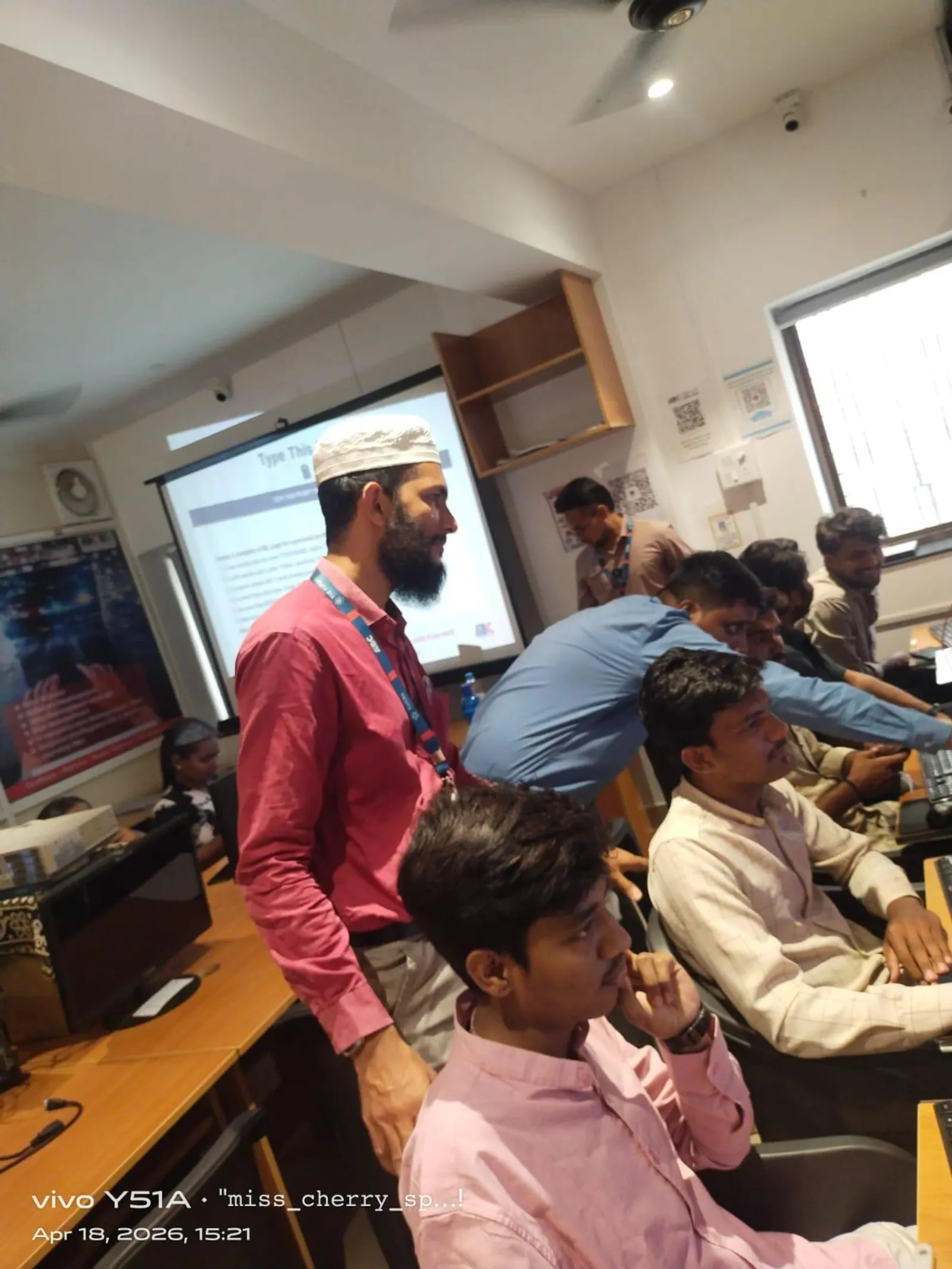
ABC Trainings runs the Industry 4.0 with AI & Industrial Automation workshop at four centres in Maharashtra — Wagholi (Pune), Hadapsar (Pune), Cidco (Chhatrapati Sambhajinagar), and Osmanpura (Chhatrapati Sambhajinagar). Weekend batches are also available at Sangli.
The programme covers all five steps above in one structured course: PLC programming, IIoT (MQTT + OPC UA + edge), Python for industrial data, and a hands-on Industry 4.0 project. Duration is 3–5 months depending on your starting knowledge. Fees: ₹25,000–₹55,000; CMYKPY/PMKVY stipend available.
To book a free demo session or ask about the next batch date, call 7039169629 or WhatsApp 7774002496.
The Chhatrapati Shivaji Maharaj Kaushalya Vikas Yojana (CMYKPY) provides a stipend of ₹6,000–₹10,000 to eligible Maharashtra students enrolled in approved Industry 4.0 skill development training. This is a Maharashtra government scheme designed to make engineering upskilling more accessible. ABC Trainings is an MSME-registered, government-affiliated institute. Under PMKVY 4.0, 2.1 crore students nationwide have received training subsidies since 2023. Ask us about eligibility when you enquire.
Get the Industry 4.0 with AI & Industrial Automation Brochure + Fees + Batch Dates on WhatsApp
Free 1:1 counselling. Placement track record. CMYKPY/PMKVY eligibility check.
💬 Get Brochure on WhatsApp📞 Call 7039169629About the author: Rutuja Maske, Electrical & Automation Trainer, ABC Trainings.
Visit Our Centers
- Wagholi (Pune): 1st Floor, Laxmi Datta Arcade, Pune-Ahilyanagar Highway. Call 7039169629
- Hadapsar (Pune HQ): 1st Floor, Shree Tower, opp. Vaibhav Theater, Magarpatta. Call 7039169629
- Cidco (Chh. Sambhajinagar): Kalpana Plaza, opp. Eiffel Tower, N-1 Cidco. Call 7039169629
- Osmanpura (Chh. Sambhajinagar): S.S.C Board to Peer Bazar Road, near Jama Masjid. Call 7039169629
- Sangli: Shubham Emphoria, 1st Floor, Above US Polo Assn., Sangli-Miraj Rd, Vishrambag. Weekend batches available. Call 7039169629
FAQs
What is Industry 4.0 in simple words?
Industry 4.0 is the fourth industrial revolution: factories where machines are connected to each other, to the internet, and to AI systems — so they can share data automatically, predict their own failures, and partially self-optimise. It adds intelligence and connectivity to the automation (PLCs, robots) that Industry 3.0 brought. In practice, it means a sensor on a machine sends data to the cloud, AI analyses it, and maintenance gets an alert before anything breaks.
What are real examples of Industry 4.0 in Indian factories?
Real India examples: Skoda VW in Shendra MIDC uses AI-powered weld inspection and digital twins for new model launches. Bajaj Auto in Waluj runs IIoT predictive maintenance on conveyor and powertrain lines. Bosch in Pimpri (Pune) has live OEE dashboards connected to all their production equipment. Endurance Technologies in Waluj uses edge computing on die casting machines for real-time quality monitoring. These are not pilot projects — they are running in production.
Is Industry 4.0 replacing workers in India?
Industry 4.0 is changing what workers do more than eliminating jobs — at least in India and at least for the next decade. Repetitive manual tasks (checking gauges, logging data, doing routine inspections on a fixed schedule) are being automated. But new engineering roles are being created at a faster rate: IIoT integration engineers, data analysts, automation upgrade engineers, AI maintenance engineers. India still needs hundreds of thousands of additional automation engineers — the AURIC corridor alone targets 62,405 new manufacturing jobs.
How do I start learning Industry 4.0 as a fresh engineering graduate in Maharashtra?
Start with PLC programming (Siemens TIA Portal is the most in-demand in Maharashtra), then add IIoT skills (MQTT, OPC UA), then basic Python for data analysis. The key is a hands-on project — build a working IIoT system connecting a PLC to a cloud dashboard. This becomes your portfolio piece for job interviews. ABC Trainings covers this full path in one structured programme — call 7039169629 to ask about the next batch date.