Python in India 2026 is no longer just a beginner programming topic. It's a serious career skill used in software development, automation, data analysis, AI, testing, finance and backend systems across Pune, Mumbai, Hyderabad and Bengaluru. If you already know basic syntax and you're asking what Python really does in real projects, where companies use it, and how professionals write cleaner and faster code, this guide is for you. Here's the thing: most students stop at print statements and small programs. Industry doesn't. Industry cares about problem-solving, libraries, workflows and deployment.

The good news is, Python gives you room to grow fast. You can start simple and then move into APIs, automation scripts, dashboards, test frameworks, data pipelines and AI applications. What most people don't realize is that the same language can help a mechanical engineer automate Excel reports, help a civil engineer process site data, or help an IT graduate build backend tools for Infosys, TCS or KPIT Technologies. Trust me, once you understand Python beyond the beginner level, your learning speed in tech increases sharply.
What is Python actually used for in India?
Python is a high-level programming language known for readable syntax, huge library support and fast development speed. But if you're already past the basics, you should think of Python as a productivity language. It's used when companies want results quickly without writing too much boilerplate code.
In India, Python is heavily used in:
- Backend development using Django, Flask and FastAPI
- Data analysis using Pandas, NumPy and Jupyter
- AI and machine learning using scikit-learn, TensorFlow and PyTorch
- Test automation with Pytest and Selenium
- Business process automation for Excel, CSV, PDFs, emails and reports
- Scripting in engineering environments where teams need quick tools instead of full software products
Companies like TCS, Infosys, Bosch, Siemens and KPIT Technologies value Python because it reduces development time. In product teams, it's common to use Python 3.11 or 3.12 for APIs, automation utilities and internal tools.
How do advanced Python users work differently?
Beginners focus on syntax. Advanced users focus on workflow. That's a big difference.
A power user doesn't just write code that runs. They write code that is easier to test, easier to debug and easier to scale. That means:
- Using virtual environments so project dependencies don't clash
- Structuring code into modules and packages instead of one giant file
- Writing functions with clear inputs and outputs
- Using exception handling properly instead of hiding errors
- Following PEP 8 formatting and using tools like Black and Flake8
- Reading and writing data efficiently with built-in libraries and third-party packages
If you're serious about Python, start using VS Code with linting, formatting and an isolated venv setup. That's how real teams work. At ABC Trainings, we push students toward project structure early because that's what employers expect in Pune and Chhatrapati Sambhajinagar.
Which Python libraries should you master after basics?
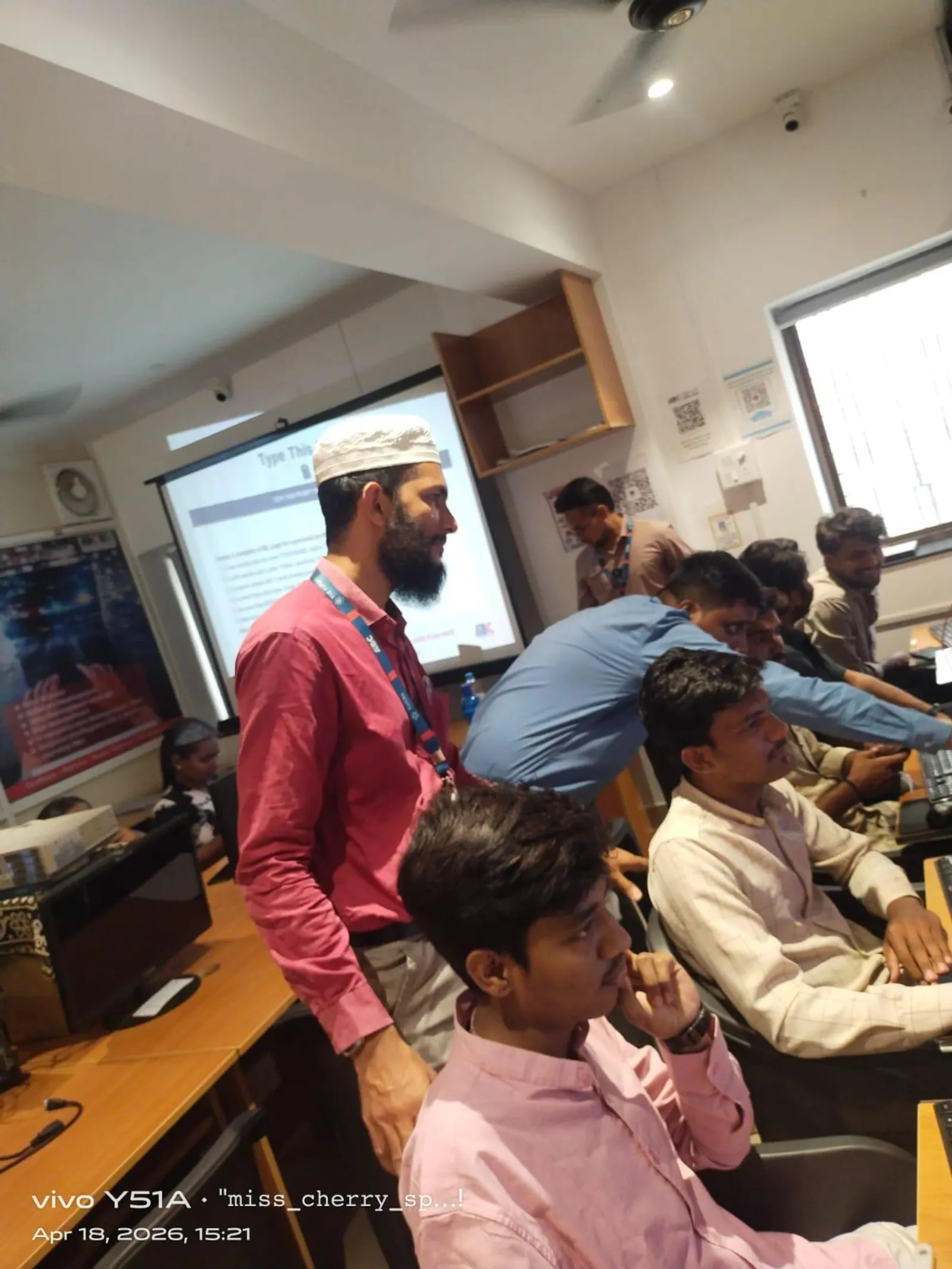
This is where your direction matters. Don't try to learn everything at once. Pick a track and go deep.
For automation
Learn os, pathlib, shutil, openpyxl, pandas and requests. These are enough to automate file handling, Excel reporting, API calls and repetitive office tasks.
For data work
Master NumPy, Pandas, Matplotlib and Jupyter Notebook. Don't just learn syntax. Learn grouping, filtering, joins, missing-value handling and CSV-to-dashboard workflows.
For backend development
Go with Flask for fundamentals and FastAPI if you want modern API development. Add JSON handling, routing, validation and database basics with SQLite or PostgreSQL.
For testing
Use Pytest. Learn fixtures, assertions, parametrization and test reports. This is useful if you're targeting QA automation roles in Pune IT companies.
What industry-standard Python setup should you use in 2026?
Here's a practical setup I recommend for serious learners in India:
- Python version: Python 3.12 for new learning, unless project compatibility requires 3.11
- Editor: VS Code with Python extension, Pylance and Jupyter support
- Environment: venv or conda for dependency isolation
- Formatting: Black
- Linting: Flake8 or Ruff
- Version control: Git and GitHub
- API testing: Postman when working with backend projects
What most people don't realize is that setup discipline itself becomes a hiring advantage. A candidate who knows environments, requirements.txt, Git commits and clean project folders looks far more job-ready than someone who only solved practice questions.
How is Python used in real company projects?
Let's keep this grounded. In Indian companies, Python often appears in support tools, automation and analytics before it appears in big flagship products.
For example:
- A team at Infosys may use Python scripts for log processing and internal automation
- TCS teams may use Python for testing frameworks, data cleaning or backend services
- KPIT Technologies may use Python in data processing, simulation support or toolchain automation
- Bosch and Siemens teams may use Python for scripting, analytics and engineering support tasks
Even outside IT, companies like Bajaj Auto, Mahindra Engineering, Thermax and Kirloskar can benefit from Python for report automation, inventory analysis and process data handling. That's why Python is such a valuable cross-domain skill.
What salary can Python skills get you in Maharashtra?
Salary depends on your role, not just the language. Still, Python can directly improve your earning potential.
- Python trainee or intern: ₹10,000 to ₹20,000 per month
- Entry-level Python developer: ₹3.2 lakh to ₹5.5 lakh per year
- Automation tester with Python: ₹4 lakh to ₹6.5 lakh per year
- Data analyst using Python: ₹4.5 lakh to ₹7 lakh per year
- Backend developer with FastAPI/Django: ₹5 lakh to ₹8.5 lakh per year
In Pune, strong project-based candidates often get better responses than students who only collect certificates. Trust me, one solid automation project plus one API project can change your interview outcomes more than ten random tutorials.
How should you learn Python deeply instead of staying stuck at basics?
Use this progression:
- Strengthen fundamentals — data types, loops, functions, file handling, exceptions
- Build mini tools — CSV cleaner, invoice generator, Excel report formatter
- Learn one specialization — backend, automation, data or testing
- Use GitHub — publish clean projects with README files
- Practice debugging — don't copy-paste solutions blindly
- Work on real datasets and messy inputs — because real-world data is never clean
The good news is, Python rewards consistency. If you practice 60 to 90 minutes daily for 4 to 6 months, you'll see visible growth. If you want guided learning with projects, mentorship and placement-focused preparation in Maharashtra, you can contact ABC Trainings at 7039169629 or WhatsApp 7774002496.
Why does Python stay relevant even when tools keep changing?
Because Python sits in the middle of too many important workflows. AI tools change. Frameworks change. Dashboards change. But Python remains the glue language connecting data, APIs, automation, scripting and machine learning. That's why it keeps showing up in job descriptions year after year.
If you're from Pune, Sangli or Chhatrapati Sambhajinagar and you've already learned basic Python, your next step should be depth, not repetition. Learn one real use case. Build with it. Document it. Then move to the next layer.
Here's the thing: Python is not valuable because it's easy. It's valuable because it scales with you. Beginner to advanced, student to working professional, IT to engineering support, it stays useful at every stage.
Is Python enough to get a job in Pune in 2026?
Python alone is usually not enough. You also need a role-based stack such as SQL for data roles, FastAPI or Django for backend, or Pytest and Selenium for automation testing. In Pune, employers want practical projects, GitHub proof and problem-solving ability. If you combine Python with one clear specialization, your chances improve a lot.
Which is better after Python basics: data analysis or web development?
It depends on your interest and background. If you enjoy working with reports, Excel, trends and business numbers, data analysis is a smart path. If you like building applications, APIs and logic-heavy systems, web development is better. In Maharashtra job markets, both are useful, but your portfolio must match the role.
Can non-IT students in Maharashtra learn Python seriously?
Yes, and many should. Mechanical, civil, electrical and electronics students can use Python for automation, data processing and domain-specific tools. What most people don't realize is that non-IT students often stand out when they apply Python to their own branch problems. That creates a stronger interview story than generic coding exercises.
Where can I learn Python with practical projects near me?
If you want classroom support, project guidance and job-focused learning in Maharashtra, ABC Trainings is one practical option to explore. They work with students from Pune, Sangli and Chhatrapati Sambhajinagar and focus on skills employers actually ask for. You can call 7039169629 or WhatsApp 7774002496 to check current Python batches, project modules and counseling support.
Visit Our Centers
Chhatrapati Sambhajinagar
Corporate Office (HQ)
2nd Floor, Kandi Towers, Jalna Road, Amarpreet Chowk, Chhatrapati Sambhajinagar, Maharashtra 431001
Osmanpura Branch
Plot No 14, Shanya Sect, Near Sant Eknath Rang Mandir, Osmanpura, Chhatrapati Sambhajinagar, Maharashtra 431005
CIDCO Branch
Plot No 4, N-3, Cidco, Opp. High Court, Chhatrapati Sambhajinagar, Maharashtra 431003
Pune
Wagholi Branch
1st Floor, ABC Trainings, Laxmi Datta Arcade, Pune - Ahilyanagar Hwy, Wagholi, Pune, Maharashtra 412207
Hadapsar Branch
Bloom Hotel, ABC Trainings 1st Floor, S.no 156/3 Shree Tower Pune - Solapur Rd, Hadapsar, Pune, Maharashtra 411028
Sangli
Sangli Branch
2nd Floor, Vasant Market, Opp. City High School, Sangli, Maharashtra 416416
Start Your Career Journey Today
Join 10,000+ students who transformed their careers with ABC Trainings.
💬 WhatsApp: 7774002496📞 Call: 7039169629