Why Civil Engineers Struggle to Get BIM Jobs: The College vs Industry Gap Explained by a 12-Year Trainer (2026) (Updated August 2026)
I have been running BIM training since 2014 — 12 years of watching civil engineering graduates come in unable to get hired for BIM jobs despite the fact that their college curriculum listed AutoCAD and even BIM in the syllabus. The gap is not about intelligence or effort. It is structural: colleges in Maharashtra still teach 2D AutoCAD drafting on 10-year-old drawing exercises, while every BIM employer in 2026 wants Revit Architecture, AutoCAD Civil 3D and Navisworks clash detection. The Gulf market — UAE, Qatar, Saudi Arabia — actively recruits Indian BIM engineers for infrastructure projects, and the salary jump from India to Gulf is 3x to 5x. But Gulf employers also run practical skill tests, not degree checks. A civil engineering graduate with a Revit portfolio and Navisworks experience clears those tests; a graduate with only college theory does not. This guide explains the gap, what it costs graduates who fall into it, and the exact skill path that actually closes it.
- Colleges teach 2D AutoCAD and theory; BIM employers in 2026 want Revit, Civil 3D and Navisworks — the gap is structural, not the student's fault
- Gulf market (UAE, Qatar, Saudi Arabia) actively recruits Indian BIM engineers at 3x–5x India salaries
- ABC Trainings has been delivering practical BIM training (Revit Architecture, Structure, MEP, Civil 3D, Navisworks) since 2014
- Maharashtra's BIM mandate for government projects above ₹100 crore is creating domestic demand alongside Gulf hiring
- The fix is 4–5 months of structured practical training with a portfolio — not another academic course
The College vs Industry BIM Gap: Why Civil Engineering Graduates Cannot Get Hired
The college vs industry BIM gap has two specific causes. First, most civil engineering colleges in Maharashtra still use AutoCAD 2D as their primary CAD tool — the same drawing commands taught in 2005. The AICTE syllabus has been updated on paper, but the practical lab software, the trainer skills and the assignment projects have not kept up. A student who passes their college CAD paper has learned to draw lines and circles in AutoCAD — not to build a coordinated BIM model in Revit. Second, the BIM syllabus that has been added to recent curriculum revisions is largely theoretical: definitions of LOD (Level of Development), IFC file format discussions, and BIM case studies read from textbooks. No college lab in Maharashtra has 30 Revit-licensed PCs with actual building project templates. The result: a graduate who can define "BIM" but cannot open Revit, create a wall family, or run a basic clash detection in Navisworks. That graduate applies for BIM jobs and fails the practical test in the first round.

| Skill Area | What College Teaches | What Employers Require |
|---|---|---|
| CAD Software | AutoCAD 2D (basic line/circle commands) | Revit Architecture, Revit Structure, AutoCAD Civil 3D |
| BIM Knowledge | Theoretical definition, LOD levels, case study reading | Live Revit model built to IS/ISO drawing standard |
| Coordination | Manual drawing checking on paper | Navisworks clash detection, BIM 360/ACC issue tracking |
| Infrastructure | Manual BoQ and highway cross-section by hand | AutoCAD Civil 3D corridor, grading, IFC export |
| Portfolio | None (college assignments not industry-standard) | 2–3 coordinated BIM models with clash reports |
What Colleges Teach vs What BIM Employers Actually Want in 2026
Here is what a BIM job description in Pune or on a Gulf project actually asks for in 2026. Required: Revit Architecture (create and modify wall, floor, roof and ceiling families; build multi-storey building models; output construction documents to IS/ISO standards). Revit Structure (structural grids, column and beam families, slab systems, foundation modelling, ETABS import/link). Navisworks (multi-discipline model federation, Clash Detective, issue tracking via BIM 360 or ACC). AutoCAD Civil 3D (road corridor modelling, grading surfaces, drainage network design). IFC export and import for model exchange. Autodesk Construction Cloud for project coordination and document management. Not one of these is part of the standard Maharashtra university civil engineering practical syllabus as it is actually taught in labs today. Colleges that claim BIM in their syllabus are teaching the concept — not the practice. The concept does not clear a Gulf employer's Revit skills test.
BIM Demand in India and the Gulf: Real Numbers for Civil Engineers
India's domestic BIM market is growing for two specific reasons. Maharashtra's state government BIM mandate requires IFC-format model submissions for all government-funded projects above ₹100 crore — this affects PWD, NHAI, MSRDC and municipal corporation projects across the state. The Pune Metro Line 3 (civil works ongoing since May 2026), PCMC infrastructure projects and Nagpur Metro Phase 2 all require BIM coordination. Simultaneously, the Gulf market has not slowed. UAE, Qatar and Saudi Arabia are building at a scale that requires importing Indian talent — the Gulf Vision 2030 and 2040 infrastructure pipelines have not been completed. Gulf BIM roles for Indian civil engineers pay AED 4,000–12,000/month (₹90,000–2,70,000/month) depending on experience. An Indian fresher with a strong Revit and Navisworks portfolio, IELTS 6+, and a willingness to relocate can target Gulf BIM roles within 12–18 months of completing structured practical training. The ones who fail to clear Gulf skills tests are, almost without exception, the ones who relied on college theory without practical Revit hours.
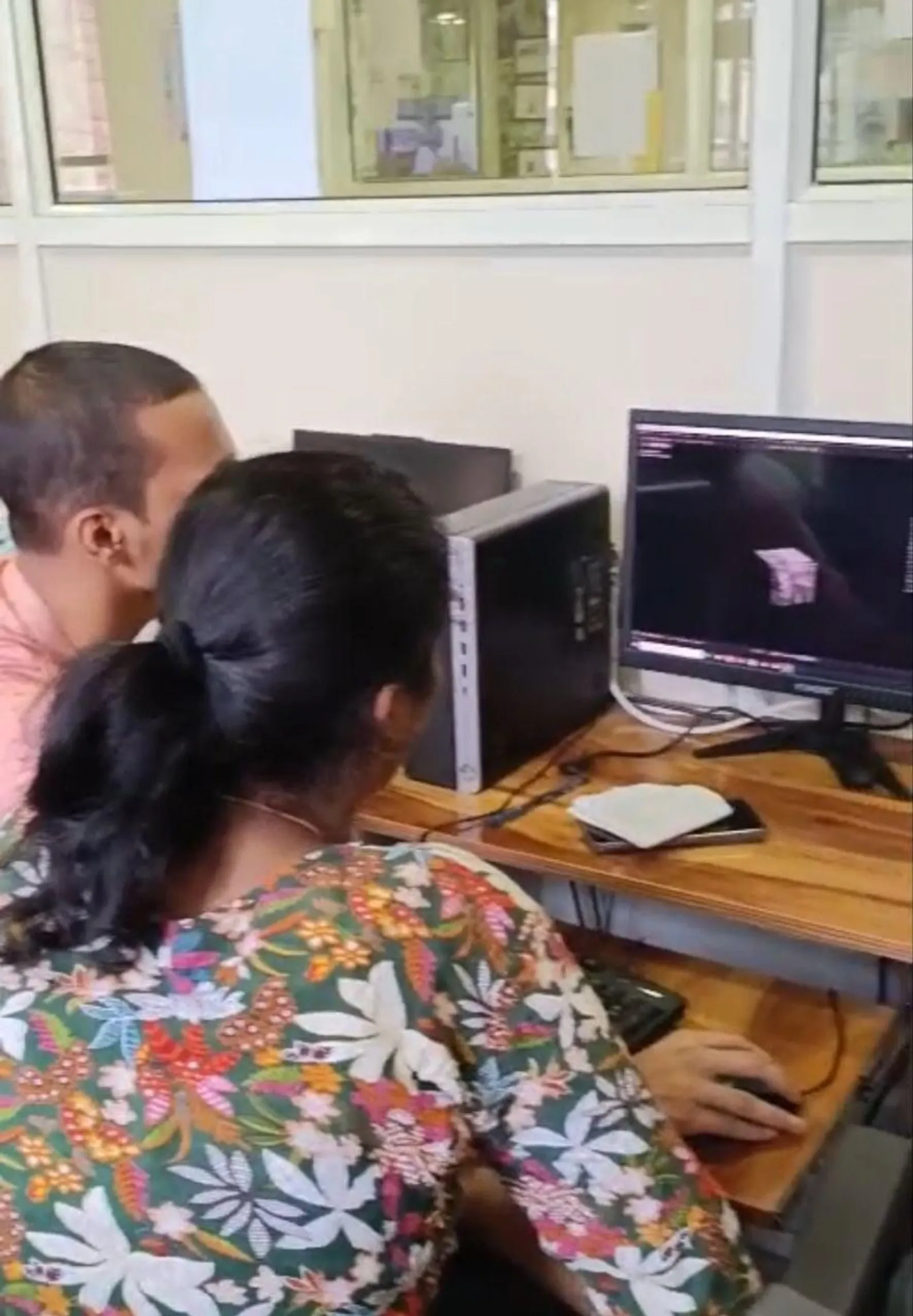
How ABC Trainings Has Been Bridging the BIM Skills Gap Since 2014
ABC Trainings started BIM training in 2014 — when the term "BIM" was still unfamiliar to most Maharashtra contractors. In those 12 years, we have trained engineers from L&T Construction, AECOM India, PWD Maharashtra and AECOM Gulf who joined our Pune batches while already employed and needed to upgrade from AutoCAD to Revit coordination. The curriculum has been updated continuously: Maharashtra BIM mandate requirements are now part of the core Revit module, Autodesk Construction Cloud workflows are covered, and AI-assisted design tools (Autodesk Forma) are introduced in the advanced module. Every student at our Wagholi, Hadapsar, CIDCO and Osmanpura centres works on a real-scale building project — not a tutorial house. The project follows the same sequence as a live BIM project: architectural model first, structural coordination next, MEP clash detection last. This is what makes ABC Trainings graduates interview-ready rather than just certificate-holders.
The Right BIM Learning Path for Civil Engineers Who Want to Be Job-Ready
The right BIM learning path for a civil engineering graduate in Maharashtra in 2026: start with AutoCAD 2D (3 weeks, to ensure the drawing foundation is solid regardless of college exposure), move to Revit Architecture (5 weeks, multi-storey building model to construction document standard), then Revit Structure (4 weeks, coordinating structural model with architectural shell), then Navisworks (3 weeks, full multi-discipline clash detection and report), then AutoCAD Civil 3D (4 weeks, road corridor and drainage for infrastructure BIM). Total: 4–5 months of structured practical training with a portfolio. This is the same path Bhagyashree followed to complete BIM training in 4 months at ABC Trainings. It is also the path that Gulf employers and Indian BIM companies test for in their interviews. Call 7039169629 to check the current batch schedule and start date at the ABC Trainings centre nearest to you.
ABC Trainings BIM courses are MSME-recognised and CMYKPY eligible (₹6,000–10,000/month stipend during 4–5 month training). Pune and Chh. Sambhajinagar centres. Call 7039169629 for batch dates.Get the BIM Brochure + Fees + Batch Dates on WhatsApp
Free 1:1 counselling. Placement track record. CMYKPY/PMKVY eligibility check.
💬 Get Brochure on WhatsApp📞 Call 7039169629About the author: Komal Chilwar, Civil & BIM Trainer, ABC Trainings.
Visit Our Centers
- Wagholi (Pune): 1st Floor, Laxmi Datta Arcade, Pune-Ahilyanagar Highway. Call 7039169629
- Hadapsar (Pune HQ): 1st Floor, Shree Tower, opp. Vaibhav Theater, Magarpatta. Call 7039169629
- Cidco (Chh. Sambhajinagar): Kalpana Plaza, opp. Eiffel Tower, N-1 Cidco. Call 7039169629
- Osmanpura (Chh. Sambhajinagar): S.S.C Board to Peer Bazar Road, near Jama Masjid. Call 7039169629
- Sangli: Shubham Emphoria, 1st Floor, Above US Polo Assn., Sangli-Miraj Rd, Vishrambag. Weekend batches available. Call 7039169629
FAQs
Is a civil engineering degree enough to get a BIM job in 2026 — or do I need additional training?
A civil engineering degree is not enough to get a BIM job in 2026 — practical Revit and Navisworks skill is. BIM employers run software proficiency tests in interviews; college theory does not prepare you for these. The gap is not a failing of civil engineering graduates — it is a structural lag between university curriculum and industry software adoption. The fix is 4–5 months of structured practical training at an institute with licensed Revit software, real project exercises and a trainer who has worked on actual BIM coordination projects. The degree remains the formal qualification; the practical training is what makes it hireable.
Which BIM software should a civil engineering fresher learn first — Revit or AutoCAD Civil 3D?
Revit Architecture first. Revit is the core BIM tool for buildings — it is what BIM Coordinator and BIM Modeller job descriptions test for in every first-round interview. AutoCAD Civil 3D is the right second tool for civil engineers who want to work on road, drainage and infrastructure projects (NHAI, MSRDC, highway contractors). Once you have Revit Architecture plus Revit Structure plus Navisworks as a portfolio, add Civil 3D to broaden your scope. A student who tries to learn all four simultaneously ends up with surface knowledge of each. Learn Revit to confidence first, then build outward.
Do Gulf countries actually hire Indian BIM engineers — is the demand real?
Yes. UAE, Qatar, Saudi Arabia and Oman are in multi-decade infrastructure buildout phases — airports, metro systems, commercial real estate and smart cities. Indian BIM engineers are recruited directly from Pune and Hyderabad by Gulf consultancies and contractors including AECOM Middle East, WSP, Mott MacDonald and local firms. The demand is genuine; the barrier is passing the practical skills test. Gulf employers test Revit, Navisworks and increasingly Autodesk Construction Cloud proficiency. A candidate with a strong portfolio and 4–5 months of hands-on BIM training consistently outperforms a candidate with a degree but no Revit hours in these tests.
How is ABC Trainings BIM training different from what colleges teach?
Colleges teach the concept of BIM using textbooks and minimal software time. ABC Trainings teaches BIM as a practical workflow: students build a real multi-storey building model in Revit Architecture, coordinate it with a structural model in Revit Structure, run clash detection in Navisworks and output a construction document package to IS/ISO standards — all in one continuous project. This mirrors what BIM Coordinators actually do on live projects. ABC Trainings has been running this curriculum since 2014, updating it each year as employer requirements change. Our graduates who enter placement processes at L&T, AECOM and Shapoorji carry portfolios of real coordinated models — the same type of work their prospective employers produce.