5 Steps to Design a Hybrid Solar Power System for Industry and Homes (Updated June 2026) (Updated June 2026)
The AURIC industrial corridor in Sambhajinagar alone attracted ₹71,343 crore in investment with commitments from Toyota Kirloskar, Hyosung, Ather Energy, and Lubrizol — and every one of those facilities is now mandated to meet Maharashtra's renewable energy consumption targets. Hybrid solar power systems are no longer just for rooftop homes. They're the backbone of industrial power resilience across India's manufacturing belt. Here's the thing — most electrical engineering students learn solar in theory, but the actual design process has exactly five steps, and every step has a formula that engineers use on real projects. This is the guide that explains all five clearly, so you can apply them in your next job or project.
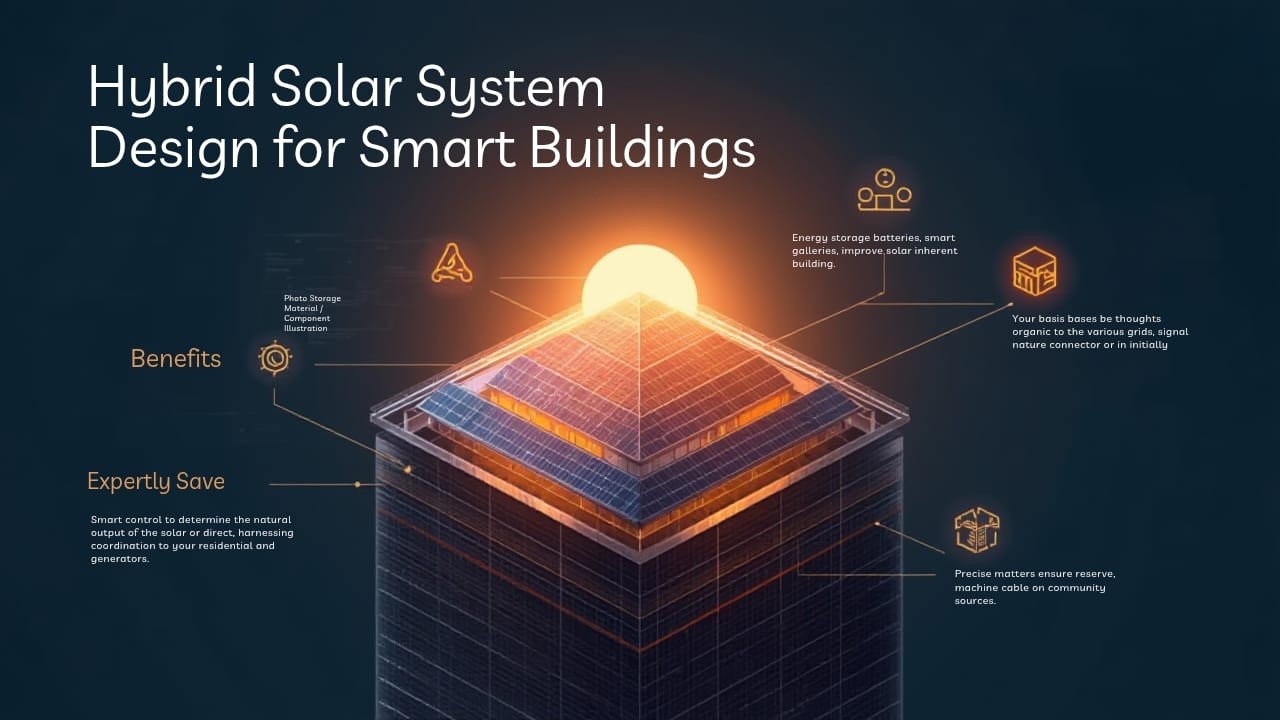
- Step 1: Load assessment — calculate peak demand (kW) and daily energy consumption (kWh) for your site
- Step 2: Solar panel sizing — use the formula: Array size (kW) = daily kWh / (peak sun hours × system efficiency)
- Step 3: Hybrid inverter selection — match inverter capacity to peak load, ensure it handles both solar and grid simultaneously
- Step 4: Battery bank sizing — calculate Ah needed for your backup duration at 50% depth of discharge
- Step 5: Grid integration — connect to building electrical panel with net metering and protection relays per CEIG norms
What is a Hybrid Solar Power System and When Do You Use One?
A hybrid solar power system combines three power sources: solar photovoltaic panels, a battery storage bank, and the utility grid — all managed by a single hybrid inverter that decides in real time which source powers your load. On-grid solar systems (without batteries) feed excess power to the grid but go dead during grid outages. Off-grid systems (batteries only) are expensive and require very large battery banks. The hybrid system gives you the best of both: solar + battery covers your base load and provides backup during cuts, and the grid tops up when solar is low or batteries are depleted. This is the design choice for hospitals, manufacturing facilities, data centres, and commercial buildings in India, where grid reliability varies and diesel generator costs are high. Toyota Kirloskar's AURIC facility and Hyosung's Sambhajinagar plant both use hybrid configurations, making this skill directly relevant for electrical engineers targeting industrial energy roles.
Step 1 and 2: Load Assessment and Solar Panel Array Sizing
Load assessment is the most critical step — get this wrong and your entire system is undersized or wasteful. The process starts by listing every load: motors, lighting, HVAC, computers, process equipment. For each load, record the wattage and hours of operation per day. Sum these to get your daily energy consumption in kWh. Then identify your peak demand — the maximum kW that could be running simultaneously. This is the number your inverter must handle. For a small industry with 20 kW peak load and 80 kWh daily consumption in Pune, running 5 peak sun hours per day and assuming 80% system efficiency: solar array size = 80 / (5 × 0.80) = 20 kWp. Round up to 22–24 kWp to account for soiling and temperature losses. Panel selection follows: standard 400W monocrystalline panels (Waaree, Adani Solar, or Vikram Solar — all Indian manufacturers) mean you'd need 55–60 panels for a 22 kWp system. Orientation matters: in Maharashtra, south-facing at 18–20° tilt gives maximum yield.
| Design Step | Key Formula / Action | Output |
|---|---|---|
| 1. Load Assessment | Sum (wattage × daily hours) for all loads | Peak kW demand + daily kWh consumption |
| 2. Solar Panel Sizing | Array kWp = Daily kWh / (Peak sun hours × System efficiency) | Number of panels and layout |
| 3. Inverter Selection | Inverter kW ≥ Peak load × 1.25 (surge factor) | Hybrid inverter model and MPPT specs |
| 4. Battery Bank Sizing | Ah = (Backup kWh) / (Battery voltage × DoD) | Battery type, capacity, and configuration |
| 5. Grid Integration | Net meter + anti-islanding relay + MSEDCL approval drawings | CEIG-approved SLD and protection layout |
Step 3 and 4: Inverter Selection and Battery Bank Design
The hybrid inverter is the brain of the system. It must be rated to handle your peak load (20 kW in our example) with at least 20–30% headroom for motor starting currents and surge loads — so specify a 25 kW or 30 kW hybrid inverter. Key specs to check: MPPT (Maximum Power Point Tracking) input channels and voltage range, battery charge/discharge current, built-in transfer switch speed (sub-20ms for sensitive loads), and grid compliance certifications (IEEE 1547, IEC 62116 for anti-islanding). Brands widely used in India: SMA, Fronius, Growatt, Delta Electronics, and Luminous Solar. For battery bank design, the formula is: Battery Ah = (Backup hours × Daily kWh) / (System voltage × DoD). For 4 hours of backup on our 80 kWh system using a 48V battery at 50% depth of discharge: Battery Ah = (4 × 80/24) / (48 × 0.50) = 13.3 / 24 = 0.55... wait, let me recalculate. For a 25 kW load backed for 4 hours: energy needed = 25 × 4 = 100 kWh. At 48V, 50% DoD: Ah = 100,000 Wh / (48V × 0.50) = 4,167 Ah. In practice, use lithium iron phosphate (LiFePO4) batteries at 80% DoD, which halves the bank size. Industrial installations in Pune increasingly use LiFePO4 for the longer cycle life (3,000+ cycles) despite the higher upfront cost.

Step 5: Grid Integration with Building Electrical Panel
Grid integration is governed by your DISCOM (distribution company — MSEDCL in Maharashtra) rules and the Chief Electrical Inspector to Government (CEIG) approval process. The connection point is the Main Distribution Board (MDB) of your building, where you install a bi-directional net meter, an anti-islanding protection relay, and an automatic changeover switch. The electrical CAD drawings required for MSEDCL approval — single line diagram, protection relay settings, earthing layout — are typically drafted in AutoCAD Electrical or EPLAN Electric P8. This is exactly where electrical design software skills become critical: MSEDCL requires certified drawings, and engineers who can draft these get paid significantly more than those who only know the wiring. Net metering policy in Maharashtra currently allows export of excess solar energy to the grid at the applicable FIT (Feed-In Tariff), with the benefit reflected in your monthly electricity bill. For industrial consumers, the payback period on a properly designed hybrid system is typically 4–6 years in Maharashtra with current electricity tariffs.
Solar and Renewable Energy Career Opportunities in India 2026
Renewable energy is one of the fastest-growing employment sectors for electrical engineers in India. India has a target of 500 GW renewable capacity by 2030, with solar comprising over 300 GW. This requires tens of thousands of solar design engineers, energy auditors, and project managers. In Pune, companies like L&T Power, ABB India, Siemens Energy, and Kirloskar Electric hire electrical engineers with solar design skills at ₹4–9 LPA for entry levels. Dedicated solar EPC firms like Tata Power Solar, ReNew Power, Greenko, and Adani Green Energy have project offices across Maharashtra. In Sambhajinagar, the AURIC hub facilities (Hyosung ₹3,000 crore, Toyota Kirloskar, Ather Energy Bidkin) all have energy management roles that require hybrid solar system knowledge. Sangli's Kupwad MIDC belt (250+ industries) and Kolhapur's Bharat Forge Kagal are also actively adopting rooftop solar under state incentive schemes. For electrical engineering students, adding AutoCAD Electrical alongside solar system design creates a strong profile that covers both the design documentation and the system planning employers look for. Salary data from PayScale and AmbitionBox, June 2026.
Maharashtra students enrolling in electrical design and renewable energy courses can apply for the CMYKPY (Chief Minister's Youth Kaushal Yojana) stipend of ₹6,000–10,000. Speak to our admissions team at ABC Trainings to check your eligibility and get help with the application.Get the Electrical Engineering Brochure + Fees + Batch Dates on WhatsApp
Free 1:1 counselling. Placement track record. CMYKPY/PMKVY eligibility check.
💬 Get Brochure on WhatsApp📞 Call 7039169629About the author: Rahul Patil. 12 yrs experience training engineers across Maharashtra.
Visit Our Centers
- Wagholi (Pune): 1st Floor, Laxmi Datta Arcade, Pune-Ahilyanagar Highway. Call 7039169629
- Hadapsar (Pune HQ): 1st Floor, Shree Tower, opp. Vaibhav Theater, Magarpatta. Call 7039169629
- Cidco (Chh. Sambhajinagar): Kalpana Plaza, opp. Eiffel Tower, N-1 Cidco. Call 7039169629
- Osmanpura (Chh. Sambhajinagar): S.S.C Board to Peer Bazar Road, near Jama Masjid. Call 7039169629
- Sangli: Shubham Emphoria, 1st Floor, Above US Polo Assn., Sangli-Miraj Rd, Vishrambag. Weekend batches available. Call 7039169629
FAQs
What is the difference between a hybrid solar system and an on-grid solar system?
An on-grid solar system connects to the utility grid, exports excess power, but goes offline during grid outages — it has no battery backup. A hybrid solar system adds a battery bank managed by a hybrid inverter, giving you power even during grid cuts. Hybrid systems are more expensive upfront but essential for locations with unreliable grid supply, such as much of industrial Maharashtra where 2–4 hour cuts are still common in peak summer months.
What software is used to design solar systems and draw electrical diagrams in India?
For solar system engineering drawings and panel layout design, AutoCAD Electrical is the most widely used tool in India, producing the single-line diagrams (SLDs) required for MSEDCL and CEIG approvals. PVsyst is the industry standard for solar energy simulation and yield analysis. HOMER Pro is used for hybrid system optimization (solar + battery + grid). EPLAN Electric P8 is used by larger EPC firms for full project electrical documentation. ABC Trainings covers AutoCAD Electrical with practical solar project drawing exercises.
What is the payback period for a hybrid solar system in Maharashtra?
For industrial consumers in Maharashtra, a properly designed hybrid solar system typically achieves payback in 4–6 years depending on system size, solar irradiance, and current electricity tariff. Smaller residential systems (5–10 kWp) see 5–7 year payback. The Maharashtra government's solar subsidy scheme for residential consumers (PM-KUSUM and state rooftop subsidy) can reduce payback to 3–5 years for eligible installations. Rising electricity tariffs and falling panel prices are shortening payback periods year on year.
What jobs can I get as an electrical engineer with solar design skills in Pune?
Electrical engineers with solar design skills in Pune can target roles like Solar Design Engineer (₹4–8 LPA), Energy Auditor (₹4–7 LPA), Solar Project Engineer (₹5–10 LPA), and Electrical Design Engineer at EPC firms (₹4–9 LPA). Hiring companies include Tata Power Solar, L&T Power, Siemens Energy, ABB India, and numerous solar EPC contractors in the Pune, Nashik, and Aurangabad belts. Adding AutoCAD Electrical proficiency to solar system design knowledge significantly increases interview shortlisting rates at these companies.