AI tools for civil engineers in India are no longer just a trend topic for seminars. They're becoming part of daily project work across planning offices, BIM teams, quantity departments, and even site review meetings. If you already know the basics of civil engineering software and you're wondering what comes next, this is where things get interesting. Here's the thing: by 2026, the civil engineers who move ahead won't be the ones who only draft, estimate, or supervise manually. They'll be the ones who know how to combine engineering judgment with AI-powered workflows.

The good news is you don't need to become a data scientist to use these tools well. What most people don't realize is that AI in civil engineering is less about replacing engineers and more about speeding up repetitive thinking, reducing avoidable errors, and helping you make decisions faster. If you're targeting companies like L&T, Tata Technologies, Siemens, Bosch, Thermax, or even infrastructure consultants working out of Pune, Mumbai, and Chhatrapati Sambhajinagar, these are the practical AI directions worth learning deeply.
Which AI tools are actually useful for civil engineers in India?
Let's keep this practical. The most useful AI tools for civil engineers usually fall into seven working categories: planning support, BIM/model review, quantity and cost intelligence, site monitoring, document automation, predictive maintenance, and reporting assistants. The exact software stack changes from company to company, but the workflow pattern is now very clear.
For example, one project team may use ChatGPT or Microsoft Copilot for tender summaries and report drafting, Autodesk tools for BIM coordination, Power BI with AI features for dashboards, drone-image tools for progress analysis, and Excel automation for quantity validation. Another team may use custom AI layers built into enterprise systems. Trust me, the tool name matters less than the engineering use case.
How do AI tools improve planning and scheduling for civil projects?
Planning is one area where AI can save serious time. If you've already worked with Primavera P6 or Microsoft Project, you know the basics of activity sequencing. Advanced users now use AI-supported workflows to identify delayed dependencies, compare baseline versus actual patterns, and generate risk flags before the schedule collapses.
Here's a strong workflow: export your activity data, clean it in Excel or Power Query, then use AI-assisted analysis in Power BI or Copilot-style tools to identify repetitive delay reasons. Instead of manually checking 400 activities, you can ask focused prompts like: which structural activities are slipping repeatedly, which subcontractor-linked tasks are affecting the critical path, and which package has low float across three reporting cycles?
That doesn't replace planning logic. It sharpens it. At firms handling industrial and infrastructure work, this kind of pattern detection is becoming valuable because project managers want explanations, not just bar charts.
Can AI help with BIM and model coordination in civil engineering?
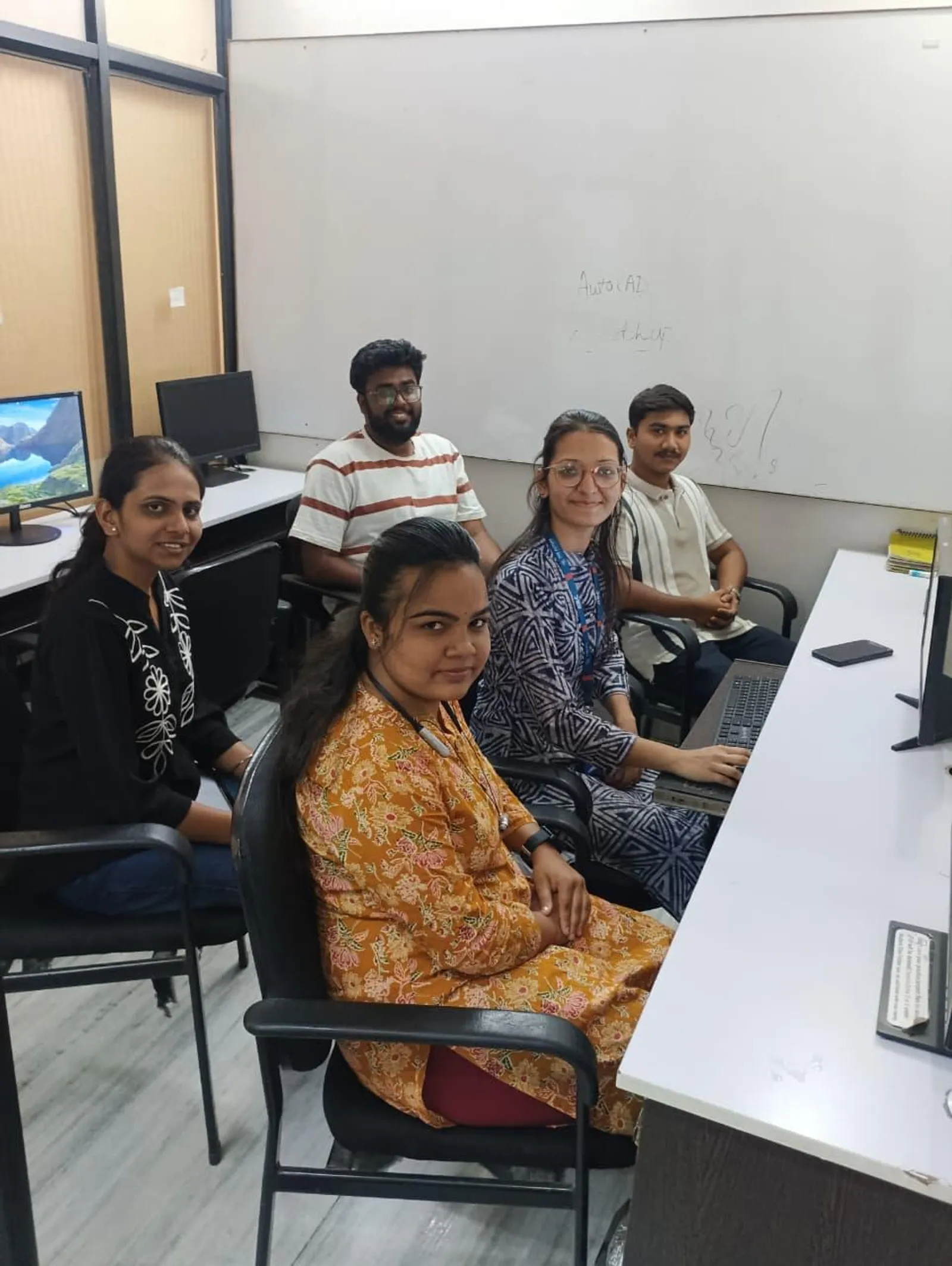
Yes, and this is where many civil engineers can create a major career jump. If you already know Revit, Civil 3D, or Navisworks basics, the advanced move is using AI-assisted review logic around models, clashes, revisions, and data extraction. AI won't magically create a perfect model for you, but it can help detect inconsistencies faster.
For example, in a BIM coordination environment, AI-supported tools can help classify repeated clash types, summarize issue logs, and prioritize model conflicts that affect site execution. What most people don't realize is that the real value isn't just clash detection. It's clash prioritization. A hundred clashes don't matter equally. Some can stop reinforcement, MEP routing, or shuttering work on site. Others are minor cleanup issues.
If you're aiming for BIM-related roles in Pune or Mumbai, this matters because employers increasingly prefer engineers who can review model data intelligently instead of just operating commands.
How is AI used for estimation and quantity takeoff?
This is one of the most promising areas for civil engineers who enjoy detail. Traditional estimation is still essential, but AI can speed up quantity verification, BOQ comparison, cost trend analysis, and anomaly detection. You'll still need your civil basics. AI is only as good as the structure of the data you feed it.
A power-user workflow looks like this: pull quantities from drawings or BIM exports, standardize item descriptions, use AI to group similar line items, then compare rates across previous projects. If cement concrete quantities suddenly spike beyond the structural pattern, AI-assisted checks can help flag that before the estimate goes out.
At contractor and consultancy level, this becomes useful for bid preparation. Engineers who can combine Excel, Power Query, and AI-supported classification tools can save hours. In salary terms, a fresher with only manual quantity skills in Maharashtra may start around ₹2.4 lakh to ₹3.2 lakh per year, but a civil engineer who adds BIM, data reporting, and AI-assisted estimation workflows can often target ₹3.8 lakh to ₹6 lakh, depending on city, project type, and software depth.
What AI tools are used for site monitoring and progress tracking?
Site monitoring is changing fast. Drone imagery, mobile photo capture, computer vision, and AI-based progress comparison are becoming more relevant on large projects. You won't see this on every small site in Sangli or Satara yet, but on major infrastructure, industrial, and commercial projects, it's gaining traction.
The advanced skill here is not flying a drone. It's converting visual data into engineering decisions. AI tools can compare site images against planned progress, identify unsafe zones, detect material stock changes, and support reporting. If you've ever spent half a day compiling photo updates into a client report, you know how painful manual reporting can be.
The good news is that engineers who understand both site reality and digital reporting are hard to replace. That's why companies working with smart construction methods are paying more attention to engineers who can interpret progress data instead of just collecting it.
How can civil engineers use AI for reports, documentation, and client communication?
This is the easiest entry point and also the most misused. Tools like ChatGPT, Microsoft Copilot, and Gemini can help generate MOMs, DPR summaries, RFI drafts, risk notes, and weekly progress reports. But don't copy-paste blindly. That's amateur-level usage.
Professional usage means feeding structured inputs, project context, and technical constraints. For example, instead of asking for a generic progress report, give the tool your package name, achieved quantities, pending approvals, weather impact, and major bottlenecks. Then ask it to draft a client-facing summary in formal construction language. You'll still review it, of course.
Trust me, this one skill alone can make a junior engineer look far more polished in meetings. Managers notice engineers who communicate clearly. At companies like Mahindra Engineering, KPIT Technologies in infra-tech functions, or large EPC teams linked with L&T-style reporting standards, written clarity matters a lot more than students think.
Do civil engineers need coding to work with AI tools?
Not always. For many roles, no-code and low-code usage is enough. If you can work confidently with Excel, Power BI, BIM exports, and structured prompts, you're already ahead of many engineers. But if you want to go deeper, basic Python can help with data cleaning, repetitive report generation, and project analytics.
Here's the thing: coding is useful when you have repeating data problems. If every week you're cleaning the same progress sheets, rate analysis tables, or issue logs, automation starts making sense. But if you're still weak in estimation logic, drawings, or planning fundamentals, fix that first. AI rewards strong engineers. It doesn't rescue weak basics.
What is the best career strategy for civil engineers learning AI in Maharashtra?
Start with your core role, then layer AI on top of it. If you're into planning, learn AI-supported schedule analysis. If you're into BIM, focus on issue classification and model data review. If you're in QS, work on quantity validation and cost intelligence. If you're site-oriented, learn progress dashboards and visual monitoring tools.
Don't try to learn everything at once. A smart 90-day roadmap works better. Month one: strengthen one core software area. Month two: build reporting and data skills. Month three: apply AI to one real engineering workflow. That's the difference between random tool usage and actual career growth.
At ABC Trainings, we often tell students from Pune, Sangli, and Chhatrapati Sambhajinagar the same thing: your goal is not to become dependent on AI. Your goal is to become the engineer who knows where AI saves time and where human judgment must stay in control. If you want help choosing the right upskilling path, call 7039169629 or WhatsApp 7774002496.
Why are AI-enabled civil engineers getting more attention in 2026?
Because project teams want speed, clarity, and fewer errors. That's true whether you're supporting a contractor, consultant, developer, or industrial project team. Civil engineering careers are no longer limited to site execution and 2D drawings. Planning intelligence, BIM review, digital reporting, quantity analytics, and smart documentation are now part of the value chain.
What most people don't realize is that AI won't reward shallow learners. It rewards engineers who can ask better technical questions, validate outputs, and improve project decisions. That's why this shift matters. And that's exactly where advanced training becomes useful.
Which AI tool should a civil engineering fresher learn first in India?
Start with AI-assisted reporting and data analysis, not complex automation. Tools like ChatGPT, Copilot, Excel, and Power BI are easier to apply to daily engineering work. They help with reports, quantity checks, and schedule summaries without requiring deep coding. Once you're comfortable, move toward BIM and project analytics use cases.
Will AI reduce civil engineering jobs in Maharashtra?
It will reduce repetitive manual work more than actual engineering jobs. Companies still need engineers for decisions, coordination, site judgment, client handling, and validation. The risk is higher for people who refuse to upgrade. Engineers who combine civil basics with digital tools are likely to see better opportunities in Pune, Mumbai, and industrial belts.
Do companies like L&T and Tata Technologies expect AI skills from civil engineers?
They may not always list "AI" as a separate requirement, but they increasingly value digital project skills. That includes BIM, dashboards, smart reporting, data analysis, and automation-friendly workflows. If you can use AI to improve planning, estimation, or reporting quality, it strengthens your profile. That's especially useful in large project environments where time and coordination matter.
Where can I learn AI-focused civil engineering skills in Maharashtra?
Look for training that connects AI with real civil workflows, not generic theory. You need practical exposure in BIM, estimation, reporting, planning, and project data handling. ABC Trainings works with students and professionals across Maharashtra who want job-focused upskilling in these areas. For course guidance, call 7039169629 or WhatsApp 7774002496.
Visit Our Centers
Chhatrapati Sambhajinagar
Corporate Office (HQ)
2nd Floor, Kandi Towers, Jalna Road, Amarpreet Chowk, Chhatrapati Sambhajinagar, Maharashtra 431001
Osmanpura Branch
Plot No 14, Shanya Sect, Near Sant Eknath Rang Mandir, Osmanpura, Chhatrapati Sambhajinagar, Maharashtra 431005
CIDCO Branch
Plot No 4, N-3, Cidco, Opp. High Court, Chhatrapati Sambhajinagar, Maharashtra 431003
Pune
Wagholi Branch
1st Floor, ABC Trainings, Laxmi Datta Arcade, Pune - Ahilyanagar Hwy, Wagholi, Pune, Maharashtra 412207
Hadapsar Branch
Bloom Hotel, ABC Trainings 1st Floor, S.no 156/3 Shree Tower Pune - Solapur Rd, Hadapsar, Pune, Maharashtra 411028
Sangli
Sangli Branch
2nd Floor, Vasant Market, Opp. City High School, Sangli, Maharashtra 416416
Start Your Career Journey Today
Join 10,000+ students who transformed their careers with ABC Trainings.
💬 WhatsApp: 7774002496📞 Call: 7039169629