ANSYS Workbench Foundation to Expert – Episode 1: Getting Started with FEA, Interface & Geometry Setup (Updated June 2026)
Maharashtra's AURIC industrial corridor near Sambhajinagar has locked in ₹71,343 crore in investment and is building 62,405 manufacturing jobs — and if you look at the job descriptions from every major OEM inside it, from Skoda VW to Toyota Kirloskar, one requirement keeps appearing: ANSYS Workbench or equivalent FEA software. Episode 1 of our Foundation to Expert series is the proper entry point for every mechanical engineer who has heard about simulation but never actually opened ANSYS. We cover the Workbench interface, how the project schematic organises your analysis workflows, how to import and clean up CAD geometry in SpaceClaim, and how to assign material properties through Engineering Data. No prior ANSYS experience needed — just a basic understanding of engineering mechanics. By the end of Episode 1, you will have run your first simulation and understood what the software is actually doing.

- Episode 1 covers ANSYS Workbench interface, project schematic, geometry import, SpaceClaim cleanup, and material assignment in Engineering Data
- CAE/FEA engineers earn ₹3.5–₹6 LPA fresher and ₹8–₹15 LPA mid-level in Maharashtra
- Key hirers: Skoda VW Shendra (A-1/1), Bajaj Auto Waluj (G-137), Endurance Technologies (E-92), Toyota Kirloskar AURIC, Bosch Ranjangaon
- CMYKPY scheme provides eligible Maharashtra students ₹6,000–₹10,000/month during ANSYS training
- ABC Trainings ANSYS batches in Pune (Wagholi, Hadapsar), Sambhajinagar (Cidco, Osmanpura), and Sangli
What ANSYS Workbench Is and Why It Is the Industry Standard for FEA
ANSYS Workbench is the industry-standard platform for multi-physics simulation — structural, thermal, fluid, electromagnetic, and coupled analyses all sit inside a unified project environment. It is used by virtually every major automotive, aerospace, industrial equipment, and electronics manufacturer in the world. In India, Tata Technologies, KPIT, Bosch, Bajaj Auto, and dozens more run their entire simulation workflows inside ANSYS. The reason it has become standard is that it combines a graphical project management interface (the Project Schematic) with parametric analysis capabilities, bi-directional CAD integration, and a single data structure that lets you reuse geometry, material, and mesh data across multiple analysis types. For a mechanical engineer in Maharashtra, knowing ANSYS Workbench is no longer optional — it is expected.
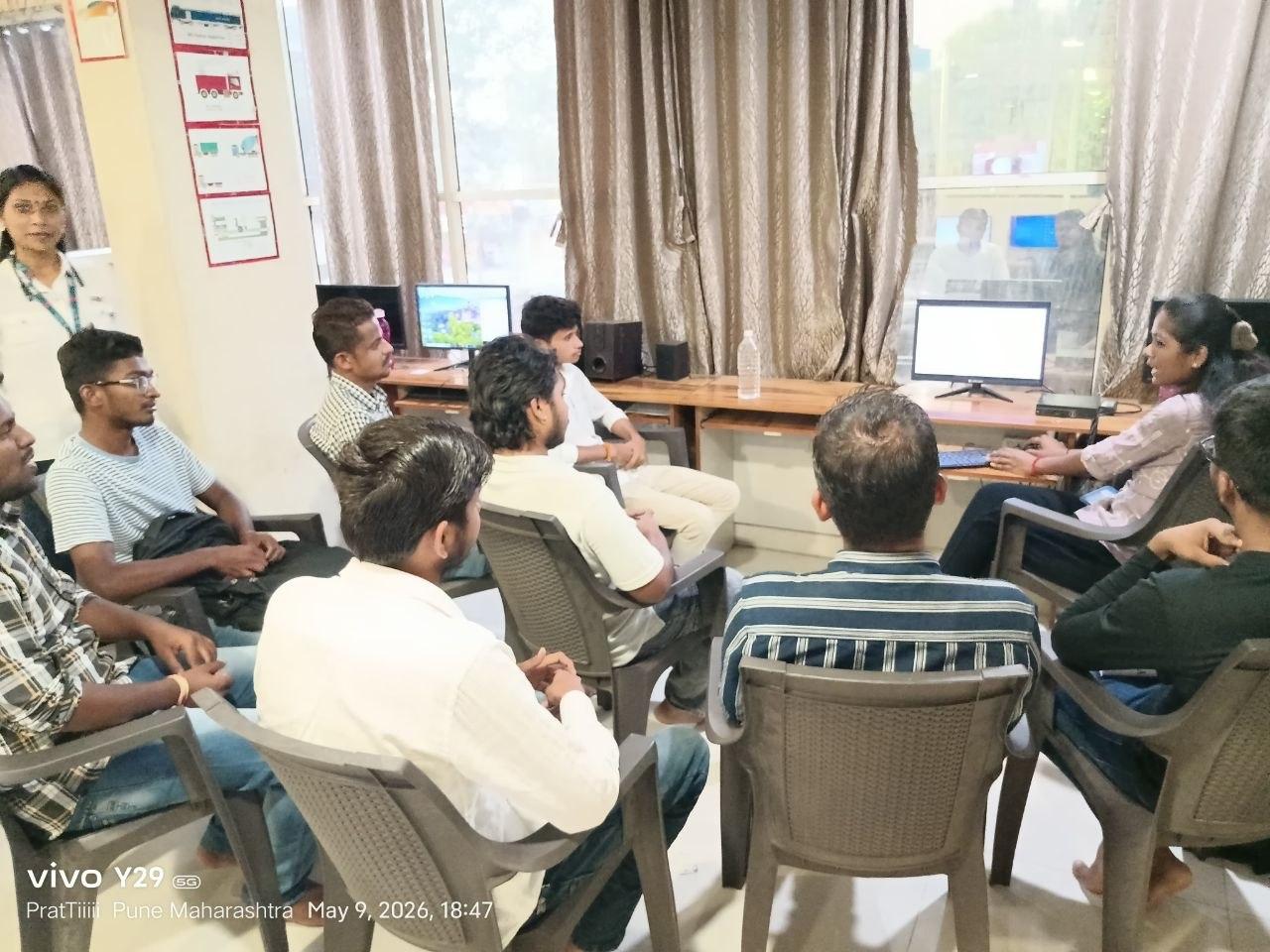
Navigating the ANSYS Workbench Interface: Toolbox, Project Schematic and Analysis Systems
The first thing Episode 1 does is build your mental map of the ANSYS Workbench interface. The Toolbox on the left lists all available analysis systems — Static Structural, Modal, Thermal, Fluid Flow, etc. You drag systems onto the Project Schematic canvas in the centre to create analysis workflows. Each system has a stack of cells: Engineering Data, Geometry, Model, Setup, Solution, and Results — and you can share cells between systems (for example, sharing geometry and mesh between a static structural and a thermal analysis). The Properties panel on the right shows cell-specific settings. Mechanical APDL (ANSYS classic) hides behind the Modern ANSYS Mechanical interface, which is where you do all the pre- and post-processing work. Episode 1 spends time on this navigation because students who understand the architecture learn faster and troubleshoot errors independently.
ANSYS Workbench Foundation to Expert full series map
Importing and Cleaning Up Geometry in SpaceClaim for FEA
Geometry quality is the biggest factor determining whether a simulation completes successfully. Real-world CAD models from SolidWorks, NX, or CATIA often contain sliver faces, short edges, duplicate surfaces, and tiny gaps that the FEA mesher cannot handle without special treatment. SpaceClaim, ANSYS's built-in geometry editor, lets you fix these issues before meshing. Episode 1 walks through five common geometry cleanup operations: removing small fillets that are below the mesh element size (a 0.1 mm fillet on a 2 mm element mesh crashes the mesher), closing surface gaps using the Fill tool, removing internal partitions, suppressing non-structural details like logo embossments and connector pins, and splitting bodies into regions for targeted mesh sizing. These are the exact operations that experienced simulation engineers perform before every project setup.
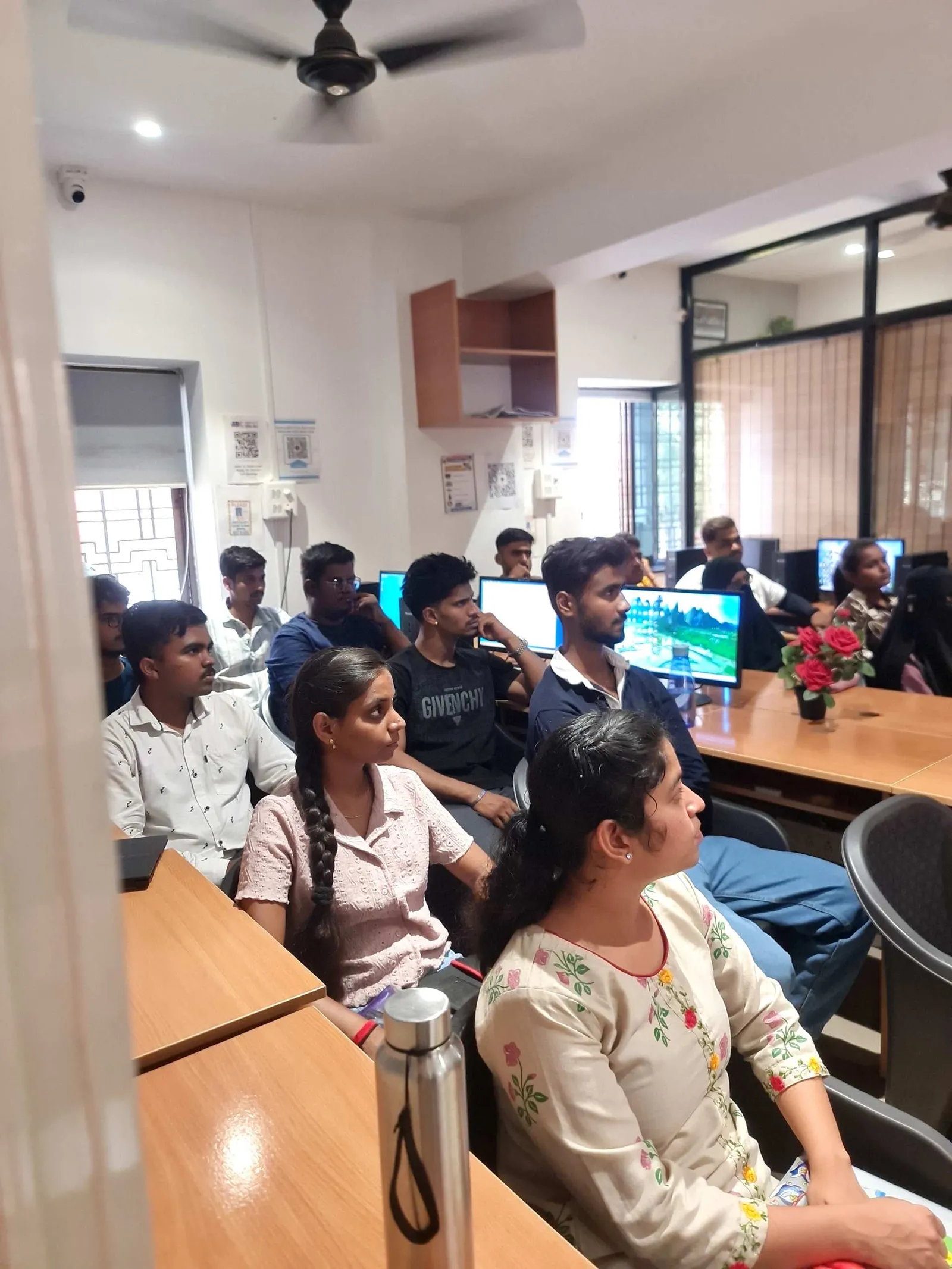
Assigning Material Properties in Engineering Data: What Every Beginner Needs to Know
Material properties tell ANSYS how each part in your model will behave under load. The Engineering Data cell in every ANSYS analysis system contains a library of hundreds of materials — structural steel, aluminium alloys, copper, titanium, concrete, rubbers — each with density, Young's modulus, Poisson's ratio, yield strength, ultimate tensile strength, and thermal properties. In Episode 1 we assign three different materials to three parts in a bracket-and-fastener assembly: structural steel to the bracket, aluminium 6061-T6 to a housing, and 8.8-grade bolt material to the fasteners. We also create a custom material by entering manufacturer-supplied mechanical properties for a polymer grade that does not appear in the standard library. Understanding how to manage Engineering Data correctly avoids the most common simulation error: running an analysis with the wrong material properties and not realising it until the results look physically impossible.
FEA Career Paths in Maharashtra: Salary Data and Which Companies Are Hiring
The FEA and CAE job market across Maharashtra is active and growing. In Pune: Tata Technologies Hinjewadi consistently recruits simulation engineers across multiple OEM projects; KPIT Technologies Hinjewadi runs large NVH and structural groups for EV clients; Bajaj Auto R&D Akurdi has 164+ engineering openings per year; Bosch Engineering Centre at Ranjangaon MIDC (Plots A1/A2) runs multi-physics simulation work for global projects. In Sambhajinagar: Skoda VW Shendra (Plot A-1/1, Shendra MIDC), Bajaj Auto Waluj (Plot G-137, Waluj MIDC), Endurance Technologies (Plot E-92, Waluj), and Toyota Kirloskar at AURIC City Bidkin all have engineering analysis requirements. Fresher CAE engineers in Pune earn ₹3.5–₹6 LPA; in Sambhajinagar ₹3.5–₹5 LPA. Mid-level engineers earn ₹8–₹15 LPA. Source: AmbitionBox, PayScale India 2025–2026.
Begin Your ANSYS Journey at ABC Trainings
ABC Trainings runs the ANSYS Workbench Foundation to Expert series at five centres across Maharashtra: Wagholi (Laxmi Datta Arcade, Pune-Ahilyanagar Highway), Hadapsar (Shree Tower, opp. Vaibhav Theater, Magarpatta), Cidco (Kalpana Plaza, N-1 Cidco, Sambhajinagar), Osmanpura (near Jama Masjid, Sambhajinagar), and Sangli (Shubham Emphoria, Vishrambag). The CMYKPY scheme (Chief Minister Yuva Karya Prashikshan Yojana) provides ₹6,000–₹10,000/month to eligible Maharashtra domicile students. PMKVY 4.0 and self-funded options are also available. Our 20,000+ trained students since 2014, ISO certification, and MSME registration give us a track record you can verify. Call 7039169629 or WhatsApp 7774002496.
The CMYKPY scheme provides eligible Maharashtra domicile students ₹6,000–₹10,000/month during approved skill training at ABC Trainings. MSME and ISO-certified. Call 7039169629 to check your ANSYS CMYKPY eligibility today.
Get the CAD/CAM Brochure + Fees + Batch Dates on WhatsApp
Free 1:1 counselling. Placement track record. CMYKPY/PMKVY eligibility check.
💬 Get Brochure on WhatsApp📞 Call 7039169629About the author: Shubham Choundiye, Mechanical Design Trainer, ABC Trainings.
Visit Our Centers
- Wagholi (Pune): 1st Floor, Laxmi Datta Arcade, Pune-Ahilyanagar Highway. Call 7039169629
- Hadapsar (Pune HQ): 1st Floor, Shree Tower, opp. Vaibhav Theater, Magarpatta. Call 7039169629
- Cidco (Chh. Sambhajinagar): Kalpana Plaza, opp. Eiffel Tower, N-1 Cidco. Call 7039169629
- Osmanpura (Chh. Sambhajinagar): S.S.C Board to Peer Bazar Road, near Jama Masjid. Call 7039169629
- Sangli: Shubham Emphoria, 1st Floor, Above US Polo Assn., Sangli-Miraj Rd, Vishrambag. Weekend batches available. Call 7039169629
FAQs
What does Episode 1 of the ANSYS Workbench Foundation to Expert series cover?
Episode 1 covers the ANSYS Workbench interface (Toolbox, Project Schematic, cell structure), project setup and system linking, geometry import and cleanup in SpaceClaim (removing small features, closing gaps, suppressing non-structural details), and material property assignment in Engineering Data including creating custom materials from datasheets.
Do I need prior ANSYS experience to start the Foundation to Expert series from Episode 1?
No prior ANSYS experience is needed. Episode 1 starts from zero — it assumes only a basic understanding of engineering mechanics (stress, strain, material properties). The Foundation to Expert series is designed for mechanical, civil, aerospace, and automobile engineering students and professionals who are new to simulation software.
How long does it take to learn ANSYS Workbench from scratch?
With regular practice of 2–3 hours per day, most students complete the full Foundation to Expert series (Episodes 1–5) in 8–12 weeks. The ABC Trainings course covers all episodes with hands-on project files, real case studies, and interview preparation support. Industry-ready proficiency is typically achieved in 3–4 months of consistent practice.
What is the career scope for ANSYS-trained engineers in Maharashtra?
Maharashtra has one of India's largest concentrations of automotive and industrial manufacturers. Companies including Bajaj Auto, Tata Technologies, KPIT, Bosch, Skoda VW, Endurance Technologies, Toyota Kirloskar, and L&T actively hire ANSYS-trained FEA and CAE engineers. Maharashtra domicile students also benefit from the CMYKPY and PMKVY 4.0 skill schemes for funding their training.