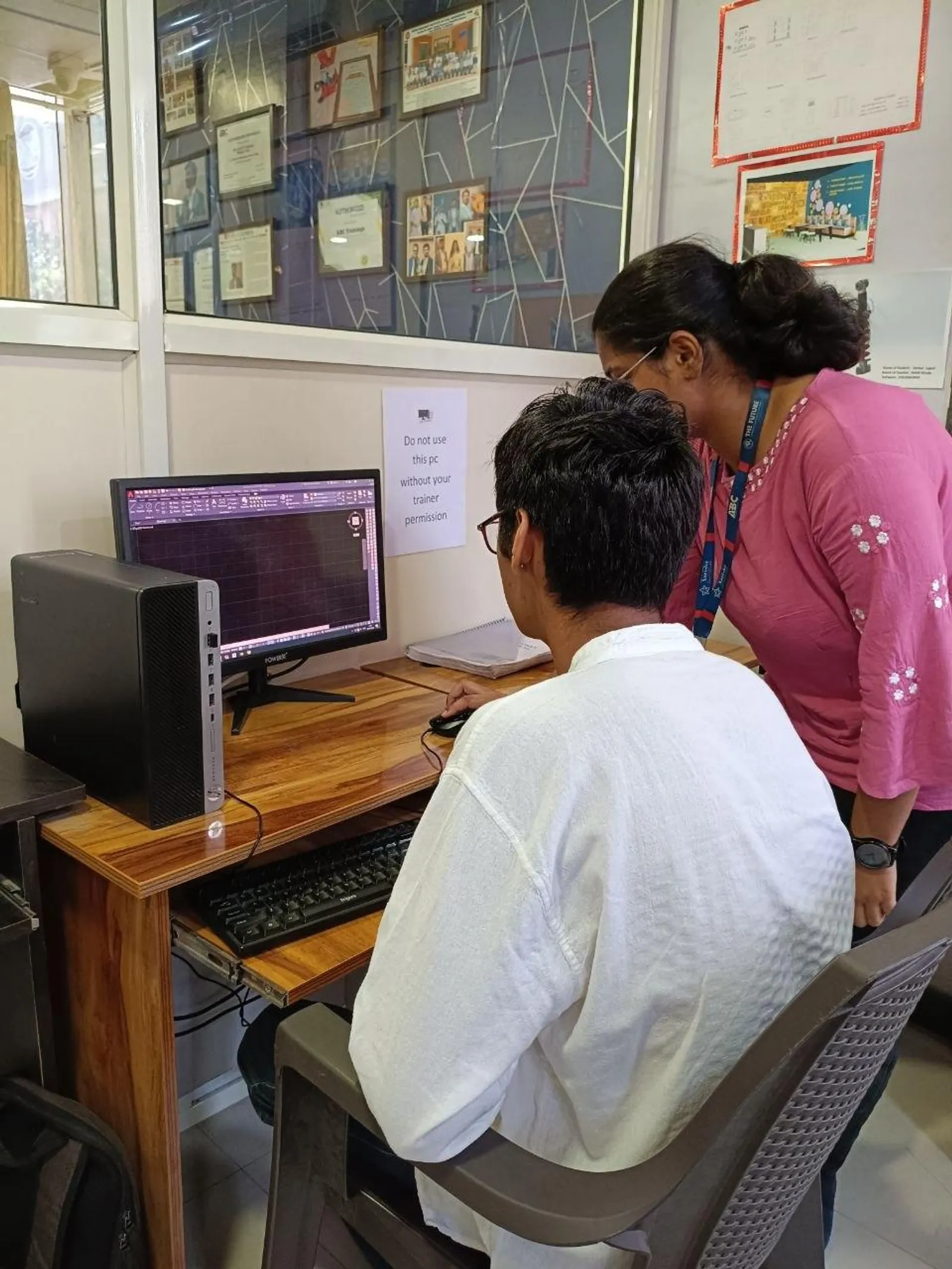
AutoCAD Electrical Panel Layouts in India 2026
AutoCAD Electrical panel layouts are where many learners get stuck after understanding the basics. They know how to draw lines, place symbols, and make simple schematics, but when it comes to creating a proper control panel drawing that matches industry practice, confidence drops. Here's the thing: real electrical design work in India is not just about neat drawings. It's about linking schematics, footprints, wire data, and component information so your design is usable on the shop floor, during inspection, and later during maintenance. If you're aiming for roles in panel design, automation support, or electrical drafting in Pune, Chhatrapati Sambhajinagar, Sangli, or even companies like Siemens, Bosch, L&T, Thermax, or Tata Technologies, this is the level you need to reach.

This lesson is based on the core idea introduced in the video: understanding what AutoCAD Electrical is and how it is used for professional electrical drawings such as wiring diagrams, panel layouts, and circuit schematics. Since the video is introductory, let's take that exact lesson deeper and focus on the advanced side of panel layout work inside AutoCAD Electrical 2026.
What is AutoCAD Electrical actually used for in real panel design jobs?

Most people don't realize that AutoCAD Electrical is not just AutoCAD with electrical symbols added on top. It's built for electrical controls work. That means it can track components, manage wire numbers, connect schematic symbols to panel footprints, assign catalog data, and help you generate reports.
In a real Indian control panel design workflow, you'll usually create the schematic first, then build the physical panel layout. The schematic tells you what the circuit does. The panel layout shows where each component is mounted: MCBs, relays, contactors, terminal blocks, PLC modules, SMPS units, VFDs, cable ducts, and push buttons. If you're working with clients in manufacturing, utilities, or building automation, both drawings must match.
That's why companies such as Bajaj Auto, Mahindra Engineering, Kirloskar, and KPIT Technologies prefer candidates who understand not only drafting but also project structure and annotation logic. A fresher with only basic drafting knowledge may start around ₹15,000 to ₹22,000 per month in Maharashtra. Someone who can handle AutoCAD Electrical panel projects properly can move toward ₹25,000 to ₹40,000 faster, depending on city and project exposure.
How do professionals set up AutoCAD Electrical before starting panel layouts?
Trust me, bad setup creates bad drawings. Before you place a single footprint, you need a proper project environment. In AutoCAD Electrical 2026, the first advanced habit is using project-based drawing management instead of random standalone files.
Start with these settings:
- Create a dedicated project with clear drawing naming rules.
- Set drawing properties for IEC or JIC standards based on client requirement. In India, IEC-style documentation is common in industrial projects.
- Load the correct symbol libraries and footprint libraries.
- Configure wire numbering format early.
- Set component tagging format such as K, M, Q, TB, CR depending on your office standard.
- Assign title block attributes that can auto-fill project and drawing data.
The good news is, once this is set correctly, your reporting and cross-referencing become much easier. What most people don't realize is that professionals save hours not by drawing faster, but by reducing correction work later.
How do schematic symbols connect to panel footprints in AutoCAD Electrical?

This is one of the most important advanced concepts. A schematic symbol represents the electrical function. A panel footprint represents the physical device mounted inside the enclosure. In a proper workflow, these two must be linked.
For example, if you insert a contactor in the schematic and assign the correct manufacturer and catalog information, AutoCAD Electrical can help map that device to a panel footprint. This allows consistent tagging between the circuit drawing and the enclosure layout.
Here's a practical workflow:
- Insert the schematic component with proper tag and description.
- Assign catalog data from the database or edit it manually if your vendor part is missing.
- Use panel layout tools to insert the linked footprint.
- Place the footprint on DIN rail or panel plate based on your design standard.
- Check parent-child relationships for multi-part devices like relays and contactors.
If you skip this and just draw rectangles manually, you'll lose the real advantage of AutoCAD Electrical.
How do you create cleaner and faster panel layouts for industrial projects?
Panel layout quality depends on spacing, alignment, and logic. Beginners place components wherever they fit. Experienced designers think about wiring route, heat dissipation, service access, and manufacturing convenience.
Use these power-user habits:
- Build the panel around rails, ducts, and zones first.
- Group incoming power components separately from control components.
- Keep PLC I/O, relays, and terminal blocks arranged for field wiring convenience.
- Use alignment and copy tools with fixed spacing values.
- Create reusable enclosure templates for repeated projects.
- Keep minimum clearance around VFDs, SMPS, and heat-generating devices.
In many Indian panel shops, especially around Pune, Chakan, Ranjangaon, and Waluj MIDC, layout readability matters as much as drawing accuracy. A panel that looks fine on screen but is difficult to wire will create delays on the assembly floor.
What catalog setup and manufacturer data should you manage properly?
Catalog data is where advanced users stand apart. AutoCAD Electrical can store manufacturer name, part number, description, rating, and footprint information. Once this is maintained properly, BOM generation becomes much more reliable.
Let's say you're designing a panel using Siemens contactors, Schneider MCBs, Phoenix terminal blocks, and Delta PLC modules. If your catalog entries are clean, your component reports and panel schedules will reflect actual procurement data. That's a huge advantage when coordinating with purchase teams.
Here's the thing: many learners ignore the catalog browser because it feels slow at first. But in industry, this is exactly what saves rework. At firms supporting OEMs or plant projects, one incorrect part number can affect costing, panel dimensions, and lead time.
Which drawings should accompany a professional panel layout?
A panel layout drawing rarely stands alone. In a proper AutoCAD Electrical project, you'll often prepare a complete drawing set:
- Power schematic
- Control schematic
- PLC I/O wiring diagram
- Panel layout
- Terminal plan
- Cable schedule
- BOM or component list
- Door mounting layout for push buttons and HMIs
When students ask why one software matters so much, this is the answer. AutoCAD Electrical helps keep these documents connected. If you're preparing for jobs in control panel manufacturing, building management systems, machine automation, or plant maintenance support, this integrated documentation style is expected.
What are the common mistakes advanced learners still make?
Even after learning the basics, many users make avoidable errors:
- Using plain AutoCAD blocks instead of intelligent electrical symbols
- Not assigning catalog data
- Mixing inconsistent tag formats in the same project
- Creating panel layouts without schematic references
- Ignoring terminal planning until the end
- Not checking wire number duplication
- Using poor layer control for footprints, dimensions, and annotations
Trust me, these mistakes don't look serious during practice. But in real jobs, they show up during review meetings, client approval, and fabrication. That's why deeper training matters.
How can you practice AutoCAD Electrical like someone already in industry?
The best way is to stop practicing disconnected commands and start building mini-projects. Create a DOL starter panel. Then build a star-delta panel. Then move to a PLC-based motor control panel. Add a panel layout, terminal plan, and BOM for each. That's how your skills become job-ready.
If you're serious about electrical CAD careers in Maharashtra, practice with real naming logic, real part references, and real enclosure constraints. At ABC Trainings, this is the difference we push students to understand. Knowing commands is one thing. Building a panel documentation set that an electrician, supervisor, and client can all read correctly is another level.
And yes, that level pays better. In Pune and nearby industrial zones, candidates with practical AutoCAD Electrical project skills can target ₹2.4 lakh to ₹4.8 lakh annual packages early in their careers, while experienced panel designers with automation exposure can move beyond that. If you want structured guidance, you can contact ABC Trainings at 8698270088 or WhatsApp 7774002496.
Why does AutoCAD Electrical still matter in India in 2026?
Because factories, process plants, machine builders, and MEP contractors still need clear electrical documentation. Not every company jumps straight to high-end automation platforms. A huge amount of practical design work still depends on accurate schematics and panel layouts. AutoCAD Electrical remains valuable because it sits exactly in that space between drafting and engineering documentation.
The good news is, if you already know the basics, you're not far away. Go deeper into project setup, panel footprints, catalog data, and documentation logic. That's where employability improves fast.
Is AutoCAD Electrical enough to get a panel design job in Pune or Chhatrapati Sambhajinagar?
Yes, if you know more than commands. Employers want you to create schematics, panel layouts, terminal plans, and BOMs with proper tagging and part references. If you combine AutoCAD Electrical with basic control panel knowledge, you can qualify for entry-level panel design and electrical drafting roles in Maharashtra.
Should I learn plain AutoCAD first or go directly to AutoCAD Electrical?
If you already know basic AutoCAD navigation, layers, and editing tools, move to AutoCAD Electrical quickly. The software is built for electrical workflows, so you'll save time by learning symbols, wire numbering, and component tagging in the right environment. For electrical jobs, this is more relevant than staying too long with generic AutoCAD.
Which industries in India use AutoCAD Electrical the most?
Control panel manufacturing, industrial automation, machine building, process plants, building services, and OEM support companies use it regularly. In Maharashtra, you'll find demand around Pune, Nashik, Chhatrapati Sambhajinagar, and industrial belts connected to automotive and manufacturing sectors. Companies working with Siemens, Bosch, L&T, Thermax, and similar ecosystems value this skill.
What salary can a beginner get after learning AutoCAD Electrical in Maharashtra?
For freshers, salaries commonly start around ₹15,000 to ₹22,000 per month depending on city, diploma or degree background, and project skills. If you can prepare proper panel layouts, schematics, and reports, you may reach ₹25,000 to ₹40,000 per month faster than basic drafters. Strong project practice matters more than certificate count.
Visit Our Centers
Chhatrapati Sambhajinagar
Corporate Office (HQ)
2nd Floor, Kandi Towers, Jalna Road, Amarpreet Chowk, Chhatrapati Sambhajinagar, Maharashtra 431001
Osmanpura Branch
Plot No 14, Shanya Sect, Near Sant Eknath Rang Mandir, Osmanpura, Chhatrapati Sambhajinagar, Maharashtra 431005
CIDCO Branch
Plot No 4, N-3, Cidco, Opp. High Court, Chhatrapati Sambhajinagar, Maharashtra 431003
Pune
Wagholi Branch
1st Floor, ABC Trainings, Laxmi Datta Arcade, Pune - Ahilyanagar Hwy, Wagholi, Pune, Maharashtra 412207
Hadapsar Branch
Bloom Hotel, ABC Trainings 1st Floor, S.no 156/3 Shree Tower Pune - Solapur Rd, Hadapsar, Pune, Maharashtra 411028
Sangli
Sangli Branch
2nd Floor, Vasant Market, Opp. City High School, Sangli, Maharashtra 416416
Start Your Career Journey Today
Join 10,000+ students who transformed their careers with ABC Trainings.
💬 WhatsApp: 7774002496📞 Call: 8698270088