Best Automation Training After B.Tech Electrical in Maharashtra 2026
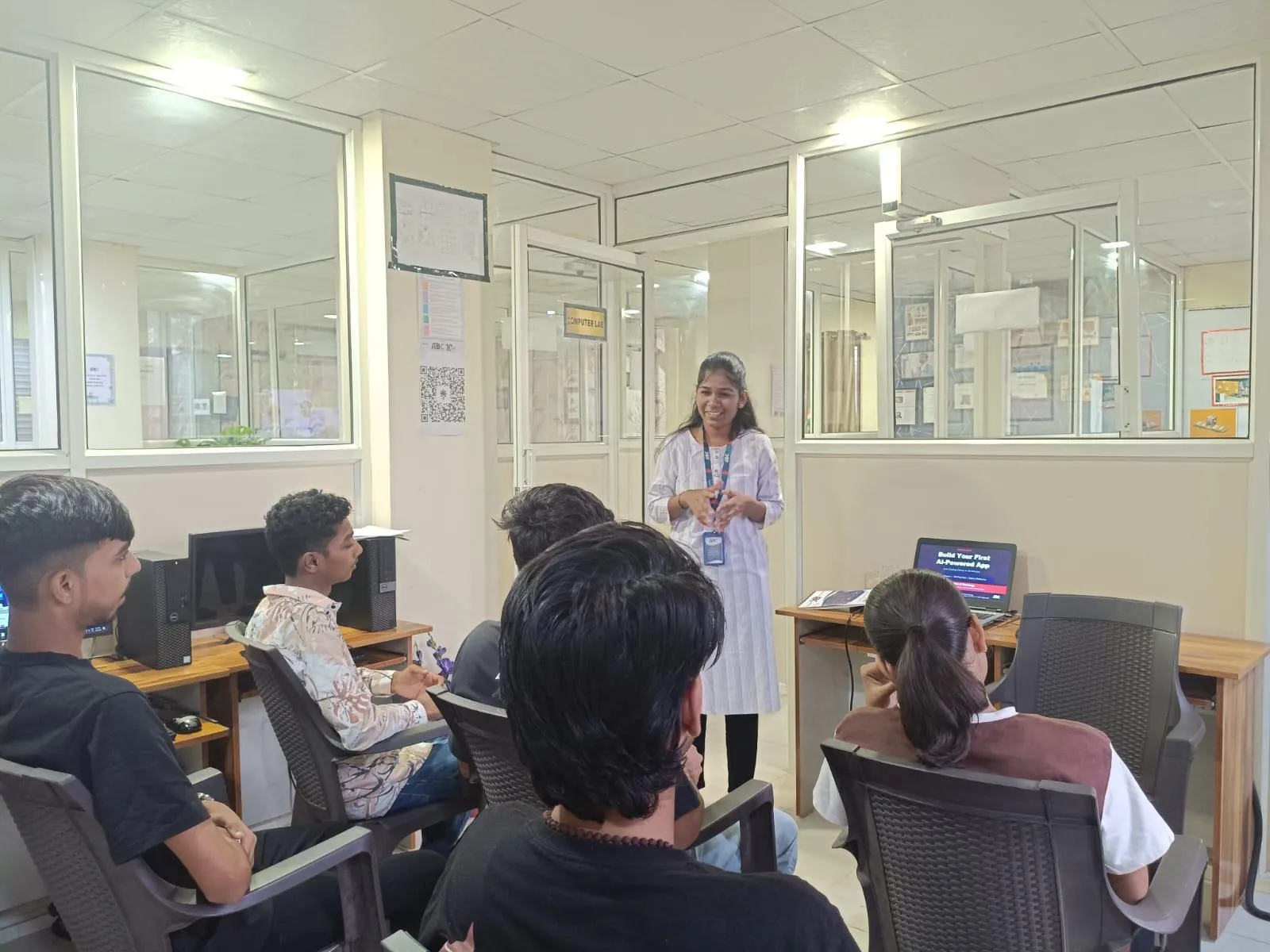
Industrial automation is transforming the manufacturing sector in Pune & Maharashtra and across India. If you are considering a career in PLC SCADA and automation, this guide covers everything you need to know: the career roadmap, skills required, companies hiring, and how to get your first job.
Step-by-Step Career Roadmap
- Month 1-2: Foundation — Learn electrical basics, PLC hardware, and ladder logic programming. Understand industrial sensors and actuators.
- Month 2-3: Core Skills — Master PLC programming (Siemens TIA Portal or Allen-Bradley RSLogix), SCADA configuration, and HMI design.
- Month 3-4: Advanced Topics — Industrial networking (Profinet, Modbus), VFD configuration, motor control, and safety systems.
- Month 4-5: Projects — Complete 3-5 real industrial projects: conveyor control, water treatment automation, packaging machine logic, batch process control.
- Month 5-6: Placement Preparation — Resume building, mock interviews, company referrals. ABC Trainings connects you with 50+ manufacturing companies.
Skills Every Automation Engineer Needs in 2026
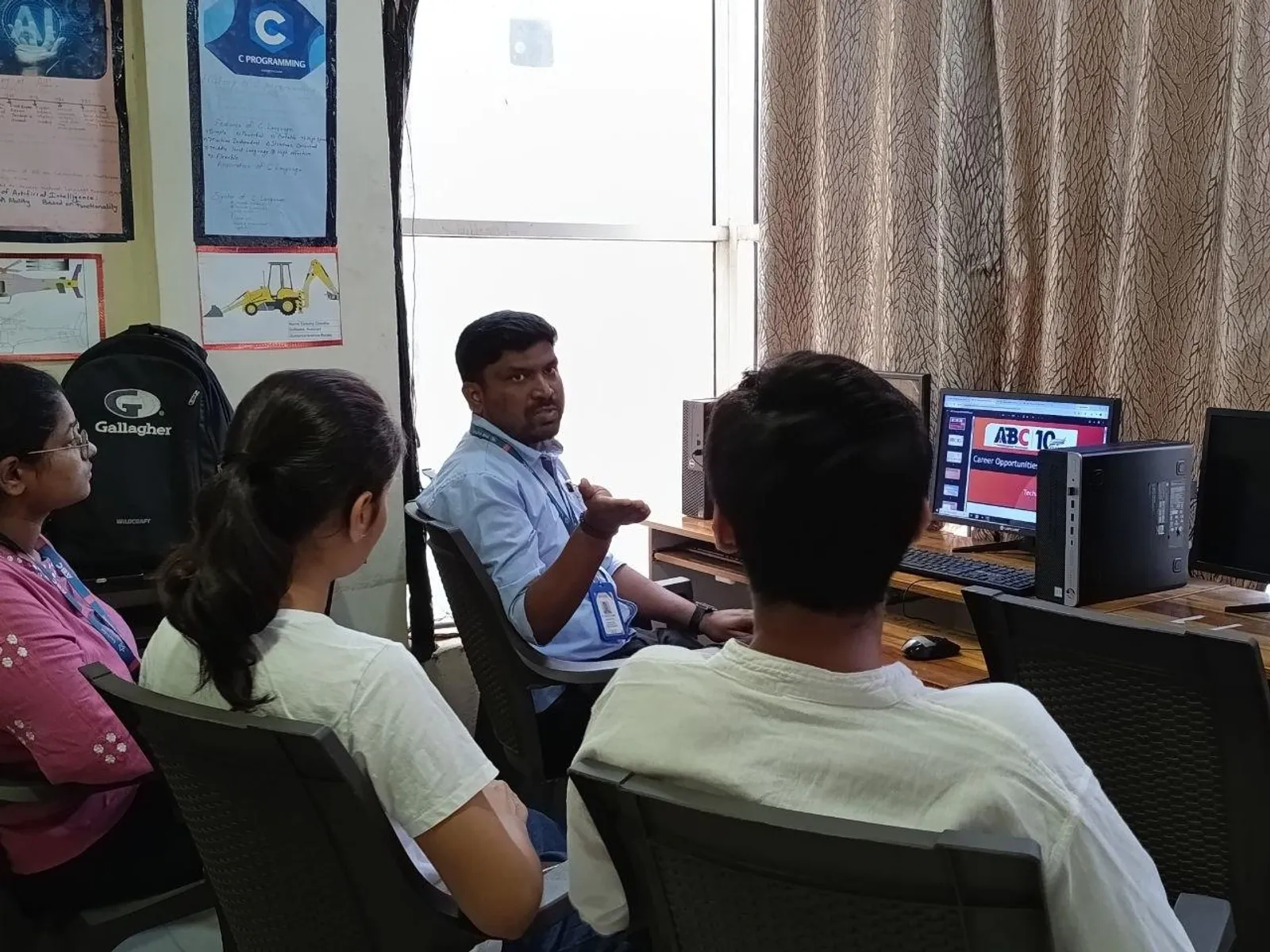
- Technical: PLC programming (Siemens/Allen-Bradley), SCADA development, HMI design, industrial networking, instrumentation basics
- Practical: Panel wiring, hardware troubleshooting, loop checking, commissioning procedures
- Soft Skills: Technical documentation, client communication, project management, problem-solving
- Emerging: Industrial IoT, cloud-based SCADA, cybersecurity for OT networks, digital twins
Top Companies Hiring in Pune & Maharashtra
These companies regularly recruit automation engineers from training institutes in Pune & Maharashtra:
- Automotive: Tata Motors, Bajaj Auto, Volkswagen India, Force Motors, Kinetic Group
- Process: Thermax, Forbes Marshall, Endress+Hauser, Emerson, Honeywell
- MNC Automation: Siemens, ABB, Schneider Electric, Rockwell Automation, Yokogawa
- MIDC SMEs: 200+ small and medium manufacturing companies in Bhosari, Chakan, Ranjangaon, Waluj MIDC zones
How ABC Trainings Helps You Get Placed
Our 85%+ placement rate is not a marketing claim — it is backed by a structured placement process:
- Dedicated placement cell with full-time placement officers
- Monthly campus recruitment drives at our Pune & Maharashtra branch
- Resume and LinkedIn profile optimization
- Mock technical interviews with industry-standard questions
- Direct referrals to partner companies in MIDC zones
- Post-placement support for the first 6 months of your job
Frequently Asked Questions
What is the fee for Automation Training After B.Tech Electrical in Maharashtra 2026?
At ABC Trainings, PLC SCADA and industrial automation courses range from ₹18,000 to ₹45,000 depending on the module and duration. The fee includes hands-on lab access, study materials, mock interviews, and placement assistance.
How long does it take to complete this course?
The typical duration is 2 to 4 months for a complete PLC SCADA program at ABC Trainings. Fast-track weekend batches are also available for working professionals. The course covers both Siemens and Allen-Bradley platforms with real industrial projects.
Does ABC Trainings provide placement for automation courses?
Yes. ABC Trainings has an 85%+ placement rate for industrial automation graduates. We have active partnerships with manufacturing companies in Pune & Maharashtra, MIDC zones across Maharashtra, and automotive OEMs. Placement support includes resume building, mock interviews, and direct company referrals.
Is this course suitable for freshers?
Absolutely. Our PLC SCADA and automation courses are designed for both freshers (diploma/B.Tech in Electrical, Electronics, Instrumentation) and working professionals looking to upskill. We start from basics and progress to advanced industrial applications.
Why Choose ABC Trainings for Industrial Automation?
ABC Trainings is a Government Affiliated, MSME and ISO Certified training institute with branches in Pune (Wagholi, Hadapsar), Aurangabad (Osmanpura, CIDCO), and Sangli. Our industrial automation program is designed by Sunil Wagh, a senior automation expert with 15 years of industry experience in PLC, SCADA, HMI, DCS, and robotics systems.
- 85%+ Placement Rate — Active partnerships with MIDC manufacturers, automotive OEMs, and process industries across Maharashtra
- Hands-on Lab Training — Real Siemens S7-1200/1500, Allen-Bradley CompactLogix, and Delta PLCs available for practice
- Industry Projects — Every student completes 3-5 real industrial automation projects before graduation
- Expert Trainers — All trainers have 8-15 years of hands-on industry experience
- Flexible Batches — Weekday, weekend, and fast-track options for working professionals
- Government Affiliated — MSME certified, ISO certified, recognized institute
Contact ABC Trainings
Ready to start your industrial automation career? Contact us today:
- WhatsApp: +91 7774002496
- Website: https://abctraining.in
- Branches: Pune (Wagholi, Hadapsar) | Aurangabad (Osmanpura, CIDCO) | Sangli
Get Brochure + Fees + Batch Dates on WhatsApp
Free 1:1 counselling. Placement track record. CMYKPY/PMKVY eligibility check.
💬 WhatsApp 7774002496📞 Call 7039169629Visit Our Centers
- Wagholi (Pune): 1st Floor, Laxmi Datta Arcade, Pune-Ahilyanagar Highway. Call 7039169629
- Hadapsar (Pune HQ): 1st Floor, Shree Tower, opp. Vaibhav Theater, near Bloom Hotel, Magarpatta. Call 7039169629
- Cidco (Chh. Sambhajinagar): Kalpana Plaza, opp. Eiffel Tower, N-1 Cidco. Call 7039169629
- Osmanpura (Chh. Sambhajinagar): S.S.C Board to Peer Bazar Road, near Jama Masjid. Call 7039169629
- Sangli: Shubham Emphoria, 1st Floor, Above US Polo Assn., Sangli-Miraj Rd, Vishrambag. Weekend batches available. Call 7039169629
How to Check Whether an Automation Course Is Genuinely Hands-On
The biggest difference between two automation courses at the same fee is how many hours you personally spend with a controller powered up in front of you. Simulation software is fine for learning ladder logic, but it never teaches you what a loose ferrule, a reversed sensor polarity or a dropped 24 V supply looks like on a live panel. Before you pay anywhere, ask these questions and expect specific answers:
- How many students share one PLC in a lab session, and how many hours a week do you get on the hardware yourself?
- Which controllers can you practise on? This guide lists Siemens S7-1200/1500, Allen-Bradley CompactLogix and Delta PLCs in the ABC Trainings lab.
- Does the course include panel wiring, sensor connection and loop checking, or only programming on a PC?
- Can you see a finished student project — the ladder program, the HMI screens, the I/O list — rather than just a certificate?
- Who teaches, and what did they commission in the field? Ask about the plant work behind the years of experience.
- Is the lab open outside class hours, and after the course ends, so you can revise before interviews?
Mistakes B.Tech Electrical Graduates Make in Their First Automation Job Hunt
- Memorising programs instead of processes. Interviewers ask what the machine does before they ask how you programmed it. If you cannot describe the sequence in plain words, the ladder logic will not rescue you.
- Skipping the field side. Proximity and photoelectric sensors, limit switches, 24 V DC digital I/O and 4–20 mA analog signals come up in almost every automation interview. Programming knowledge without wiring knowledge reads as college-project depth.
- Applying only to big names. The MIDC clusters listed above — Bhosari, Chakan, Ranjangaon, Waluj — are where a fresher usually gets to touch a live machine first. Commissioning experience earned there is exactly what larger plants recruit for later.
- Letting electrical fundamentals rust. Star-delta starting, contactors and overload relays, motor protection and earthing still get asked, because an automation panel is still an electrical panel.
- Carrying no evidence. Turning up with a certificate and no project file leaves the interviewer nothing to test you on.
Turning Your Projects Into Interview Answers
The roadmap above asks for three to five industrial projects — conveyor control, water treatment automation, packaging machine logic, batch process control. A project only earns you a job if you can present it. Keep one page per project containing:
- Two lines on the process and why it needed automation.
- The I/O list: every input and output, whether it is digital or analog, and the field device behind it.
- The control sequence in plain English — start conditions, interlocks, stop and emergency-stop behaviour — written before any logic.
- Screenshots of the ladder routine and of the HMI or SCADA screens you built.
- One fault you hit and how you traced it. That is the part interviewers remember.
Then prepare for the questions that follow: the PLC scan cycle, latching and interlocking, timers and counters, scaling a 4–20 mA transmitter into engineering units, and where a safety relay belongs. Answer each one with your own project as the example instead of a textbook definition.
Weekday, Weekend or Fast-Track: Which Batch Format Fits You
All three formats are listed above; pick by how soon you need to be job-ready and how much lab time you can realistically protect. Freshers with no job commitment should take weekday batches — continuous lab exposure is the whole advantage of studying full-time. Working professionals gain from weekend batches because the salary continues, but the calendar stretches, so block one weekday evening for revision or the logic goes cold between Sundays. Fast-track suits people who already have panel, maintenance or wiring experience and only need the programming layer; it is punishing if PLC work is completely new to you. Whichever you pick, ask in advance whether a missed session can be repeated with a later batch.
PLC and Automation Platforms Compared
A quick comparison of the platforms and skill areas this course covers, so you know what each one is for before you walk into the lab.
| Platform or skill | What it is | Who it suits | What to watch for |
|---|---|---|---|
| Siemens S7-1200 / S7-1500 (TIA Portal) | Siemens SIMATIC controllers programmed in the TIA Portal engineering software | Students aiming at process plants and larger manufacturers that run Siemens as the house standard | Menu-driven demos look easy; ask how much time you get on a physical S7 rack, not a projector |
| Allen-Bradley CompactLogix | Rockwell Automation controller line, programmed with RSLogix 5000 / Studio 5000 Logix Designer | Automotive lines and machine builders where Rockwell is specified | Tag-based addressing works differently from Siemens; learn both, since this course covers both |
| Delta PLC | Delta Electronics compact PLC line, listed among the controllers in the ABC Trainings lab | Beginners building ladder-logic fundamentals on small machine control | Excellent to learn on, but employers ask about the brand they actually run — treat it as a starting point |
| SCADA | Supervisory software that collects, displays, trends and logs data from PLCs across a plant | Anyone targeting process industries, utilities and water treatment | Drawing screens is the easy part; tag databases, alarm configuration and data logging are what get probed |
| HMI | The operator interface panel mounted at the machine itself | Every automation role — machine-level work starts here | Screens are judged on operator clarity and alarm handling, not on graphics |
| VFDs and motor control | Drives that vary AC motor speed by changing supply frequency, plus starters and protection | Electrical graduates moving from panel and wiring work into automation | Parameter setting and reading fault codes are the practical test; motor fundamentals are assumed |
| Industrial networking (Profinet, Modbus) | Profinet is an industrial Ethernet protocol; Modbus is an open protocol used over serial RTU or TCP | Anyone heading into commissioning, integration or maintenance of connected machines | Addressing, cable topology and diagnostics — the most common blank spot on a fresher's CV |
Key Takeaways
- Automation after B.Tech Electrical is a hardware skill: the roadmap in this guide runs from electrical basics and ladder logic through SCADA, industrial networking and VFDs to three to five real projects, then placement preparation.
- The course covers both Siemens (TIA Portal) and Allen-Bradley platforms, so your job search is not tied to one vendor's plants.
- Hiring is not only MNC hiring — automotive makers, process companies, automation MNCs and 200+ small and medium manufacturers in the Bhosari, Chakan, Ranjangaon and Waluj MIDC zones all recruit automation engineers.
- ABC Trainings lists fees of ₹18,000 to ₹45,000 depending on module and duration, a typical duration of two to four months, and weekday, weekend and fast-track batches.
- ABC Trainings reports an 85%+ placement rate for automation graduates, supported by a placement cell, monthly campus drives, mock interviews, MIDC referrals and six months of post-placement support.
- Judge any institute on hardware hours per student, whether wiring and commissioning are taught alongside programming, and whether you leave with a documented project you can defend in an interview.