BIM for Warehousing and Logistics Parks on the Pune-Mumbai Expressway 2026: Civil Careers in the Chakan-Talegaon Corridor
The 50-kilometre stretch from Chakan through Talegaon, Khed, and Shikrapur has become one of the most active industrial warehousing corridors in India. Between 2023 and 2026 it has absorbed more than 25 million square feet of new Grade A warehousing and logistics park supply — developed by names like IndoSpace, Welspun One, LOGOS India, ESR India, Blackstone-backed Horizon Industrial Parks, and Pragati Industrial Parks. The demand signal is relentless: e-commerce fulfilment (Amazon, Flipkart, Meesho), third-party logistics (DHL, Blue Dart, DTDC, Delhivery), manufacturing 3PL for Chakan's automotive cluster (Bajaj, Mahindra, Tata Motors, Mercedes-Benz, Volkswagen), and a fast-growing cold-chain segment driven by pharma and QSR supply chains.
This corridor is not being designed in AutoCAD anymore. Every Grade A developer has adopted BIM-first delivery for their new parks — and every civil engineer or BIM specialist who understands warehousing-specific BIM workflows has a direct route into one of the highest-growth employment zones in Pune district. This article explains what warehousing BIM work looks like, which firms are hiring, the specific salary bands in 2026, and the training sequence that gets a civil engineer into the corridor.
Why Warehousing Has Become BIM-First

A Grade A warehouse or logistics park is deceptively complex. Single buildings routinely exceed 500,000 square feet, with clear heights of 12 to 15 metres, heavy-duty concrete floors rated for multi-tonne rack loads, and dense MEP service provision covering fire suppression (ESFR sprinklers, in-rack sprinklers, specialised smoke ventilation), cold rooms, HVAC for office mezzanines, loading dock hydraulic infrastructure, and increasingly automation-ready conveyors, AS/RS, and AGV integration points.
The economics of warehousing are also brutally margin-sensitive. Developers compete on cost per square foot delivered and on speed to commissioning, because build-to-suit tenants like Amazon typically demand 9-to-12 month delivery from land take to ready-to-fit-out. A design-execution misstep that delays commissioning by four weeks erases the project margin. BIM workflows — specifically clash detection, 4D scheduling, and prefabrication-friendly modelling — are the tools developers use to protect that margin.
The Specific BIM Skills Warehousing Projects Hire For
Warehouse BIM work differs from commercial high-rise BIM work in several practical ways a training curriculum must respect.
Large-span structural modelling — pre-engineered building (PEB) structures with clear spans of 30 to 50 metres. Familiarity with PEB modelling in Revit and Tekla, plus cross-checking between fabricator shop drawings and architectural models, is highly valued.
Warehouse floor modelling — high-performance flat floors designed to FM2 or FM1 flatness specifications, with proper joint modelling, embedded services, and load-capacity parameter documentation in Revit.
Fire suppression integration — ESFR and in-rack sprinkler design is significantly more complex than commercial-tower sprinkler design. BIM engineers working warehousing need to coordinate fire sprinkler layouts with the specific racking configurations the tenant will install.
Dock and yard modelling — loading docks, dock levellers, trailer drop zones, circulation plans, and gatehouse infrastructure. This is modelled in Revit alongside Civil 3D site models for the broader park site and yard surfacing.
Park-scale site coordination — a logistics park might contain 8 to 20 buildings across 200+ acres with shared utilities, a common road network, a central boundary wall, and an on-site utility substation. Park-scale coordination in Civil 3D and Infraworks is as important as individual building modelling.
Who Is Hiring in the Chakan-Talegaon Corridor
The hiring employers cluster into three categories. First, the developer in-house design and project management teams — IndoSpace Pune, Welspun One, LOGOS India, ESR India, Horizon Industrial Parks, Pragati, and Embassy Industrial Parks. All of these have Pune offices and active build pipelines.
Second, the design consultancies specialising in industrial buildings — Arcadis Pune, JLL Industrial Consulting, Cushman & Wakefield Industrial Services, C&W Pune project management, and local practices like Warehouse Designers India and Techture.
Third, the EPC and design-build contractors — Shapoorji Pallonji Industrial, L&T Construction Industrial segment, Tata Projects Industrial, and mid-tier specialists like Bhoomi Constructions and Kumar Industrial. All hire BIM engineers specifically for warehousing project execution.
The physical concentration of employers along the Chakan-Talegaon corridor means a BIM engineer living in Wagholi, Hadapsar, or PCMC-adjacent areas has a 30-to-50-minute commute to essentially any of these employer sites — which makes the corridor an unusually convenient employment catchment for Pune residents.
Salary Bands Specific to Warehousing BIM Work in 2026
Warehousing BIM salaries in the corridor sit modestly above commercial-tower BIM salaries in central Pune, reflecting the margin-critical delivery environment and the shortage of specialists who understand both warehousing engineering and BIM tooling.
Fresher with Revit and Civil 3D basics — ₹3.8 to ₹5 LPA.
One to three years, proficient Revit + Civil 3D + Navisworks — ₹6 to ₹9 LPA.
Three to five years, BIM coordinator on live warehousing projects — ₹10 to ₹15 LPA.
Five-plus years, BIM lead on park-scale projects with PEB and MEP coordination — ₹16 to ₹28 LPA, with senior positions at large developers reaching ₹32 LPA.
The Practical Training Sequence
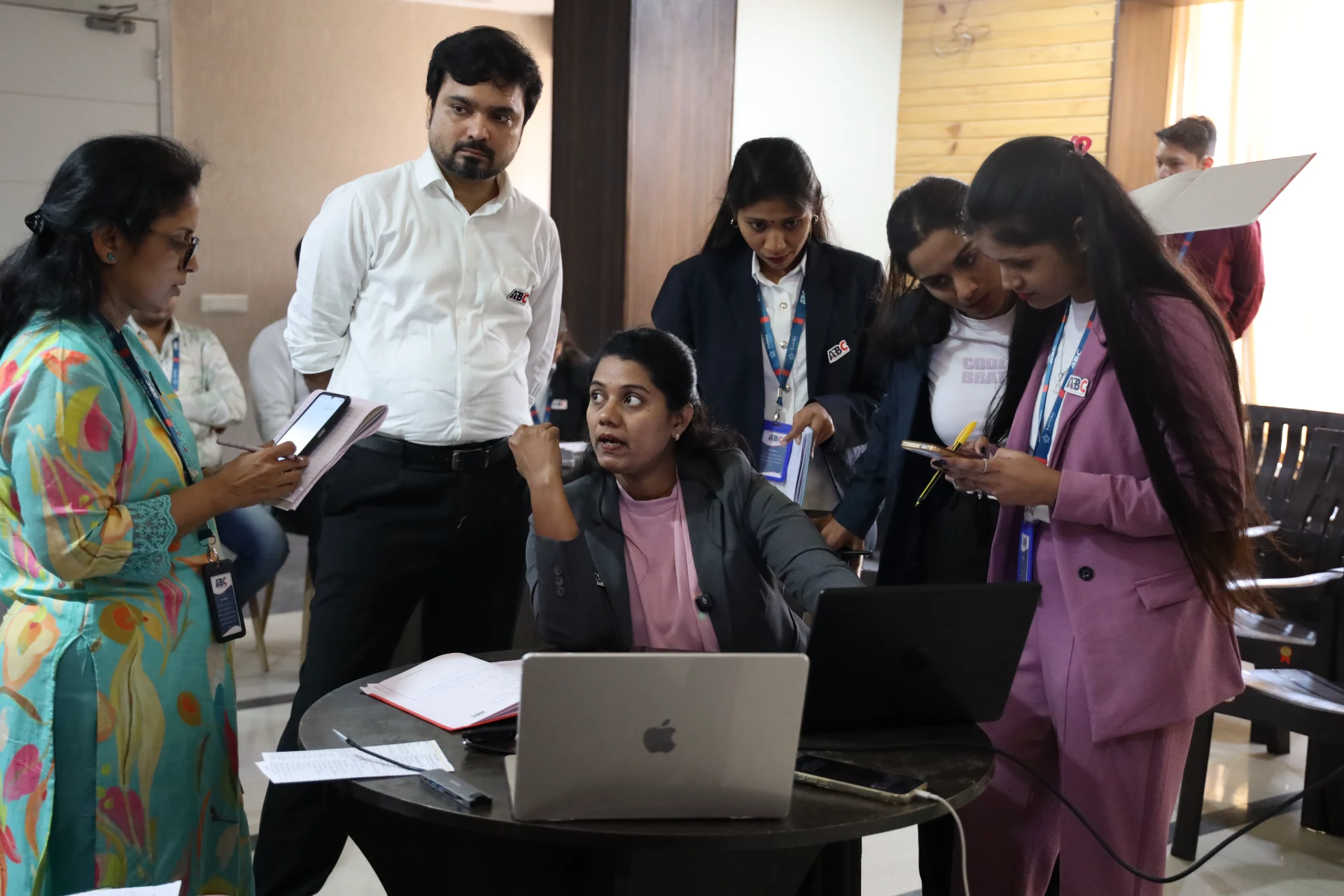
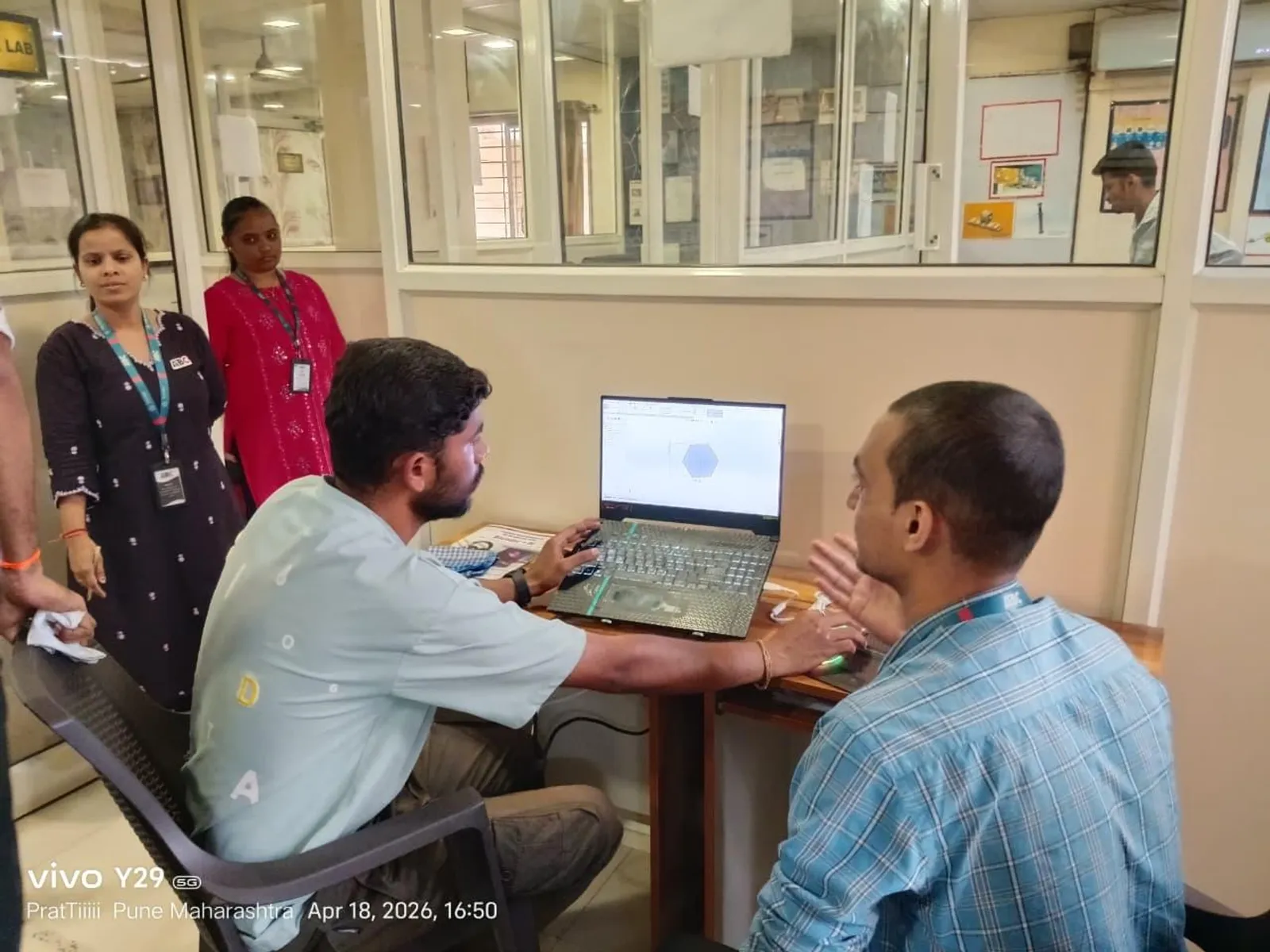
ABC Trainings' warehousing-oriented BIM pathway, delivered from the Wagholi and Hadapsar campuses in Pune, runs as a six-month module for candidates with baseline civil engineering education.
Month one — Revit Structure for large-span buildings. PEB modelling, truss and portal-frame systems, column and base-plate details, and shop-drawing coordination with fabricator models.
Month two — Revit MEP for warehousing systems. ESFR sprinklers, in-rack sprinklers, smoke ventilation, HVAC for office mezzanines, and coordination with dock levellers and electrical distribution.
Month three — Civil 3D for park-scale site engineering. Corridor modelling, grading, surface modelling for yard areas, drainage design, and utility corridor layout.
Month four — Navisworks federation and clash detection. Combining PEB, MEP, and site models, running clash tests, producing BCF reports, and resolving issues in Revit.
Month five — 4D scheduling. Navisworks TimeLiner or Synchro-based construction sequencing tied to fabrication and erection schedules characteristic of PEB buildings.
Month six — warehousing capstone project. A full logistics park design from site plan through building structural, MEP, and site coordination, culminating in a 4D-scheduled construction walkthrough.
What Makes This Niche Worth Entering Specifically
Warehousing is the single fastest-growing commercial real estate segment in India as of 2026, with annual absorption running at approximately 45 to 55 million square feet nationally and Pune accounting for 20 to 25 percent of that. The pipeline is visible multi-year ahead — land banks are already acquired, tenants are already signed, and construction phasing is already scheduled through 2028. BIM engineers entering the segment in 2026 have roughly three years of guaranteed high-demand hiring before any market softening scenario could plausibly materialise. Within that window, mid-career engineers routinely make two or three upward moves as demand continues to outpace supply.
Additionally, the skill transfer from warehousing BIM to data-centre BIM, logistics-related manufacturing BIM, and cold-chain BIM is very high. Engineers who build a warehousing BIM CV in 2026 and 2027 are positioned for the related adjacencies that will drive 2028 and 2029 hiring as well.
Getting Started
ABC Trainings runs evening and weekend batches of the warehousing BIM pathway from Wagholi and Hadapsar. Full-time fast-track options exist for unemployed or between-role candidates who want to compress the six-month pathway into roughly 16 weeks of full-time study. Counselling on batch timing, fees, and placement support into the Chakan-Talegaon corridor employer network is available on WhatsApp at 7774002496 or by calling 7039169629.
The 50 kilometres between Chakan and Khed are, in square footage terms, one of the largest active construction zones in the country. BIM engineers who understand warehousing specifically are the bottleneck, not the product. The window to become one of them is open now.