Data Science for Beginners: Complete Roadmap 2026 (Python, ML & Career Guide) — Updated July 2026 (Updated July 2026)
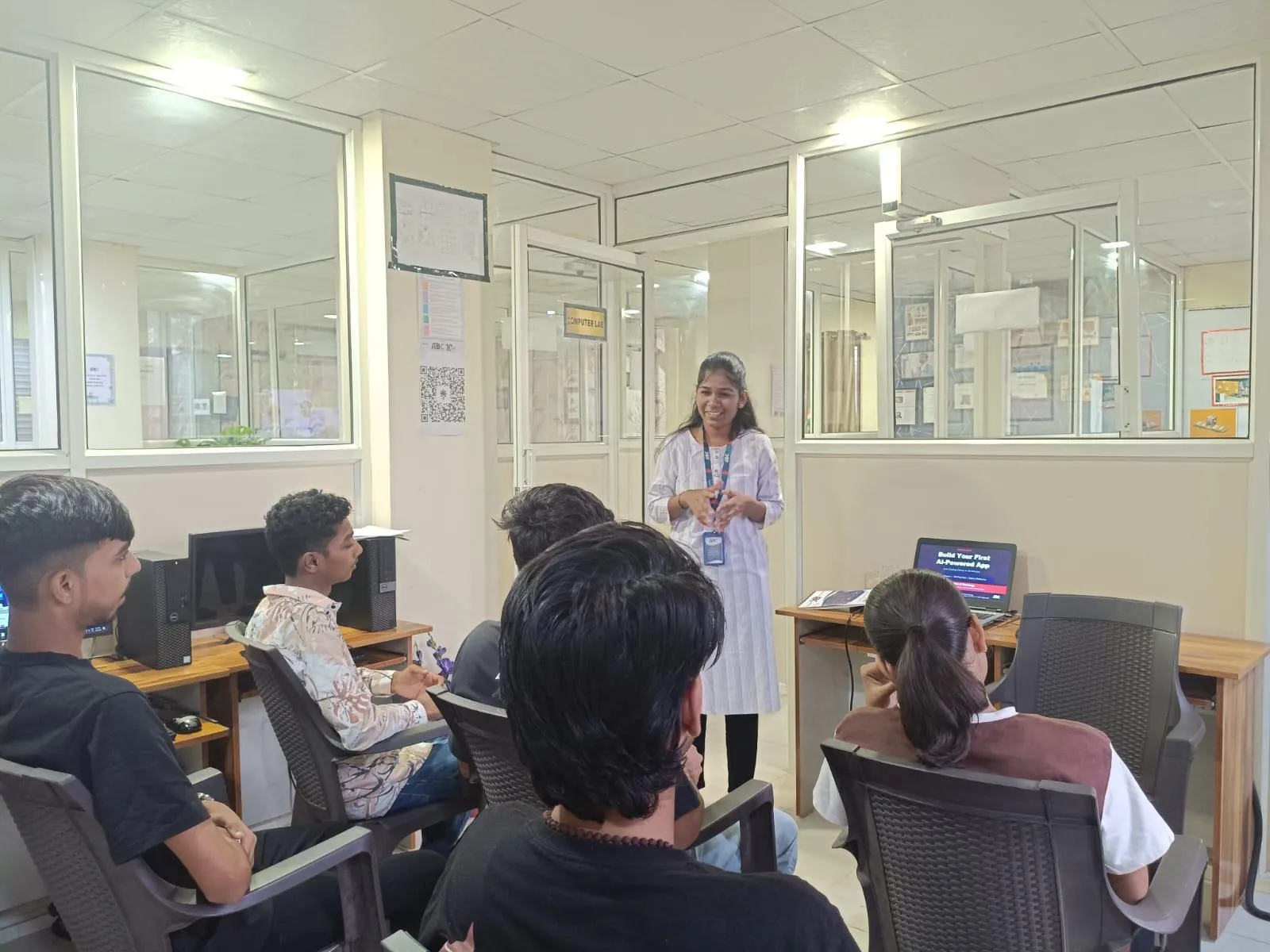
The NASSCOM-Deloitte report projects a demand for 1.25 million AI and data science professionals in India by 2027, yet less than 20% of graduating engineers today can name the three types of data or explain the difference between data analytics and machine learning. Here's what most people don't realise: data science isn't one skill — it's a pipeline of tools, maths, and problem-solving that you learn incrementally. In this guide I'll walk you through exactly what data science is, how it differs from analytics and AI, the step-by-step data science life cycle, and the Python tools you need to get started — all grounded in the concepts covered in ABC Trainings' free Introduction to Data Science webinar (watch the free session at the top of this page).

- Data science extracts insights from raw data using statistics, programming, and domain knowledge — raw data alone has no meaning
- Structured data (tables), semi-structured (JSON, XML), and unstructured (text, images, video) each need different tools and techniques
- Data Science builds predictive models; Data Analytics explains what happened; AI automates decisions — three distinct but related fields
- The data science life cycle: collect → clean → explore → model → evaluate → deploy — every real project follows this sequence
- Python with Pandas, NumPy, Matplotlib, and Scikit-learn is the industry-standard stack for data science in India 2026
What Is Data Science? The Raw Material Analogy Explained
Data science is a field that uses data, statistics, and programming to extract useful insights and knowledge — and it combines three major areas: the raw data itself, the mathematics and statistics to understand patterns, and the programming to process large amounts of data efficiently. As the ABC Trainings webinar puts it simply: just like iron is the raw material for machines and wood is the raw material for furniture, data is the raw material for insights and predictions. The key word is raw — data by itself has no meaning. A number like 85 is just data. Eighty-five marks in mathematics is information. Consistent improvement in maths performance across a semester is an insight. Data science's job is to travel that chain from raw numbers to actionable insight, reliably, at scale. The main goal is not to write code or crunch numbers in isolation — it is to solve real-world problems: why are sales decreasing this month, which customers are about to leave, what will demand look like next quarter? Data science answers these using historical patterns and predictive models, replacing guesswork with evidence.
Three Types of Data Every Data Scientist Must Know
Not all data looks the same, and how you handle it depends entirely on its structure. Structured data is highly organised and follows a fixed format — think Excel spreadsheets, SQL database tables, student mark sheets with roll number, name, and marks columns. It is easy to analyse using SQL queries and tools like Excel and Power BI because relationships are already defined, and it requires minimal pre-processing. Semi-structured data has some markers but doesn't fit neatly into a table: JSON files from APIs, XML files, server log files, and email headers are classic examples. A Python data scientist must flatten this nested data before feeding it into analysis tools — Pandas has JSON-loading utilities, and NoSQL databases like MongoDB store it natively. Unstructured data has no predefined format at all: social media posts, customer reviews, product images, video recordings, voice notes. This is the hardest type — it needs Natural Language Processing (NLP) for text, computer vision for images, and deep learning frameworks like TensorFlow and PyTorch for audio and video. The good news is that over 80% of beginner data science work deals with structured and semi-structured data — you don't need deep learning on day one.
| Role | Key Skills | Salary India 2026 |
|---|---|---|
| Data Analyst | SQL, Excel, Power BI, Python basics | ₹3.5–6 LPA |
| Data Scientist | Python, ML, Statistics, Scikit-learn | ₹8–16 LPA |
| ML Engineer | MLOps, TensorFlow, deployment (AWS, GCP) | ₹14–28 LPA |
| AI/Research Scientist | Deep learning, NLP, computer vision | ₹25–50 LPA |
Data Science vs Data Analytics vs AI: What Is Actually Different?
This is the question I get most from engineering students. Here is a clean answer. Data analytics focuses on historical data to understand what happened and why — descriptive (what happened?) and diagnostic (why did it happen?). A data analyst creates sales dashboards, finds which region underperformed last quarter, and visualises KPIs in Power BI or Tableau. Data science goes further: it builds predictive models using machine learning to answer what will happen next and prescriptive models to suggest what action to take. A data scientist predicts customer churn, builds a recommendation engine, or forecasts next month's demand. Artificial intelligence is the broadest umbrella — it creates systems that act intelligently and autonomously: self-driving cars, voice assistants, face recognition. AI uses data science models as its engine but focuses on autonomous action rather than analysis. In practice: data analytics is the starting point, data science is the progression, and AI is the destination. Many Indian companies currently need data analysts and data scientists far more urgently than AI researchers — which makes data science the career-sweet-spot for engineers graduating in 2026.

The Data Science Life Cycle: How Real Projects Work Step by Step
The data science life cycle is a structured, repeatable process that every real project follows. Step 1 — Data Collection: gather raw data from databases (MySQL, PostgreSQL), CSV files, APIs (application programming interfaces that deliver JSON data in real time), web scraping, or IoT sensors. Data quality here determines everything downstream — poor data, poor results. Step 2 — Data Cleaning: handle missing values, fix inconsistent formats, remove duplicates, and standardise units. In practice, this step consumes 60–70% of a data scientist's time. Step 3 — Exploratory Data Analysis (EDA): visualise distributions, spot outliers, check correlations using Pandas, Matplotlib, and Seaborn. Step 4 — Model Building: choose an algorithm (linear regression, decision tree, random forest, neural network), split data into train and test sets, and fit the model. Step 5 — Evaluation: measure accuracy, precision, recall, F1-score, or RMSE depending on the problem type. Step 6 — Deployment: put the model into production using APIs (Flask, FastAPI) or platforms like AWS SageMaker or Azure ML. Understanding this lifecycle end-to-end — not just writing model.fit() — is what separates hireable data scientists from online-course certificate collectors.
Essential Python Tools for Data Science in 2026
Python is the universal language of data science in 2026 — both in India and globally. Here are the core libraries you need to learn in sequence. Pandas: for loading, cleaning, and manipulating structured data — think of it as Excel with programming superpowers. NumPy: for numerical computations, array operations, and mathematical functions that underpin every ML library. Matplotlib and Seaborn: for data visualisation — charts, histograms, heatmaps, scatter plots — the tools that turn numbers into stories. Scikit-learn: the go-to library for machine learning — linear regression, classification, clustering, dimensionality reduction, and model evaluation tools, all in one clean API. SQL: not a Python library but an essential companion skill — most company data lives in relational databases, and you will write SQL every single day as a data analyst or data scientist. Power BI and Tableau: for business dashboards — many Indian companies want analysts who can present data visually to non-technical stakeholders. TensorFlow and PyTorch come later, for deep learning. Start with Pandas + NumPy + Matplotlib + Scikit-learn and build your first end-to-end project (predict house prices, classify customer reviews) before moving to advanced frameworks.
Data Science Career Roles and Salary in India (2026)
India's data science job market in 2026 is broad, with clearly distinct role tiers. Data Analyst: entry-level, focuses on SQL queries, Excel, Power BI / Tableau dashboards, and basic Python — salary ₹3.5–6 LPA at companies like Infosys, TCS, Wipro, and mid-size e-commerce firms. Data Scientist: mid-level, builds ML models, runs experiments, works with unstructured data — salary ₹8–16 LPA at KPIT, Persistent Systems, Amazon, Flipkart, and analytics startups. Machine Learning Engineer: builds and deploys ML models at scale in production — salary ₹14–28 LPA at tech companies and AI-first startups. AI/Research Scientist: deep learning research, NLP, computer vision — salary ₹25–50 LPA at Cognizant AI Labs, Google India, Microsoft Research. In Pune specifically, companies like KPIT Technologies, Cummins India, and L&T Technology Services are hiring data scientists for embedded analytics and connected vehicle data. The NASSCOM-Deloitte forecast of 1.25 million AI professionals needed by 2027 means India is structurally short on trained data people right now — which makes this the right time to start. ABC Trainings' AI Powered Application Development course covers the full Python-to-ML pipeline with live project work. Call +91 7039169629 or WhatsApp 7774002496 for batch dates.
Maharashtra's CMYKPY scheme provides eligible engineering and BSc students a ₹6,000–₹10,000 monthly stipend during the apprenticeship component of data science training — ask ABC Trainings admissions about current eligibility, alongside PMKVY 4.0 benefits for government-subsidised AI training.Get the Data Science Brochure + Fees + Batch Dates on WhatsApp
Free 1:1 counselling. Placement track record. CMYKPY/PMKVY eligibility check.
💬 Get Brochure on WhatsApp📞 Call 7039169629About the author: Ankush Shendge, IT Trainer, ABC Trainings.
Visit Our Centers
- Wagholi (Pune): 1st Floor, Laxmi Datta Arcade, Pune-Ahilyanagar Highway. Call 7039169629
- Hadapsar (Pune HQ): 1st Floor, Shree Tower, opp. Vaibhav Theater, Magarpatta. Call 7039169629
- Cidco (Chh. Sambhajinagar): Kalpana Plaza, opp. Eiffel Tower, N-1 Cidco. Call 7039169629
- Osmanpura (Chh. Sambhajinagar): S.S.C Board to Peer Bazar Road, near Jama Masjid. Call 7039169629
- Sangli: Shubham Emphoria, 1st Floor, Above US Polo Assn., Sangli-Miraj Rd, Vishrambag. Weekend batches available. Call 7039169629
FAQs
What is the difference between data science and data analytics?
Data analytics focuses on historical data to explain what happened and why — using SQL queries, dashboards, and visualisations. Data science goes further by building predictive models using machine learning to forecast future outcomes and recommend actions. Think of data analytics as the foundation; data science is the next level.
What programming language should I learn first for data science?
Python, without question. It has the most comprehensive data science ecosystem — Pandas, NumPy, Scikit-learn, TensorFlow, Matplotlib — and is used by every Indian tech company hiring data professionals. Learn Python alongside SQL (for database access) and one visualisation tool (Power BI or Tableau).
Do I need a mathematics degree to become a data scientist?
Not at all. You need solid secondary-school level statistics — mean, median, standard deviation, correlation — and a conceptual understanding of linear algebra and probability. Most data science courses teach the required maths alongside programming, and you can fill gaps as you encounter specific algorithms.
What is the salary of a data scientist in India in 2026?
Entry-level data analysts in India earn ₹3.5–6 LPA (AmbitionBox, 2025–2026). Data scientists with 2–4 years of ML experience earn ₹8–16 LPA at companies like KPIT, Persistent, and e-commerce firms. Senior ML engineers earn ₹14–28 LPA. The NASSCOM-Deloitte projection of 1.25 million AI professionals needed by 2027 means salaries in this space are rising fast.